- Company Articles
- Products and Technology
- Product knowledge
- Parallel Rotatory Lean Pipe Joints: Boosting Efficiency in Warehousing

Parallel Rotatory Lean Pipe Joints: Boosting Efficiency in Warehousing
Related Product
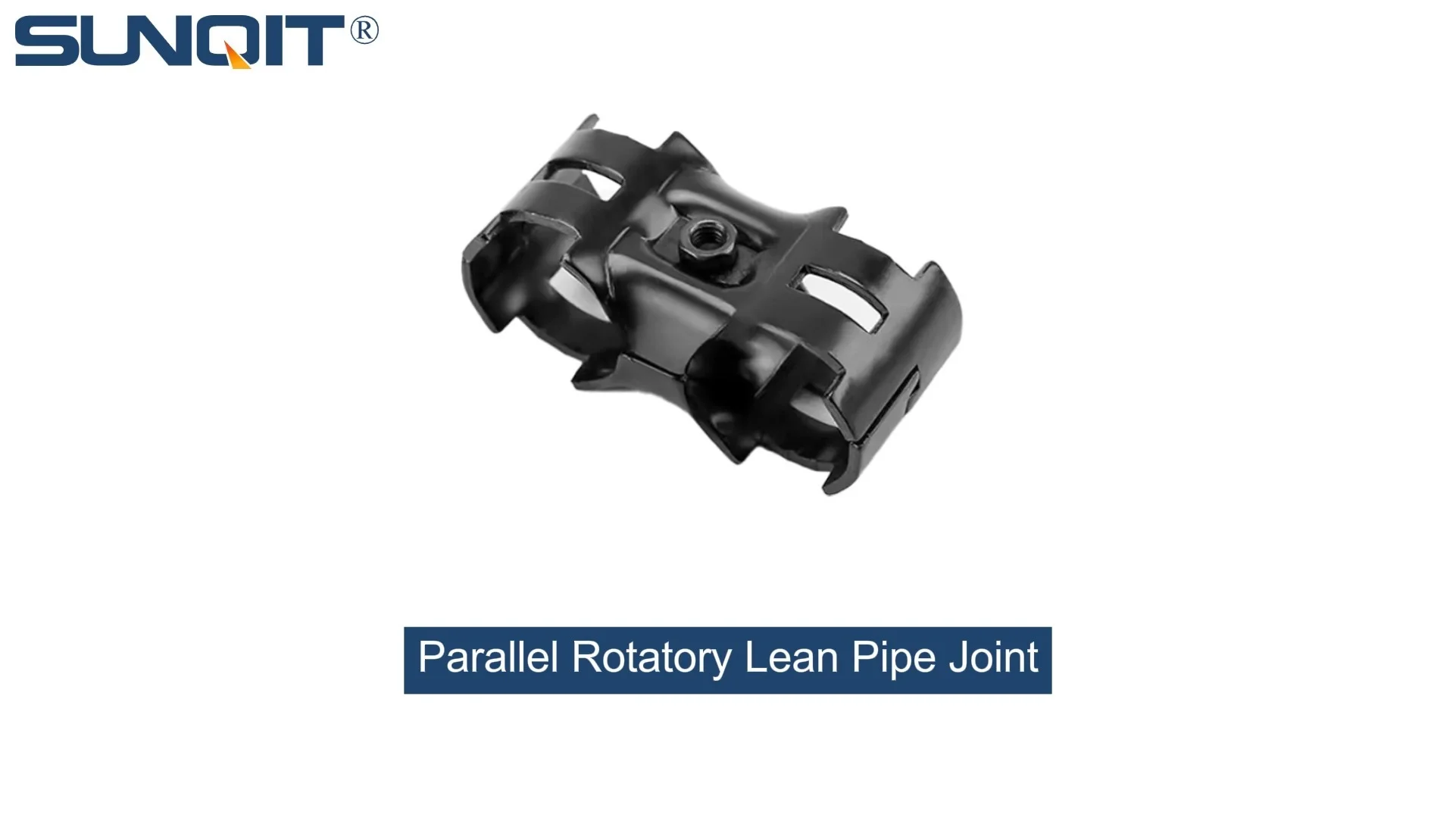
Parallel Rotatory Lean Pipe Joint
Parallel rotatory lean pipe joint, for 2 pcs pipe conenction in parallel direction with rotatory function.
The Hidden Cost of Rigidity in Modern Warehouses
Walk into any busy warehouse, and you'll likely see the same scene: workers hustling to meet deadlines, products moving between stations, and a maze of equipment—from workbenches to racks to conveyors—designed to keep operations flowing. But beneath the surface of this apparent efficiency, there's often a silent productivity killer: rigidity. Fixed workbenches that can't adjust to new product sizes, flow racks that jam when loads shift, and conveyor systems that require weeks of reconfiguration to adapt to seasonal demands. These are the daily frustrations that eat into efficiency, increase labor costs, and leave warehouse managers feeling like they're constantly playing catch-up.
In an era where consumer demands change overnight and supply chains need to pivot at a moment's notice, flexibility isn't just a nice-to-have—it's a necessity. That's where parallel rotatory lean pipe joints come in. These unassuming components are quietly revolutionizing how warehouses operate, turning static, one-size-fits-all setups into dynamic, adaptable systems that grow with your business. But what exactly are they, and how do they deliver such a transformative impact? Let's dive in.
What Are Parallel Rotatory Lean Pipe Joints?
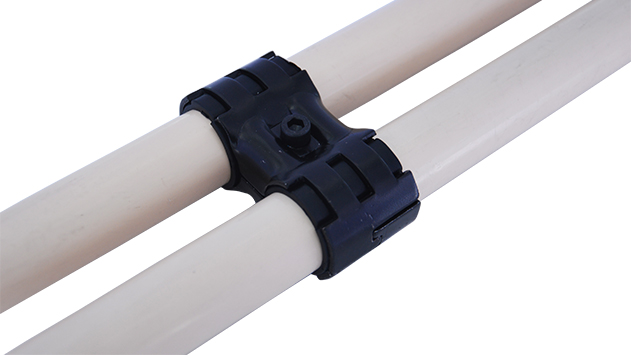
At their core, parallel rotatory lean pipe joints are mechanical connectors designed to link lean pipes (also known as "lean tubes")—the lightweight, durable tubes used to build everything from workbenches to material racks—in a way that allows controlled rotation and adjustment. Unlike traditional fixed joints, which lock pipes into rigid angles, these rotatory joints feature a unique mechanism that lets pipes pivot, tilt, or swivel within a range of motion, then lock securely into place. Think of them as the "hinges" of the lean manufacturing world, but with far more precision and strength.
Most parallel rotatory lean pipe joints are made from high-grade materials like aluminum or steel, chosen for their strength-to-weight ratio and resistance to corrosion—critical in warehouse environments where dust, moisture, and heavy use are constants. They typically feature a central rotating axis, a locking lever or bolt, and connection points that fit standard lean pipe diameters (often 28mm or 30mm). Some models even include built-in accessories like clamps or brackets, making them compatible with other warehouse components like flow rack rollers or conveyor tracks.
But what truly sets them apart is their versatility. Whether you're building a lean pipe workbench that needs to tilt for ergonomic assembly, a flow rack that must adapt to different box sizes, or a conveyor system that needs to navigate tight corners, parallel rotatory lean pipe joints turn static structures into dynamic tools that respond to your team's needs.
How Parallel Rotatory Joints Solve Warehouse Pain Points
To understand the impact of these joints, let's look at three common warehouse challenges and how parallel rotatory lean pipe joints address them head-on.
1. The "One-Size-Fits-None" Workbench Problem
A typical lean pipe workbench is built with fixed joints, meaning its height, surface angle, and shelf positions are set in stone during installation. That works great—until your product line changes. Imagine shifting from assembling small electronics (which require a low, flat work surface) to larger machinery parts (which need a higher, tilted surface to reduce back strain). With fixed joints, you'd either have to rebuild the entire workbench or force workers to adapt, increasing fatigue and error rates.
Enter parallel rotatory lean pipe joints. By replacing fixed joints with rotatory ones, the same workbench can be adjusted in minutes. Loosen the locking lever, pivot the legs to raise the height from 30 inches to 42 inches, tilt the surface to a 15-degree angle, and lock it back down. No tools needed beyond a basic wrench, and no downtime waiting for a custom-built replacement. Workers stay comfortable, tasks get done faster, and the workbench adapts as your needs evolve.
2. Flow Racks That Fight Back
Flow racks are the backbone of order picking, using gravity to move products from the back (loading end) to the front (picking end) of the rack. But traditional flow racks use fixed roller tracks, which can become misaligned if a box is loaded off-center or if product weights vary. The result? Jams, slowdowns, and frustrated pickers who waste time unclogging the system.
Parallel rotatory lean pipe joints transform flow racks by adding flexibility to the roller tracks. By mounting the tracks on rotatory joints, the angle of the rack can be (fine-tuned) to match the weight and size of the products. Heavier boxes might need a steeper incline to overcome friction, while lighter items require a gentler slope to prevent sliding too fast. With a quick adjustment of the joints, the flow rack self-centers products, reduces jams by up to 40% (based on industry studies), and keeps picking speeds consistent.
3. Conveyors Stuck in a Rut
Conveyor systems are the arteries of a warehouse, moving products between stations with minimal labor. But traditional conveyors are often rigidly built, with fixed angles and paths that can't be easily modified. If your warehouse adds a new production line or needs to reroute traffic to accommodate a seasonal surge, you're looking at days (or weeks) of downtime and expensive reconfiguration.
Parallel rotatory lean pipe joints change that. By integrating these joints into the conveyor frame, operators can adjust the incline of the belt, pivot sections to navigate obstacles, or even split the conveyor into multiple lanes—all in hours, not days. For example, a food distribution center handling both small packages and large crates can use rotatory joints to tilt one section of the conveyor for packages and flatten another for crates, eliminating the need for two separate systems. The result? Lower costs, faster adaptation, and a conveyor that grows with your business.

The Numbers Behind the Benefits: Why Flexibility Drives ROI
It's one thing to say parallel rotatory lean pipe joints improve efficiency, but what does that look like in concrete terms? Let's break down the key benefits and their impact on your bottom line.
These numbers come from real-world applications. For instance, a automotive parts manufacturer in Michigan replaced fixed joints with parallel rotatory lean pipe joints on 10 of their lean pipe workbench stations. Within six months, they reported a 32% reduction in setup time between product runs, a 18% drop in worker complaints about discomfort, and a 22% increase in daily output. The initial investment in the joints paid for itself in under a year.

Real-World Success Stories: From Frustration to Efficiency
To truly grasp the impact of parallel rotatory lean pipe joints, let's look at two case studies of warehouses that transformed their operations with these simple yet powerful components.
Case Study 1: Electronics Manufacturer Eliminates Workbench Bottlenecks
A mid-sized electronics manufacturer in California was struggling with a common problem: their assembly line produced both small circuit boards (for smartphones) and large control panels (for industrial machines). Their existing lean pipe workbench stations, built with fixed joints, were too low for the control panels, forcing workers to hunch over, slowing production, and increasing errors. Rebuilding the workbenches every time they switched products took 4 hours per station—time they couldn't afford.
They turned to a lean system supplier specializing in flexible solutions, who recommended retrofitting the workbenches with parallel rotatory lean pipe joints. The transformation was immediate. Workers could now adjust the height of each workbench from 32 inches (for circuit boards) to 40 inches (for control panels) in under 5 minutes. The angle of the work surface was also adjustable, reducing neck and back strain. Within three months, assembly time for control panels dropped by 28%, error rates fell by 15%, and the company eliminated the need for two separate workbench lines. The ROI? The $12,000 investment in joints and installation paid for itself in increased productivity within four months.
Case Study 2: Distribution Center Cuts Flow Rack Jams by 60%
A large e-commerce distribution center in Texas was drowning in flow rack jams. With over 100 flow rack lanes handling everything from small envelopes to large shoe boxes, the fixed-angle racks couldn't adapt to varying product weights and sizes. Pickers were spending 15–20 minutes per hour unclogging jams, and missed shipping deadlines were costing the company thousands in penalties.
Their lean system supplier proposed a solution: replace the fixed joints on the flow rack supports with parallel rotatory lean pipe joints. This allowed the team to adjust the angle of each rack lane individually—steeper for heavy boxes, gentler for light envelopes. They also added rotatory joints to the roller tracks themselves, letting the tracks pivot slightly to self-center off-kilter packages. The results were staggering: jams dropped by 60%, pickers' productivity increased by 25%, and the distribution center met 100% of its shipping deadlines for the first time in a year. The cost? $35,000 for 50 rack lanes. The return? Over $200,000 in saved labor and penalty costs within a year.
Choosing the Right Parallel Rotatory Lean Pipe Joints: What to Look for in a Lean System Supplier
Not all parallel rotatory lean pipe joints are created equal, and the same goes for the lean system supplier you choose to partner with. To ensure you get the most value from your investment, here are key factors to consider:
1. Material Quality
Warehouses are tough environments—joints need to withstand heavy loads, constant adjustment, and exposure to dust and moisture. Look for suppliers that use high-grade aluminum or stainless steel for the joint body and hardened steel for the rotation mechanism. Avoid cheap plastic components, which can crack or wear out quickly under stress.
2. Range of Motion & Locking Mechanism
Check the joint's rotation range (most offer 180° or 360° movement) and the locking mechanism. A good joint should lock securely with minimal effort—preferably a simple lever or cam lock that doesn't require tools. Avoid joints that slip under load or need complex tools to adjust; these will only slow your team down.
3. Compatibility with Existing Systems
If you're retrofitting existing lean pipe workbench , flow rack , or conveyor systems, ensure the joints are compatible with your current lean pipes (diameter, material) and accessories (rollers, brackets). A reputable supplier will offer adapters or custom solutions if needed.
4. Technical Support & Warranty
Even the best products need support. Look for suppliers that offer detailed installation guides, video tutorials, and responsive customer service. A solid warranty (5+ years) is also a sign of quality—if a supplier stands behind their joints, you can trust they'll perform.
5. Track Record of Success
Ask for case studies or references from other warehouses in your industry. A supplier that has experience solving problems similar to yours (e.g., electronics assembly, e-commerce distribution) will be better equipped to recommend the right joint configurations and accessories.
The Future of Warehousing: How Parallel Rotatory Joints Fit Into the Smart Warehouse Revolution
Warehouses are evolving—driven by automation, IoT, and the need for even greater agility. Parallel rotatory lean pipe joints are poised to play a key role in this future, thanks to their adaptability and compatibility with new technologies.
For example, some forward-thinking lean system supplier are already integrating sensors into rotatory joints to monitor usage, track wear, and predict maintenance needs. Imagine a conveyor system that alerts you when a joint's rotation mechanism is starting to wear out, or a flow rack that automatically adjusts its angle based on real-time product data from IoT-enabled tags. These innovations are on the horizon, and parallel rotatory joints provide the mechanical flexibility needed to make them a reality.
Even without cutting-edge tech, the core value of these joints—flexibility—will only grow in importance. As warehouses face shorter product lifecycles, smaller batch sizes, and higher customer expectations, the ability to adapt quickly will separate the leaders from the laggards. Parallel rotatory lean pipe joints aren't just a tool for today—they're an investment in your warehouse's ability to thrive tomorrow.
Conclusion: From Rigid to Resilient—The Power of Adaptable Warehousing
In the fast-paced world of warehousing, rigidity is a liability. Fixed workbenches, unyielding flow racks, and inflexible conveyors don't just slow you down—they hold back your entire operation. Parallel rotatory lean pipe joints offer a simple, cost-effective solution: the power to adapt. By turning static structures into dynamic tools that adjust to your needs, these joints boost productivity, reduce costs, and create a warehouse that can keep up with the demands of modern business.
Whether you're building a new lean pipe workbench , upgrading your flow rack system, or revamping your conveyor lines, the right parallel rotatory lean pipe joints—paired with a trusted lean system supplier —can transform your warehouse from a place of frustration to a hub of efficiency. The question isn't whether you can afford to invest in them—it's whether you can afford not to.
Ready to make your warehouse more adaptable? Start by exploring parallel rotatory lean pipe joints today—and unlock a new level of efficiency tomorrow.