- Company Articles
- Products and Technology
- Product knowledge
- Parallel Rotatory Lean Pipe Joints: Compatibility with Lean Management Accessories

Parallel Rotatory Lean Pipe Joints: Compatibility with Lean Management Accessories
Related Product
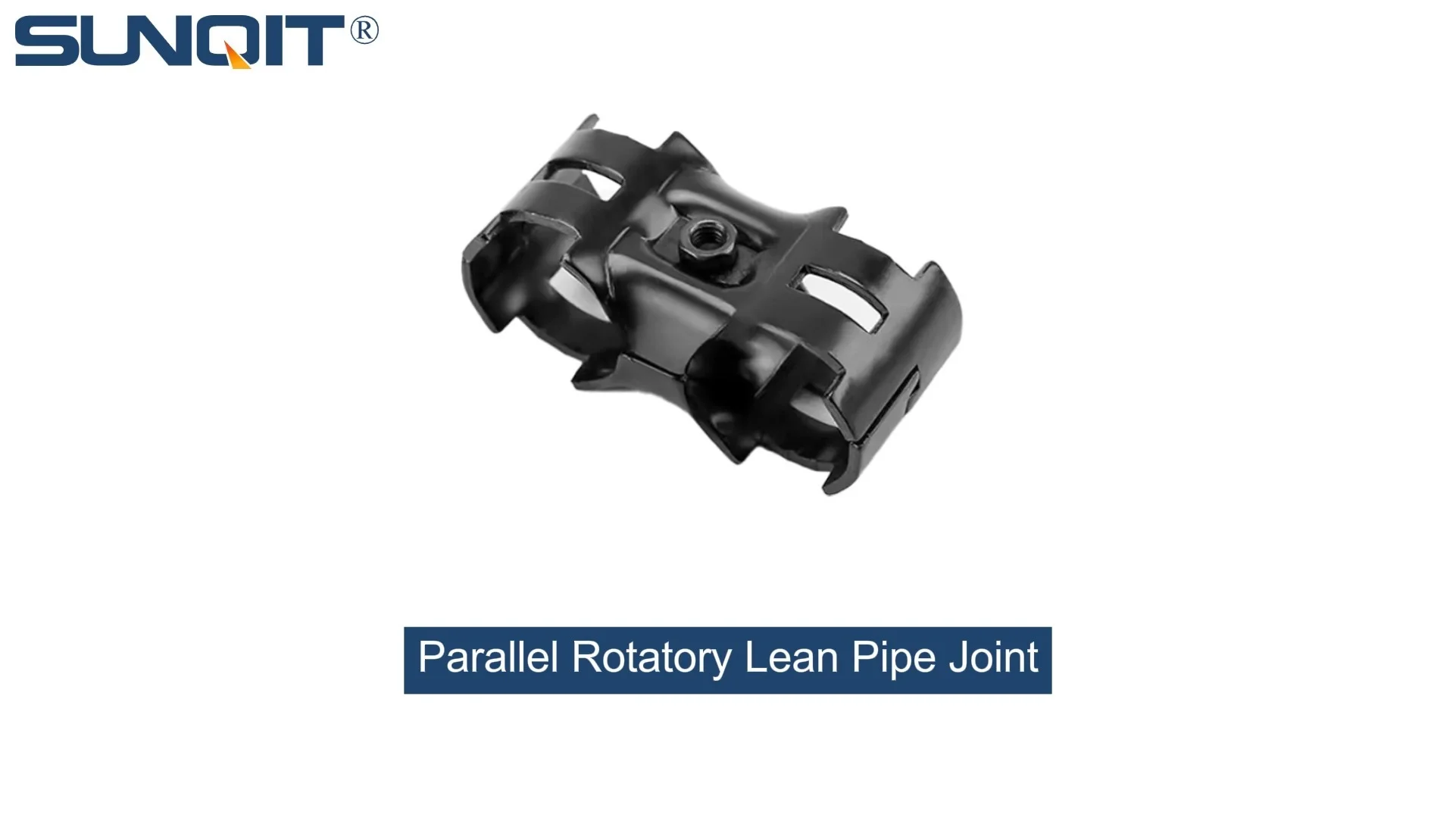
Parallel Rotatory Lean Pipe Joint
Parallel rotatory lean pipe joint, for 2 pcs pipe conenction in parallel direction with rotatory function.
Introduction: The Heartbeat of Lean Management – Components That Connect
In the world of manufacturing and production, where every second counts and waste is the enemy, lean management isn't just a buzzword—it's a way of life. At its core, lean management is about streamlining processes, eliminating inefficiencies, and creating systems that adapt as needs change. But here's the thing: even the most well-designed lean strategy can fall flat if the tools holding it all together aren't up to the task. That's where components like parallel rotatory lean pipe joints come into play.
Think of a lean system as a symphony. The big-picture processes are the melody, but the smaller components—joints, pipes, rollers, casters—are the rhythm section. They might not always be in the spotlight, but without them, the whole piece falls apart. Parallel rotatory lean pipe joints, in particular, are the unsung heroes that keep the rhythm steady. These small but mighty connectors are what allow teams to build, adjust, and rebuild workbenches, flow racks, conveyors, and material trolleys with ease. And their true power? Compatibility. The ability to work seamlessly with a wide range of lean management accessories is what turns a static setup into a dynamic, responsive system.
In this article, we're diving deep into parallel rotatory lean pipe joints: what they are, why they matter, and most importantly, how they harmonize with the accessories that make lean systems tick. Whether you're a production manager looking to optimize your facility, a small business owner setting up a new workspace, or just curious about the nuts and bolts of lean operations, understanding this compatibility is key to building systems that grow with you.
What Are Parallel Rotatory Lean Pipe Joints, Anyway?
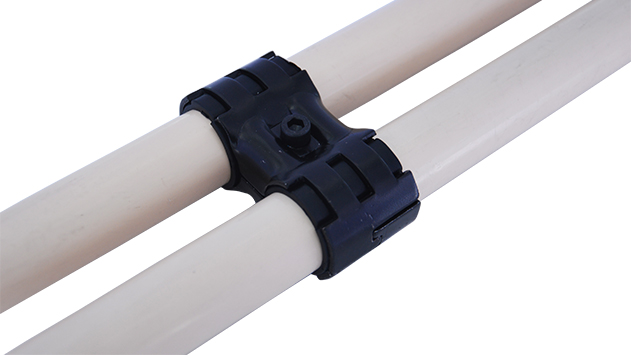
Let's start with the basics. Parallel rotatory lean pipe joints are specialized connectors designed to join lean pipes (also known as "lean tubes") in a way that allows rotation along a parallel axis. Unlike fixed joints that lock pipes into rigid angles, these joints let pipes swivel, pivot, or rotate smoothly—think of them as the "hinges" of the lean world. They're typically made from durable materials like aluminum, steel, or high-strength plastic, and they come in various shapes and sizes to fit different pipe diameters and load requirements.
But why "parallel" rotation? Imagine two lean pipes running side by side. A parallel rotatory joint would let one pipe rotate relative to the other along an axis that's parallel to both pipes, rather than twisting them at a perpendicular angle. This might sound like a small detail, but it's a game-changer for flexibility. For example, on a workbench, this rotation could let you adjust the angle of a tool holder or a material shelf without disassembling the entire structure. On a flow rack, it might allow you to tilt a roller track slightly to speed up or slow down material flow—no tools, no hassle, just a quick twist.
These joints are also built with simplicity in mind. Most feature a clamp-style design that tightens around the pipe with a screw or lever, making installation and adjustments tool-free (or requiring just a basic wrench). This is critical in lean environments, where downtime for reconfiguration can eat into productivity. A worker shouldn't need an engineering degree to adjust a joint—they should be able to do it in minutes, so the system can keep up with shifting production demands.
Key Features That Make Parallel Rotatory Lean Pipe Joints Indispensable
Not all lean pipe joints are created equal, and parallel rotatory ones stand out for a few key reasons. Let's break down their most important features:
1. Smooth, Controlled Rotation: The "rotatory" part isn't just about movement—it's about precision movement. High-quality parallel rotatory joints use bearings or friction-reducing materials to ensure rotation is smooth, not jerky. This is crucial when adjusting components that hold delicate parts (like in electronics manufacturing) or when you need to set a specific angle and have it stay put without slipping.
2. Load-Bearing Strength: Flexibility doesn't mean sacrificing durability. These joints are engineered to support significant weight, whether it's a shelf stacked with parts, a conveyor carrying heavy components, or a workbench with tools and equipment. Most manufacturers specify load ratings (e.g., 50kg per joint), so you can choose the right joint for the job without overloading.
3. Compatibility with Standard Pipe Sizes: Lean pipes come in standard diameters (common ones are 28mm for traditional lean pipes and 30mm for aluminum profiles), and parallel rotatory joints are designed to fit these sizes snugly. A good joint will grip the pipe tightly enough to prevent wobbling but not so tightly that it damages the pipe's surface (especially important for coated pipes like PE-coated lean pipe).
4. Resistance to Wear and Tear: In busy production environments, joints get bumped, adjusted, and exposed to dust, oil, and occasional spills. That's why most parallel rotatory joints are made from corrosion-resistant materials (like aluminum or stainless steel) or have protective coatings. This ensures they hold up over time, reducing the need for frequent replacements.
5. Versatile Mounting Options: These joints aren't just for connecting two pipes. Many designs include additional holes, slots, or tabs that let you attach other accessories directly—like brackets for roller tracks, clips for cables, or mounts for casters. This versatility is what makes them a hub for accessory integration.

Compatibility 101: How Parallel Rotatory Lean Pipe Joints Play Well with Others
The true magic of parallel rotatory lean pipe joints lies in their ability to work with a wide range of lean management accessories. After all, a joint is only as useful as the components it can connect. Let's explore the most common accessories they pair with, and why this compatibility matters in real-world settings.
Lean Pipe and Accessories: The Foundation
At the most basic level, parallel rotatory joints are designed to work with lean pipe and accessories —the building blocks of any lean system. This includes standard lean pipes (like 1.5mm PE-coated lean pipe or aluminum lean pipe), pipe clamps, end caps, and sleeve covers. The joint's clamp-style design ensures a secure fit with these pipes, whether you're building a simple shelving unit or a complex conveyor system.
For example, if you're assembling a material rack, you might use parallel rotatory joints to connect vertical and horizontal pipes. The rotation allows you to adjust the angle of the horizontal pipes to create sloped shelves, making it easier for workers to slide boxes or bins forward. No need to cut pipes to custom angles—just rotate the joint and tighten. Later, if you need to switch to flat shelves, you can rotate the joint back to 0° in seconds. This kind of adaptability is why lean systems are so powerful, and it all starts with the joint-pipe compatibility.
Aluminum Profile Accessories: Adding Strength and Precision
While traditional lean pipes are often made of steel with a plastic coating, many modern lean systems now use aluminum profiles for their lightweight, corrosion-resistant properties. Parallel rotatory joints are fully compatible with aluminum profile accessories like T-slot aluminum guide rails (aluminum guide rail A or B), profile connectors, and end caps. This compatibility bridges the gap between old and new systems, letting you mix steel pipes and aluminum profiles if needed.
Aluminum profiles have T-shaped slots along their length, which accessories slide into and lock with bolts or clips. Parallel rotatory joints designed for aluminum profiles often have tabs or bolts that fit these slots, creating a rock-solid connection. For instance, if you're building a workbench with an aluminum profile frame, you could use a parallel rotatory joint to attach a roller track (via aluminum guide rail B) to the bench's edge. The joint's rotation lets you angle the track to feed parts directly to the worker, reducing reach and fatigue. And because the joint locks into the profile's T-slot, there's no risk of it slipping during use.
Roller Track and Accessories: Keeping Materials Flowing
In lean systems, material flow is everything. That's where roller track and accessories come in—think roller tracks (40 steel roller track, 38 aluminum roller track), swivel roller balls (1 inch or 0.5 inch), and roller track connectors. Parallel rotatory lean pipe joints are the glue that holds these tracks to the rest of the system, and their rotation adds a new level of control over how materials move.
Imagine a production line where components need to flow from a storage rack to an assembly station. The roller track connecting them needs to be slightly inclined to use gravity, but the angle depends on the component's weight—heavier parts need a gentler slope to avoid damage. With a parallel rotatory joint, you can adjust the track's angle by rotating the joint until the flow speed is just right. No shims, no cutting, no re-welding—just a quick tweak. And when you switch to lighter components, you can rotate the joint again to steepen the angle. This kind of on-the-fly adjustment is impossible with fixed joints, which would require disassembling and repositioning the entire track.
Roller track accessories like placon mounts (roller track placon mount for aluminum profile flat, roller track placon mount center support bracket) also pair seamlessly with these joints. These mounts attach the track to the joint, ensuring the track stays aligned even when materials are sliding over it. The joint's rotation, combined with the mount's stability, creates a system that's both flexible and reliable.
Caster and Accessories: Mobility Without Compromise
Many lean systems need to be mobile—think workbenches on wheels, material trolleys, or portable flow racks. That's where caster and accessories (caster wheel, swivel stem caster with brake, caster accessories) enter the picture. Parallel rotatory joints play a key role here, too, by connecting casters to the system while maintaining stability and adjustability.
Casters are typically mounted to the bottom of a frame, but what if the floor isn't perfectly level? A parallel rotatory joint can help here. By rotating the joint slightly, you can adjust the angle of the caster mount, ensuring all four casters touch the ground evenly. This prevents wobbling and makes the trolley easier to push, even when loaded. Swivel casters with brakes benefit, too—aligning the brake lever where it's easy to reach by rotating the joint that holds the caster.
For example, a turnover trolley used to transport parts between departments might use parallel rotatory joints to mount its casters. If the trolley needs to carry taller loads, you could rotate the joints to angle the casters slightly outward, widening the base and improving stability. When moving through narrow aisles, rotate them back to keep the trolley compact. This adaptability makes the trolley useful in more scenarios, reducing the need for multiple specialized trolleys.
A Quick Guide: Parallel Rotatory Lean Pipe Joint Compatibility Chart
| Accessory Type | Common Examples | How They Connect to Parallel Rotatory Joints | Key Benefit of Compatibility |
|---|---|---|---|
| Lean Pipe and Accessories | 1.5mm PE-coated lean pipe, plastic pipe end cap | Clamp-style grip; joint tightens around pipe via screw/lever | Quick assembly/disassembly; easy reconfiguration of frames |
| Aluminum Profile Accessories | Aluminum guide rail B, 4040 aluminum profile end cap | T-slot bolts or tabs fit into aluminum profile slots | Strong, vibration-resistant connection; integrates with lightweight aluminum systems |
| Roller Track and Accessories | 38 aluminum roller track yellow, roller track placon mount bracket | Joint-mounted brackets attach to roller track guide rails | Adjustable track angle for optimal material flow speed |
| Caster and Accessories | Swivel stem caster wheel with brake, caster installation base | Joint connects caster mount to frame; rotation adjusts alignment | Stable, wobble-free mobility; easy brake access |

Real-World Impact: How Compatibility Solves Everyday Lean Challenges
Talk is cheap—let's look at a real scenario where parallel rotatory lean pipe joints and their compatibility with accessories made a tangible difference. Meet "Acme Electronics," a mid-sized manufacturer that assembles smartphones. Like many manufacturers, Acme struggled with two common lean challenges: rigid workstations that couldn't adapt to new phone models, and slow material flow between stations.
The Problem: Acme's old assembly line used fixed steel workbenches with built-in shelving. When a new phone model came out (which happened 3-4 times a year), the team had to disassemble and rebuild the workbenches to fit new tools and component sizes—a process that took 2 full days of downtime. Additionally, components were stored on shelves above the workbenches, requiring workers to reach up and back repeatedly, leading to fatigue and slowdowns.
The Solution: Acme switched to a lean system built with parallel rotatory lean pipe joints, aluminum lean pipes, roller tracks, and swivel casters. Here's how compatibility played a role:
- Adjustable Workbenches: Using parallel rotatory joints, the team built workbenches with modular shelves. When a new phone model arrived, workers rotated the joints to reposition shelves—lowering some for tools, angling others to hold component bins. No disassembly needed; reconfiguration took 2 hours instead of 2 days.
- Roller Track Material Flow: Aluminum roller tracks (38 aluminum roller track black esd with side guide) were attached to the workbenches via parallel rotatory joints. The joints let the team angle the tracks to feed components directly into the worker's hand, reducing reach and cutting assembly time by 15%.
- Mobile Trolleys: Turnover trolleys with swivel casters (mounted via parallel rotatory joints) were used to transport finished subassemblies. The joints adjusted caster alignment, making trolleys stable even when loaded with 50kg of parts. Workers reported less strain pushing them through the factory.
The Result: Acme cut reconfiguration downtime by 90%, reduced worker fatigue (measured via surveys), and increased daily production by 20%. The plant manager later noted, "We used to see the assembly line as a fixed structure. Now, with these joints and accessories, it feels like a living system that grows with us."
The Hidden Costs of Incompatibility (and How to Avoid Them)
You might be thinking, "Why not just mix and match joints and accessories from different suppliers? How bad can it be?" The answer: surprisingly bad. Incompatibility isn't just an annoyance—it can lead to real costs, both in time and money. Let's break down the risks and how to steer clear of them.
Risk 1: Loose Connections and Safety Hazards If a parallel rotatory joint doesn't fit snugly with a lean pipe (e.g., the pipe is too thin, or the joint's clamp is the wrong size), the connection will be loose. Over time, this can cause shelves to sag, roller tracks to misalign, or trolleys to wobble. In the worst case, a loose joint could lead to a collapse, damaging parts or injuring workers. The fix? Always check that the joint's pipe diameter rating matches your pipe (e.g., 28mm joint for 28mm pipe). Reputable suppliers (like a trusted lean pipe supplier) will list compatible pipe sizes clearly.
Risk 2: Premature Wear and Replacement Using a steel parallel rotatory joint with an aluminum pipe might seem harmless, but dissimilar metals can cause galvanic corrosion—where one metal corrodes faster when in contact with another. This weakens the joint and pipe over time, leading to frequent replacements. Solution: Use aluminum joints with aluminum pipes, or steel joints with steel pipes. If mixing is necessary, use plastic sleeves or corrosion-resistant coatings to separate the metals.
Risk 3: Reduced Flexibility (the Opposite of Lean!) The whole point of parallel rotatory joints is flexibility. But if you pair them with non-compatible accessories (e.g., a roller track with a connector that doesn't fit the joint), you'll lose that flexibility. You might end up drilling holes or using zip ties to make them work—turning a "lean" setup into a messy, rigid one. Avoid this by sticking to accessory lines from the same supplier, or checking compatibility charts (like the one earlier) before buying.
Future-Proofing Your Lean System: Trends in Joint and Accessory Design
Lean management is always evolving, and so are the components that power it. What's next for parallel rotatory lean pipe joints and their accessories? Here are a few trends to watch:
1. Smart Joints with Condition Monitoring: Imagine a parallel rotatory joint with a tiny sensor that alerts you when it's loose or worn out. Early prototypes are being tested in automotive plants, where sensors measure vibration or rotation resistance to predict failures before they happen. This could reduce unplanned downtime and make maintenance more proactive.
2. Lightweight, High-Strength Materials: Carbon fiber and advanced composites are starting to appear in lean components. These materials are lighter than aluminum but just as strong, making systems easier to move and reconfigure. Parallel rotatory joints made from composites could also be more corrosion-resistant, extending their lifespan in harsh environments (like food processing plants with frequent washdowns).
3. 3D-Printed Custom Accessories: While mass-produced accessories will always dominate, 3D printing is making custom (accessories) more accessible. Need a special bracket to connect a parallel rotatory joint to a unique roller track? Print it on-site. This will let small manufacturers create hyper-specific setups without the cost of tooling for custom parts.
4. Integration with Industry 4.0: As factories get smarter, lean systems will too. Parallel rotatory joints might one day connect to IoT platforms, where their rotation angles are tracked to optimize material flow. For example, if a joint on a roller track is often adjusted to 15°, the system could suggest permanently angling that track to save time.
Conclusion: Compatibility as the Cornerstone of Lean Success
Parallel rotatory lean pipe joints might be small, but their impact on a lean system is enormous. They're not just connectors—they're enablers of flexibility, efficiency, and adaptability. And their true power shines when they work seamlessly with lean management accessories: lean pipes, aluminum profiles, roller tracks, and casters.
As we've seen through examples like Acme Electronics, compatibility between joints and accessories isn't a "nice-to-have"—it's a "must-have" for any lean operation looking to stay competitive. It reduces downtime, cuts costs, improves safety, and lets your system grow with your business. So the next time you're designing or upgrading a lean setup, remember: the right joint isn't just about holding things together. It's about holding your entire operation together, one rotation at a time.
Whether you're a seasoned lean practitioner or just starting out, investing in high-quality, compatible components will pay dividends for years to come. After all, in lean management, the smallest details often make the biggest difference.