- Company Articles
- Products and Technology
- Product knowledge
- Parallel Rotatory Lean Pipe Joints: Driving Innovation in Lean Production

Parallel Rotatory Lean Pipe Joints: Driving Innovation in Lean Production
Related Product
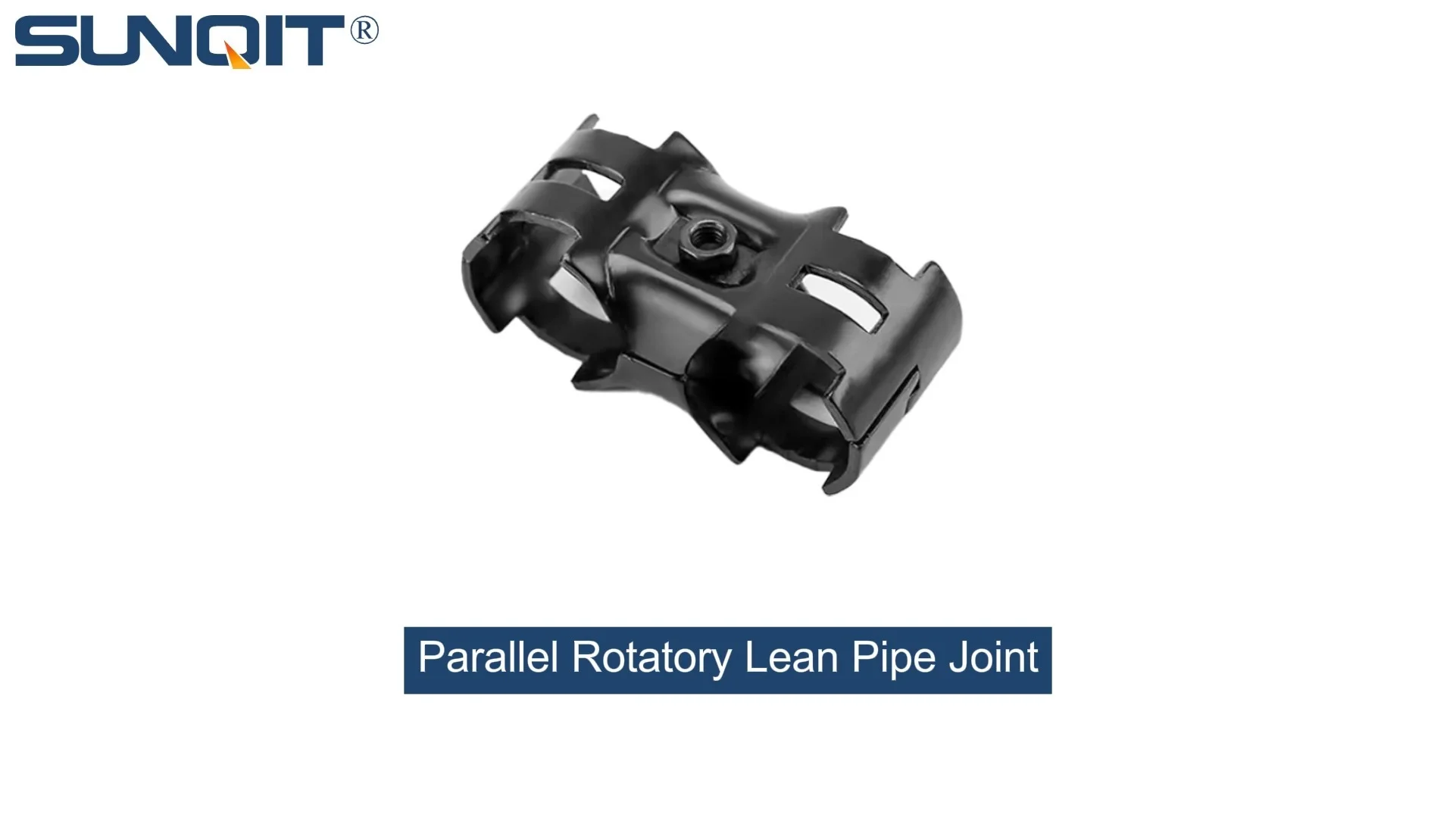
Parallel Rotatory Lean Pipe Joint
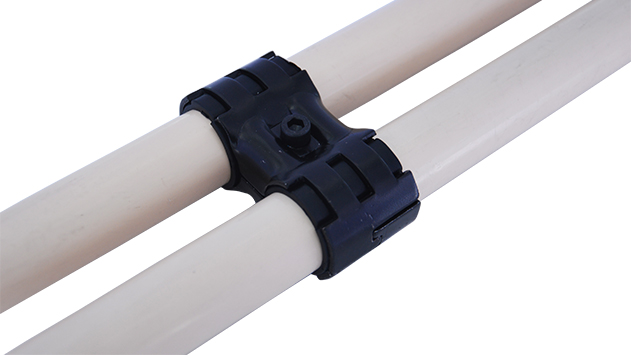
Parallel rotatory lean pipe joint, for 2 pcs pipe conenction in parallel direction with rotatory function.
Walk into any modern manufacturing facility, and you'll likely notice a subtle but powerful shift: the once rigid, one-size-fits-all production lines are giving way to dynamic, adaptable workspaces. Tools, workbenches, and material racks seem to "breathe" with the rhythm of the workflow—adjusting, reconfiguring, and evolving as needs change. Behind this flexibility lies a quiet hero of lean production: the parallel rotatory lean pipe joint . These unassuming components, often overlooked in the grand scheme of industrial equipment, are redefining how manufacturers approach efficiency, waste reduction, and continuous improvement.
In a world where consumer demands shift overnight and product lifecycles grow shorter by the day, rigidity is the enemy of success. A factory floor that can't adapt to new product dimensions, updated assembly processes, or sudden spikes in demand will quickly fall behind. This is where lean production principles—rooted in minimizing waste and maximizing value—meet practical engineering. And at the heart of this intersection? Lean pipe systems, with parallel rotatory joints acting as their most versatile building blocks.
This article dives into the world of parallel rotatory lean pipe joints: what they are, how they work, and why they've become indispensable for manufacturers striving to stay competitive. We'll explore their role in transforming static workbenches into ergonomic hubs, clunky material racks into smooth-flowing flow racks , and disjointed assembly lines into cohesive conveyor systems. Along the way, we'll hear from industry professionals who've witnessed firsthand how these small but mighty joints drive big change—and why choosing the right lean pipe supplier can make all the difference in your lean journey.
The Evolution of Lean Production: From Philosophy to Physical Tools
Before we can appreciate the impact of parallel rotatory lean pipe joints, it's essential to understand the philosophy that birthed them: lean production. Born in the Toyota factories of post-WWII Japan, lean was a response to scarcity. With limited resources, Toyota engineers like Taiichi Ohno and Shigeo Shingo sought to eliminate "muda"—the Japanese term for waste—in every aspect of production. Waste, they argued, wasn't just about physical materials; it included time wasted in inefficient workflows, overproduction, unnecessary movement, and inflexible processes.
Over decades, lean evolved from a set of factory-specific practices into a global movement, adopted by industries from automotive to electronics to food processing. But here's the thing: lean isn't just a mindset. It's a practical discipline that relies on tangible tools to turn philosophy into action. Early lean tools were often rigid—think fixed conveyor belts, bolted-down workbenches, and custom-built material racks. They worked for standardized products, but as markets demanded more variety, these tools became liabilities.
Enter the lean pipe revolution. In the 1990s, manufacturers began experimenting with modular systems built from lightweight, coated steel pipes and plastic joints. These systems were affordable, easy to assemble, and—most importantly—reconfigurable. Suddenly, a workbench used for assembling small electronics could be disassembled and rebuilt as a material rack for larger components in a matter of hours, not days. Waste from over-customization and underutilization plummeted.
But even early lean pipe systems had limitations. Fixed joints restricted movement; adjusting the angle of a pipe or repositioning a shelf often required disassembling and reassembling entire sections. That's where parallel rotatory lean pipe joints stepped in. Designed to allow 360-degree rotation and secure locking at any angle, these joints turned "good enough" flexibility into "game-changing" adaptability. They didn't just make lean systems better—they made them responsive to the chaos of modern manufacturing.
What Are Parallel Rotatory Lean Pipe Joints? Breaking Down the Basics
At first glance, a parallel rotatory lean pipe joint looks simple: a cylindrical connector with a central pivot, flanked by two or more ports for inserting lean pipes. But its simplicity is deceptive. Inside that unassuming design lies a clever engineering solution to one of manufacturing's oldest problems: how to balance stability with flexibility.
Traditional lean pipe joints are "fixed"—they lock pipes at specific angles (90 degrees, 45 degrees, etc.) and require tools to adjust. Parallel rotatory joints, by contrast, feature an internal bearing or friction mechanism that allows the connected pipes to rotate parallel to each other while maintaining alignment. Imagine two pipes connected by a joint that lets them spin around their axes, then lock into place at any position. This means a shelf on a flow rack can tilt forward for easier access, a conveyor section can angle upward to feed into another line, or a workbench surface can adjust to accommodate a worker's height—all without tools, all in seconds.
Most parallel rotatory joints are made from high-strength plastic (like nylon) or aluminum, with metal components for added durability. They're compatible with standard lean pipes (typically 28mm in diameter) and work seamlessly with other joint types, making them easy to integrate into existing systems. Some models even include ESD (electrostatic discharge) properties, critical for electronics manufacturing where static electricity can damage sensitive components.
Key Features That Set Them Apart
360-Degree Rotation: The star feature. Unlike fixed joints, which limit movement to preset angles, parallel rotatory joints allow pipes to rotate freely around their axis. This is a game-changer for applications where angle adjustments are frequent—like a workbench where workers alternate between sitting and standing, or a flow rack that handles products of varying sizes.
Tool-Free Locking: Most models use a cam lever, thumb screw, or quick-release mechanism to lock the joint in place. This eliminates the need for wrenches or screwdrivers, cutting reconfiguration time from hours to minutes. For workers on the factory floor, this means less downtime and more focus on value-adding tasks.
High Load Capacity: Don't let their lightweight design fool you. Quality parallel rotatory joints can support loads of up to 50kg per joint, depending on the material and design. This makes them suitable for heavy-duty applications, from holding tool cabinets to supporting loaded conveyor sections.
Corrosion Resistance: Many joints are coated or made from materials like stainless steel or aluminum, making them resistant to oils, chemicals, and moisture common in manufacturing environments. This extends their lifespan and reduces maintenance costs.
Real-World Impact: How Parallel Rotatory Joints Transform Workspaces
To understand the value of parallel rotatory lean pipe joints, let's step into the shoes of Maria, a production manager at a mid-sized electronics manufacturer. Her facility assembles everything from smartphone chargers to industrial control panels—a mix of small, high-volume products and large, low-volume custom orders. For years, her team struggled with two problems: workbenches that were too low for tall workers and too high for shorter ones, leading to ergonomic complaints, and material racks that couldn't adapt to varying component sizes, resulting in wasted space and slow material retrieval.
Maria's solution? She replaced her facility's fixed lean pipe workbenches and racks with systems upgraded with parallel rotatory joints. The results were immediate. Workers could now adjust their workbench heights in seconds using the joint's thumb screw, reducing strain injuries by 30% in the first quarter. Material racks, once cluttered with "one-size-fits-all" shelves, were reconfigured daily—tilting sections for small components, flattening others for larger boxes, and even rotating entire units to face different assembly lines as needed. Material retrieval time dropped by 25%, and the team could now handle custom orders without pausing production to build new racks.
Maria's story isn't unique. Across industries, parallel rotatory lean pipe joints are solving specific, everyday challenges. Let's explore three key applications where their impact is most felt:
1. Adaptive Workbenches: Ergonomics Meets Productivity
A workbench is more than just a table—it's a worker's second home. Discomfort here translates to fatigue, errors, and turnover. Traditional workbenches are built to a "standard" height (usually around 36 inches), but "standard" doesn't account for the 6'4" technician or the 5'2" assembler. Parallel rotatory joints change that by allowing height and angle adjustments.
For example, a workbench top supported by parallel rotatory joints can tilt from 0 degrees (flat) to 45 degrees, making it easier to access components in deep bins. The legs, connected via rotatory joints, can extend or retract (when paired with telescopic pipes) to adjust overall height. In medical device manufacturing, where precision is critical, this adaptability reduces eye strain and hand fatigue, leading to fewer defects.
Even accessories like tool holders and monitor arms benefit. A tool holder mounted on a rotatory joint can swing from left to right, keeping frequently used tools within arm's reach for both left- and right-handed workers. No more wasted motion reaching across the bench or hunting for misplaced tools.
2. Dynamic Flow Racks: Smoothing Material Flow
Flow racks are the backbone of "kanban" systems—lean's pull-based material replenishment method. They rely on gravity to feed components to the assembly line, reducing the need for workers to walk to storage areas. But traditional flow racks have fixed angles, meaning they work best for a specific product size and weight. A heavy component might slide too slowly; a light one might slide too fast.
Parallel rotatory joints let operators adjust the angle of the flow rack's roller tracks in real time. Need to slow down heavy circuit boards? Tilt the rack slightly upward. Speeding up small screws? Tilt it downward. This precision ensures a steady, consistent flow of materials, eliminating bottlenecks caused by jams or slowdowns.
In automotive parts manufacturing, where components range from tiny washers to large plastic panels, this adaptability is invaluable. A single flow rack can now handle multiple part types, reducing the need for dedicated racks and freeing up floor space—another lean win.
3. Flexible Conveyors: Bridging Production Gaps
Conveyors move products between stations, but production lines aren't always straight. A conveyor that works for a 12-inch product might need to curve, rise, or lower to feed into a packaging machine designed for 18-inch products. Parallel rotatory joints enable these transitions without custom engineering.
For instance, a section of roller conveyor connected via parallel rotatory joints can pivot 90 degrees to create a temporary "bridge" between two lines during a rush order. Or, the incline of an upward conveyor can be adjusted to prevent fragile products from sliding too quickly. In food and beverage packaging, where product sizes change seasonally (think holiday gift boxes vs. regular cans), this flexibility means conveyor systems don't become obsolete with each new product launch.

The Numbers Speak: Quantifying the Benefits
Flexibility and ergonomics are compelling, but for manufacturers, the bottom line matters most. How do parallel rotatory lean pipe joints translate to tangible ROI? Let's look at the data:
- Reduced Reconfiguration Time: A study by the Lean Manufacturing Institute found that facilities using rotatory joints reduced the time to reconfigure workstations by 70% compared to fixed systems. For a factory reconfiguring 10 workbenches monthly, that's a savings of 140 hours per year—time that can be redirected to production.
- Lower Labor Costs: Ergonomic adjustments reduce worker fatigue, which the Occupational Safety and Health Administration (OSHA) estimates can boost productivity by 15-20%. For a team of 50 workers earning $25/hour, that's an annual gain of $37,500 to $50,000.
- Extended Equipment Lifespan: Reconfigurable systems are less likely to be replaced when product lines change. A survey of manufacturers using lean pipe systems with rotatory joints found they kept equipment for 5-7 years, compared to 2-3 years for fixed systems—cutting capital expenditure by up to 60%.
- Improved Space Utilization: Adaptive racks and workbenches reduce the need for dedicated storage, freeing up 10-15% of floor space, according to industry reports. In high-rent manufacturing zones, this can save tens of thousands of dollars annually in facility costs.
To put this in perspective, let's compare traditional fixed lean pipe systems with those upgraded with parallel rotatory joints:
| Metric | Traditional Fixed Lean Pipe Systems | Lean Pipe Systems with Parallel Rotatory Joints |
|---|---|---|
| Reconfiguration Time | 4-6 hours per workstation | 1-2 hours per workstation |
| Ergonomic Adjustability | Limited to preset heights/angles | Infinite height/angle adjustments |
| Product Compatibility | 1-2 product types per system | 5+ product types per system |
| Annual Maintenance Cost | $500-$800 per system | $200-$300 per system (fewer replacements) |
| Worker Satisfaction (Survey Score) | 6/10 (based on industry data) | 8.5/10 (based on post-upgrade surveys) |
The message is clear: parallel rotatory lean pipe joints don't just make workspaces better—they make them more profitable.

Choosing the Right Partner: What to Look for in a Lean Pipe Supplier
Not all parallel rotatory lean pipe joints are created equal. The market is flooded with cheap, low-quality imitations that promise flexibility but fail under stress—cracking under load, jamming during rotation, or corroding after a few months. To maximize the benefits of these systems, choosing the right lean pipe supplier is critical.
So, what should you look for? Here are five key factors:
1. Quality Materials and Testing
A joint is only as strong as its materials. Look for suppliers who use industrial-grade plastics (like PA6 or PA66 nylon), aluminum alloys, or stainless steel. Ask about load testing—reputable suppliers will provide data on maximum weight capacity, rotation cycles, and corrosion resistance. For example, a quality joint should withstand 10,000+ rotation cycles without degradation.
2. Range of Accessories
A lean system is a ecosystem. Your supplier should offer not just rotatory joints, but a full suite of accessories: straight joints, elbows, tees, casters, roller tracks, and workbench tops. This ensures compatibility and simplifies ordering. Bonus points if they offer custom solutions for unique applications.
3. Technical Support
Even the most flexible system needs guidance. Choose a supplier with a knowledgeable technical team that can help design layouts, troubleshoot issues, and recommend configurations. Look for online resources like CAD drawings, assembly guides, and video tutorials—these are signs of a supplier invested in your success.
4. Lead Times and Reliability
In manufacturing, downtime waits for no one. A supplier with long lead times or inconsistent stock can derail your lean initiatives. Ask about inventory levels for standard parts and their track record for on-time delivery. Many top suppliers maintain regional warehouses to ensure quick shipping.
5. Sustainability Practices
Lean and sustainability go hand in hand—both focus on reducing waste. Look for suppliers who use recycled materials, minimize packaging, or offer take-back programs for old components. This aligns with modern ESG goals and reduces your facility's environmental footprint.
The Future of Lean: Where Parallel Rotatory Joints Fit In
As manufacturing hurtles toward Industry 4.0—with smart factories, IoT sensors, and AI-driven optimization—what role will humble lean pipe joints play? The answer might surprise you: they'll become more critical than ever.
Industry 4.0 demands hyper-flexibility. Factories of the future won't just produce multiple products—they'll produce customized products at mass scale (think "batch size 1"). This requires systems that can adapt in real time, and parallel rotatory joints are the mechanical foundation for this adaptability. Imagine a workbench equipped with sensors that detect a worker's height and automatically adjust using motorized rotatory joints, or a flow rack that tilts based on real-time production data to prevent stockouts.
Materials innovation will also drive change. We're already seeing joints made from carbon fiber composites, offering even higher strength-to-weight ratios, and "smart" joints embedded with RFID tags for inventory tracking. In the next decade, self-lubricating bearings and self-healing plastics could further reduce maintenance needs.
Perhaps most exciting is the potential for integration with collaborative robots ("cobots"). Cobots work alongside humans, but they need flexible workspaces to operate effectively. A cobot arm mounted on a lean pipe system with parallel rotatory joints can reposition itself to assist different workers or perform different tasks—no programming required. This human-robot collaboration, enabled by adaptable tools, will redefine productivity.
Conclusion: Small Joints, Big Impact
Parallel rotatory lean pipe joints are easy to overlook. They're small, unassuming, and rarely featured in glossy manufacturing brochures. But for those on the factory floor—for the production managers like Maria, the assemblers adjusting their workbenches, and the teams racing to meet tight deadlines—they're nothing short of revolutionary.
These joints embody the very spirit of lean production: they eliminate waste (time, space, frustration), maximize value (productivity, ergonomics, adaptability), and empower people to do their best work. They remind us that innovation in manufacturing doesn't always come from flashy technology—it often comes from reimagining the tools we use every day.
As you look to transform your own production facility, remember this: the most powerful solutions are often the simplest. And in the world of lean, few solutions are simpler—or more powerful—than the parallel rotatory lean pipe joint.