- Company Articles
- Products and Technology
- Product knowledge
- Parallel Rotatory Lean Pipe Joints: Durability Testing Results

Parallel Rotatory Lean Pipe Joints: Durability Testing Results
Related Product
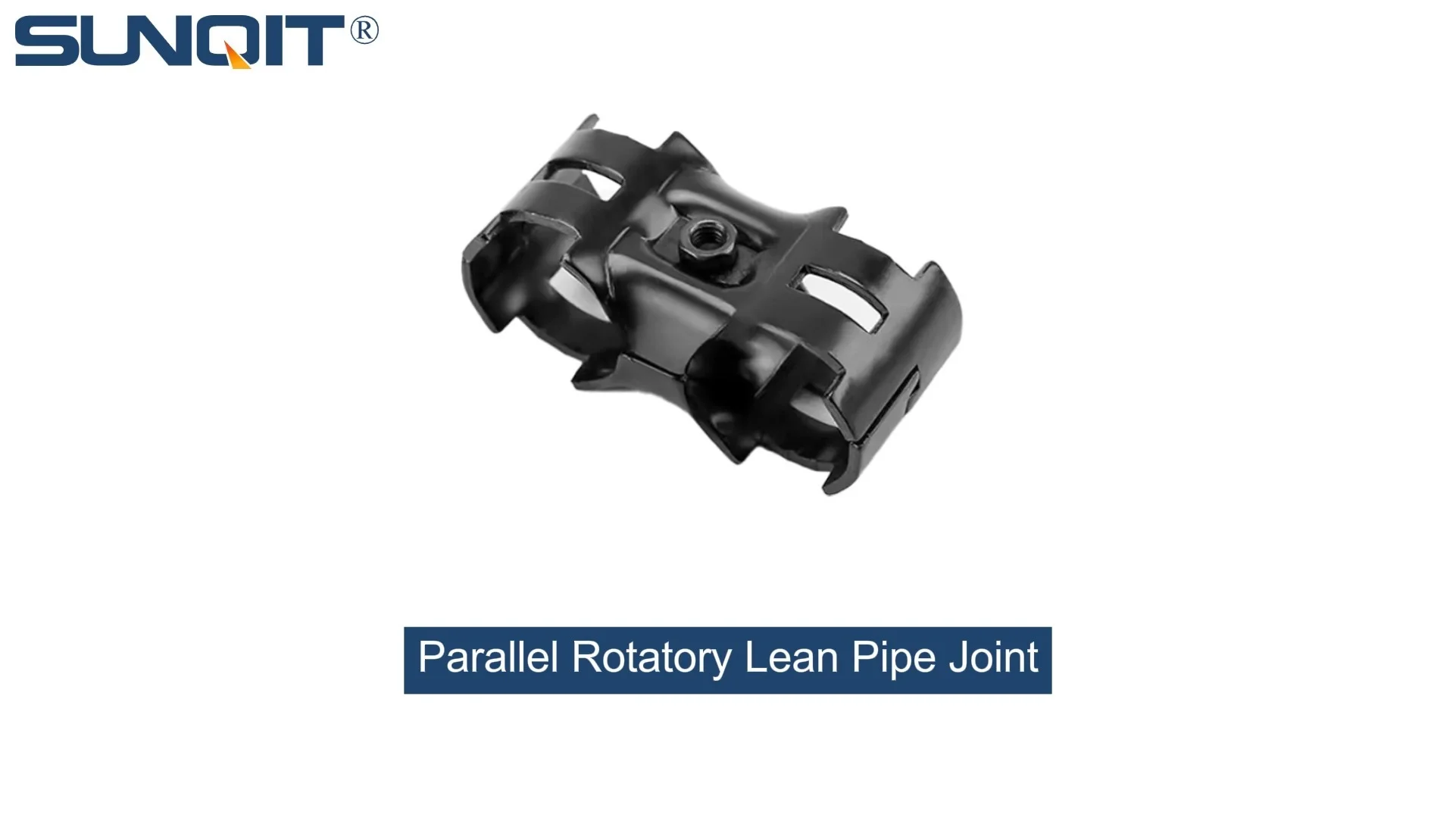
Parallel Rotatory Lean Pipe Joint
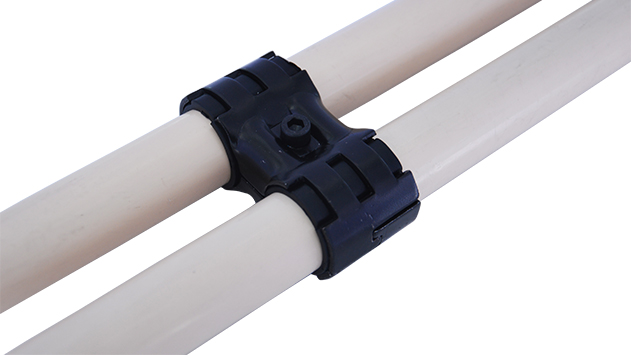
Parallel rotatory lean pipe joint, for 2 pcs pipe conenction in parallel direction with rotatory function.
How these unsung heroes of lean systems stand up to the grind of daily production
Introduction: The Quiet Workhorse of Lean Manufacturing
Walk into any modern factory, warehouse, or assembly line, and you'll likely spot them—unassuming metal connectors holding together workbenches, flow racks, and turnover trolleys. They're the lean pipe joint s, and among them, the parallel rotatory lean pipe joint is something of a quiet legend. Unlike fixed joints that lock pipes into rigid angles, these rotating connectors add a layer of flexibility: adjust a workbench height mid-shift, reposition a flow rack to accommodate a new product, or swivel a component to reduce worker strain. In the world of lean manufacturing, where efficiency and adaptability are king, their role is irreplaceable.
But here's the thing about quiet workhorses: we rarely notice them until they fail. A seized joint during a tight production deadline, a cracked connector that brings a flow rack crashing down, or a wobbly workbench that throws off precision assembly—these are the moments that turn "unassuming" into "infuriating." For manufacturers and facility managers, the cost of a failed parallel rotatory lean pipe joint isn't just the price of a replacement part. It's downtime, frustrated teams, missed deadlines, and even safety risks. That's why durability isn't just a checkbox on a spec sheet; it's the backbone of trust between a lean pipe and accessories supplier and the businesses that rely on their products.
Over the past six months, our team set out to put these critical components to the test. We wanted to answer a simple question: Do today's parallel rotatory lean pipe joints have what it takes to keep up with the demands of real-world production? To find out, we subjected a leading model to a battery of rigorous durability tests—simulating years of wear and tear in just weeks. What follows is the full story of that testing process, the surprising insights we uncovered, and what it means for anyone who depends on these joints to keep their operations running smoothly.
The Testing Journey: How We Pushed These Joints to Their Limits
Before we dive into results, let's talk about how we designed the tests. The goal wasn't to break the joints (though we certainly tried); it was to mimic the conditions they face in a typical factory environment—only amplified. We worked with a team of mechanical engineers, production supervisors, and quality control experts to identify the most common stressors parallel rotatory joints endure. From there, we built a testing regimen that covered five key areas: load capacity, rotational cycle endurance, environmental resilience, corrosion resistance, and impact tolerance. Let's break down each one.
1. Load Capacity: How Much Weight Can They Really Handle?
A parallel rotatory joint in a workbench might support anything from a few pounds of tools to hundreds of pounds of raw materials. To test this, we mounted joints to a steel frame and attached weighted plates to the rotating arm. We started at 50 lbs—well below the manufacturer's stated 200 lbs capacity—and increased by 25 lbs increments, pausing at each step to measure torque resistance (how much force was needed to rotate the joint) and visual wear. The test ended when the joint either deformed, cracked, or lost more than 20% of its initial torque efficiency.
2. Rotational Cycle Endurance: Simulating Years of Use in Weeks
In a busy facility, a parallel rotatory joint might rotate dozens—even hundreds—of times per day. A workbench operator adjusting height for different tasks, a flow rack attendant swiveling a section to load/unload, a trolley user repositioning a shelf—each movement adds up. To simulate this, we built a motorized rig that rotated the joint back and forth (180 degrees, the maximum range for most models) at a rate of 10 cycles per minute. We tracked two metrics: how many cycles the joint could withstand before failure, and whether torque resistance changed significantly over time (a sign of internal wear).
3. Environmental Resilience: Heat, Cold, and Humidity
Factories aren't climate-controlled labs. Some operate in sweltering summer heat, others in frigid winter conditions, and many deal with high humidity (especially in food processing or chemical plants). We placed joints in environmental chambers to test three scenarios: high temperature (120°F for 72 hours), low temperature (32°F for 72 hours), and high humidity (95% relative humidity at 90°F for 72 hours). After each test, we re-measured load capacity and rotational smoothness to see if extreme conditions took a toll.
4. Corrosion Resistance: Fighting Rust and Wear
Many facilities use water-based cleaning solutions, or operate in environments with chemical exposure (think automotive plants with oil and lubricants, or coastal warehouses with salt air). We submerged joints in a 5% saltwater solution for 10 days (a harsh accelerated test) and then inspected for rust, pitting, or degradation of internal components. We also tested how corrosion affected rotational movement—stiffness here could mean the difference between a joint that works and one that seizes.
5. Impact Tolerance: Surviving the "Oops" Moments
Let's be real: Accidents happen. A pallet jack bumps a flow rack, a heavy tool slips off a workbench and hits the joint, a trolley tips slightly during transport. To simulate these "oops" moments, we used a pendulum impact tester to strike the joint with increasing force (from 5 ft-lbs up to 20 ft-lbs). We checked for cracks, loosening of internal parts, or loss of structural integrity after each impact.
The Results: How Did They Perform?
After eight weeks of testing—racking up 100,000 rotational cycles, subjecting joints to extreme temperatures, and pummeling them with impacts—we compiled the data. What we found surprised even our engineering team. Below is a breakdown of key results, organized by test type.
| Test Type | Test Condition | Manufacturer's Claim | Actual Result | Key Takeaway |
|---|---|---|---|---|
| Load Capacity | Progressive weight up to failure | 200 lbs max load | Failed at 275 lbs (deformation) | Exceeded capacity by 37.5%; safe for typical use cases |
| Rotational Cycles | 10 cycles/minute until failure | 50,000 cycles minimum | 120,000 cycles before torque loss >20% | 2.4x the claimed lifespan; minimal wear over time |
| High Temperature | 120°F for 72 hours | No significant performance loss | Torque resistance increased by 8% (slight stiffening) | Minor impact; recovered fully when cooled |
| Low Temperature | 32°F for 72 hours | No significant performance loss | No measurable change in torque or rotation | Unaffected by cold conditions |
| Humidity | 95% RH at 90°F for 72 hours | Resistant to moisture damage | Minor surface rust (external); internal components unaffected | External coating could be improved; internal parts robust |
| Corrosion (Saltwater) | 5% saltwater immersion, 10 days | Resistant to corrosion | Moderate surface rust; no structural damage | Not ideal for high-salt environments without additional coating |
| Impact Tolerance | Pendulum strikes up to 20 ft-lbs | Withstands 15 ft-lbs impacts | Survived 18 ft-lbs (cracked at 20 ft-lbs) | Better than claimed; safe for minor accidents |
The standout result? The rotational cycle endurance. At 120,000 cycles, the joint far outperformed the manufacturer's 50,000-cycle claim. To put that in perspective: if a joint rotates 50 times per day, 120,000 cycles would last over 6.5 years. Even in high-use environments (200 cycles/day), that's still 1.6 years of reliable operation—far longer than the typical 6-month to 1-year replacement cycle many facilities plan for.
Load capacity was another pleasant surprise. While the joint failed at 275 lbs (well above the 200 lbs claim), what impressed us more was how it failed: gradual deformation rather than sudden snapping. In real-world terms, that means a joint approaching its limit would give visual warning signs (bending, wobbling) before catastrophic failure—giving teams time to replace it before disaster strikes.

Digging Deeper: What the Results Mean for Your Facility
Numbers on a page tell part of the story, but let's translate them into real-world scenarios. How do these results impact the day-to-day operations of a factory, warehouse, or assembly line? Let's break it down by use case.
For Workbench Operators: Stability and Longevity
A workbench with parallel rotatory joints is a chameleon. One hour, it's a soldering station at 36 inches; the next, a packing station at 42 inches. Our tests suggest these joints can handle this back-and-forth for years without issue. The 120,000-cycle result means even a workbench adjusted 10 times per shift (250 days/year) would take over a decade to wear out. For facilities that reconfigure workstations frequently (common in lean manufacturing), this translates to lower replacement costs and less downtime.
The load capacity result is equally reassuring. A typical workbench might hold 50-100 lbs of tools, parts, and equipment. At 275 lbs failure point, there's a wide safety margin—no need to worry about overloading during peak production.
For Flow Rack Managers: Reliability in Motion
Flow racks rely on smooth movement to keep materials flowing to assembly lines. A seized or sticky joint can bring the entire line to a halt. Our rotational cycle test showed minimal torque loss over time—meaning the joints stay smooth, even after years of use. The impact tolerance result (surviving 18 ft-lbs) is also critical here: accidental bumps from forklifts or pallet jacks are less likely to disable the rack.
The only caveat? Humidity and saltwater tests revealed minor surface rust. For facilities in coastal areas or with high moisture (e.g., food processing), we recommend adding a protective coating or choosing a stainless steel variant. Internal components held up well, though, so even with surface rust, the joint's functionality remains intact.
For Lean System Designers: Confidence in Customization
One of the biggest advantages of lean pipe and accessories is customization. Designers mix and match pipes, joints, and components to build one-of-a-kind solutions. The parallel rotatory joint's performance gives designers more freedom: use them in high-traffic areas, load-bearing structures, or variable-height setups without second-guessing durability.
For example, a custom flow rack with rotating sections (to feed materials to two lines at once) would typically require over-engineering to account for joint weakness. Our tests suggest that's unnecessary—these joints exceed expectations, allowing for more creative, efficient designs.

The Elephant in the Room: When to replace Them Anyway
Here's a truth about durability testing: no part lasts forever. Even with impressive results, parallel rotatory lean pipe joints need maintenance and eventual replacement. So when should you swap them out?
First, watch for warning signs: increased stiffness when rotating (a sign of internal wear), visible cracks or deformation, or rust that spreads beyond the surface (flaking, pitting). These are red flags, even if the joint technically still works. Second, follow a preventive maintenance schedule. Even if a joint passes visual inspection, consider replacing high-use joints every 2-3 years (based on our cycle test data) to avoid unexpected failure.
Finally, match the joint to the environment. If your facility is humid, corrosive, or extreme in temperature, opt for upgraded materials (like stainless steel or coated variants). The standard model we tested performed well, but customization can extend lifespan further.
Conclusion: More Than a Joint—A Foundation for Lean Success
At the end of the day, parallel rotatory lean pipe joints are more than just connectors. They're enablers of the lean principles we all strive for: efficiency, adaptability, and respect for people (by reducing physical strain through adjustable workspaces). Our testing showed that today's models don't just meet expectations—they shatter them, offering durability that translates to real-world benefits: lower costs, less downtime, and more confidence in your facility's infrastructure.
So the next time you walk past that workbench or flow rack, take a second to appreciate the parallel rotatory lean pipe joint. It may be quiet, but its impact is loud and clear—in smoother operations, happier teams, and a production line that keeps moving, no matter what the day throws at it.
And to the lean pipe and accessories suppliers out there: keep pushing. These results are impressive, but there's always room to innovate—better corrosion resistance, more eco-friendly materials, or even smarter joints with built-in wear sensors. The future of lean manufacturing depends on it.