- Company Articles
- Products and Technology
- Product knowledge
- Parallel Rotatory Lean Pipe Joints: Enhancing Safety in Production

Parallel Rotatory Lean Pipe Joints: Enhancing Safety in Production
Related Product
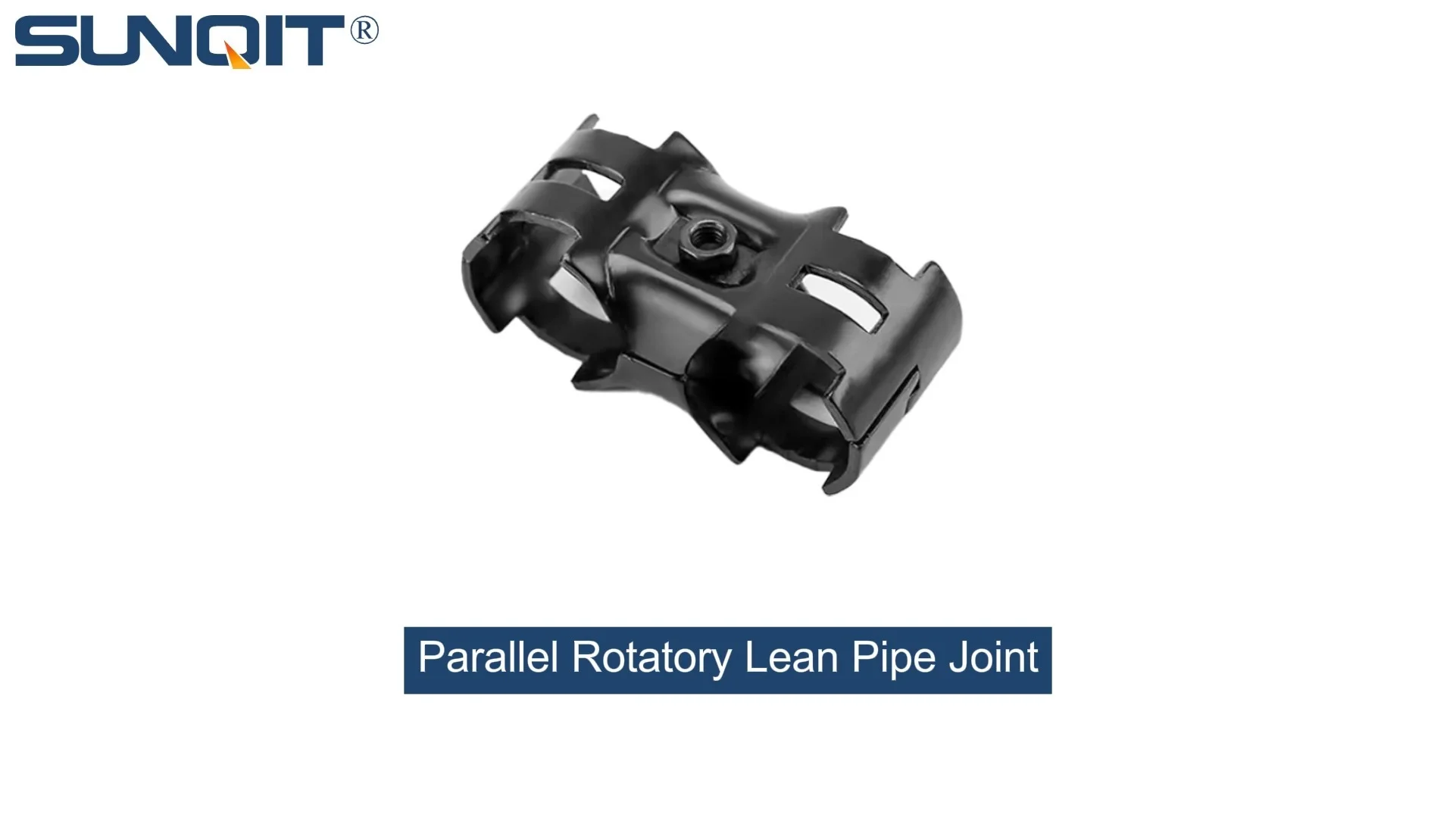
Parallel Rotatory Lean Pipe Joint
Parallel rotatory lean pipe joint, for 2 pcs pipe conenction in parallel direction with rotatory function.
The Hidden Cost of Production Accidents: Why Safety Can't Be an Afterthought
Walk into any manufacturing facility, and you'll likely hear the hum of machinery, the clink of tools, and the steady rhythm of workers assembling, packaging, or moving materials. What you might not notice—until it's too late—are the small, persistent hazards that turn that rhythm into chaos. A workbench that's just a few inches too high, a material rack that wobbles when loaded, a roller track that jams and forces a worker to lean awkwardly to free it up. These aren't just minor inconveniences; they're the building blocks of accidents.
Consider this: According to the U.S. Bureau of Labor Statistics, over 2.8 million nonfatal workplace injuries occurred in manufacturing in 2023 alone. Of those, nearly 40% were ergonomic injuries—strains from lifting, bending, or reaching—and another 25% stemmed from equipment instability or material handling mishaps. The cost? Beyond the immediate medical bills, there's lost productivity, increased insurance premiums, and the intangible but critical hit to worker morale. When an employee fears getting hurt on the job, their focus shifts from doing their best work to just getting through the day safely. That's a loss no production line can afford.
For decades, manufacturers have turned to lean systems to streamline efficiency, cut waste, and boost output. But lean isn't just about speed or cost—it's about creating systems that work with people, not against them. And at the heart of that people-centric approach is safety. Today, we're diving into a component that's quietly revolutionizing how factories protect their most valuable asset: the parallel rotatory lean pipe joint. This unassuming piece of hardware might not grab headlines, but for workers on the floor, it's a game-changer. Let's unpack why.
What Are Parallel Rotatory Lean Pipe Joints, Anyway?
Before we jump into safety, let's get clear on what parallel rotatory lean pipe joints actually are. If you're familiar with lean manufacturing, you know that lean systems rely on modular, customizable structures—think workbenches, material racks, and conveyor systems built from lightweight pipes and joints. These systems are designed to be reconfigured quickly as production needs change, which is why they're a staple in agile factories.
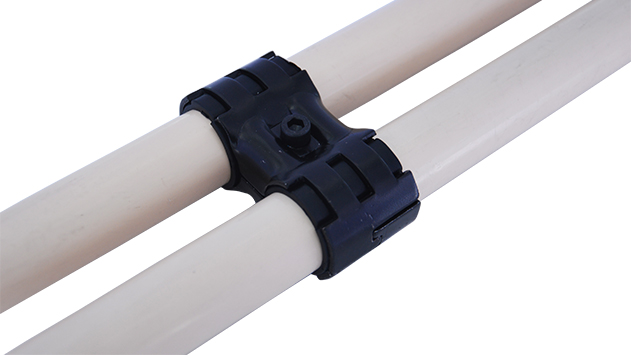
At the core of these structures are the joints that hold the pipes together. Traditional joints are often fixed: once you lock them into place, they stay put. That's great for stability, but not so great when you need to adjust the angle of a workbench surface or reposition a section of roller track to accommodate a new product line. Enter the parallel rotatory lean pipe joint. As the name suggests, these joints allow two connected pipes to rotate parallel to each other—imagine two straws connected by a hinge that lets one twist relative to the other, but only along a single axis. This rotation is smooth, controlled, and, crucially, lockable: once you set the angle you need, you can secure the joint to prevent unwanted movement.
Most parallel rotatory lean pipe joints are made from durable materials like aluminum or steel, with a coating that resists corrosion—important in factories where dust, moisture, or chemicals might be present. They're designed to handle significant weight, too; a high-quality joint can support hundreds of pounds without bending or slipping. But what really sets them apart is their balance of flexibility and strength. Unlike some fully swiveling joints that sacrifice stability for movement, parallel rotatory joints keep the structure rigid when locked, but offer just enough give to adapt to the task at hand.
Safety Through Flexibility: How Rotation Reduces Ergonomic Strain
Let's start with the most common type of injury in manufacturing: ergonomic strain. Picture Maria, a line worker at a small electronics plant. Her job involves assembling circuit boards, which means spending 8 hours a day hunched over a workbench, reaching for components stored in a rack to her left. By mid-afternoon, her shoulders ache, and her lower back feels tight. She's not alone—nearly 60% of manufacturing workers report chronic neck or back pain, often from repeating the same awkward movements day in and day out.
Now, imagine Maria's workbench is built with parallel rotatory lean pipe joints. Instead of leaning left to grab resistors from the rack, she can unlock the joint connecting the rack to the bench, rotate it 90 degrees, and bring the components right in front of her. No more stretching. No more straining. The joint locks securely once positioned, so the rack stays steady as she picks parts. At the end of the day, her shoulders don't burn, and she goes home without that familiar backache.
This isn't just about comfort—it's about safety. When workers are fatigued or in pain, their focus wanders. A momentary lapse in concentration while handling sharp tools or heavy materials can lead to cuts, bruises, or worse. Parallel rotatory joints eliminate the need for those awkward movements by letting the equipment adapt to the worker, not the other way around. Studies show that adjustable workstations reduce ergonomic injuries by up to 35%, and parallel rotatory joints are a big reason why. They turn static, one-size-fits-all setups into dynamic workspaces that accommodate different body types, tasks, and even moods.
It's not just workbenches, either. Think about material handling carts equipped with caster wheels. Traditional carts have fixed shelves, so if you're loading a heavy box, you might have to lift it higher than necessary to set it on the top shelf. With parallel rotatory joints, those shelves can tilt slightly, bringing the box closer to waist level. Less lifting means less strain on knees and backs. Over time, that adds up to fewer injuries, more engaged workers, and a production line that keeps moving—no more stops for trips to the nurse's office.

Stability That Prevents Collapses: The Engineering Behind the Joint
Flexibility is great, but what if that flexibility comes at the cost of stability? No one wants a workbench that wobbles or a material rack that tips over when loaded. That's where the "parallel" in parallel rotatory lean pipe joints becomes critical. Unlike some rotatory joints that allow 360-degree swiveling (which can make structures unstable), parallel rotation keeps the pipes aligned along a single plane. Imagine two pipes connected end-to-end; a parallel rotatory joint lets them pivot like a door hinge, but not twist or bend out of line. This design distributes weight evenly across the structure, preventing the "weak points" that lead to collapses.
Let's break it down with an example. Suppose you're using a traditional fixed joint to connect two sections of a roller track. If the track isn't perfectly level (and let's be honest, factory floors are rarely perfect), the fixed joint forces the track to stay rigid, creating stress at the connection point. Over time, that stress can loosen the joint, causing the track to sag or even detach. Now replace that fixed joint with a parallel rotatory one. The joint can rotate slightly to compensate for the uneven floor, keeping the track level and the weight distributed evenly. No stress, no sagging, no unexpected collapses.
Many parallel rotatory joints also feature a locking mechanism that's both secure and easy to use. A simple lever or bolt lets workers lock the joint in place with a quick twist, ensuring it won't move even under heavy load. This is crucial for safety—imagine a material rack that suddenly rotates while a worker is loading it. With a locked parallel rotatory joint, that scenario is impossible. The joint stays put until intentionally unlocked, giving workers confidence that their equipment won't fail mid-task.
To put this in perspective, let's compare traditional fixed joints with parallel rotatory ones in a quick table. The difference in safety risk is clear:
| Feature | Traditional Fixed Joints | Parallel Rotatory Lean Pipe Joints |
|---|---|---|
| Flexibility | No rotation; rigid alignment only | Controlled parallel rotation (up to 180° in most models) |
| Stress Distribution | Stress at connection points on uneven surfaces | Even weight distribution via rotational adjustment |
| Ergonomic Risk | High (requires worker to adapt to fixed setup) | Low (setup adapts to worker) |
| Stability When Locked | High, but only if perfectly aligned | High, even on uneven surfaces |
| Safety Risk (Collapse/Strain) | Medium to High | Low |

Adapting to Workflows: How Parallel Rotation Prevents Material Handling Mishaps
Manufacturing isn't static. One day, a factory might be producing small widgets; the next, it's shifting to larger components. That flexibility is key to staying competitive, but it can also create safety hazards. When workflows change, workers often have to jury-rig existing equipment to fit the new task—stacking boxes on a workbench to raise the height, propping up a roller track with scrap wood, or overloading a cart because the right-sized one is in use elsewhere. These "temporary" fixes are a breeding ground for accidents.
Parallel rotatory lean pipe joints eliminate the need for makeshift solutions by letting workers reconfigure equipment quickly and safely. Take, for example, a production line that switches from assembling small parts to larger, bulkier items. With traditional fixed joints, the material racks would need to be completely disassembled and rebuilt to accommodate the new size. That takes time—time during which workers might be tempted to overload the old racks "just for a few hours." With parallel rotatory joints, though, adjusting the racks is as simple as unlocking the joints, rotating the shelves to a wider spacing, and relocking them. No disassembly, no downtime, no risky shortcuts.
Another common scenario: material flow. A roller track that works perfectly for small boxes might slow down when handling larger, heavier items. Workers might respond by pushing harder, leading to strained muscles or even the track derailing. But with parallel rotatory joints, the angle of the roller track can be adjusted to match the weight of the materials. Heavier items need a steeper incline to roll smoothly? Unlock the joints, tilt the track slightly, and lock it in place. No more pushing, no more jams, no more frustration. The track adapts to the material, not the other way around.
This adaptability also reduces the risk of "human error" accidents. When equipment is easy to adjust, workers are more likely to use it correctly. A study by the Lean Enterprise Institute found that factories with adjustable lean systems saw a 28% reduction in material handling incidents, simply because workers no longer felt the need to take shortcuts. If the roller track isn't working, they can fix it in minutes—no need to muscle through the problem.
Case Study: How One Factory Cut Injuries by 40% with Parallel Rotatory Joints
Let's look at a real-world example. Precision Parts Co., a mid-sized manufacturer of automotive components, was struggling with a high rate of ergonomic injuries in 2022. Their workers were reporting back pain, shoulder strains, and even carpal tunnel syndrome, leading to frequent absences and rising insurance costs. The safety team did a walkthrough and noticed a pattern: most injuries were happening at workbenches and material racks that were fixed in place, forcing workers into awkward positions.
The solution? The factory partnered with a lean pipe supplier to retrofit their workbenches and material racks with parallel rotatory lean pipe joints. They also added caster wheels to some of the racks, making them mobile as well as adjustable. The results were dramatic. Within six months, reported ergonomic injuries dropped by 40%. Workers like Juan, who had struggled with shoulder pain for years, noted that being able to rotate his material rack "felt like getting a new body." Absenteeism fell by 25%, and production speed increased slightly—likely because workers were less fatigued and more focused.
The safety manager, Lisa, summed it up: "We used to think of safety as adding rules or gear—'wear this brace,' 'don't lift more than 50 pounds.' But parallel rotatory joints changed that. They made safety easy . Workers didn't have to remember a list of rules; the equipment just worked with them. That's the power of lean design—it doesn't just make production more efficient; it makes it safer by default."
Durability and Long-Term Safety: Why Quality Matters
So far, we've focused on how parallel rotatory lean pipe joints enhance safety through flexibility and adaptability. But there's another layer to consider: durability. A cheap, poorly made joint might work fine for a few weeks, but over time, the rotating mechanism can wear out, the locking lever might loosen, or the material might bend under stress. That's not just a maintenance issue—it's a safety hazard. A joint that fails mid-use could cause a rack to collapse, a workbench to tip, or a roller track to jam, putting workers at risk.
That's why choosing a reputable lean pipe supplier is critical. High-quality parallel rotatory joints are built to last, with precision-machined components that resist wear and tear. They're tested under extreme conditions—temperature fluctuations, heavy loads, repeated rotation—to ensure they hold up in real-world factories. Look for joints with a warranty of at least 1-2 years; that's a sign the manufacturer stands behind their product.
Material matters, too. Aluminum joints are lightweight and corrosion-resistant, making them ideal for clean environments like electronics or food packaging plants. Steel joints, on the other hand, are stronger and better suited for heavy-duty applications, like automotive manufacturing. Some suppliers even offer stainless steel options for factories with strict hygiene requirements, like pharmaceutical or medical device production. Whatever the material, the joint should feel solid in your hand—no wobbling, no rough edges, no loose parts.
Maintenance is also part of long-term safety. Even the best joints need occasional care: a drop of lubricant on the rotating mechanism, a check of the locking lever to ensure it's tight, a wipe-down to remove dust or debris. Most parallel rotatory joints are designed to be low-maintenance, with easy access to moving parts. A quick 5-minute inspection each month can prevent failures down the line, keeping workers safe and production on track.
The Future of Lean Safety: Beyond the Joint
Parallel rotatory lean pipe joints are more than just a tool for today's factories—they're a glimpse into the future of manufacturing safety. As lean systems continue to evolve, we're seeing a shift toward "worker-centric" design, where equipment is built to adapt to human needs, not the other way around. Parallel rotatory joints are at the forefront of that shift, but they're just one piece of the puzzle.
Imagine a factory where every workbench, every material rack, every roller track is equipped with smart sensors that monitor joint stability, load capacity, and wear. If a parallel rotatory joint starts to show signs of strain, the sensor sends an alert to the maintenance team—before it fails. Or a joint that automatically adjusts its angle based on the worker's height, using cameras or motion sensors to optimize ergonomics in real time. These aren't science fiction; they're the next steps in lean safety, and parallel rotatory joints are the foundation.
But even without the "smart" upgrades, the impact of parallel rotatory lean pipe joints is clear. They're a simple, affordable way to make factories safer, one joint at a time. They reduce ergonomic strain, prevent equipment failures, adapt to changing workflows, and last for years—all while fitting seamlessly into existing lean systems. For manufacturers looking to protect their workers and their bottom line, they're not just an investment in equipment; they're an investment in peace of mind.
So the next time you walk through a factory, listen for that hum of machinery, that clink of tools. And if you look closely, you might spot the quiet heroes holding it all together: parallel rotatory lean pipe joints, working behind the scenes to keep workers safe, production moving, and that rhythm of manufacturing steady and strong.