- Company Articles
- Products and Technology
- Product knowledge
- Parallel Rotatory Lean Pipe Joints for Small-Scale Factories: Affordable Solutions

Parallel Rotatory Lean Pipe Joints for Small-Scale Factories: Affordable Solutions
Related Product
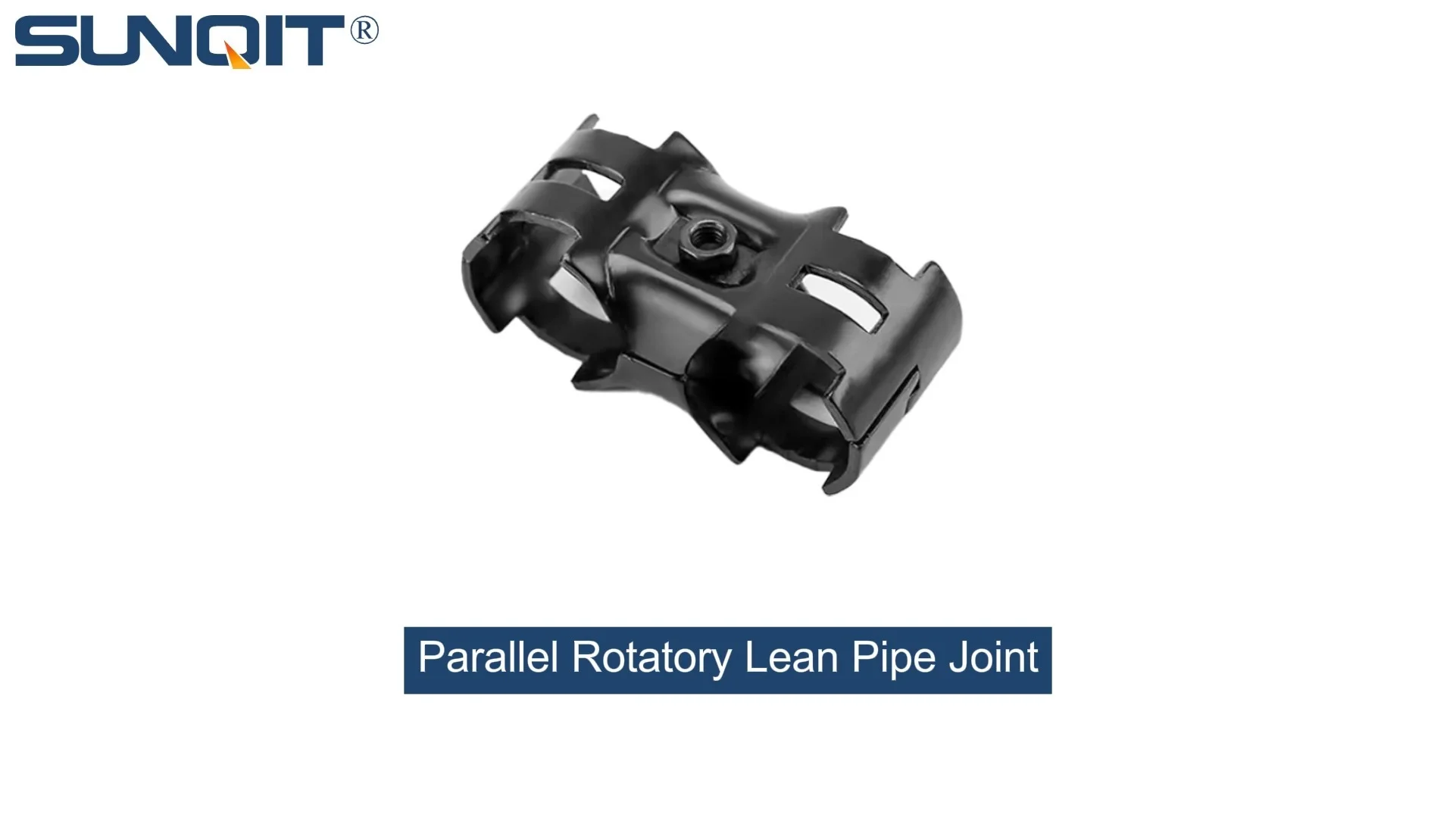
Parallel Rotatory Lean Pipe Joint
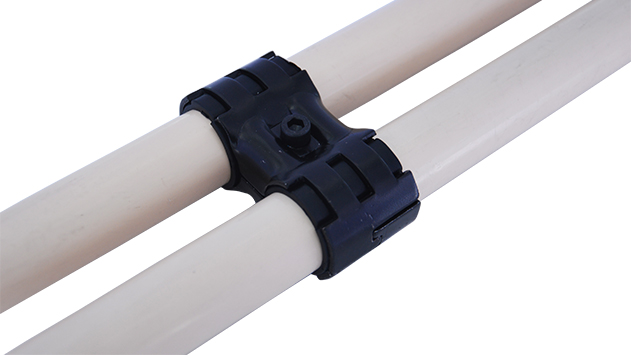
Parallel rotatory lean pipe joint, for 2 pcs pipe conenction in parallel direction with rotatory function.
How a Simple Component is Transforming Workflow Efficiency Without Breaking the Bank
The Small Factory Struggle: Big Dreams, Tight Budgets
Walk into any small-scale factory, and you'll likely find the same scene: a team of hardworking people juggling multiple tasks, a floor plan that feels like a puzzle of equipment and materials, and a constant pressure to do more with less. For owners and managers of these operations, the challenges are clear: space is limited, funds are tight, and every minute wasted on inefficient workflows eats into already thin profit margins. Traditional fixed workbenches, rigid material racks, and one-size-fits-all conveyor systems? They might work for large corporations with endless resources, but for small factories, they're often more of a burden than a solution. Welding custom metal structures costs a fortune, and if your production line needs to shift next month? You're stuck with a costly, immovable relic gathering dust.
But what if there was a way to build, adapt, and grow your workspace without draining your budget? What if you could reconfigure a workbench in an afternoon instead of hiring a contractor for a week? That's where parallel rotatory lean pipe joints come in. These unassuming components are quietly revolutionizing how small factories approach workflow design, proving that efficiency and affordability don't have to be mutually exclusive.
What Are Parallel Rotatory Lean Pipe Joints, Anyway?
Let's start with the basics. If you're not familiar with lean pipe systems, think of them as the "Lego blocks" of factory design. Lean pipes—typically made of steel with a plastic coating, aluminum, or stainless steel—are lightweight, strong tubes that connect using a variety of joints. These joints are the unsung heroes here: they're the pieces that let you snap pipes together into almost any shape, from workbenches to material racks to flow lines. And among all these joints, the parallel rotatory lean pipe joint stands out for its versatility.
Unlike fixed-angle joints that lock pipes into a rigid 90° or 45° position, parallel rotatory joints do exactly what their name suggests: they rotate. This means you can adjust the angle of connected pipes smoothly, even after assembly. Imagine building a lean pipe workbench where the side shelves can tilt slightly to make materials easier to reach, or a flow rack where the roller tracks can be angled to speed up (or slow down) product movement based on the day's needs. That's the power of rotation—adaptability that fixed systems just can't match.
But why "parallel"? These joints are designed to connect two parallel pipes while still allowing rotation, which is crucial for stability. Whether you're building a double-deck workbench or a multi-tiered material rack, parallel rotatory joints keep the structure sturdy while adding that all-important flexibility. They're small, they're simple, and they're surprisingly affordable—usually costing just a fraction of what you'd pay for a custom metal bracket or welded joint.
The Case for Affordability: Why Small Factories Can't Afford to Ignore This
Let's talk numbers—because for small factories, that's what matters most. Traditional factory setups often require investing in custom metal fabrication. A single fixed steel workbench can cost $500 or more, and if you need to modify it later? You're looking at hiring a welder, buying new materials, and losing production time while the work is done. Multiply that by 5 or 10 workstations, and suddenly you're staring at a bill that could have funded a month's worth of raw materials.
Lean pipe systems, by contrast, are budget-friendly from the start. A basic lean pipe workbench built with parallel rotatory joints? You can put one together for under $200, using standard pipes and off-the-shelf accessories. And when you need to change it? No need for a welder. Just loosen the joint's locking mechanism, rotate the pipes to the new angle, and tighten it back up. That's zero labor costs for reconfiguration, and zero waste from scrapping old equipment. It's a "buy once, adapt forever" model that aligns perfectly with the lean principles small factories live by—eliminating waste, maximizing value, and keeping costs low.
To put this in perspective, let's look at a quick comparison between traditional fixed workbenches and lean pipe workbenches using parallel rotatory joints:
| Feature | Traditional Fixed Workbench | Lean Pipe Workbench with Parallel Rotatory Joints |
|---|---|---|
| Initial Cost | $500–$800 per unit | $150–$300 per unit |
| Reconfiguration Cost | $200–$400 (welding, new materials) | $0 (DIY adjustment) |
| Assembly Time | 4–6 hours (professional installation) | 1–2 hours (in-house team) |
| Weight | Heavy (hard to move) | Lightweight (add caster wheels for mobility) |
| Waste Potential | High (scrapped if design changes) | Low (pipes/joints reused in new setups) |
For a small factory with 10 workstations, switching to lean pipe systems with parallel rotatory joints could save upwards of $5,000 upfront. And that's before factoring in the long-term savings from reconfiguration, reduced downtime, and fewer wasted materials. It's not just a cost-cutting measure—it's an investment in your factory's ability to grow and adapt.

Beyond Workbenches: How Parallel Rotatory Joints Power Entire Workflows
Parallel rotatory lean pipe joints aren't just for building workbenches—though they excel at that. They're the backbone of entire lean systems, enabling small factories to create custom solutions for every stage of production. Let's break down a few key applications:
1. Dynamic Flow Racks for Smoother Material Handling
Material handling is a common pain point in small factories. If parts are stored on static shelves, workers waste time bending, reaching, and walking back and forth. Flow racks solve this by using gravity to feed materials directly to the workstation—but only if they're angled correctly. Too steep, and parts slide too fast; too shallow, and they get stuck. Parallel rotatory joints let you fine-tune the angle of the roller tracks on your flow rack, ensuring a steady, consistent flow. During peak production, you might steepen the angle to speed things up; during slower periods, flatten it to reduce jams. It's like having a flow rack that adapts to your day, not the other way around.
2. Mobile Workstations with Adjustable Heights
Ergonomics matter—especially in factories where workers spend hours at a single station. A workbench that's too low leads to back strain; too high, and shoulders ache. With parallel rotatory joints, you can build height-adjustable workbenches. Attach the legs to the tabletop using rotatory joints, and you've got a workstation that can be tweaked to fit each worker's height. Add caster wheels, and suddenly that workstation can roll to where it's needed most—no more carrying heavy tools across the factory floor.
3. Flexible Assembly Lines That Grow With You
Small factories often start with a single assembly line and expand as orders pick up. Traditional fixed lines require you to tear down and rebuild when you need to add a station or change the workflow. With lean pipe systems and parallel rotatory joints, expansion is as simple as adding a few more pipes and joints. Need to insert a quality control station mid-line? Rotate the existing joints to make space, add new pipes, and you're done in an hour. No welding, no contractors, no downtime.
4. Custom Storage Solutions for Odd-Shaped Parts
Not all factory parts are neat and uniform. If you're manufacturing irregularly shaped components, standard shelves just don't cut it. Parallel rotatory joints let you build storage racks with adjustable dividers, angled bins, or even curved sections to cradle odd parts. For example, a electronics factory might use rotatory joints to create a rack where circuit boards rest at a slight angle, preventing dust buildup and making inspection easier. The possibilities are limited only by your imagination.

The Aluminum Advantage: Lightweight, Strong, and Rust-Resistant
While lean pipes come in various materials, aluminum has emerged as a favorite for small factories—and for good reason. Aluminum lean pipes are lighter than steel, making them easier to handle during assembly and reconfiguration. They're also rust-resistant, which is a big plus in factories where moisture or chemicals are present (like food processing or electronics manufacturing). And when paired with parallel rotatory joints, aluminum pipes become even more versatile.
Aluminum's lightweight nature means you can build larger structures—like tall flow racks or extended workbenches—without worrying about them being too heavy to move (especially with caster wheels). It's also more affordable than stainless steel, striking a perfect balance between cost and durability. For small factories operating on tight budgets, aluminum lean pipes and parallel rotatory joints offer the best of both worlds: strength where you need it, flexibility everywhere else.
Another bonus? Aluminum is recyclable. If you ever do need to scrap a structure (though with lean systems, you'll likely reuse the parts), you can sell the aluminum pipes for recycling, adding a little extra back to your bottom line. It's a small detail, but every penny counts in small-scale manufacturing.
Installation 101: You Don't Need to Be a Engineer to Build It
One of the biggest myths about lean pipe systems is that they require special training to install. Let's debunk that right now: if you can use a wrench, you can build with parallel rotatory lean pipe joints. Here's a quick step-by-step guide to building a basic lean pipe workbench—no engineering degree required:
Step 1: Gather Your Materials
You'll need: lean pipes (aluminum or steel), parallel rotatory joints, end caps (to protect pipe ends), a rubber mallet (to tap joints into place), and an Allen wrench (to tighten the joint screws). If you're adding a work surface, pick a lightweight material like plywood or aluminum honeycomb panel.
Step 2: Plan Your Design
Sketch out your workbench dimensions on paper. Measure the space where it will go to avoid surprises. For a standard workbench, aim for a height of 36–40 inches, width of 24–30 inches, and length of 48–72 inches. Remember: you can always adjust later with the rotatory joints!
Step 3: Assemble the Frame
Start with the legs: connect four vertical pipes to a square frame of horizontal pipes using parallel rotatory joints. Tighten the joints just enough to hold the shape—you can adjust the angles later. Add cross-braces between the legs for stability (these can also be connected with rotatory joints for extra flexibility).
Step 4: Add the Work Surface
Once the frame is stable, attach the work surface using pipe clamps or brackets. If you want the surface to tilt, use parallel rotatory joints to connect the brackets to the frame—this lets you adjust the angle as needed.
Step 5: Customize and Adjust
Add shelves, tool hooks, or side racks using extra pipes and joints. Use the rotatory feature to angle shelves for easy access. If you want mobility, screw caster wheels into the bottom of the legs. Tighten all joints with the Allen wrench, and your workbench is ready to use.
Total time? About 1–2 hours for a basic bench. And if you decide next month that you need a longer surface or a different height? Loosen the joints, adjust, and retighten. It's that simple.
Real-World Results: How a Small Electronics Factory Saved $10,000 in One Year
Let's put this all into context with a real example. Take "TechCore Electronics," a small factory in Ohio with 15 employees that manufactures circuit boards for medical devices. Before switching to lean pipe systems, TechCore was struggling with inefficiency:
- Their fixed steel workbenches were too low for most workers, leading to frequent back pain and high turnover.
- Material storage was disorganized—parts were stored on static shelves, so workers spent 20% of their day walking to retrieve components.
- Assembly lines were rigid; adding a new testing station required hiring a welder, costing $800 and taking two days of downtime.
In 2023, TechCore's manager decided to invest in lean pipe systems, focusing on parallel rotatory joints, aluminum pipes, and flow racks. Here's what happened next:
- Workbench Upgrade: They replaced 8 fixed steel workbenches with lean pipe workbenches using parallel rotatory joints. Workers adjusted the height and angle of their stations, reducing reported back pain by 75%. Initial cost: $1,600 (vs. $4,000 for new fixed benches).
- Flow Rack Installation: They built 4 custom flow racks with adjustable roller tracks (using rotatory joints to angle the tracks). Parts now roll directly to the assembly line, cutting walking time by 15%. Workers reported saving 2 hours per day on material retrieval. Cost: $800 (vs. $2,500 for pre-built flow racks).
- Flexible Assembly Line: They reconfigured their main assembly line using lean pipes and rotatory joints. Adding a testing station took 1 hour (no contractor needed). Over the year, they expanded the line twice without downtime, increasing output by 20%. Savings from avoided downtime: $5,000+.
Total investment: $2,400. Total savings: Over $10,000 in one year (including reduced labor costs, lower turnover, and avoided downtime). For TechCore, parallel rotatory lean pipe joints weren't just a tool—they were a game-changer.
Choosing the Right Supplier: What to Look For
Now that you're convinced of the benefits, how do you find the right parallel rotatory lean pipe joints and accessories for your factory? Not all suppliers are created equal, so here are a few tips to ensure you're getting quality products at a fair price:
1. Prioritize Quality Materials
Look for joints made of durable materials like zinc-plated steel or aluminum—these resist rust and stand up to heavy use. Avoid cheap plastic joints; they'll crack under pressure and need frequent replacement, costing you more in the long run.
2. Check for Compatibility
Make sure the joints you buy are compatible with the lean pipes you plan to use. Most lean pipes come in standard diameters (1.0–1.5 inches), but double-check the joint specifications to avoid mismatches. A good supplier will list pipe diameter compatibility clearly on their website.
3. Ask About Customization
While standard joints work for most projects, you might need a custom solution for unique workflows. Some suppliers offer made-to-order joints with specific rotation ranges or attachment points—don't hesitate to ask.
4. Compare Prices, But Don't Skimp on Service
Affordability is key, but so is customer service. A supplier who offers technical support (like design tips or assembly guides) can save you time and frustration. Look for suppliers with positive reviews from other small factories—they'll understand your needs better than a giant corporation.
5. Start Small, Then Scale
You don't need to overhaul your entire factory at once. Buy a few pipes, joints, and caster wheels to build a single workbench or flow rack first. Test it out, see how it works, and then expand. Most suppliers offer bulk discounts, so you'll save money when you're ready to scale up.
Conclusion: Lean Into Flexibility, Grow Your Factory
Small-scale factories don't have the luxury of wasting time or money on rigid, one-size-fits-all solutions. In a world where customer demands change overnight and every dollar counts, flexibility isn't just a nice-to-have—it's a survival skill. Parallel rotatory lean pipe joints offer that flexibility at a price that makes sense for small budgets. They're simple, they're durable, and they put the power of factory design back in your hands.
Whether you're building a lean pipe workbench, a custom flow rack, or a flexible assembly line, these joints are the key to creating a workspace that adapts to your needs, not the other way around. And when your factory can adapt, it can grow—taking on new orders, expanding production, and competing with larger operations without losing that small-factory agility.
So, what are you waiting for? Grab a few pipes, a handful of parallel rotatory joints, and start building. Your factory floor (and your bottom line) will thank you.