- Company Articles
- Products and Technology
- Application Cases
- Parallel Rotatory Lean Pipe Joints in Aerospace Manufacturing: Applications

Parallel Rotatory Lean Pipe Joints in Aerospace Manufacturing: Applications
Related Product
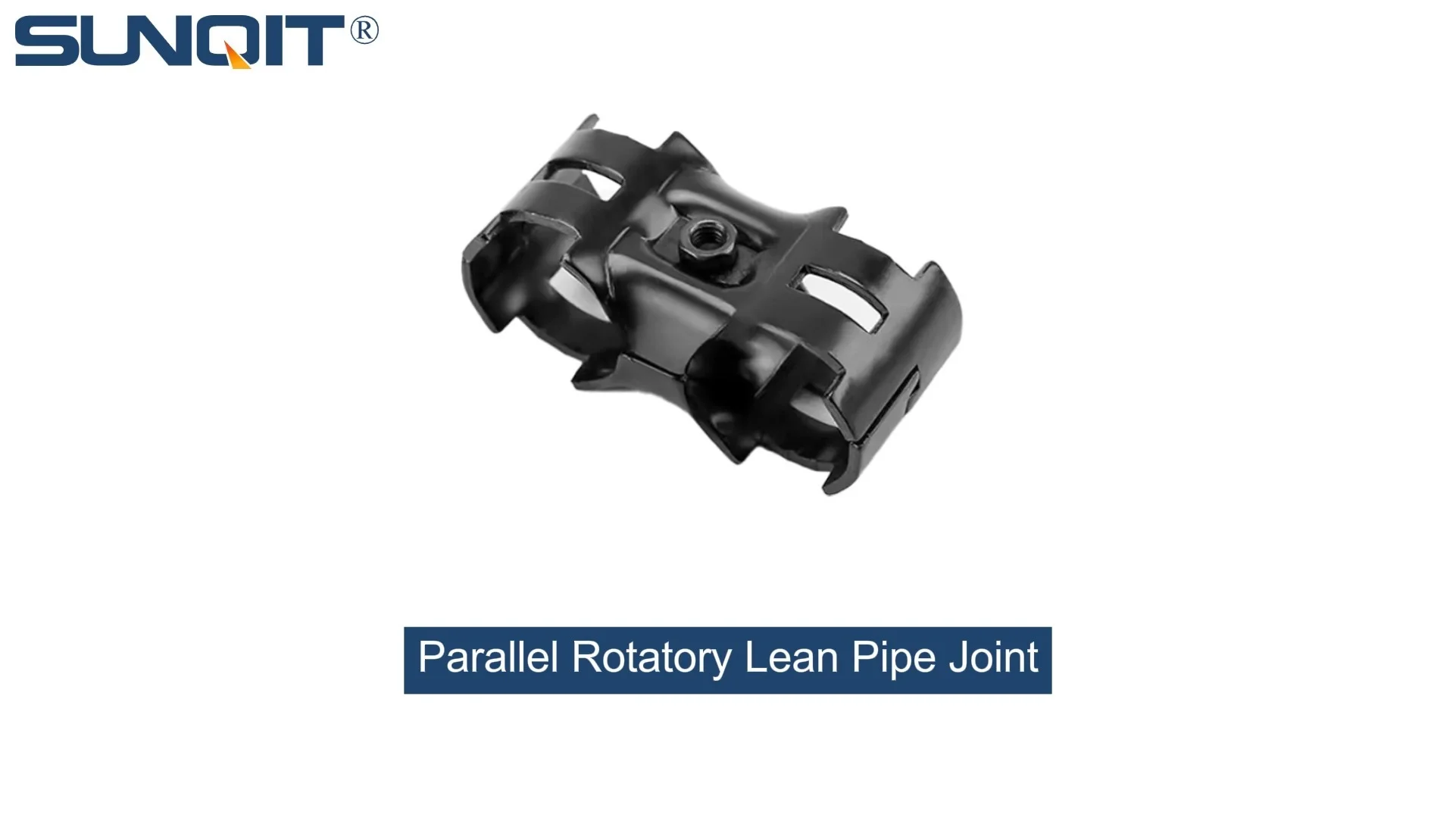
Parallel Rotatory Lean Pipe Joint
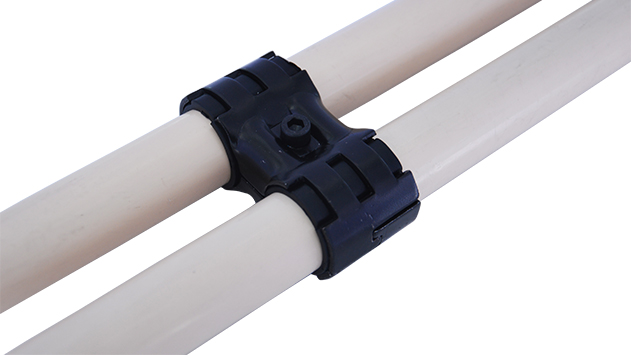
Parallel rotatory lean pipe joint, for 2 pcs pipe conenction in parallel direction with rotatory function.
Aerospace manufacturing is a world where precision isn't just a goal—it's the foundation of safety, reliability, and innovation. Every rivet in a jet engine, every wire in a navigation system, and every panel on a spacecraft must align with microscopic accuracy. But here's the quiet truth behind those flawless final products: the factories that build them are in a constant battle to stay agile. New aircraft models roll out faster than ever, components shrink in size while growing in complexity, and teams juggle tight deadlines without sacrificing an ounce of quality. In this high-stakes environment, the tools and systems that keep production lines moving matter just as much as the engineers and technicians who operate them.
Enter lean manufacturing—a philosophy built on eliminating waste, streamlining workflows, and empowering teams to adapt. At the heart of many lean systems lies a surprisingly unassuming hero: the lean pipe. These modular tubes, often made of aluminum or steel, and their accompanying joints form the backbone of everything from workbenches to material racks. But among the many types of lean pipe joints, one stands out for its ability to solve aerospace's unique challenges: the parallel rotatory lean pipe joint. This small, flexible component isn't just a connector; it's a bridge between rigidity (critical for precision) and adaptability (essential for evolving needs). Today, we're exploring how parallel rotatory lean pipe joints are transforming aerospace manufacturing floors, making them smarter, more human-centered, and ready to build the next generation of flight.
Understanding Parallel Rotatory Lean Pipe Joints: More Than Just a "Connector"
Before diving into their applications, let's take a moment to appreciate what makes parallel rotatory lean pipe joints special. Traditional lean pipe systems rely on fixed joints—welded or bolted connections that lock pipes into place. They're sturdy, but once set, they're hard to change. If a production line needs to reconfigure for a new component, technicians might spend hours disassembling and rebuilding with new parts. That's downtime no aerospace plant can afford.
Parallel rotatory lean pipe joints flip that script. Designed with a rotating mechanism, they allow connected lean pipes to pivot along a parallel axis—think of a door hinge, but for industrial tubes. This rotation isn't just for show; it's controlled, smooth, and lockable, meaning workers can adjust angles or positions in seconds, then secure the joint tightly to maintain stability. Most are made from durable materials like aluminum or stainless steel, chosen for their lightweight strength (critical in aerospace, where even workbench weight impacts floor load limits) and resistance to corrosion (important in cleanrooms or facilities with strict hygiene standards).
Quick Example: Imagine a workbench where technicians assemble avionics circuit boards. One day, they're working on a small, delicate sensor; the next, a larger control module. With a fixed joint workbench, the height and angle of the tool tray are set in stone. A technician might strain their neck leaning down, or stretch to reach tools—minor annoyances that add up to fatigue and, over time, mistakes. With a parallel rotatory joint, they loosen a lever, swivel the tray to eye level, lock it, and get back to work. No tools, no delays, just a workspace that adapts to them .
But their magic goes beyond adjustability. These joints play well with others—compatible with standard lean pipe, aluminum lean pipe (a lighter, more corrosion-resistant cousin), roller tracks, and even ESD (electrostatic discharge) components. This versatility makes them a cornerstone of modular systems, where one base setup can be reimagined for dozens of tasks. In aerospace, where production runs can be short (think military aircraft or specialized satellites), this modularity isn't just convenient—it's cost-saving. Why buy a new workbench for each project when you can reconfigure an existing one in an hour?
Applications in Aerospace Manufacturing: Where Flexibility Meets Precision
1. Assembly Workstations: Ergonomics First, Always
Aerospace assembly lines are a study in variety. One station might build turbine blades (heavy, heat-resistant, requiring robust support), while the next assembles delicate radar systems (light, sensitive to static, needing ESD protection). Parallel rotatory lean pipe joints shine here by turning generic workbenches into custom-tailored workspaces.
Take, for example, a lean pipe workbench used for aircraft interior panels. These panels vary in size—from small overhead bins to large cabin dividers—and each requires different tooling. With parallel rotatory joints, the workbench's side rails can rotate to clamp panels of varying thicknesses, eliminating the need for multiple fixed jigs. Technicians like Priya, who's worked on interior assembly for 12 years, notes the difference: "Before, if we switched from a bin panel to a divider, we'd have to swap out the entire clamping system—it took 20 minutes, minimum. Now, I just twist the joint, adjust the rail, and lock it. That time adds up over a shift; we're finishing 3-4 more panels a day, and my back doesn't ache from leaning over a fixed setup."
ESD workstations, critical for electronics assembly, also benefit. Many aerospace components—like flight control computers—are sensitive to static electricity, which can fry microchips. ESD workbenches use conductive materials to ground static, but their fixed designs often limit adjustability. Parallel rotatory joints solve this by integrating with ESD-compliant lean pipe and conductive accessories. A technician assembling a satellite's communication module can rotate the ESD-safe tool shelf to avoid reaching across the workspace (a common cause of static buildup from friction) or angle the work surface to reduce glare on tiny circuit components—all while maintaining the workstation's grounding integrity.
2. Material Flow: Smoothing the Path with Roller Tracks
In aerospace, moving materials efficiently is half the battle. Components can be bulky (like wing spars), fragile (like composite panels), or both, and they need to flow from storage to assembly to testing without delays or damage. Roller tracks—lines of rotating rollers that let materials glide smoothly—are a staple here, but their fixed angles often create bottlenecks. A roller track set at a 5-degree incline might work for lightweight parts but cause heavy ones to slide too fast, risking impact damage.
Parallel rotatory lean pipe joints transform roller tracks from one-trick ponies into adaptable systems. By mounting roller tracks on frames connected with these joints, teams can adjust the track's angle in real time. For example, when moving a lightweight carbon fiber panel, the track might stay at a gentle 3-degree incline. When switching to a heavier titanium bracket, a technician can rotate the joint to flatten the track to 1 degree, slowing the bracket's descent. No more rushing to catch sliding parts or manually lifting heavy items—just a steady, controlled flow.
A Real-World Win: A major aerospace supplier in Seattle recently retrofitted their wing component line with roller tracks and parallel rotatory joints. Previously, workers had to manually push wing ribs (large, curved aluminum structures) along a fixed track—a strenuous task that sometimes led to misalignment when ribs got stuck. After the upgrade, they adjusted the track's angle to match each rib's weight and curvature. "We used to have two people per track to keep things moving," says floor supervisor Mike. "Now, one person can oversee three tracks. And because the ribs glide smoothly, we've cut down on scratches and dents—quality checks are passing 98% of parts now, up from 92%."
3. Custom Trolleys and Turnover Racks: Mobility with a Twist
Aerospace manufacturing isn't confined to fixed assembly lines. Technicians often need to transport tools, parts, or even entire subassemblies between stations. That's where turnover trolleys and racks come in—but traditional trolleys are rigid. A trolley built to carry engine parts might be too tall to fit under a low assembly platform, or too wide to navigate tight corners in a facility with limited space.
Parallel rotatory lean pipe joints let teams build "shape-shifting" trolleys. By attaching caster wheels (for mobility) and using rotatory joints on the trolley's frame, technicians can fold down side rails, adjust shelf heights, or even pivot the entire load bed to fit through narrow doorways. For example, a trolley used to transport avionics test equipment might have a top shelf that rotates upward to clear a low ceiling, then locks back into place once it's through. "We used to have a separate trolley for every test station—12 trolleys taking up space," recalls a maintenance lead at a Midwest aerospace plant. "Now, we have 3 adjustable ones with these joints. They save floor space, and we're not wasting money on specialized equipment that only gets used once a month."
4. Prototyping and Low-Volume Production: Speed to Innovation
Aerospace isn't just about mass-produced commercial jets; it's also about prototypes, one-off military vehicles, and specialized spacecraft. These projects often have unique requirements—think a prototype drone with an irregularly shaped fuselage or a satellite component that needs a custom testing rig. Traditional manufacturing setups, built for repeatability, struggle here; they're too slow to reconfigure for small batches or one-time builds.
Parallel rotatory lean pipe joints thrive in this environment. Teams can quickly cobble together custom workbenches, material racks, or test fixtures using lean pipe, aluminum lean pipe, and rotatory joints—no welding, no machining, just modular components that snap together. For example, engineers at a California-based space tech startup recently needed a rig to test a new solar panel deployment mechanism. Using parallel rotatory joints, they built a frame that could rotate the panel to mimic different angles of sunlight, adjusting on the fly as they tweaked the deployment software. "We went from design to testing in 2 days," says the lead engineer. "With traditional tools, that would've taken a week—we'd have missed our deadline for the prototype review."
Why Aerospace Can't Afford to Ignore These Joints: Key Advantages Over Traditional Systems
| Feature | Traditional Fixed Joints | Parallel Rotatory Lean Pipe Joints |
|---|---|---|
| Adjustability | Limited; requires disassembly and new parts | Tool-free rotation and locking; adjusts in seconds |
| Ergonomics | Static setups force workers to adapt to the system | Workers adapt the system to their needs (height, angle, reach) |
| Downtime for Reconfiguration | High (hours to days for major changes) | Low (minutes to hours for full reconfigurations) |
| Cost Over Time | Higher (needs replacement parts for each new setup) | Lower (modular reuse reduces need for new equipment) |
| Worker Satisfaction | Often low (frustration with rigid, unadaptable setups) | Higher (empowers workers to customize their workspace) |
Beyond the table, there's a human advantage that's hard to quantify but impossible to ignore: these joints make work easier . In aerospace, where technicians and engineers already carry the mental load of ensuring zero defects, reducing physical strain and frustration has a ripple effect. Happier, less fatigued teams are more focused, more creative, and less likely to make errors. As one production manager put it: "We track a lot of metrics—parts per hour, defect rates, on-time delivery. But the biggest win with parallel rotatory joints? I don't get as many requests for ergonomic assessments anymore. Workers aren't asking for new chairs or anti-fatigue mats; they're adjusting their own workstations to fit. That's empowerment."

Case Study: How XYZ Aerospace Cut Costs and Boosted Morale with Parallel Rotatory Joints
To put these benefits into perspective, let's look at a real example (details anonymized for confidentiality). XYZ Aerospace, a mid-sized manufacturer specializing in military helicopter components, was struggling with two key issues: high turnover on their assembly line (due to ergonomic complaints) and slow reconfiguration times when switching between helicopter models.
Their old setup relied on fixed steel workbenches and welded roller tracks. When switching from a light utility helicopter's rotor assembly to a heavy attack helicopter's gearbox components, the team spent 4-6 hours reconfiguring workbenches and material racks. Workers reported neck and back pain from leaning over fixed-height surfaces, and turnover among assembly technicians hit 25%—well above the industry average of 15%.
In 2023, XYZ invested in a lean system upgrade, centered on parallel rotatory lean pipe joints, aluminum lean pipe (to reduce weight), and adjustable roller tracks. The results were striking:
- Reconfiguration time dropped by 80%: Switching between rotor and gearbox assembly now takes 45 minutes, not 6 hours. "We used to schedule reconfigurations for weekends to avoid disrupting production," says the plant manager. "Now, we can switch between models mid-shift if needed."
- Turnover fell to 12%: Exit interviews cited "better workstation flexibility" as a key reason workers stayed. One technician noted, "I can adjust my workbench to stand or sit—whatever's easier on my knees that day. It sounds small, but it makes coming to work less of a chore."
- Defect rates dropped by 18%: With fewer ergonomic strain injuries and more focused workers, errors in component alignment decreased. "We're catching issues earlier, and the final inspection pass rate is up," says the quality control lead.
The ROI? XYZ estimates the upgrade paid for itself in 11 months, thanks to reduced downtime, lower turnover costs, and fewer defective parts. "We didn't just buy joints and pipes," the plant manager adds. "We bought a system that lets our team work smarter, not harder. In aerospace, that's priceless."

Looking Ahead: The Future of Parallel Rotatory Lean Pipe Joints in Aerospace
As aerospace manufacturing evolves—with trends like additive manufacturing (3D printing), Industry 4.0, and sustainable production—parallel rotatory lean pipe joints are poised to evolve with it. Here's what to watch for:
Smarter Integration with Industry 4.0: Future joints might include sensors that track usage—how often they're adjusted, torque levels, or wear and tear. This data could feed into predictive maintenance systems, alerting teams when a joint needs lubrication or replacement before it fails. Imagine a roller track joint sending a notification: "Adjusted 500 times this month—check rotation smoothness."
Eco-Friendly Materials: With sustainability becoming a priority, manufacturers are exploring recycled aluminum and bio-based plastics for joint components. Some suppliers are already testing joints made from 70% recycled aluminum, with no loss in strength—a win for both the planet and aerospace's green initiatives.
Enhanced Precision for Micro-Assembly: As aerospace components shrink (think miniaturized drones or micro-satellites), joints will need finer adjustability. New designs with micro-rotation controls (measured in degrees, not inches) could let technicians align tools or parts with sub-millimeter precision, critical for tiny electronics or delicate composites.
Conclusion: Small Joints, Big Impact
In the grand scheme of aerospace manufacturing—where budgets run into billions and projects take years—parallel rotatory lean pipe joints might seem like small potatoes. But as we've seen, their impact is anything but minor. They're a testament to the power of lean thinking: solving big problems with simple, flexible tools that put people first.
For aerospace manufacturers, these joints aren't just about saving time or money (though they do both). They're about building systems that adapt to the humans who use them, not the other way around. In an industry where the difference between success and failure is measured in millimeters and milliseconds, that adaptability is the key to staying ahead.
So the next time you look up at a plane or a rocket, remember: behind that marvel of engineering is a factory floor where small, rotating joints are helping build the future—one adjustable workbench, one smooth roller track, and one empowered technician at a time.