- Company Articles
- Products and Technology
- Product knowledge
- Parallel Rotatory Lean Pipe Joints in Communication Equipment Assembly

Parallel Rotatory Lean Pipe Joints in Communication Equipment Assembly
Related Product
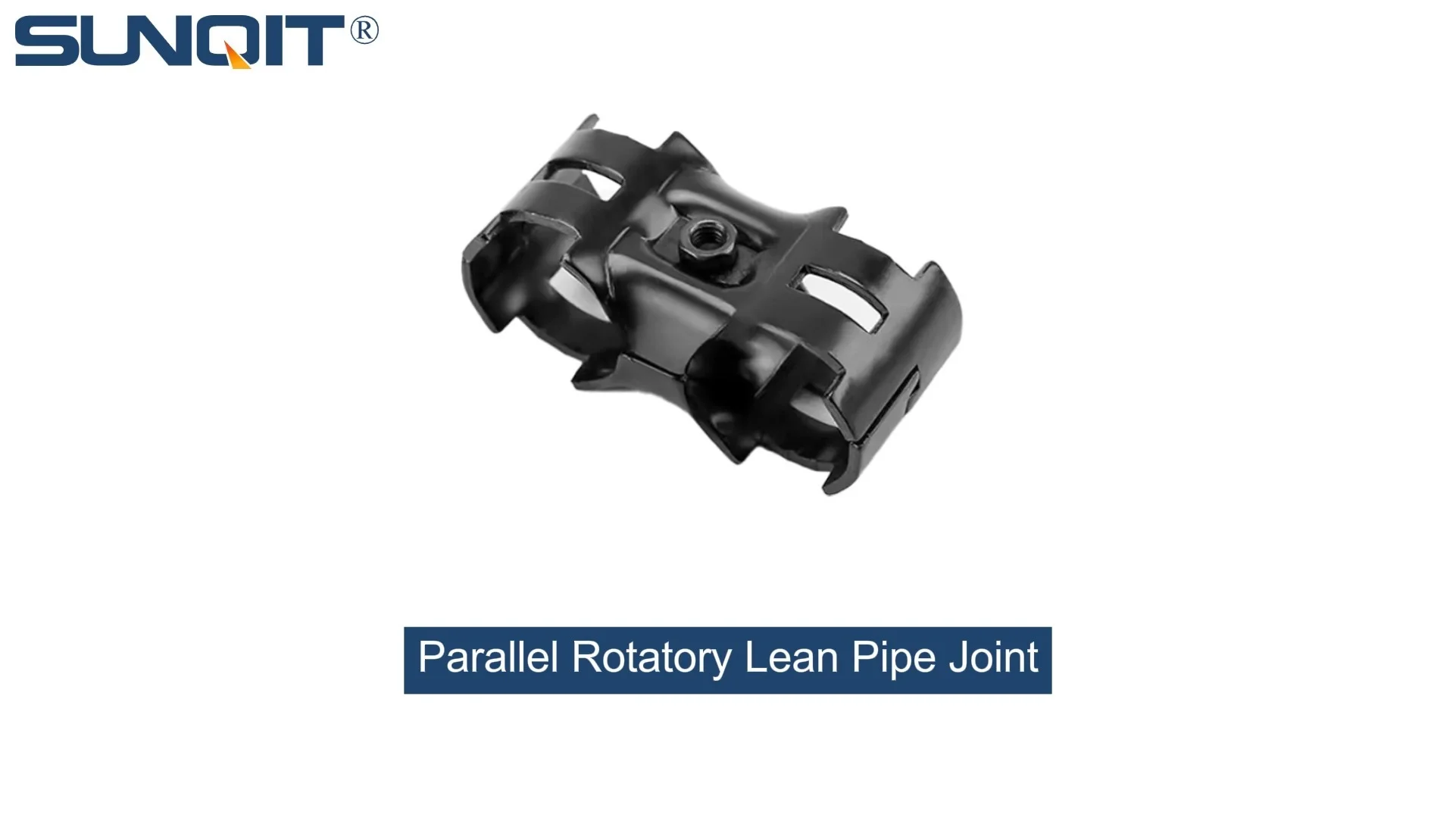
Parallel Rotatory Lean Pipe Joint
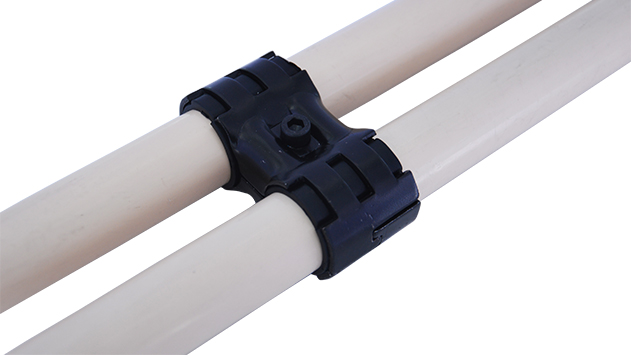
Parallel rotatory lean pipe joint, for 2 pcs pipe conenction in parallel direction with rotatory function.
In the dynamic world of communication equipment manufacturing, where innovation cycles shrink and product complexity grows, the assembly line is the heartbeat of productivity. Every component, every connection, and every second counts. Imagine a production floor where workers spend less time adjusting workstations and more time assembling intricate circuit boards, or where reconfiguring a line for a new router model takes hours instead of days. This isn't just a dream—it's the reality made possible by smart, flexible tools like parallel rotatory lean pipe joints. These unassuming yet powerful components are quietly revolutionizing how communication equipment is built, blending lean principles with adaptability to meet the industry's relentless demands.
The Challenges of Modern Communication Equipment Assembly
Communication equipment—think routers, switches, fiber optic transceivers, and 5G base stations—isn't what it used to be. Today's devices are sleeker, more powerful, and packed with sensitive electronics. They also come in a dizzying array of sizes and configurations, as manufacturers race to cater to enterprise, consumer, and industrial markets. This diversity creates a unique set of challenges for assembly lines:
Frequent Product Changes: A single factory might produce a high-end enterprise switch one month and a compact home router the next. Each product requires different workbench heights, tool placements, and material flow paths. Fixed, rigid assembly setups struggle to keep up, leading to costly downtime during reconfigurations.
Ergonomic Demands: Communication equipment components range from tiny microchips to heavy metal chassis. Workers need workstations that adjust to their height, reach, and posture to prevent fatigue and injury. Static workbenches often force compromises, increasing the risk of repetitive strain injuries.
Precision and Static Control: Many components are sensitive to electrostatic discharge (ESD), meaning workstations must maintain strict ESD protocols. Any change to the setup—like moving a shelf or adjusting a rail—can disrupt ESD grounding, putting expensive components at risk.
Speed and Efficiency: With global competition intensifying, manufacturers can't afford bottlenecks. Material flow must be seamless, with parts arriving exactly when needed. Inflexible roller tracks or fixed material racks often create logjams, slowing down the entire line.
These challenges aren't just operational—they're financial. Downtime, rework, and worker inefficiency eat into profit margins, while slow time-to-market can mean missing critical industry trends. Enter lean manufacturing systems, and at their core, the unsung hero: the parallel rotatory lean pipe joint.
Lean Systems: The Foundation of Flexible Assembly
Lean manufacturing isn't new, but its principles—eliminating waste, optimizing flow, and continuous improvement—are more relevant than ever in communication equipment assembly. At the heart of any lean system is the ability to adapt quickly, and that's where lean pipe systems shine. Made from lightweight yet durable materials like aluminum or steel, lean pipes (or "lean tubes") are combined with joints, brackets, and accessories to build everything from workbenches and material racks to flow racks and turnover trolleys.
Traditional lean pipe joints are fixed, limiting their flexibility. A 90-degree fixed joint, for example, locks two pipes at a right angle, making it hard to adjust if a workstation needs to tilt slightly or reposition. This is where parallel rotatory lean pipe joints change the game. Unlike fixed joints, these specialized connectors allow pipes to rotate along a parallel axis, enabling smooth, tool-free adjustments. It's a small design tweak with massive implications for assembly line agility.
Spotlight on Parallel Rotatory Lean Pipe Joints: Design and Functionality
At first glance, a parallel rotatory lean pipe joint might look similar to its fixed counterparts. It's a compact, often aluminum-cast component with holes or slots to connect lean pipes. But inside, a clever mechanism—usually a bearing or friction-based pivot—allows one pipe to rotate relative to another while keeping them parallel. This rotation isn't just a party trick; it's engineered for precision. Most parallel rotatory joints offer a rotation range of 0 to 180 degrees, with detents or locking mechanisms to hold the position once set. Some even feature internal springs or dampers to ensure smooth, controlled movement, preventing sudden shifts that could jostle sensitive components.
Materials matter here, especially in communication equipment assembly. Many parallel rotatory joints are made from aluminum or aluminum alloys, chosen for their lightweight, corrosion resistance, and compatibility with aluminum lean pipes. Aluminum's natural conductivity also makes it easier to integrate with ESD workstations, ensuring static charges are safely grounded. For harsher environments—like factories with high humidity or exposure to chemicals—stainless steel versions are available, though they add a bit more weight.

Why Parallel Rotatory Joints Are a Game-Changer for Communication Assembly
To understand the impact of parallel rotatory lean pipe joints, let's dive into their real-world benefits. These aren't just theoretical advantages—they translate to faster production, happier workers, and healthier bottom lines.
1. Unmatched Flexibility for Rapid Reconfigurations
Remember the earlier challenge of frequent product changes? Parallel rotatory joints turn reconfiguration from a headache into a breeze. Suppose a manufacturer switches from assembling a small 5G modem (requiring a low workbench) to a large outdoor base station (needing a higher, sturdier surface). With fixed joints, workers would need to disassemble the entire lean pipe workbench, swap out brackets, and reassemble—a process that could take half a day. With parallel rotatory joints, they simply loosen the locking mechanism, rotate the pipes to the new height, and lock them in place. Done. What once took hours now takes minutes, slashing downtime and keeping production on track.
This flexibility isn't limited to height adjustments. Need to tilt a workbench surface 15 degrees to make it easier to access the back of a device? Rotate the joint. Want to swing a tool holder out of the way when not in use? Rotate the joint. The result is an assembly line that bends to the product, not the other way around.
2. Ergonomics That Protect Workers and Boost Morale
A tired, uncomfortable worker is a slow, error-prone worker. Communication equipment assembly often involves repetitive tasks—inserting connectors, tightening screws, routing cables—that can take a toll on the body. Parallel rotatory joints let workers customize their lean pipe workbenches to their unique needs. A taller worker can raise their work surface; a shorter one can lower it. Someone assembling the front panel of a device can tilt the workstation forward for better visibility, while a colleague working on the back can tilt it backward. This level of personalization reduces strain on the neck, shoulders, and back, leading to fewer absences and higher job satisfaction.
In one case study, a mid-sized communication equipment manufacturer in Taiwan replaced fixed joints with parallel rotatory models on 20 assembly workstations. After six months, worker-reported fatigue dropped by 32%, and the number of quality defects (often caused by tired hands) fell by 18%. "It's like having a workstation that adjusts to me , not the other way around," one assembly line worker noted in feedback. "I used to go home with a sore back; now I barely notice the end of the shift."
3. Seamless Integration with Lean Systems and Components
Parallel rotatory lean pipe joints don't work in isolation—they're part of a larger ecosystem of lean components. This compatibility is key in communication equipment assembly, where lines often combine lean pipe workbenches, roller tracks, ESD stations, and aluminum profiles into a cohesive workflow.
Aluminum Profiles: Aluminum extrusion profiles are the backbone of many modern workstations, prized for their strength-to-weight ratio and modularity. Parallel rotatory joints pair seamlessly with aluminum profiles, using T-slot connections to attach pipes, brackets, and accessories. This means a single workbench can combine an aluminum profile frame for stability with lean pipes and rotatory joints for adjustable shelves or tool holders.
Roller Tracks: Material flow is critical in communication assembly, where components need to move smoothly from one station to the next. Roller tracks—whether plastic, aluminum, or steel—rely on sturdy connections to stay aligned. Parallel rotatory joints can be used to angle roller tracks slightly downward, using gravity to assist material flow, or to adjust the track height to match the next workstation. For example, a roller track feeding components to an ESD workstation might need to be raised 6 inches to align with the workbench surface; a quick twist of a parallel rotatory joint makes this adjustment possible without disassembly.
ESD Workstations: Static electricity is the enemy of sensitive electronics like microchips and circuit boards. ESD workstations are designed to dissipate static charges, often using conductive materials and grounding straps. Parallel rotatory joints, when made from aluminum or conductive alloys, maintain this grounding path even as they rotate. Unlike plastic joints, which can disrupt ESD continuity, aluminum rotatory joints ensure that every part of the workstation—from the tabletop to the tool rack—remains grounded, protecting components from costly static damage.

A Closer Look: How Parallel Rotatory Joints Work with Key Assembly Components
To truly appreciate their versatility, let's explore how parallel rotatory lean pipe joints integrate with three critical components in communication equipment assembly: lean pipe workbenches, roller tracks, and ESD workstations.
1. Lean Pipe Workbenches: The Adjustable Foundation
The lean pipe workbench is the centerpiece of any assembly station, and parallel rotatory joints transform it from a static table into a dynamic workspace. Imagine a workbench used to assemble fiber optic transceivers. In the morning, workers might need a flat surface to solder delicate connections. By afternoon, they switch to testing, requiring the surface to tilt 30 degrees for better access to the transceiver's ports. With a parallel rotatory joint connecting the workbench top to the frame, this adjustment takes seconds: unlock the joint, tilt the surface, relock it, and get back to work.
But it's not just the surface. Shelves, tool hooks, and monitor arms attached to the workbench can also benefit from rotatory joints. A monitor displaying assembly instructions, for example, can be swiveled out of the way when not needed, then rotated back into view—no tools required. This adaptability reduces clutter, keeping the workspace focused on the task at hand.
2. Roller Tracks: Smoothing Material Flow
Roller tracks are the arteries of the assembly line, carrying circuit boards, chassis, and subassemblies between stations. Misaligned or poorly angled tracks can cause jams, delays, or even component damage. Parallel rotatory joints solve this by allowing precise adjustment of track angles and heights. For instance, a roller track feeding a final assembly station might need to be angled at 5 degrees to ensure components glide smoothly without sliding too fast. A parallel rotatory joint at the track's support bracket lets workers tweak this angle until the flow is just right.
Some roller track systems also use parallel rotatory joints at the connection points between track sections. This flexibility is invaluable when routing tracks around obstacles—like a support column or a tool cabinet—allowing the track to bend slightly without kinking. In one case, a manufacturer of 5G base stations used parallel rotatory joints to route roller tracks around a central conveyor, reducing the line length by 15% and cutting material travel time by nearly 20%.
3. ESD Workstations: Protecting Sensitive Electronics
ESD workstations are non-negotiable in communication equipment assembly, and parallel rotatory joints play a quiet but critical role in maintaining their integrity. By using conductive aluminum joints, the workstation's grounding path remains unbroken even as components rotate. For example, an ESD-safe tool rack attached to the workbench with a parallel rotatory joint can be swung out of the way during assembly, then rotated back—all while ensuring the tools stay grounded. This continuity is essential; a single break in the ESD path could allow static to build up, potentially frying a $500 circuit board.
Technical Specifications: What to Look for in a Parallel Rotatory Joint
Not all parallel rotatory lean pipe joints are created equal. When selecting joints for communication equipment assembly, several key specifications matter:
Rotation Range: Most joints offer 0–180 degrees of rotation, but some specialized models go up to 360 degrees. For workbench adjustments, 180 degrees is usually sufficient, but for tool arms or overhead racks, a wider range might be useful.
Load Capacity: Communication equipment components can be heavy—think 20-pound chassis or 50-pound batches of circuit boards. Ensure the joint can handle the weight of the attached components. Most aluminum rotatory joints support 50–100 pounds per joint, while steel versions can handle 150+ pounds.
Locking Mechanism: Look for joints with secure locking—cam levers, thumb screws, or quick-release pins are ideal for tool-free adjustments. Avoid joints that require wrenches or screwdrivers; these slow down reconfigurations.
Material Compatibility: If you're using aluminum lean pipes or aluminum profiles, choose aluminum joints to avoid galvanic corrosion. For ESD workstations, confirm the joint is conductive and rated for ESD applications.
To help compare options, here's a quick overview of how parallel rotatory joints stack up against fixed joints in key areas:
| Feature | Parallel Rotatory Lean Pipe Joint | Fixed Lean Pipe Joint |
|---|---|---|
| Rotation Range | 0–180 degrees (adjustable) | Fixed (e.g., 90°, 45°) |
| Reconfiguration Time | Seconds to minutes (tool-free) | Hours (requires disassembly) |
| Load Capacity (Aluminum) | 50–100 lbs per joint | 50–150 lbs per joint (higher for steel) |
| ESD Compatibility | Yes (with conductive aluminum) | Yes (but no rotation) |
| Best For | Adjustable workbenches, dynamic lines, ergonomic setups | Static lines, fixed material racks, heavy-load applications |
Choosing the Right Lean Pipe Supplier for Parallel Rotatory Joints
Not all parallel rotatory lean pipe joints are created equal, and neither are the suppliers who provide them. When selecting a lean pipe supplier for communication equipment assembly, keep these factors in mind:
Quality Materials: The joint's durability depends on the material and manufacturing process. Look for suppliers who use high-grade aluminum alloys (like 6061-T6) or stainless steel, and who test their joints for load capacity and rotation smoothness.
Customization Options: Communication assembly lines are rarely "one size fits all." A good supplier should offer custom joint configurations—different rotation ranges, locking mechanisms, or finishes—to meet your specific needs. For example, if you need a joint that locks at 30-degree increments for precise workbench tilting, a supplier willing to customize can deliver that.
Technical Support: Even the best joints are useless if you can't install or maintain them properly. Look for suppliers who provide detailed installation guides, video tutorials, and responsive customer support. Some even offer on-site training for your team, ensuring everyone knows how to get the most out of the joints.
Compatibility with Existing Systems: If you're upgrading an existing lean pipe setup, ensure the supplier's joints work with your current pipes, profiles, and accessories. Most reputable suppliers provide compatibility charts or sample joints for testing.
Future Trends: Where Parallel Rotatory Joints Are Headed
As communication equipment assembly moves toward Industry 4.0 and smart manufacturing, parallel rotatory lean pipe joints are evolving too. Here are a few trends to watch:
Smart Locking Mechanisms: Imagine joints with built-in sensors that detect when a workstation is being reconfigured and automatically lock into preprogrammed positions. Some manufacturers are experimenting with IoT-enabled joints that sync with production management software, logging reconfiguration times and usage patterns to optimize workflows.
Lightweight Composites: While aluminum remains dominant, new composite materials—like carbon fiber-reinforced polymers—are being tested for joints. These materials offer the strength of steel with the weight of aluminum, making them ideal for mobile workstations or overhead racks.
Integrated Cable Management: Communication assembly lines are wired with power cords, data cables, and ESD grounding wires. Future rotatory joints may include built-in cable channels or clips, keeping wires organized even as the joint rotates, reducing tangles and tripping hazards.
Conclusion: The Small Joint with a Big Impact
Parallel rotatory lean pipe joints may not be the most glamorous components in communication equipment assembly, but they're undeniably essential. They embody the lean philosophy of "doing more with less"—less downtime, less effort, less waste—while putting flexibility and worker well-being at the forefront. In an industry where speed, precision, and adaptability are non-negotiable, these joints are more than tools; they're enablers of innovation.
Whether you're assembling the next generation of 5G routers or fine-tuning a line for fiber optic equipment, parallel rotatory lean pipe joints offer a simple, cost-effective way to build assembly lines that grow with your needs. They remind us that sometimes, the biggest improvements come from reimagining the smallest connections. So the next time you walk through a communication equipment factory, take a closer look at those unassuming joints holding the line together—they might just be the reason that factory is outpacing the competition.
In the end, it's not just about building better equipment. It's about building better workplaces—where workers have the tools to succeed, where change is embraced, and where every second is spent creating, not adjusting. Parallel rotatory lean pipe joints are helping make that vision a reality, one rotation at a time.