- Company Articles
- Products and Technology
- Product knowledge
- Parallel Rotatory Lean Pipe Joints in Consumer Electronics Production

Parallel Rotatory Lean Pipe Joints in Consumer Electronics Production
Related Product
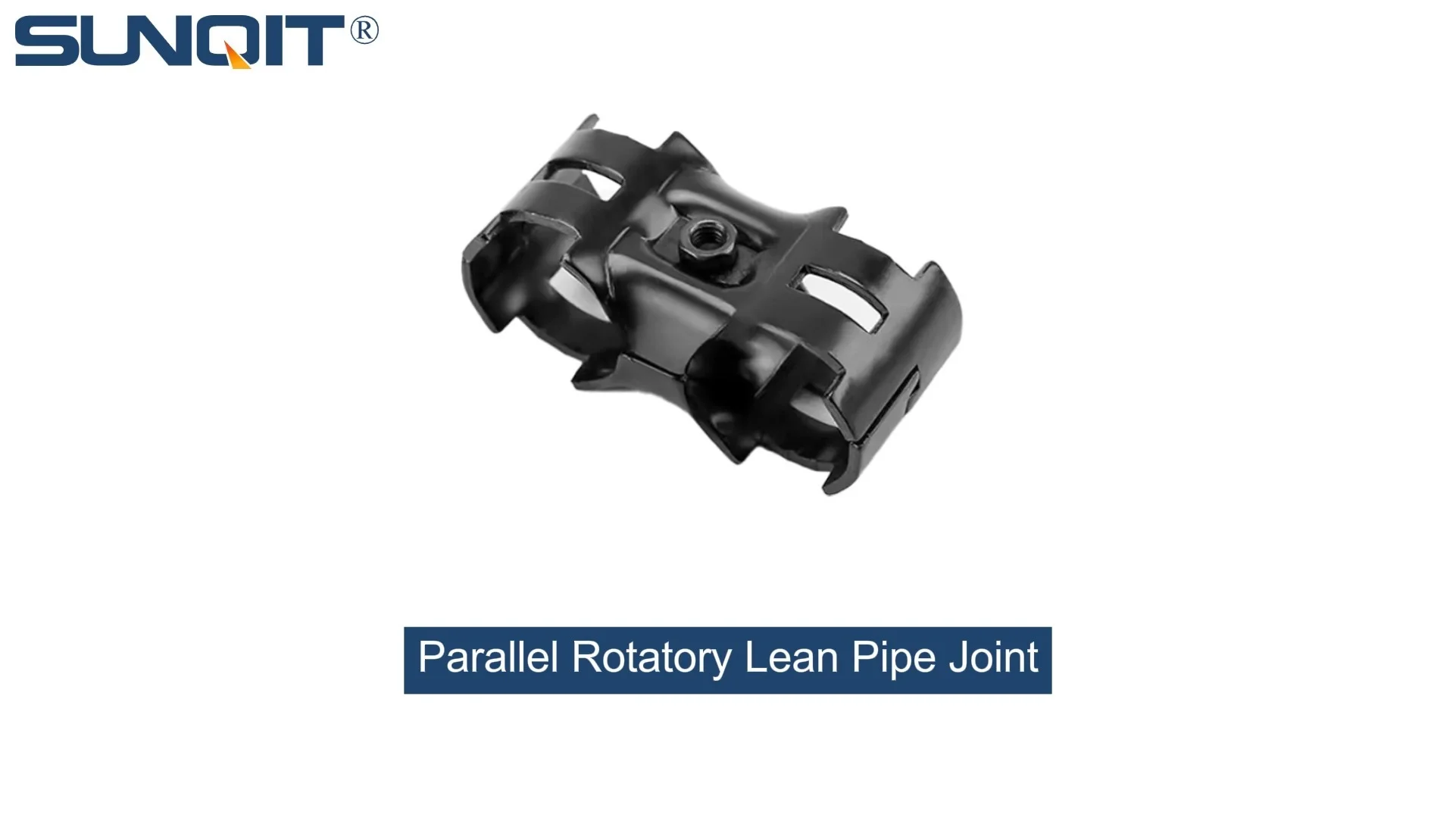
Parallel Rotatory Lean Pipe Joint
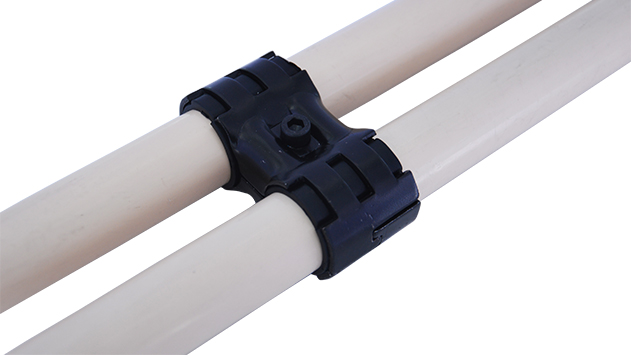
Parallel rotatory lean pipe joint, for 2 pcs pipe conenction in parallel direction with rotatory function.
Walk into any consumer electronics factory, and you'll feel it immediately—the hum of machinery, the rapid click of assemblers fitting tiny components, the urgency of meeting deadlines for the next smartphone launch or smartwatch update. In this world, where a single production line might switch from assembling tablets to wireless earbuds in a matter of weeks, rigidity is the enemy. Workers don't just need tools; they need systems that bend, adapt, and grow with their needs. That's where parallel rotatory lean pipe joints step in—quiet, unassuming, but utterly transformative. These small, versatile components are the backbone of the flexible workbenches, flow racks, and conveyors that keep modern electronics production lines running smoothly. Let's dive into how they're reshaping the way we build the devices we rely on.
What Are Parallel Rotatory Lean Pipe Joints, Anyway?
At first glance, a parallel rotatory lean pipe joint might look like just another metal connector. But pick one up, give it a twist, and you'll notice the difference: it rotates. Not just a little nudge, but a full, smooth 360-degree swivel, allowing the pipes it connects to pivot, tilt, and lock into place with precision. Designed to work seamlessly with aluminum profiles and lean pipes—those lightweight, durable tubes that form the skeleton of modular production systems—these joints are engineered for adaptability.
Unlike fixed joints, which lock pipes into rigid angles, parallel rotatory joints let workers adjust configurations on the fly. Need to lower a workbench surface by 10cm to fit a new testing device? Twist the joint. Want to reangle a flow rack to feed components to a different assembly station? Rotate, lock, done. They're typically made from high-grade aluminum alloy or stainless steel, resistant to the wear and tear of daily factory life—scratches, spills, and the constant handling that comes with reconfiguration.
But their real magic lies in their simplicity. No specialized tools, no complicated manuals. An assembler with a basic wrench (or sometimes just their hands) can loosen a bolt, rotate the joint to the desired angle, and tighten it back up—all in under a minute. For someone like Raj, a shift supervisor at a Bangalore-based electronics plant, that means less time waiting for maintenance crews and more time keeping his team focused on building quality products.
The Old Way: Why Rigid Joints Held Factories Back
To appreciate parallel rotatory lean pipe joints, it helps to remember the "before" picture. Not long ago, production lines relied heavily on fixed joints—welded steel brackets, bolted connectors, or plastic clips that locked pipes into static positions. These systems were sturdy, sure, but they came with a steep cost: inflexibility. Let's say a factory needed to retool a lean pipe workbench to accommodate a new laptop model with a thicker chassis. With fixed joints, that meant disassembling the entire bench, replacing brackets, and reassembling—often taking a full day of downtime. For a line producing 500 units per hour, that's 4,000 units lost. Worse, if the next model required another adjustment? The process repeated, eating into profits and frustrating workers.
Then there was the issue of ergonomics. Fixed workbenches forced assemblers to hunch or stretch, leading to fatigue and even repetitive strain injuries. "I used to have to stand on a stool to reach the top shelf of our flow rack," says Mei, an assembler with five years of experience at a Shenzhen factory. "The joints wouldn't budge, so the rack was stuck at shoulder height. After a week, my lower back was killing me." Traditional joints also limited creativity—engineers couldn't experiment with new layouts or test more efficient workflows without investing in entirely new hardware.
Three Game-Changing Benefits of Parallel Rotatory Joints
1. Flexibility That Keeps Pace With Innovation
Consumer electronics don't stand still, and neither should production lines. A smartphone manufacturer might release three new models in a year, each with slightly different component sizes or assembly steps. Parallel rotatory joints turn reconfiguration from a headache into a quick task. For example, when a factory in Vietnam switched from producing 6.7-inch phone screens to 7.2-inch ones, workers used these joints to adjust their flow racks in under two hours—simply rotating the pipes to widen the slots for larger components. With fixed joints, the same job would have taken a team of two mechanics a full day. "It's like going from a flip phone to a smartphone," jokes Minh, the plant's operations manager. "Once you use them, you can't imagine going back."
2. Durability That Stands Up to the Grind
Don't let their smooth rotation fool you—these joints are tough. Most are made from aluminum alloy or stainless steel, materials chosen for their resistance to corrosion and impact. Take the stainless steel swivel roller balls often paired with these joints: they glide under the weight of circuit boards and batteries, day in and day out, without wearing down. At a factory in Mexico producing smart home sensors, a set of parallel rotatory joints on a conveyor system has been in constant use for over three years, surviving daily cleaning with industrial solvents and the occasional bump from a turnover trolley. "We expected to replace them after a year," says Carlos, the maintenance lead. "They're still going strong."
3. Ergonomics That Put Workers First
Happy workers are productive workers, and parallel rotatory joints make a tangible difference in daily comfort. Adjusting a lean pipe workbench to match an assembler's height is as easy as rotating the joints—no tools, no hassle. At a Taiwanese factory, after switching to these joints, reports of shoulder and back pain dropped by 40% within six months. "I can lower my workbench when I'm sitting and raise it when I'm standing," says Lin, an assembler. "It sounds small, but it means I don't go home sore anymore." Even better, the joints' smooth rotation reduces the force needed to adjust setups, lowering the risk of strains or accidents.

Where You'll Find Them: Real-World Applications in Factories
Parallel rotatory lean pipe joints aren't just a theoretical improvement—they're hard at work in every corner of electronics production. Let's look at three key areas where they shine:
Lean Pipe Workbenches: Customizable Stations for Every Task
The lean pipe workbench is the assembler's command center, and parallel rotatory joints make it infinitely adaptable. Imagine a workbench where the top shelf can tilt 30 degrees to hold a magnifying lamp for inspecting microchips, then rotate back to horizontal to stack toolboxes. Or side rails that swing out to hold component bins when needed, then fold in to save space during cleanup. At a California-based drone manufacturer, workers use these joints to attach adjustable armrests to their workbenches, reducing fatigue during long shifts. "One size never fits all," says the plant's ergonomics specialist, Sarah. "These joints let us build workbenches that fit each person, not the other way around."
Flow Racks: Keeping Materials Moving, No Stagnation Allowed
Flow racks are the arteries of production lines, feeding components from storage to assembly stations. But if the angle is off—too steep, and parts slide too fast; too shallow, and they get stuck—efficiency grinds to a halt. Parallel rotatory joints let workers fine-tune the slope of each rack's roller track with precision. At a South Korean camera factory, a flow rack holding lens modules uses these joints to adjust the angle based on the lens size: steeper for small, lightweight lenses, gentler for larger, heavier ones. The result? Zero jams, and a 15% faster material flow. "We used to have someone standing by the rack all day, unclogging stuck parts," says Jin, the line manager. "Now, we just twist the joint, and it works perfectly."
Conveyors: Smooth Transitions for Fragile Components
Conveyors move delicate components—think circuit boards or OLED screens—across the factory floor. A sudden jolt or misalignment can ruin hundreds of dollars' worth of parts. Parallel rotatory joints help here, too, by allowing conveyor sections to pivot and align smoothly, even when the floor isn't perfectly level. At a Malaysian factory producing smart speakers, a curved conveyor section uses these joints to adjust its angle, ensuring speaker grilles glide from one station to the next without scratching. "Fragile parts need a gentle touch," explains the plant engineer, Arif. "These joints let us create conveyors that feel almost human in how they handle materials."

How Do They Stack Up? A Side-by-Side With Traditional Joints
Still not convinced? Let's put parallel rotatory lean pipe joints head-to-head with two common alternatives: fixed steel joints and basic plastic rotatory joints. The difference is clear.
| Feature | Fixed Steel Joints | Basic Plastic Rotatory Joints | Parallel Rotatory Lean Pipe Joints |
|---|---|---|---|
| Rotation Range | 0° (fixed angles only) | 90°-180° (limited swivel) | 360° (full, smooth rotation) |
| Reconfiguration Time | 4-8 hours (requires disassembly) | 30-60 minutes (tools needed) | 5-10 minutes (hand-tighten or basic wrench) |
| Load Capacity | High (up to 100kg per joint) | Low (up to 20kg per joint) | Medium-High (up to 60kg per joint) |
| Durability | High (but prone to rust if uncoated) | Low (cracks under repeated use) | High (aluminum/stainless steel, corrosion-resistant) |
| Best For | Static, long-term setups | Light-duty, infrequent adjustments | Dynamic, high-change production lines |
Case Study: How One Factory Cut Downtime by 70% With Parallel Rotatory Joints
Let's zoom in on a real example. A mid-sized electronics manufacturer in Indonesia, specializing in Bluetooth speakers, was struggling with frequent reconfiguration delays. Their production line switched between three speaker models monthly, each requiring different workbench heights and flow rack layouts. With fixed steel joints, each switch took 16 hours of downtime—two full shifts. By 2023, they were losing over 200 production hours annually, costing them an estimated $120,000 in missed output.
In early 2024, they partnered with a lean pipe supplier to upgrade their workbenches, flow racks, and conveyors with parallel rotatory lean pipe joints. The results were immediate. The first reconfiguration—switching from a compact speaker to a larger, bass-boosted model—took just 4 hours. By the third month, workers had refined the process to under 2 hours. Over the year, downtime dropped to 60 hours, saving the factory $84,000. "It wasn't just the time saved," says the plant manager, Adi. "It was the morale boost. Workers felt empowered to adjust their stations themselves, instead of waiting for us to send in a team. Productivity went up, and so did job satisfaction."
Looking Ahead: The Future of Parallel Rotatory Joints in Smart Factories
As consumer electronics production moves toward Industry 4.0—think AI-driven workflows, IoT-connected machinery, and even collaborative robots—parallel rotatory lean pipe joints are evolving, too. Suppliers are experimenting with built-in sensors that track joint wear and tear, alerting maintenance teams before a part fails. Imagine a joint that sends a notification to a supervisor's tablet when its rotation starts to stiffen, preventing unexpected breakdowns. Other innovations include "smart locking" mechanisms, where joints can be adjusted via a mobile app, allowing remote reconfiguration of workbenches or flow racks during off-hours.
Sustainability is also a focus. Many manufacturers are shifting to recycled aluminum for joint production, reducing their carbon footprint without sacrificing strength. At a factory in Germany, joints made from 80% recycled aluminum perform just as well as their virgin counterparts, with the added benefit of lowering material costs by 12%. "Green manufacturing isn't a trend—it's a necessity," says the supplier's sustainability director, Lena. "These joints prove you can be both flexible and responsible."
Why They Matter: More Than Parts—Partners in Progress
At the end of the day, parallel rotatory lean pipe joints aren't just pieces of metal. They're tools that empower workers, reduce stress, and turn production lines into adaptable ecosystems. In a world where consumer electronics demand speed, precision, and constant innovation, rigidity is no longer acceptable. These joints don't just keep up—they lead the way, proving that sometimes the smallest components make the biggest difference.
So the next time you unbox a new gadget, take a moment to appreciate the invisible work happening behind the scenes. Chances are, a parallel rotatory lean pipe joint played a role in bringing it to life—quietly, efficiently, and always ready for whatever comes next.