- Company Articles
- Products and Technology
- Product knowledge
- Parallel Rotatory Lean Pipe Joints in Electrical Equipment Manufacturing

Parallel Rotatory Lean Pipe Joints in Electrical Equipment Manufacturing
Related Product
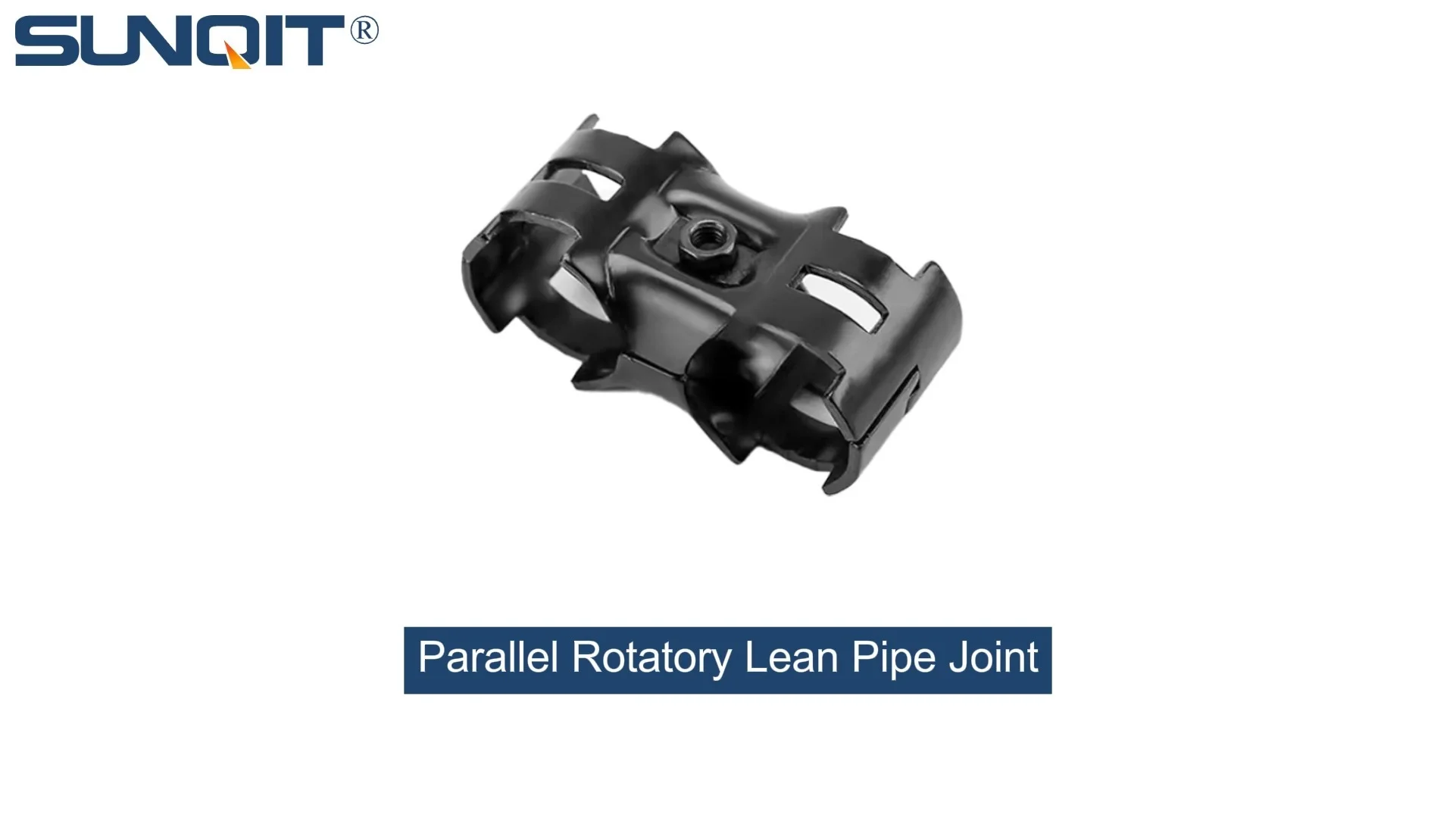
Parallel Rotatory Lean Pipe Joint
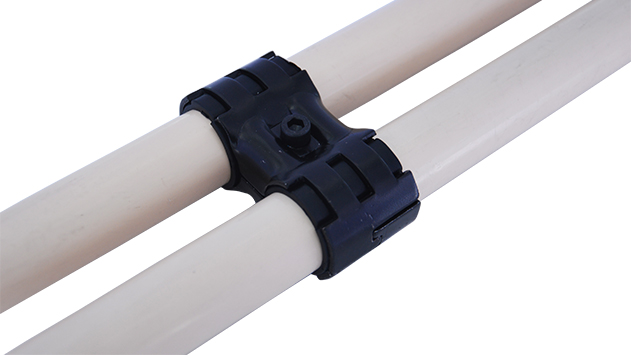
Parallel rotatory lean pipe joint, for 2 pcs pipe conenction in parallel direction with rotatory function.
The Role of Lean Systems in Modern Electrical Manufacturing
Walk into a modern electrical equipment factory, and you'll immediately sense the rhythm of precision. Workers in blue coveralls huddle over workbenches, carefully soldering tiny components onto circuit boards; automated arms glide overhead, transporting coils of wire to assembly stations; and flow racks hum as parts slide from storage to production lines. In this orchestrated chaos, there's an invisible force keeping everything in sync: lean manufacturing. For electrical manufacturers, lean isn't just about cutting costs—it's about building resilience in a market where product cycles shrink, customization demands grow, and downtime can cost thousands of dollars per minute.
At its core, lean manufacturing is about creating systems that adapt. Traditional setups—think bolted-down workbenches, fixed shelving, and rigid assembly lines—simply can't keep up. A factory producing smart meters one month might need to switch to IoT sensors the next, requiring entirely new workflows. This is where lean pipe systems shine. Built from modular components like aluminum profiles, lean pipes, and specialized joints, these systems are the chameleons of manufacturing: they transform to fit the task at hand. And among these components, the parallel rotatory lean pipe joint is the quiet innovator, turning static structures into dynamic tools that respond to real-time needs.
Why flexibility matters in electrical manufacturing: Electrical components range from microchips smaller than a fingernail to transformers weighing hundreds of pounds. A single factory might produce 50+ product variants annually, each with unique assembly steps. Rigid systems force workers to adapt to the equipment; lean systems let the equipment adapt to the workers.
Understanding Parallel Rotatory Lean Pipe Joints: Beyond Basic Connections
To appreciate the parallel rotatory lean pipe joint, start with the basics: lean pipes. These lightweight, durable tubes—often made of aluminum, steel, or PE-coated materials—are the building blocks of lean systems. But a pipe is just a tube without the right joint. Traditional lean pipe joints are fixed: they connect pipes at 90°, 45°, or straight angles, but once locked in place, they stay put. Need to adjust a shelf height? You'll need a wrench, time, and maybe a second pair of hands. Enter the parallel rotatory lean pipe joint: a connector designed for movement.
Imagine a joint that lets two parallel pipes rotate around each other, or pivot to new angles, without losing stability. That's the magic of the parallel rotatory design. Engineered with internal bearings or friction-based mechanisms, these joints allow smooth, tool-free adjustments. Twist, rotate, lock—done. No bolts, no tools, no downtime. They're built to handle the daily grind of manufacturing: high-grade materials like chrome-plated steel or aluminum resist corrosion, while reinforced casings withstand the vibrations of heavy machinery and the occasional bump from a material trolley.
From Static to Dynamic: How Rotatory Joints Redefine Workflow
Consider a typical workbench in an electrical assembly line. With traditional fixed joints, the shelves, tool hooks, and part bins are set in stone. If a worker needs to angle a bin of capacitors closer to their workspace to reduce reaching, they're out of luck. With a parallel rotatory joint, it's a 30-second fix: twist the joint, tilt the bin to 30°, lock it, and get back to work. Multiply that small adjustment across hundreds of workbenches and thousands of shifts, and the productivity gains add up fast.
But it's not just about small tweaks. These joints enable entire system overhauls. Take a factory retooling for a new product line: instead of dismantling a flow rack and rebuilding it, workers can reconfigure the entire structure by rotating joints to change shelf angles, adjust heights, or even repurpose sections as temporary workstations. What once took a day now takes an hour—and that hour saved is an hour of production.
The Unseen Workhorse: How Parallel Rotatory Joints Transform Workflow
To truly understand the impact of parallel rotatory lean pipe joints, talk to the people on the factory floor. "Before these joints, changing the layout of my workbench meant a call to maintenance and a two-hour delay," says Priya, an assembly technician with a major electrical manufacturer. "Now, if I need to shift my tool rack six inches to the left, I just twist the connectors and do it myself. It's not just faster—it makes me feel in control of my space."
That sense of control translates to tangible benefits. Workers who can adjust their environment to fit their needs report less fatigue and fewer repetitive strain injuries. A study by the Manufacturing Ergonomics Institute found that adjustable workstations reduced musculoskeletal complaints by 32% in electrical assembly lines—largely because workers could position tools and parts at elbow height, eliminating awkward bending or reaching. Parallel rotatory joints make that adjustability possible without sacrificing stability; even when rotated, the joints lock securely, ensuring parts don't shift mid-assembly—a critical detail when working with delicate electrical components like microprocessors or fiber optic cables.
Beyond the workbench: These joints aren't limited to stationary setups. Material trolleys, a staple in electrical manufacturing for moving coils, circuit boards, and finished products, become far more versatile with rotatory joints. Trolley shelves can be angled to prevent parts from sliding, or adjusted to fit odd-shaped components like transformer cores—no more jerry-rigging with bungee cords or cardboard dividers.
Flow Racks: Smoothing the Path from Storage to Production
Flow racks are the arteries of a lean factory, ensuring parts move seamlessly from storage to assembly. In electrical manufacturing, where components range from tiny resistors to bulky power supplies, flow racks need to handle diverse shapes and weights. Traditional flow racks use fixed-angle rails, which work well for uniform parts but struggle with irregular items. Parallel rotatory joints change that.
By attaching roller tracks to rotatory joints, workers can adjust the incline of flow rack rails to match the weight of the parts. Heavier items like metal enclosures slide easily on a steeper angle, while lighter components like plastic insulators use a gentler slope to avoid damage. During a recent visit to a mid-sized electrical factory in Michigan, I watched a team reconfigure a flow rack for a batch of oversized circuit breakers. Using parallel rotatory joints, they adjusted three sections of the rack in under 10 minutes—no tools, no hassle. "Last year, we would have had to build a new rack from scratch," the plant manager noted. "Now, we just adapt the one we have."

Choosing the Right Components: A Comparison of Lean Pipe Joints
Not all lean pipe joints are created equal. When outfitting a factory, manufacturers must weigh factors like adjustability, load capacity, and durability. To help, we've compared traditional fixed joints with parallel rotatory lean pipe joints across key metrics:
| Feature | Traditional Fixed Lean Pipe Joints | Parallel Rotatory Lean Pipe Joints |
|---|---|---|
| Adjustability | Fixed angles (90°, 45°, straight); require tools to reconfigure. | 360° rotation; tool-free adjustment of angles and positions. |
| Setup/Reconfiguration Time | 30–60 minutes for major adjustments (e.g., repositioning a shelf). | 2–5 minutes for similar adjustments; no tools needed. |
| Load Capacity | High (up to 500 lbs per joint for steel variants); fixed position only. | Comparable (300–450 lbs per joint for aluminum/steel); maintains capacity at any angle. |
| Best For | Static setups with infrequent changes (e.g., long-running, high-volume products). | Dynamic environments with frequent reconfigurations (e.g., custom orders, short production runs). |
| Worker Impact | Requires maintenance assistance; limits worker control over workspace. | Empowers workers to adjust setups independently; reduces reliance on external support. |
The takeaway? For factories stuck in a "one product, one setup" mindset, traditional joints may suffice. But for the majority of electrical manufacturers—those juggling multiple product lines, custom orders, and frequent design changes—parallel rotatory joints are an investment that pays for itself in weeks, not years.

Real-World Impact: Case Study – GreenVolt Electrical
GreenVolt Electrical, a mid-sized manufacturer of renewable energy inverters in Texas, faced a common challenge: their product line was expanding, but their factory layout wasn't keeping up. "We were producing three inverter models in 2022; by 2023, that number jumped to seven," explains Raj Patel, GreenVolt's Operations Director. "Our old setup—fixed workbenches, static flow racks—meant retooling took 48 hours per model change. We were losing production days every month."
In early 2024, GreenVolt invested in a lean pipe system centered on parallel rotatory joints. The results were striking: retooling time dropped from 48 hours to 4 hours. "We replaced our fixed workbenches with modular setups using aluminum profiles and rotatory joints," Patel says. "Now, when we switch from a 5kW inverter to a 10kW model, workers adjust the bench heights, reangle the component bins, and reset the flow rack rails—all in a morning. We've added 12 production days to our calendar this year alone."
But the benefits went beyond speed. Quality improved, too. "With fixed racks, parts would sometimes get stuck or jostled, leading to micro-cracks in circuit boards," Patel notes. "By adjusting the flow rack angles with rotatory joints, we've cut those defects by 27%. And our workers? They love the flexibility. Turnover was 18% last year; this year, it's down to 9%."
Future-Proofing with Parallel Rotatory Joints
As electrical manufacturing evolves—with trends like electrification, smart grids, and AI-driven automation reshaping the industry—flexibility will only grow more critical. Factories of the future won't just produce products; they'll adapt to new technologies, materials, and processes on the fly. Parallel rotatory lean pipe joints are more than a current solution—they're a bridge to that future.
Consider the rise of "cobots" (collaborative robots) in electrical assembly. These machines work alongside humans, but they require precise positioning relative to workbenches and tools. With rotatory joints, factories can reconfigure workstations to optimize cobot-human collaboration—adjusting heights, angles, and layouts as new cobot models or tasks are introduced. Similarly, as sustainability becomes a priority, modular lean systems reduce waste by extending equipment lifespans; instead of scrapping a fixed workbench when needs change, manufacturers can reconfigure it with new joints and pipes.
Choosing Your Supplier: What to Look For
Not all parallel rotatory lean pipe joints are created equal. When selecting a supplier, prioritize quality over cost. Look for joints made from high-grade materials like anodized aluminum or chrome-plated steel—these resist corrosion from coolants, lubricants, and humidity common in electrical factories. Check load capacity ratings; a joint rated for 300 lbs may work for light components, but heavy items like battery packs need 400+ lbs capacity. Finally, ask about customization: some suppliers offer joints with locking mechanisms tailored to specific needs, like quick-release levers for ultra-fast adjustments or anti-slip gaskets for high-vibration environments.
Conclusion: Building a Leaner, More Human-Centric Factory
Parallel rotatory lean pipe joints may seem like small components, but their impact ripples through every level of electrical manufacturing. They turn rigid systems into adaptable ecosystems, empower workers to shape their environments, and help factories keep pace with a changing market. In an industry where precision and efficiency are non-negotiable, these joints aren't just tools—they're partners in progress.
As you walk through your factory tomorrow, take a closer look at your workbenches, flow racks, and assembly lines. Are they holding your team back with rigidity? Or are they enabling the flexibility your workers need to thrive? For electrical manufacturers ready to embrace the future, the answer is clear: lean into adaptability. Start small—swap out a few fixed joints for parallel rotatory ones on a single workbench—and watch the difference unfold. Before long, you'll wonder how you ever worked without them.