- Company Articles
- Products and Technology
- Application Cases
- Parallel Rotatory Lean Pipe Joints in Laboratory Settings: Use Cases

Parallel Rotatory Lean Pipe Joints in Laboratory Settings: Use Cases
Related Product
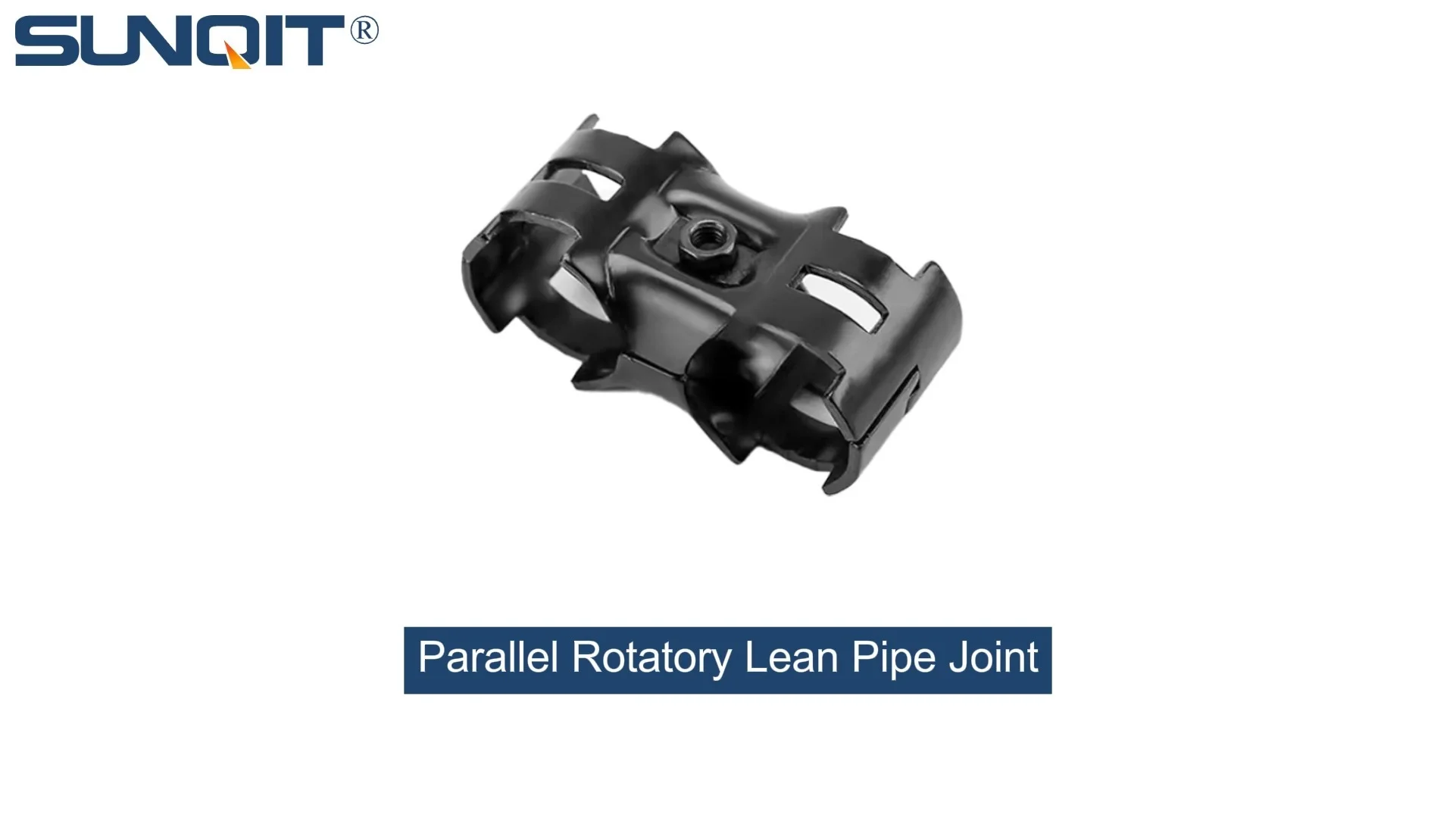
Parallel Rotatory Lean Pipe Joint
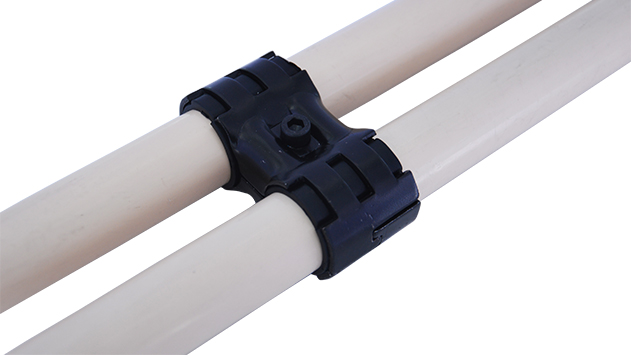
Parallel rotatory lean pipe joint, for 2 pcs pipe conenction in parallel direction with rotatory function.
Laboratories are dynamic ecosystems where precision, efficiency, and adaptability can make or break breakthroughs. From biotech labs racing to develop new vaccines to electronics facilities testing sensitive components, the ability to reconfigure workspaces, streamline workflows, and protect critical equipment is non-negotiable. Yet for decades, many labs have relied on rigid, one-size-fits-all infrastructure—fixed workbenches bolted to the floor, static shelving units, and inflexible material transport systems. These setups often lead to wasted time, ergonomic strain, and missed opportunities to optimize processes. Enter lean manufacturing principles, and more specifically, the unsung hero of modular lab design: the parallel rotatory lean pipe joint.
Far more than just a connector, this small but mighty component has quietly revolutionized how labs operate. By enabling quick, tool-free adjustments and seamless integration with other lean components like aluminum profiles, roller tracks, and ESD workstations, parallel rotatory lean pipe joints are proving to be the cornerstone of flexible lab environments. In this article, we'll explore what makes these joints so valuable, and dive into real-world use cases where they've transformed lab efficiency, safety, and adaptability.
Understanding Parallel Rotatory Lean Pipe Joints: More Than Just Connectors
At first glance, a parallel rotatory lean pipe joint might look like a simple metal piece with a few holes. But its design is a masterclass in functional engineering. These joints are specifically crafted to connect lean pipes (often aluminum or stainless steel) while allowing controlled rotation and parallel alignment—meaning they can pivot along an axis and lock into place at multiple angles, all while keeping connected pipes parallel to each other. This dual functionality—rotation and parallel stability—sets them apart from fixed joints or basic hinges.
Most parallel rotatory lean pipe joints are made from high-grade aluminum or chrome-plated steel, chosen for their lightweight strength and resistance to corrosion—critical traits in labs where spills, humidity, or chemical exposure are common. Their load-bearing capacity varies by model but typically ranges from 50kg to 200kg per joint, making them sturdy enough to support heavy equipment like centrifuges or reagent racks, yet lightweight enough for easy reconfiguration.
What truly makes these joints indispensable is their simplicity. Unlike traditional bolted connections that require wrenches, drills, or specialized tools, parallel rotatory joints often use quick-lock mechanisms or friction-based tightening. A lab technician can loosen a knob, rotate the joint to the desired angle, and lock it back in place in seconds. This "adjust and go" design eliminates downtime, allowing labs to adapt to new projects or workflows without halting operations for construction or repairs.
Why Labs Can't Afford to Ignore These Joints: Key Benefits
Before diving into specific use cases, let's break down why parallel rotatory lean pipe joints have become a staple in modern labs. Their value lies in solving three core challenges labs face: adaptability, cost-efficiency, and safety.
- Unmatched Adaptability: Labs rarely stay the same for long. A biochemistry lab might switch from protein purification to cell culture work in weeks; an electronics lab could shift from testing circuit boards to assembling sensors. Parallel rotatory joints let teams reconfigure workbenches, roller tracks, or storage racks on the fly. Need to lower a workbench surface for a shorter technician? Rotate the joints to adjust the height. Want to angle a roller track to speed up sample transport? Twist the joints to set the perfect incline.
- Cost-Efficiency Over Time: Traditional lab setups often require investing in new furniture or infrastructure every time workflows change. A fixed steel workbench, for example, might cost $1,500 and become obsolete in a year. Parallel rotatory joints, by contrast, work with modular lean pipes and aluminum profiles that can be reused indefinitely. A $50 joint can extend the life of existing components, reducing long-term capital expenses by 40-60%.
- Safety First: Labs handle everything from volatile chemicals to electrostatic-sensitive devices. These joints are designed with safety in mind: aluminum and stainless steel options resist rust and chemical corrosion, while ESD-compatible versions (when paired with ESD workstations) dissipate static electricity, protecting sensitive equipment. Their secure locking mechanisms also prevent accidental shifts, ensuring heavy loads stay stable during use.
- Ergonomic Wins: Repetitive strain injuries are a silent productivity killer in labs. Fixed-height workbenches force technicians to hunch or stretch, leading to back pain or carpal tunnel. Parallel rotatory joints let teams tailor workspaces to individual needs—raising a microscope platform for standing work, lowering a pipetting station for seated tasks, or angling a reagent shelf to reduce reaching. This customization cuts down on ergonomic injuries, boosting both morale and productivity.
Use Case 1: Modular Workbenches – From One-Size-Fits-All to Tailor-Made
The Problem: Static Workbenches Stifling Productivity
Consider a mid-sized pharmaceutical lab where technicians alternate between three tasks: weighing powdered reagents, preparing agar plates, and analyzing samples under a microscope. The lab's existing setup includes a single fixed workbench at 90cm height—too low for the 180cm-tall lead technician, too high for the 155cm research assistant. The result? The taller technician hunches over, slowing down reagent weighing, while the shorter assistant strains to reach the microscope, leading to frequent errors in sample analysis. Worse, when the lab adds a fourth task—sterilizing equipment—the workbench becomes cluttered, with no space to add a hot plate without rearranging everything.
The Solution: A Workbench Powered by Parallel Rotatory Joints
The lab invests in a modular workbench frame built with aluminum profiles and parallel rotatory lean pipe joints. The main surface is supported by four vertical pipes, each connected to horizontal crossbars via parallel rotatory joints. Here's how it transforms their workflow:
- Adjustable Height: Loosening the joints allows the team to raise the workbench surface to 105cm for the tall technician during reagent weighing, then lower it to 85cm for the shorter assistant during microscope work—all in under a minute, no tools required.
- Modular Add-Ons: Using additional parallel rotatory joints, they attach a side shelf to the workbench. The shelf can rotate 180°—flipping up and out of the way when not needed, or lowering to 90cm to hold the hot plate during sterilization. A small tool rail, also connected via rotatory joints, swings over the workbench during agar plate prep to hold pipettes and Petri dish holders, then swings back when analyzing samples.
- Clutter-Free Flexibility: When the lab needs to accommodate a fifth task—storing centrifuged samples—the team adds a second tier to the workbench using vertical pipes and parallel rotatory joints. The tier can rotate 30° downward, creating a sloped shelf that makes sample tubes easier to access, or lock horizontally for flat storage.
The Outcome: Faster, Safer, Happier Teams
Within a month, the lab reports measurable improvements: reagent weighing time drops by 15%, sample analysis errors decrease by 22%, and ergonomic complaints vanish. The modular design also future-proofs the workspace—when the lab expands to six technicians, they simply add two more parallel rotatory joint-supported workbenches, reusing pipes and joints from the original setup.

Use Case 2: Roller Track Systems – Streamlining Sample Transport with Precision
The Problem: Manual Transport Slows Down Time-Sensitive Work
A diagnostic lab processes over 500 blood samples daily, with a strict 2-hour window from collection to analysis to ensure accuracy. Samples arrive at the loading dock, are transported to a refrigerated storage room, then moved to the analysis area. The current system relies on technicians carrying insulated coolers—each holding 20 samples—back and forth. This manual process is slow (taking 15 minutes per trip) and risky: a spilled cooler could ruin dozens of samples. Worse, during peak hours, the lab falls behind, forcing analysts to rush and increasing the chance of misdiagnoses.
The Solution: A Gravity-Fed Roller Track with Rotatory Joints
The lab installs a roller track system using aluminum guide rails, plastic roller track guide rails (grey and yellow for visual zone separation), and parallel rotatory lean pipe joints to connect the track segments. Here's how it works:
- Adjustable Incline: The track runs from the loading dock (higher elevation) to the refrigerated storage room (lower elevation), then to the analysis area (lowest elevation). Parallel rotatory joints connect the track segments, allowing the team to adjust the incline between 5° and 15°. A steeper 15° incline in the loading dock-to-storage section speeds up sample transport, while a gentler 5° incline in the storage-to-analysis section prevents samples from sliding too fast and spilling.
- Directional Flexibility: At the storage room, a 90° bend in the track is made possible by parallel rotatory joints, which allow the track to pivot smoothly without kinking. This avoids the need for expensive custom-molded bends, saving $800 on materials.
- Modular Stopping Points: Using rotatory joints, the lab adds small "speed bumps" along the track—short vertical pipes that rotate up to slow samples down at key points (e.g., before entering the storage room, or at the analysis station). When not needed, the bumps rotate down, keeping the track clear.
The Outcome: 40% Faster Transport, Zero Spills
The roller track cuts sample transport time from 15 minutes per trip to 6 minutes, allowing the lab to process 20% more samples daily. The adjustable inclines and stopping points eliminate spills, reducing sample loss by 100%. Technicians now focus on analysis instead of carrying coolers, boosting job satisfaction and accuracy.

Use Case 3: ESD Workstations – Protecting Sensitive Electronics in Semiconductor Labs
The Problem: Static Discharge Ruining Expensive Components
A semiconductor lab tests microchips for medical devices—components so sensitive that a single electrostatic discharge (ESD) of 250 volts can fry them. The lab's current ESD workstation uses a fixed steel frame with a grounded work surface, but the setup has two flaws: first, the monitor arm is bolted to the frame, so technicians can't adjust its angle to reduce glare (leading to eye strain and slower testing); second, the tool shelf is fixed at 45cm above the work surface, forcing technicians to reach up, generating static electricity as their sleeves rub against the shelf.
The Solution: An ESD Workstation with Rotatory Joints and Aluminum Profiles
The lab upgrades to an ESD workstation built with aluminum profiles (chosen for their conductivity and lightweight) and parallel rotatory lean pipe joints. Here's the transformation:
- Adjustable Monitor Arm: The monitor arm is mounted to the workstation frame via a parallel rotatory joint. Technicians can swivel the arm 360° and tilt the monitor 15° up or down to avoid glare—reducing eye strain and keeping their focus on the microchips. The joint's aluminum construction ensures the arm remains grounded, so adjusting it doesn't generate static.
- Height-Adjustable Tool Shelf: The tool shelf, connected to the frame with parallel rotatory joints, can lower to 30cm above the work surface—eliminating the need for technicians to reach up. When not in use, the shelf rotates 90° upward, freeing up space for larger equipment.
- Grounding Compatibility: The parallel rotatory joints are made with conductive aluminum, ensuring the entire workstation (frame, monitor arm, shelf, and work surface) remains grounded. Even when adjusted, the joints maintain a continuous electrical path, preventing static buildup.
The Outcome: Zero ESD Failures, Happier Technicians
In the six months following the upgrade, the lab reports zero microchip failures due to ESD. Technician productivity increases by 15% as eye strain and reaching-related fatigue decrease. The adjustable setup also allows the lab to repurpose the workstation for testing larger circuit boards—simply rotating the monitor arm out of the way and lowering the tool shelf to make space.
Traditional vs. Lean: A Comparison Table
| Feature | Traditional Lab Setups | Lean Setups with Parallel Rotatory Joints |
|---|---|---|
| Reconfiguration Time | 4–8 hours (requires tools, may need contractors) | 2–5 minutes (tool-free, technician-adjustable) |
| Cost Over 5 Years | $10,000+ (replacement of fixed furniture) | $3,000–$5,000 (reusable modular components) |
| Ergonomic Adaptability | Fixed (one height/angle fits none well) | Customizable (adjusts to individual technician needs) |
| ESD Protection | Basic (grounded surfaces, but fixed components may lose grounding over time) | Advanced (conductive joints maintain grounding during adjustments) |
| Sample Transport Speed | Slow (manual carrying, 10–15 minutes per trip) | Fast (adjustable roller tracks, 3–6 minutes per trip) |
Building the Lab of the Future: Small Joints, Big Impact
Parallel rotatory lean pipe joints may be small, but their impact on lab efficiency, safety, and adaptability is enormous. From adjustable workbenches that reduce ergonomic strain to roller tracks that speed up sample transport, these joints turn static labs into dynamic, responsive spaces that grow with research needs. They embody the lean principle of "doing more with less"—reusing components, reducing waste, and focusing on what matters: advancing science.
For labs still stuck with rigid setups, the message is clear: flexibility isn't a luxury; it's a necessity. By investing in modular solutions built around parallel rotatory lean pipe joints, aluminum profiles, and ESD workstations, labs can cut costs, boost productivity, and protect their most valuable assets—their people and their research. The future of lab design isn't about bigger budgets; it's about smarter connections. And when it comes to smart connections, parallel rotatory lean pipe joints are leading the way.