- Company Articles
- Products and Technology
- Application Cases
- Parallel Rotatory Lean Pipe Joints in Metalworking: Practical Applications

Parallel Rotatory Lean Pipe Joints in Metalworking: Practical Applications
Related Product
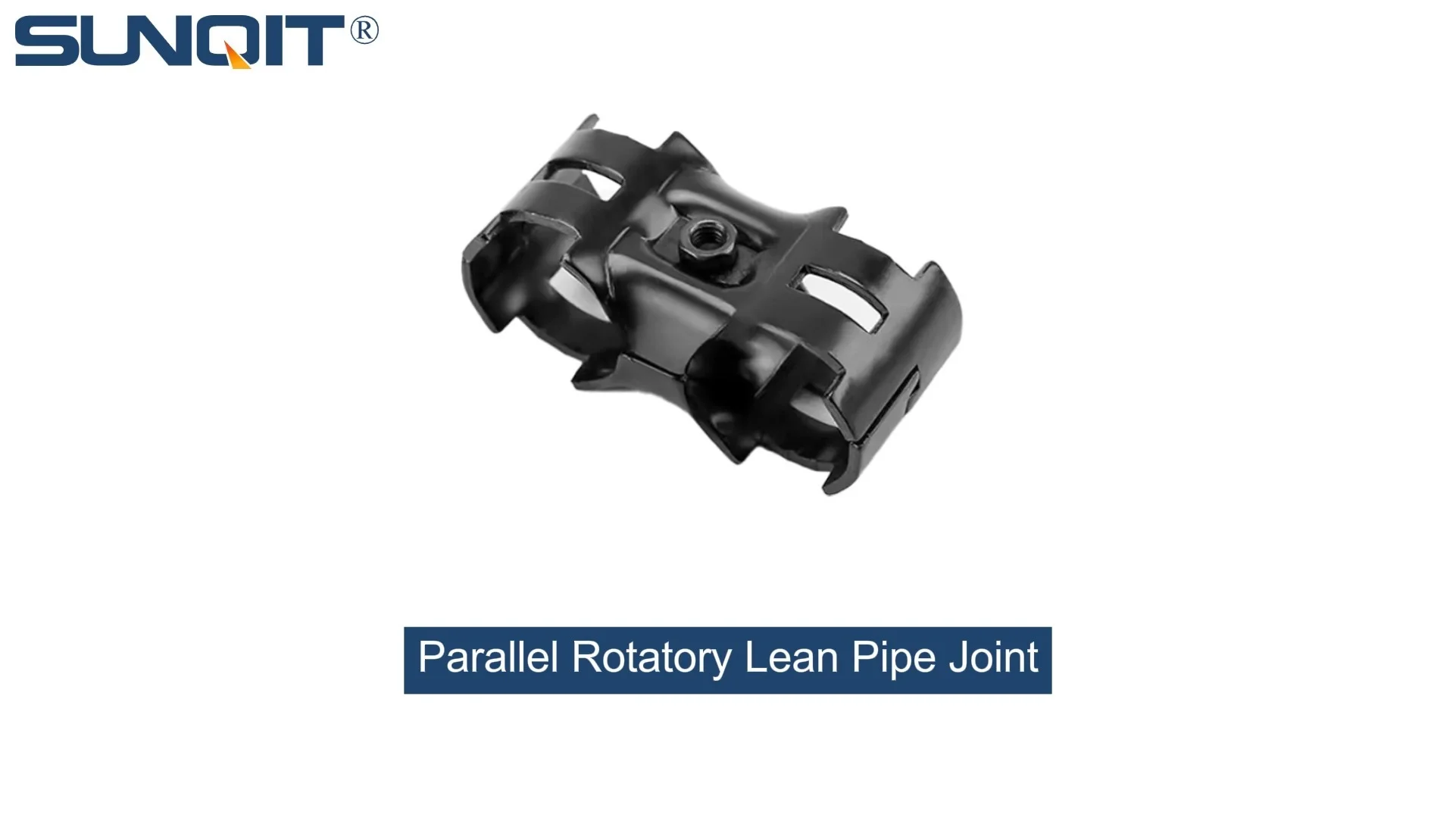
Parallel Rotatory Lean Pipe Joint
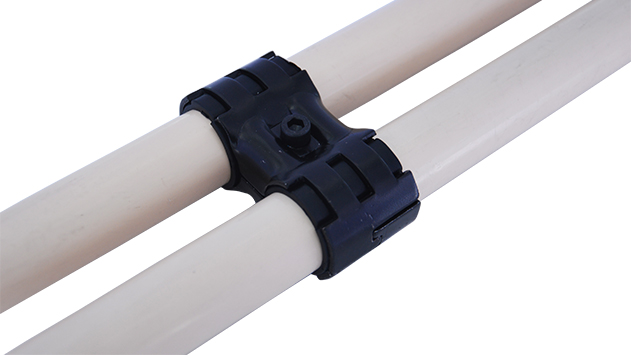
Parallel rotatory lean pipe joint, for 2 pcs pipe conenction in parallel direction with rotatory function.
Walk into any modern manufacturing facility, and you'll notice a quiet revolution happening on the shop floor. It's not the flashy robots or high-tech machinery that catch the eye first—though those certainly play a role. Instead, it's the subtle, often overlooked components that keep production lines flowing smoothly: the workbenches that adjust to fit any task, the flow racks that glide materials from station to station, and the roller tracks that turn chaos into order. At the heart of much of this adaptability lies a small but mighty tool: the parallel rotatory lean pipe joint. These unassuming connectors are the unsung heroes of lean manufacturing, turning rigid structures into flexible, customizable systems that grow and change with your business. In this article, we'll dive into how parallel rotatory lean pipe joints are transforming metalworking, from small workshops to large-scale production lines, and why they've become a must-have for anyone serious about efficiency, adaptability, and smart resource use.
What Are Parallel Rotatory Lean Pipe Joints, Anyway?
Before we jump into their applications, let's get clear on what parallel rotatory lean pipe joints actually are. Think of them as the "hinges" of the manufacturing world—but with a superpower: they let you connect two lean pipes (or aluminum profiles, more on that later) in parallel, then rotate them around each other. Unlike fixed joints that lock pipes into a rigid angle, or 90° crossing joints that force a perpendicular connection, these joints offer a rare combination of stability and movement. Picture a pair of pipes running side by side; with a parallel rotatory joint, you can twist one pipe up or down relative to the other, lock it into place, and then adjust it again later if your needs change. It's like having a adjustable wrench for your production setup—versatile, reliable, and ready for whatever the day throws at you.
Most parallel rotatory joints are made from durable materials like die-cast aluminum or steel, with a coating to resist corrosion (important in busy shops where oil, coolant, or humidity can take a toll). They typically feature a clamping mechanism—often a hex key or lever—that tightens around the pipes, holding them securely once adjusted. And while they're called "lean pipe" joints, they're just as at home with aluminum profiles, stainless steel pipes, or even the newer aluminum lean pipes that combine lightweight strength with sleek design. This compatibility is key: in metalworking, where materials range from heavy steel to lightweight aluminum, a joint that plays well with others is worth its weight in (lean) gold.
Key Features That Make Them Indispensable
What sets parallel rotatory lean pipe joints apart from other connectors? Let's break down their standout features:
- 360° Rotation (Within Limits): While they're called "parallel," these joints allow pipes to rotate around each other, making it easy to adjust angles, heights, or orientations without disassembling the entire structure. Need to tilt a workbench surface 15° for better ergonomics? Or angle a flow rack to speed up material flow? A quick twist of the joint, and you're done.
- Lockable Stability: Flexibility doesn't mean sacrificing strength. Once adjusted, the joint locks tight, holding pipes steady even under heavy loads. Most can handle anywhere from 50 to 200 kg per joint, depending on size and material—plenty for tools, raw materials, or finished products.
- Tool-Free (or Minimal Tool) Adjustment: Many modern parallel rotatory joints use quick-release levers or simple hex keys, so you don't need a whole toolbox to reconfigure a setup. This is a game-changer for small teams or fast-paced environments where downtime equals lost revenue.
- Modular Compatibility: They work with standard lean pipe sizes (often 28mm or 30mm diameter) and aluminum profiles (like the popular 2020 or 4040 series), meaning you can mix and match components from different suppliers without headaches.
- Cost-Effective Durability: Made from tough materials, these joints last for years, even in high-traffic areas. And because they're reusable—you can take apart a workbench and rebuild it as a flow rack next month—they reduce waste and long-term costs.
These features might sound simple, but when combined, they solve a big problem in manufacturing: rigidity. Traditional fixed structures—welded steel workbenches, bolted-together racks—look strong, but they're nightmares when your production needs change. A new product line with different dimensions? You'll need a new workbench. A seasonal spike in orders requiring a longer assembly line? Time to buy new racks. Parallel rotatory joints turn that "replace" mindset into "reuse and reconfigure," saving time, money, and frustration.
Practical Applications: Where Parallel Rotatory Joints Shine
Now, let's get to the real-world magic: how are these joints actually used in metalworking? From the shop floor to the assembly line, their flexibility opens up a world of possibilities. Let's explore three key applications where they make the biggest difference.
1. Adjustable Workbenches: Ergonomics Meets Adaptability
Ask any machinist or assembler what makes a good workbench, and they'll probably say two things: "sturdy" and "comfortable." But "comfortable" is personal—what works for a 6'2" technician might leave a 5'4" colleague hunching over, leading to fatigue and mistakes. Parallel rotatory lean pipe joints solve this by letting you build workbenches that adjust to people , not the other way around.
Here's how it works: Start with a frame of aluminum profiles or lean pipes connected by parallel rotatory joints. The tabletop—often a plywood, MDF, or aluminum honeycomb panel—attaches to the frame via brackets. To adjust the height, loosen the joints, slide the legs up or down, and lock them. But it doesn't stop there: you can also tilt the tabletop (useful for tasks like drafting or inspecting parts), add side shelves that swing out of the way when not needed, or even attach tool holders that rotate to keep frequently used gear within arm's reach.
Take a small machine shop in Ohio, for example. They recently switched to parallel rotatory joint-based workbenches for their assembly area. Before, they had three fixed-height workbenches: one too low for tall workers, one too high for shorter ones, and one "just right" that everyone fought over. Now, they have two adjustable workbenches. In the morning, Maria (5'3") sets hers to 32" height for assembling small components. In the afternoon, when Jamal (6'1") takes over, he cranks it up to 38" and tilts the surface 10° to reduce glare from overhead lights. No more back pain, no more wasted time switching stations—just a workbench that adapts.
And when the job changes? No problem. That same workbench can be stripped down, reconfigured with longer pipes, and turned into a packing station for shipping. Or add a roller track along one edge (connected, of course, with parallel rotatory joints) to slide finished parts to the next station. It's not just a workbench—it's a blank canvas for productivity.
2. Flow Racks: Keeping Materials Moving (Smoothly)
In manufacturing, time spent waiting for materials is time wasted. Flow racks—those gravity-fed systems where bins or trays glide from the back to the front—are designed to fix this, ensuring workers always have parts at their fingertips. But not all flow racks are created equal. Fixed-angle racks work for one type of bin, but if you switch to larger or smaller containers? The angle might be too steep (parts slide too fast, risking damage) or too shallow (they get stuck).
Enter parallel rotatory lean pipe joints. By using them to connect the roller tracks (the rails that hold the bins) to the rack frame, you can adjust the slope of the tracks on the fly. Need to slow down heavy metal brackets? Tilt the track down by 2°. Switching to lightweight plastic parts? Crank it up to 5° to keep them moving. This precision is especially critical in metalworking, where parts can range from delicate electronics components to hefty steel castings—one size does not fit all.
A case in point: a automotive parts supplier was struggling with their flow racks for brake calipers. The cast iron calipers were heavy, and the fixed 3° angle caused them to slam into the front stop, damaging the finish. By replacing fixed joints with parallel rotatory ones, they adjusted the angle to 1.5°, slowing the slide. Then, when they started shipping smaller, lighter calipers for electric vehicles, they increased the angle to 4°, ensuring smooth flow without jams. The result? Fewer damaged parts, faster assembly times, and a production line that adapts to product changes without new equipment.
3. Custom Roller Tracks: From Chaos to Controlled Flow
Roller tracks are the arteries of a production line, carrying parts from one station to the next. But in metalworking, lines aren't always straight—you might need a curve to navigate around a machine, or a slight incline to move parts uphill to a higher workstation. Fixed roller tracks require precise measuring and cutting, and if you miscalculate, you're stuck with a useless piece of metal. Parallel rotatory joints turn roller tracks into flexible, bendable systems that follow your workflow, not the other way around.
Here's how it works: Roller tracks are made of individual sections (often aluminum or steel) with rollers that let parts slide. To connect these sections, you use parallel rotatory joints. Want a 10° curve? Rotate the joints between two track sections, lock them, and you've got a smooth bend. Need to adjust the height of a track to align with a machine's feed table? Tilt the joint up or down—no cutting, no welding, no hassle.
A small tool and die shop in Texas used this to great effect. Their production line for custom gears was spread out, with parts moving from the CNC mill to the deburring station to inspection via a confusing mix of carts and conveyors. By building a roller track system with parallel rotatory joints, they created a "spine" that curved around their machines, with adjustable height sections to match each workstation. Now, gears glide from mill to deburring to inspection without anyone lifting a finger. And when they added a new laser engraver, they simply extended the track with a few more sections and adjusted the angle to feed into the engraver's table—done in an afternoon, not a week.

Comparing Parallel Rotatory Joints to Other Lean Pipe Joints
Of course, parallel rotatory joints aren't the only game in town. There are fixed joints, 90° crossing joints, three-way joints, and more. So when should you choose parallel rotatory over the others? Let's put them head-to-head in a quick comparison:
| Joint Type | Flexibility | Load Capacity (Typical) | Installation Ease | Best For |
|---|---|---|---|---|
| Parallel Rotatory Lean Pipe Joint | High (360° rotation, angle adjustment) | 50–200 kg | Easy (hex key or lever lock) | Adjustable workbenches, flow racks, roller tracks, dynamic setups |
| Fixed Lean Pipe Joint (e.g., 180° fixed) | None (locks pipes in straight line) | 100–300 kg | Easy (tighten and done) | Rigid frames, permanent structures, heavy-load racks |
| 90° Crossing Lean Pipe Joint | Low (locks at 90° perpendicular) | 80–150 kg | Moderate (aligning crossing pipes) | Shelving, right-angle corners, static workstations |
| Three-Way Lean Pipe Joint | Low (fixed T-junction) | 70–120 kg | Moderate (aligning three pipes) | Branching structures, multi-level racks |
As you can see, parallel rotatory joints excel where flexibility is key. If you need a permanent, heavy-duty structure—like a storage rack for steel plates—fixed joints might be better. But for almost everything else—workbenches, flow racks, roller tracks, or any setup that might change—parallel rotatory joints offer unbeatable adaptability.

Installation and Maintenance: Keeping It Simple
You might be thinking, "This sounds great, but is it hard to set up?" The short answer: no. Installing parallel rotatory lean pipe joints is straightforward, even for someone with basic DIY skills. Here's a quick step-by-step for building a simple adjustable workbench frame:
- Gather Parts: Aluminum profiles (or lean pipes), parallel rotatory joints, end caps, and a hex key (most joints come with the right size).
- Assemble the Base: Connect four vertical pipes to a rectangular frame using 90° joints for stability.
- Add Adjustable Rails: Attach parallel rotatory joints to the vertical pipes, then slide horizontal rails into the joints. These rails will hold the workbench top.
- Adjust Height: Slide the rails up or down to your desired height, then tighten the joint clamps with the hex key. Test stability by gently shaking the frame—if it wobbles, tighten the joints more.
- Attach the Top: Screw or clamp a plywood, MDF, or aluminum honeycomb panel to the horizontal rails. Done!
Maintenance is just as easy. Every few months, check that the joints are tight—vibration from machinery can loosen them over time. A quick tighten with the hex key is usually all it takes. If the joint starts to stick when rotating, wipe it down with a dry cloth (avoid oil, which can attract dust) and apply a small amount of silicone spray if needed. And if a joint gets damaged? Most suppliers sell replacement parts, so you don't have to replace the entire structure.
Future Trends: Where Parallel Rotatory Joints Are Headed
As manufacturing moves toward "lights-out" production, smart factories, and even more flexible setups, parallel rotatory lean pipe joints are evolving too. Here are a few trends to watch:
- Smart Locking Mechanisms: Some manufacturers are experimenting with joints that have built-in sensors to alert teams when they're loose, preventing accidents or downtime.
- Eco-Friendly Materials: More joints are being made from recycled aluminum or biodegradable coatings, aligning with the industry's push for sustainability.
- Integration with IoT: Imagine a workbench that automatically adjusts its height based on a worker's ID badge, using parallel rotatory joints controlled by a small motor. It sounds futuristic, but early prototypes are already in testing.
Even without these high-tech upgrades, though, parallel rotatory joints will remain a cornerstone of lean manufacturing. Their value lies in solving a timeless problem: how to do more with less. In a world where change is constant, that's a solution that never goes out of style.
Conclusion: The Power of Flexible Thinking
Parallel rotatory lean pipe joints might not have the glamour of a new CNC machine or the excitement of a robotic arm, but they embody the spirit of lean manufacturing: efficiency, adaptability, and respect for people. They turn rigid, one-use structures into tools that grow with your business, reduce waste, and make work easier for everyone on the shop floor.
Whether you're running a small job shop or managing a large production line, the question isn't "Do I need these joints?" but "How have I managed without them?" From adjustable workbenches that keep teams comfortable to flow racks that adapt to new products, they're the quiet innovators that make manufacturing smarter, faster, and more human. So the next time you walk through a shop, take a closer look at those workbenches and racks—chances are, there's a parallel rotatory joint hard at work, keeping things moving forward.