- Company Articles
- Products and Technology
- Application Cases
- Parallel Rotatory Lean Pipe Joints in Plastic Manufacturing: Use Cases

Parallel Rotatory Lean Pipe Joints in Plastic Manufacturing: Use Cases
Related Product
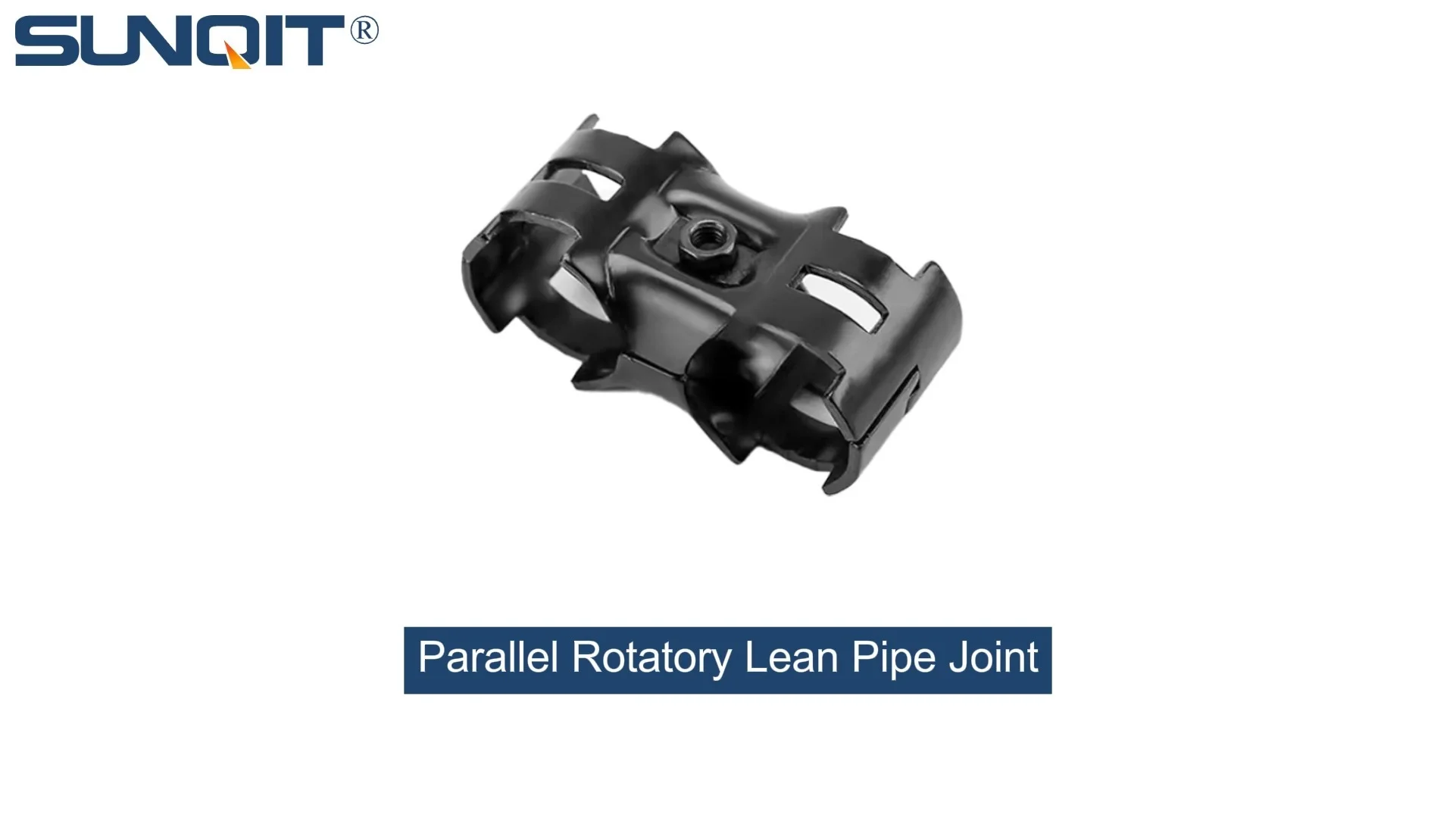
Parallel Rotatory Lean Pipe Joint
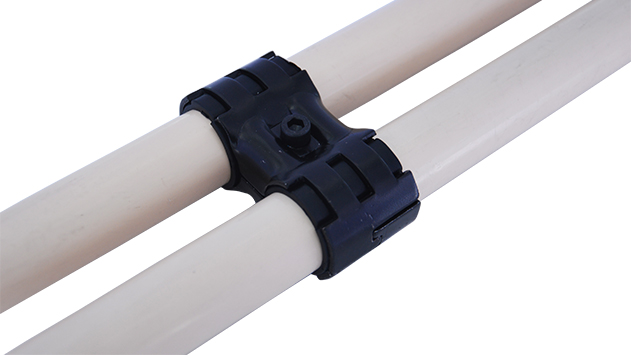
Parallel rotatory lean pipe joint, for 2 pcs pipe conenction in parallel direction with rotatory function.
In the bustling world of plastic manufacturing, where precision meets pace, every tool and component plays a role in keeping operations running smoothly. From injection molding machines churning out intricate parts to assembly lines piecing together final products, efficiency is the name of the game. Yet, amid the high-tech machinery and automated systems, there's a humble yet powerful player that often goes unnoticed: lean pipe systems. And at the heart of these systems, enabling their unmatched flexibility, are parallel rotatory lean pipe joints. These unassuming connectors are the unsung heroes that turn rigid structures into adaptable workspaces, making them indispensable in modern plastic manufacturing facilities.
Understanding Lean Pipe Systems: The Backbone of Flexible Manufacturing
Before diving into the specifics of parallel rotatory lean pipe joints, it's important to grasp why lean pipe systems have become a staple in plastic manufacturing. Born from the principles of lean manufacturing—eliminating waste, optimizing flow, and continuous improvement—these systems are modular, lightweight, and infinitely customizable. They're built using metal pipes (often steel or aluminum) and a variety of joints, allowing teams to construct everything from workbenches and material racks to conveyors and turnover trolleys. Unlike fixed, one-size-fits-all equipment, lean pipe systems adapt to changing needs: a workbench today can become a parts cart tomorrow, and a static rack can evolve into a dynamic flow station next month.
In plastic manufacturing, where product lines shift frequently (think seasonal packaging changes or custom component orders), this flexibility isn't just a luxury—it's a necessity. A facility producing plastic bottle caps one week might need to retool for medical device housings the next, and lean pipe systems make that transition possible without overhauling the entire workspace. And at the core of this adaptability? Joints. Specifically, parallel rotatory lean pipe joints, which take the system's flexibility to a whole new level.
Parallel Rotatory Lean Pipe Joints: What Are They, and Why Do They Matter?
At first glance, a parallel rotatory lean pipe joint might look like any other connector in a lean pipe system. But its design holds a key advantage: it allows connected pipes to rotate around a central axis while maintaining parallel alignment. Imagine two pipes running side by side—with a standard fixed joint, they'd stay locked in place. With a parallel rotatory joint, however, one pipe can rotate relative to the other, adjusting angles or positions without losing stability. This rotation is typically smooth and tool-free, letting workers make on-the-fly adjustments without halting production.
These joints come in various materials, including durable chrome-plated steel (often referred to as parallel rotatory lean pipe joint chrome ), which adds corrosion resistance—critical in plastic manufacturing environments where moisture or chemical exposure is common. Some are made with reinforced plastics for lighter applications, but the chrome variants are a favorite for heavy-duty use, like supporting loaded workbenches or material racks.
Key Features of Parallel Rotatory Lean Pipe Joints
- Tool-Free Rotation: Most models feature a locking mechanism (like a thumbscrew or quick-release lever) that lets users rotate pipes 180 degrees or more, then lock them in place—no wrenches or screwdrivers needed.
- Parallel Alignment: Unlike swivel joints that allow 360-degree rotation in any direction, these joints keep pipes parallel, ensuring stability even when adjusted. This is crucial for structures like workbench shelves or conveyor rails, where misalignment could cause jams or uneven loading.
- Durable Construction: Made from high-strength steel or aluminum, they withstand the daily wear of manufacturing—bumping from carts, heavy tool loads, or constant adjustments.
- Compatibility: They work seamlessly with standard lean pipes (often 28mm in diameter) and other accessories like roller tracks, casters, and workbench panels, making them easy to integrate into existing systems.
But why does this matter in plastic manufacturing? Let's break it down with real-world use cases where these joints shine.
Use Case 1: Lean Pipe Workbenches for Adaptive Assembly Cells
Plastic assembly lines are all about precision and ergonomics. Workers spend hours piecing together small parts—think laptop casings, toy components, or automotive interior trim—and their workbenches need to adapt to both the task and the person. A 5'2" operator might need a lower work surface than a 6' tall colleague; a task requiring fine motor skills (like attaching tiny plastic clips) might need a tilted tool tray; and a rush order might demand adding extra shelving for parts bins.
This is where lean pipe workbench setups with parallel rotatory joints truly excel. Consider a plastic injection molding facility that produces custom phone cases. Each case design has unique assembly steps—some require attaching metal hinges, others need adhesive-backed labels, and still others involve inserting rubber gaskets. With traditional fixed workbenches, the team would need separate stations for each task, wasting space and slowing down changeovers. But with a lean pipe workbench using parallel rotatory joints, they can reconfigure the same bench in minutes.
For example, the bench's upper shelf, used to hold tools, can be rotated downward to create a larger flat surface when assembling bulkier cases. A side-mounted parts rail, typically positioned at waist height for easy access, can be rotated upward to clear space when workers need to spread out components. Even tool holders—like brackets for screwdrivers or heat guns—can be swiveled into optimal positions, reducing strain on workers' wrists and shoulders. In one facility we worked with, this adaptability cut setup time for new case designs by 40%, letting the team take on more custom orders without adding shifts.
Use Case 2: Flow Racks for Streamlining Material Handling
Plastic manufacturing relies on a steady flow of materials—raw resins, finished parts, packaging supplies—to keep production on track. Flow racks are a cornerstone of this process, using gravity to feed materials from the back (where stock is loaded) to the front (where workers pick items). But not all materials are the same: a bin of small plastic screws might need a steep incline to flow freely, while a box of delicate polycarbonate sheets requires a gentle slope to avoid cracking.
Parallel rotatory lean pipe joints solve this by letting teams adjust flow rack angles with precision. Take a facility producing plastic cutlery: their flow racks hold stacks of pre-formed spoons, forks, and knives, feeding them to packaging stations. During peak demand, they might add extra lanes to a rack to keep up with output. With standard fixed joints, adding lanes would mean disassembling and rebuilding sections, but with parallel rotatory joints, workers can simply rotate the existing rails to create space, then lock them in place. The joints' parallel alignment ensures the new lanes stay level, so cutlery doesn't jam or tip as it flows.
Even more impressive? These racks can adapt to seasonal changes. During the holiday season, the facility might switch to larger packaging boxes for gift sets. Using parallel rotatory joints, they can tilt the rack's roller tracks upward slightly to accommodate the heavier boxes, ensuring smooth flow without damaging the packaging. It's a small adjustment that saves hours of rework and keeps the line moving.
Use Case 3: Integrating with Conveyor Systems for Seamless Production Flow
Conveyors are the arteries of plastic manufacturing, moving parts from molding machines to assembly, packaging, and shipping. But conveyor systems are rarely one continuous belt—they're often a patchwork of sections, each with different heights, angles, or speeds. Connecting these sections smoothly is critical to avoiding bottlenecks (no one wants a pileup of plastic parts at a misaligned conveyor junction).
Parallel rotatory lean pipe joints simplify this integration. For example, consider a conveyor line transporting plastic bottles from the blow-molding machine to the labeling station. The molding machine sits higher than the labeling equipment, so the conveyor needs a gradual downward slope. With traditional fixed brackets, setting this slope would require precise measurements and custom-cut supports. With parallel rotatory joints, however, workers can attach the conveyor frame to lean pipe supports, then rotate the joints to fine-tune the angle until bottles glide smoothly—no cutting, welding, or complex math needed.
In another scenario, a facility might need to add a "pop-up" conveyor section to bypass a bottleneck during maintenance. Using parallel rotatory joints, they can quickly connect the temporary section to the main line, adjusting its height and angle on the fly to match the existing conveyor. Once maintenance is done, the section can be disassembled and stored, with the joints reused elsewhere. This flexibility is a lifesaver in high-volume environments where downtime costs thousands of dollars per minute.
Use Case 4: Turnover Trolleys for Agile Material Transport
Not all material movement happens on conveyors—sometimes, you need a mobile solution. Turnover trolleys, used to transport parts between stations, are workhorses in plastic manufacturing. But standard trolleys are often rigid: they have fixed shelves, can't be folded for storage, and struggle to fit through tight spaces (like between molding machines).
Enter lean pipe turnover trolleys built with parallel rotatory joints. These trolleys can be adjusted to carry different loads: a flatbed for large plastic sheets, or stacked shelves for small components. When not in use, the sides can be rotated inward, folding the trolley to half its size for easy storage. Even the handle height can be swiveled up or down, making it comfortable for workers of all heights to push.
One plastic extrusion plant we visited uses these trolleys to transport coiled plastic tubing between the extrusion line and the cutting station. The tubing is heavy and can kink if not supported properly, so the trolley's shelves need to stay perfectly level. Thanks to parallel rotatory joints, the shelves can be rotated to adjust for uneven floors (a common issue in older facilities) or tilted slightly to keep the coils from rolling off. The result? Fewer damaged parts and happier workers who don't have to wrestle with unruly trolleys.
Traditional Joints vs. Parallel Rotatory Joints: A Comparison
To truly appreciate the value of parallel rotatory lean pipe joints, it helps to compare them to traditional fixed joints—the kind that lock pipes in place with no rotation. Below is a breakdown of how they stack up in key areas:
| Feature | Traditional Fixed Joints | Parallel Rotatory Lean Pipe Joints |
|---|---|---|
| Flexibility | Limited: Pipes stay locked in one position; reconfiguration requires disassembly. | High: Pipes rotate smoothly while staying parallel; adjustments can be made in seconds, tool-free. |
| Assembly Time | Longer: Requires precise alignment and tightening with tools; mistakes mean restarting. | Shorter: Rotation allows for trial-and-error positioning; locking mechanisms are quick to secure. |
| Durability | Good: Strong for static loads but prone to wear if frequently disassembled/reassembled. | Excellent: Chrome plating resists corrosion; rotating components are reinforced to handle repeated use. |
| Best For | Static structures (e.g., permanent storage racks) with rare changes. | Dynamic environments (e.g., assembly cells, flow racks, conveyors) with frequent reconfigurations. |
| Ergonomic Benefits | Minimal: Workers adapt to fixed setups, increasing strain over time. | Significant: On-the-fly adjustments let workers tailor workspaces to their needs, reducing fatigue. |

The Bottom Line: Why Parallel Rotatory Joints Are a Smart Investment
In plastic manufacturing, where change is constant and efficiency is everything, parallel rotatory lean pipe joints aren't just tools—they're enablers. They turn rigid workspaces into adaptable ecosystems, letting teams respond quickly to new orders, ergonomic needs, or process improvements. Whether it's reconfiguring a lean pipe workbench for a new product, adjusting a flow rack to handle heavier materials, or fine-tuning a conveyor line to avoid jams, these joints make the impossible possible.
And let's not overlook the human element. In fast-paced manufacturing environments, small frustrations add up—fighting with a stuck joint, waiting for maintenance to adjust a workbench, or struggling to fit a trolley through a door. Parallel rotatory joints eliminate these headaches, letting workers focus on what they do best: making high-quality plastic products. As one plant manager put it, "We used to spend hours reconfiguring our lines. Now, with these joints, it's a 10-minute job. That's not just efficiency—that's empowerment."
So, the next time you walk through a plastic manufacturing facility, take a closer look at the workbenches, racks, and trolleys. Chances are, you'll spot parallel rotatory lean pipe joints hard at work—quietly, reliably, and flexibly keeping the world of plastic production moving forward.