- Company Articles
- Products and Technology
- Product knowledge
- Parallel Rotatory Lean Pipe Joints: Reducing Downtime in Production

Parallel Rotatory Lean Pipe Joints: Reducing Downtime in Production
Related Product
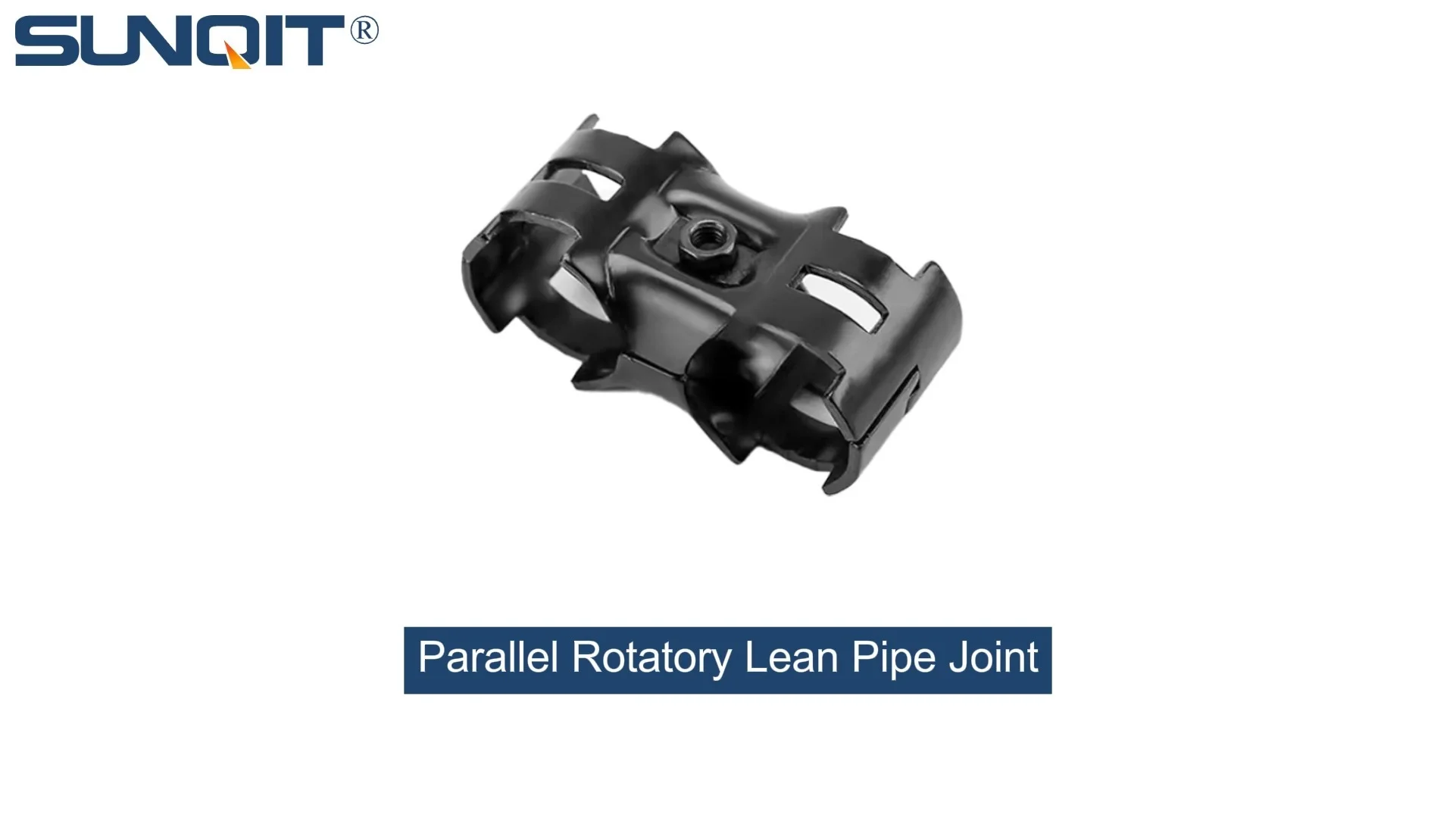
Parallel Rotatory Lean Pipe Joint
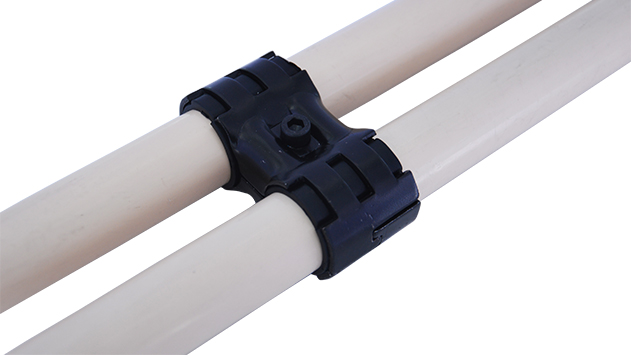
Parallel rotatory lean pipe joint, for 2 pcs pipe conenction in parallel direction with rotatory function.
Picture this: It's 9 AM on a Monday, and your production line grinds to a halt. A team member needs to reconfigure a lean pipe workbench to accommodate a new batch of components, but the joints connecting the pipes are rigid. By the time they dig out wrenches, loosen bolts, adjust the angle, and retighten everything, 45 minutes have passed. That's 45 minutes of lost output, delayed orders, and frustrated staff. Sound familiar? For manufacturers, downtime isn't just an annoyance—it's a silent profit killer. According to industry estimates, unplanned downtime can cost factories anywhere from $5,000 to $20,000 per hour, depending on the industry. But what if there was a way to slash that time from 45 minutes to 5? Enter parallel rotatory lean pipe joints : the unsung heroes of flexible, efficient production lines.
In the world of lean manufacturing, where "eliminate waste" is the mantra, every second counts. Traditional pipe joints—fixed, tool-dependent, and slow to adjust—are a hidden source of waste. They turn routine reconfigurations into production-stopping projects, force teams to work around rigid setups, and increase the risk of errors during adjustments. Parallel rotatory lean pipe joints, by contrast, are designed to bend (literally and figuratively) to your production needs. With their ability to rotate smoothly, lock securely, and adapt without tools, they're changing how factories approach flexibility and uptime. In this article, we'll dive into how these small but mighty components are reducing downtime, why they're a game-changer for flow rack systems and roller track setups, and how they fit into the broader ecosystem of lean manufacturing.
The Hidden Cost of "Sticky" Joints: Why Traditional Solutions Fail
Before we explore the solution, let's unpack the problem. Traditional lean pipe joints—think fixed-angle connectors or basic T-joints—were never designed for speed. They're built to hold pipes in place, not to adapt. To adjust a workbench height, reposition a flow rack , or reroute a roller track , workers must:
- Locate specific tools (wrenches, hex keys, or socket sets) that may be scattered across the shop floor.
- Loosen multiple bolts, often in tight spaces, risking stripped threads or damaged components.
- Manually reposition the pipe, which can require two people for heavy setups.
- Retighten bolts, often over-tightening (leading to future adjustment struggles) or under-tightening (creating safety hazards).
- Test the stability, only to realize the angle is off by a few degrees, and repeat the process.
Each step adds minutes, and those minutes add up. A 2023 survey by the Manufacturing Technology Insights found that 62% of manufacturers cite "time spent reconfiguring workstations" as a top source of planned downtime. Worse, 41% reported that unplanned downtime often stems from joint failures—loose connections that cause roller track misalignment or lean pipe workbench collapse. Traditional joints, in short, are a double-edged sword: they're necessary for structure but a liability for efficiency.
What Are Parallel Rotatory Lean Pipe Joints, Anyway?
At first glance, parallel rotatory lean pipe joints look like their traditional counterparts—small, metallic, and designed to connect pipes. But under the hood, they're engineered for movement. Let's break down their key features:
1. 360-Degree Rotation, Zero Tools
The magic lies in their rotating mechanism. Unlike fixed joints, which lock pipes into a single angle (90 degrees, 45 degrees, etc.), parallel rotatory joints use a ball-and-socket or cam-lock design that lets pipes rotate freely around each other. Need to tilt a flow rack shelf by 15 degrees to improve component flow? Simply grasp the pipe, rotate it to the desired angle, and release—a built-in spring or friction lock holds it in place. No wrenches, no bolts, no hassle. This tool-free adjustment cuts reconfiguration time by up to 90%.
2. Parallel Alignment for Stability
The "parallel" in their name isn't just a buzzword. These joints ensure that connected pipes remain parallel to each other, even as they rotate. This is critical for setups like roller track systems, where misaligned pipes can cause jams or uneven product flow. Traditional joints often require careful measurement to keep pipes parallel; parallel rotatory joints do it automatically, reducing human error.
3. Durable Materials for Heavy-Duty Use
Don't let their flexibility fool you—these joints are tough. Most are made from high-grade steel or aluminum alloys, with reinforced locking mechanisms that can withstand the vibrations, weight, and daily wear of production environments. Some models even feature corrosion-resistant coatings, making them suitable for humid or chemical-exposed areas (like electronics assembly lines). This durability means fewer joint failures, translating to less unplanned downtime.
4. Compatibility with Existing Systems
Worried about replacing your entire setup? Parallel rotatory joints are designed to work with standard aluminum lean pipe (often 28mm or 30mm diameter), the most common material in lean manufacturing. That means you can retrofit them into existing lean pipe workbench , flow rack , or roller track systems without buying all-new pipes. It's a low-risk, high-reward upgrade.
How Parallel Rotatory Joints Slash Downtime: 5 Real-World Scenarios
Theory is great, but let's get practical. How do these joints actually reduce downtime on the factory floor? Let's walk through five common scenarios where they make a measurable difference.
Scenario 1: Quick Changeovers on Lean Pipe Workbenches
A medical device manufacturer produces two types of syringes: standard and safety-lock. The lean pipe workbench where assembly happens needs different tool holders and component bins for each type. With traditional joints, switching between setups takes 30 minutes (tools, adjustments, testing). With parallel rotatory joints, the operator simply rotates the pipe arms to reposition holders, locks them in place, and starts assembling—total time: 4 minutes. Over a week with 10 changeovers, that's 260 minutes (over 4 hours) of saved production time.
Scenario 2: Flow Rack Adjustments for Variable Component Sizes
An automotive parts supplier uses flow rack systems to feed components to the assembly line. One day, they receive a batch of larger-than-usual sensors. The flow rack's shelves are too close together, causing jams. With traditional joints, adjusting the shelf height requires loosening 12 bolts per shelf (6 shelves total), realigning, and retightening—1 hour of downtime. With parallel rotatory joints, each shelf can be lifted, rotated to the new height, and locked in 2 minutes per shelf—12 minutes total. The line is back up, and the sensors flow smoothly.
Scenario 3: Roller Track Rerouting for New Layouts
A electronics plant reorganizes its production floor to improve workflow, requiring a roller track to be rerouted around a new inspection station. Traditional roller track joints are fixed, so the team must disassemble sections, cut pipes to length, and rebuild—4 hours of downtime. With parallel rotatory joints, the existing track can be bent into the new path by rotating the joints, with minimal cutting. Total time: 30 minutes. The new layout is live by lunch, not by the end of the day.
Scenario 4: Emergency Repairs with Minimal Fuss
A lean pipe workbench leg loosens during a shift, causing the bench to wobble. With traditional joints, the operator must stop work, find a wrench, and tighten the bolt—15 minutes of downtime. With parallel rotatory joints, a quick twist of the joint locks it securely; the operator is back to work in 30 seconds. No tools, no delay, no lost production.
Scenario 5: Adapting to Seasonal Demand Spikes
A toy manufacturer ramps up production for the holidays, adding a temporary assembly line using aluminum lean pipe and flow rack systems. With traditional joints, building the line takes 8 hours (measuring, cutting, bolting). With parallel rotatory joints, the team assembles the line in 2 hours—no cutting, just connecting and rotating pipes into place. The line is operational 6 hours earlier, helping meet tight holiday deadlines.

The Science of "No Tools, No Trouble": How Parallel Rotatory Joints Work
You might be wondering: If these joints rotate so easily, how do they stay secure under heavy loads? It all comes down to smart engineering. Let's take a closer look at their mechanics:
The Rotation Mechanism
Most parallel rotatory joints use a dual-cam design. Inside the joint, two curved cams (metal plates) press against the pipe when locked. When you want to rotate, you pull a small lever or twist the joint, which releases the cams, allowing the pipe to spin freely. Release the lever, and the cams clamp down again, creating friction that holds the pipe in place. This design ensures smooth rotation but firm locking—even under loads of up to 50kg per joint (depending on the model).
Parallel Alignment Technology
To keep pipes parallel, the joint's inner housing has guide rails that restrict rotation to a single plane. For example, if you're connecting two horizontal pipes, the joint ensures they stay parallel horizontally, even as you tilt them up or down. This prevents "wobble" in structures like roller track systems, where misalignment can cause products to get stuck.
Material Science for Durability
Joints are typically made from zinc-plated steel or aluminum alloys. Zinc plating resists corrosion, while aluminum is lightweight yet strong—ideal for aluminum lean pipe setups. The cams and locking mechanisms use hardened steel to prevent wear, ensuring the joint lasts for years (even with daily adjustments). Some manufacturers even offer lifetime warranties on the locking mechanism, a testament to their durability.

Traditional vs. Parallel Rotatory: A Side-by-Side Comparison
| Feature | Traditional Lean Pipe Joints | Parallel Rotatory Lean Pipe Joints |
|---|---|---|
| Adjustment Time | 15–45 minutes per adjustment (requires tools) | 30 seconds–5 minutes (tool-free) |
| Flexibility | Fixed angles (90°, 45°, etc.); limited reconfiguration | 360° rotation; infinite angle options |
| Load Capacity | Up to 40kg (varies by model) | Up to 50kg (varies by model) |
| Compatibility | Works with specific pipe sizes; limited to same-material pipes | Compatible with standard aluminum/steel lean pipes (28mm–30mm); works with aluminum lean pipe and steel |
| Downtime Risk | High (tool loss, stripped bolts, misalignment errors) | Low (tool-free, self-aligning, quick locking) |
| Cost Over Time | Higher (downtime costs, replacement of stripped bolts) | Lower (reduced downtime, longer lifespan) |
The table tells the story: parallel rotatory joints outperform traditional ones in every category that matters for uptime and efficiency. While they may cost slightly more upfront (typically 20–30% more than basic traditional joints), the ROI comes quickly through reduced downtime and labor costs.
Case Study: A Furniture Manufacturer Cuts Downtime by 68%
To put these claims to the test, let's look at a real-world example. A mid-sized furniture manufacturer in Michigan was struggling with downtime due to frequent reconfigurations of their lean pipe workbench and flow rack systems. Their production line built custom tables, meaning daily changes to tooling and component storage. Before switching to parallel rotatory joints, they averaged 2.5 hours of downtime per day (mostly for adjustments). They invested in 200 parallel rotatory joints, retrofitting their existing aluminum lean pipe setups.
Results after 3 months:
- Downtime reduced to 0.8 hours per day (68% reduction).
- Production output increased by 12% (more units assembled per day).
- Worker satisfaction scores improved (less frustration with tool-based adjustments).
- ROI achieved in 2.5 months (savings from reduced downtime offset the joint cost).
"We used to dread changeovers," said the plant manager. "Now, operators adjust the workbenches themselves, in minutes. It's like night and day."
Beyond the Joint: Building a Downtime-Resistant Ecosystem
Parallel rotatory joints are powerful, but they're most effective when paired with other lean-friendly components. Here's how to build a system that minimizes downtime:
Pair with Aluminum Lean Pipe for Lightweight Strength
Aluminum lean pipe is lighter than steel, making it easier to adjust manually. When combined with parallel rotatory joints, this means one person can reconfigure a lean pipe workbench or flow rack —no need for a second person to help lift heavy steel pipes. Aluminum also resists rust, making it ideal for humid environments (like food processing or electronics manufacturing).
Integrate Roller Tracks for Smooth Material Flow
Roller track systems rely on precise alignment to keep products moving. Parallel rotatory joints ensure that roller tracks stay level and straight, even when adjusted for different product sizes. For example, if you need to tilt a roller track to speed up product flow, the joints let you do it in seconds, without disrupting alignment.
Invest in Modular Accessories
Look for tool holders, bins, and shelves that clip onto lean pipes without bolts. When paired with parallel rotatory joints, these accessories can be moved, rotated, or swapped in seconds. A manufacturer of small appliances, for instance, uses magnetic tool holders that attach to aluminum pipes—when they need a new tool, they just slide the holder to the desired position and lock the joint.
Installation and Maintenance: Keeping Your Joints (and Line) Running
Parallel rotatory joints are low-maintenance, but a little care goes a long way in ensuring they keep reducing downtime for years. Here's what you need to know:
Installation: Simple, Even for Novices
Installing parallel rotatory joints is straightforward. Most come with a quick-connect design: slide the joint onto the pipe, twist to lock (no bolts needed), and you're done. For aluminum lean pipe , ensure the pipe ends are clean and free of burrs (a quick sand with fine-grit sandpaper works) to prevent scratching the joint's inner mechanism. No special training is required—even new hires can learn to install them in 5 minutes.
Maintenance: A Monthly Check-Up
To keep joints rotating smoothly, wipe them down monthly with a dry cloth to remove dust and debris. If a joint starts to feel stiff, apply a drop of silicone lubricant (avoid oil-based lubricants, which attract dust). Check the locking mechanism quarterly to ensure it still clamps firmly—if it feels loose, tighten the adjustment screw (most joints have one) to increase friction. That's it. No complicated maintenance schedules, no expensive parts to replace.
The Future of Lean Manufacturing: Why Joints Matter
As manufacturing trends toward smaller batches, custom products, and "on-demand" production, flexibility is no longer optional—it's essential. Parallel rotatory lean pipe joints are at the forefront of this shift, turning rigid production lines into adaptable ecosystems. They're not just tools; they're enablers of the "factory of the future," where downtime is minimized, and teams can focus on what matters: building quality products.
In the end, every minute saved with a parallel rotatory joint is a minute your team spends creating value. And in lean manufacturing, value is everything. So, the next time your production line stalls for a "quick adjustment," ask yourself: Is this really quick? Or is it time to upgrade to joints that work as hard as your team does?