- Company Articles
- Products and Technology
- Product knowledge
- Parallel Rotatory Lean Pipe Joints: The Key to Agile Manufacturing

Parallel Rotatory Lean Pipe Joints: The Key to Agile Manufacturing
Related Product
Parallel Rotatory Lean Pipe Joint
Parallel rotatory lean pipe joint, for 2 pcs pipe conenction in parallel direction with rotatory function.
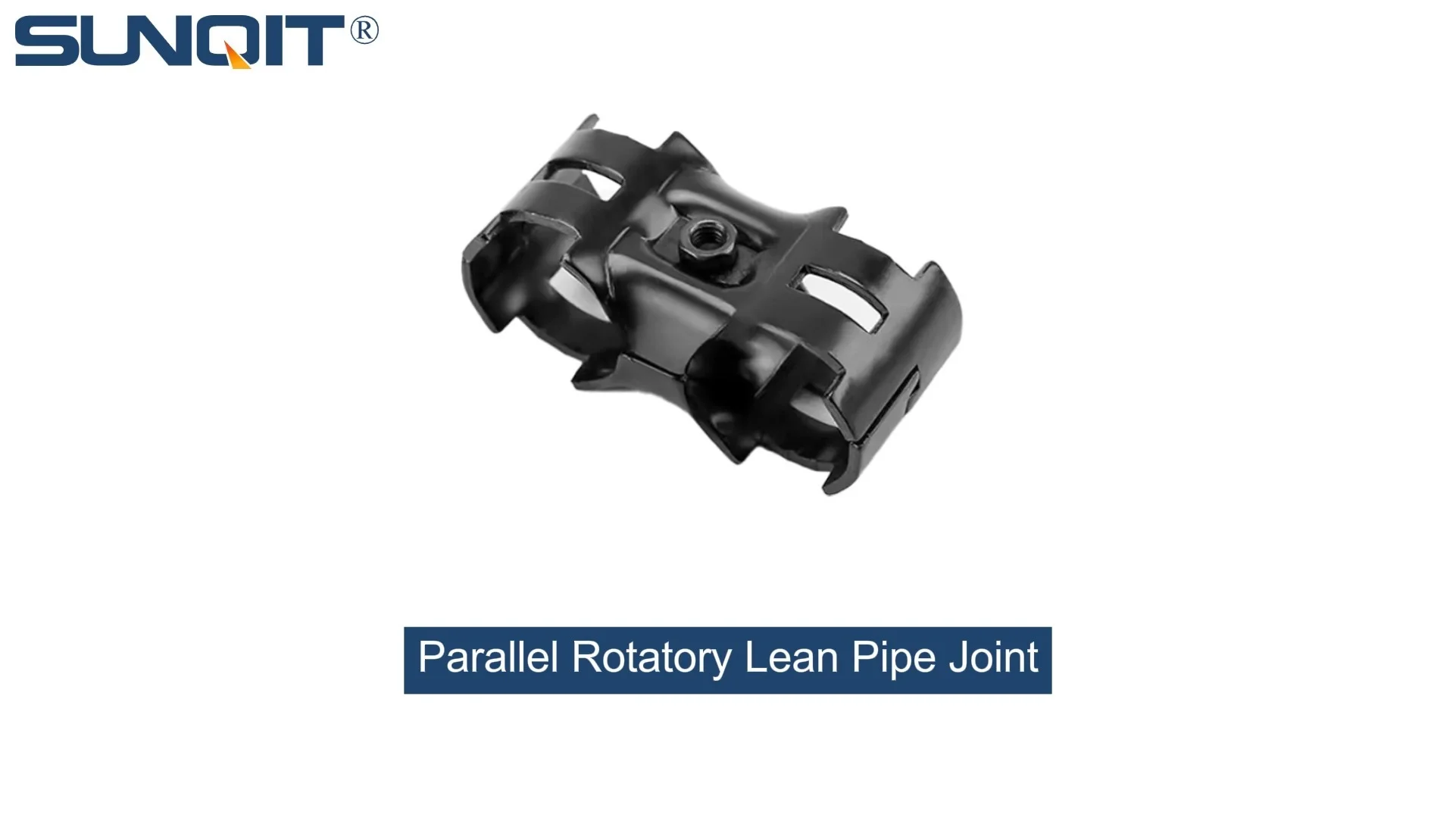
In today's fast-paced manufacturing world, where customer demands shift overnight and product lifecycles grow shorter by the quarter, agility isn't just a buzzword—it's the difference between thriving and falling behind. Picture this: a production floor where reconfiguring a workstation to accommodate a new product line takes days, not hours. A facility where rigid, fixed structures leave no room for adjusting workflows as team needs evolve. Sound familiar? For too many manufacturers, this scenario is daily reality. But what if there was a simple, cost-effective solution to break free from this rigidity? Enter parallel rotatory lean pipe joints—the unsung heroes of flexible, agile manufacturing.
The Problem with Rigidity in Modern Manufacturing
Traditional manufacturing setups often rely on fixed infrastructure: welded steel frames, bolted-down workbenches, and inflexible material racks. These systems are built to last, but "last" in manufacturing terms now means adapting to constant change. When a new product requires a taller work surface, or a sudden surge in orders demands rearranging a production line to boost throughput, rigid structures become liabilities. Teams waste precious time (and money) cutting, welding, or replacing entire setups—time that could be spent building products, not rebuilding workspaces.
This is where lean manufacturing principles collide with outdated tools. Lean is all about eliminating waste, optimizing flow, and responding quickly to change. But how can you achieve that if your physical workspace can't keep up? The answer lies in flexible components that let you adapt on the fly. And at the heart of that flexibility? Parallel rotatory lean pipe joints.
What Are Parallel Rotatory Lean Pipe Joints, Anyway?
Let's start with the basics. Lean pipe systems—often made from aluminum, stainless steel, or coated steel—are the backbone of modular manufacturing setups. They're lightweight, strong, and designed to be assembled into workbenches, material racks, conveyor systems, and more. But the real magic isn't in the pipes themselves; it's in the joints that hold them together. Enter the parallel rotatory lean pipe joint: a specialized connector that does more than just "hold" pipes—it lets them move.
Unlike fixed joints (which lock pipes into a static angle, like a 90-degree corner that never budges), parallel rotatory joints feature internal mechanisms that allow controlled rotation. Think of them as the "hinges" of your manufacturing infrastructure. Need to tilt a workbench surface for better ergonomics? Rotate the joint. Want to adjust the height of a material rack to fit taller bins? Twist the joint. Need to reposition a roller track to redirect material flow? A quick turn of the joint, and you're done—no tools, no welding, no downtime.
These joints aren't one-size-fits-all, either. They're engineered to work seamlessly with common lean manufacturing components: aluminum profiles for sturdy frames, roller tracks for smooth material movement, and even casters for mobile setups. Whether you're building a simple assembly station or a complex production line, parallel rotatory joints act as the flexible glue that holds everything together—while still letting everything move.
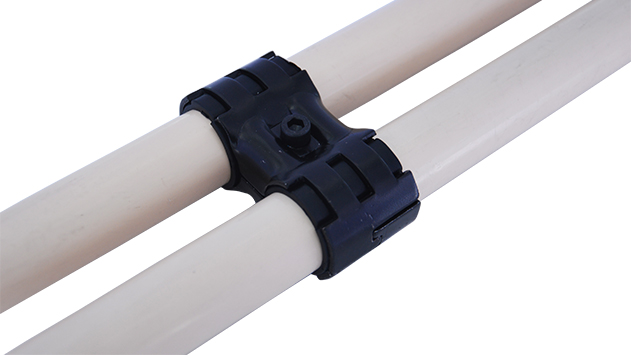
5 Game-Changing Features of Parallel Rotatory Lean Pipe Joints
What makes these joints so indispensable? Let's break down their most impactful features, and how they translate to real-world manufacturing wins:
1. 360-Degree Rotational Freedom (Without Sacrificing Stability)
The star feature here is rotation—but not the "wobbly, unstable" kind. High-quality parallel rotatory joints offer smooth, controlled movement across a full 360 degrees, with built-in locking mechanisms to hold positions securely. This means you can angle a lean pipe workbench at 15 degrees for precision assembly, lock it in place, and trust it won't shift mid-task. For workers, this translates to reduced strain (no more hunching over a flat surface) and fewer errors (better visibility of small parts). For managers, it means one workstation can adapt to multiple tasks—no need to build separate setups for different jobs.
2. Tool-Free Adjustment (Because Time Is Money)
Ever watched a team spend an hour with wrenches and screwdrivers just to move a shelf by six inches? With parallel rotatory joints, those days are over. Most models feature quick-release levers or twist-lock knobs that let anyone on the floor adjust configurations in seconds. A line worker noticing a bottleneck can reposition a roller track themselves, without waiting for maintenance. A supervisor prepping for a new product run can reconfigure three workbenches in the time it used to take to reconfigure one. When adjustments take minutes instead of hours, downtime plummets—and productivity soars.
3. Compatibility with Aluminum Profiles and Roller Tracks
No manufacturing setup exists in a vacuum, and parallel rotatory joints play well with others. They're designed to pair seamlessly with aluminum profiles (sturdy, lightweight frames that form the base of workbenches and racks) and roller tracks (the grooved rails that let materials glide from point A to B). For example, attaching a roller track to a lean pipe frame using a parallel rotatory joint lets you tilt the track slightly downward, using gravity to move bins or parts—no motors, no electricity, just smart design. This compatibility means you can mix and match components to create custom solutions, instead of being locked into one brand or system.
4. Durable Construction for Heavy-Duty Use
Flexibility doesn't mean fragility. Top-tier parallel rotatory joints are built with industrial-grade materials—often aluminum or stainless steel—with reinforced joints and corrosion-resistant coatings. They're tested to withstand daily use: repeated rotations, heavy loads (up to 500 lbs in some cases), and exposure to oils, coolants, or dust common in manufacturing environments. This durability ensures your investment lasts, even in high-traffic areas like automotive assembly lines or electronics production floors.
5. Cost-Effective Longevity (Reuse, Don't replace)
The most underrated benefit? These joints turn your infrastructure into a reusable asset. Instead of scrapping a workbench when your needs change, you can disassemble it, reconfigure the pipes with new joint positions, and build something entirely different. A material rack today becomes a turnover trolley tomorrow; a static assembly station becomes a mobile testing bench next month. Over time, this reusability slashes capital costs—no need to buy new equipment every time your product line shifts.

From Workbenches to Warehouses: Real-World Applications
Parallel rotatory lean pipe joints aren't just a theoretical win—they're transforming floors across industries. Let's look at how they're making an impact in key areas:
Lean Pipe Workbenches: The Heart of the Production Line
The lean pipe workbench is the workhorse of manufacturing, and parallel rotatory joints take it from "good" to "great." Imagine an electronics plant assembling smartphones: one day, workers need a flat surface for soldering tiny components; the next, they're testing larger circuit boards and need a tilted surface to avoid glare. With fixed joints, this would require two separate workbenches. With parallel rotatory joints? A quick twist adjusts the angle, and the same bench handles both tasks. Add aluminum profile legs with adjustable height (another joint-enabled feature), and the bench can accommodate workers of different heights—no more one-size-fits-all discomfort.
For ESD (electrostatic discharge) workbenches—critical in electronics manufacturing—these joints are even more valuable. ESD setups require precise grounding and static control, but that shouldn't mean rigidity. Parallel rotatory joints let teams adjust ESD-safe surfaces without disrupting grounding connections, ensuring sensitive components stay protected while workflows stay flexible.
Material Racks and Roller Tracks: Smoothing the Flow
Material handling is where bottlenecks kill productivity. A rack that's too tall, a roller track that feeds parts to the wrong station, or a trolley that can't navigate tight corners—these small issues add up to big delays. Parallel rotatory joints solve this by letting you "tweak" material flow in real time.
Take a automotive parts warehouse using roller tracks to move bins of screws, bolts, and washers to assembly lines. If a line needs more washers suddenly, a worker can rotate the joint connecting the roller track to the main rack, redirecting the flow in seconds. No need to call maintenance; no need to stop the line. For multi-level racks, joints let you angle tracks downward to use gravity, reducing the need for powered conveyors. The result? Material gets where it needs to be, faster—keeping production on schedule.
Mobile Trolleys and Turnover Racks: Flexibility on Wheels
Mobility is key in agile manufacturing, and parallel rotatory joints make mobile setups smarter. A turnover trolley with joint-adjustable shelves can expand or contract to fit different-sized parts bins. A mobile testing station can tilt its work surface for better access, then fold flat for storage when not in use. Even casters benefit: joints allow the trolley's frame to absorb minor bumps in the floor, keeping delicate parts stable during transport.

Case Study: How One Manufacturer Cut Downtime by 70% with Parallel Rotatory Joints
Let's dive into a real example (names changed for privacy) to see these joints in action. "Acme Electronics," a mid-sized manufacturer of medical devices, was struggling with a common problem: their production line couldn't keep up with frequent product changes. Their setup relied on fixed steel frames and welded workbenches, and reconfiguring for new device models took 2–3 days of downtime—costing them $15,000 per day in lost production.
Their solution? Partnering with a trusted lean system supplier to overhaul their infrastructure with lean pipes, aluminum profiles, and parallel rotatory joints. Here's what happened:
- Day 1: Assembly Workbench Overhaul – Acme replaced fixed workbenches with lean pipe workbenches using parallel rotatory joints. Now, instead of building a new bench for each device, workers adjust the height and angle in minutes. A task that once took 8 hours (dismantling and rebuilding) now takes 15 minutes.
- Day 2: Material Rack Reconfiguration – Their old steel racks were static, so taller device components required stacking bins (risking damage). With joint-enabled aluminum profile racks, they adjusted shelf heights on the fly, reducing part damage by 40%.
- Day 3: Roller Track Redesign – Acme's roller tracks fed parts to two assembly stations, but demand often favored one over the other. By adding parallel rotatory joints to track junctions, workers redirected parts in seconds—no more overflowing bins at one station and empty ones at the other.
The results? Reconfiguration time dropped from 3 days to just 4 hours—a 70% reduction in downtime. Over six months, this saved Acme $225,000 in lost production. Workers reported higher satisfaction (no more awkward postures), and the plant's ability to take on short-run, custom device orders (once too costly due to setup time) opened a new revenue stream.
"We used to see product changes as a headache," said Acme's production manager. "Now? We see them as an opportunity. The joints turned our floor from a rigid obstacle into a tool that adapts with us."
Traditional Joints vs. Parallel Rotatory Joints: A Side-by-Side Comparison
Still on the fence? Let's put fixed joints and parallel rotatory joints head-to-head to see how they stack up in key areas:
| Feature | Traditional Fixed Joints | Parallel Rotatory Lean Pipe Joints |
|---|---|---|
| Flexibility | Static; locked into one angle/position | 360-degree rotation with secure locking; adapts to tasks |
| Reconfiguration Time | Hours to days (requires tools, welding, or disassembly) | Minutes (tool-free adjustment) |
| Ergonomics | Limited; one-size-fits-all setup | Highly adjustable; adapts to worker height/angle preferences |
| Cost Over Time | Higher (need to replace entire structures for new tasks) | Lower (reusable; reconfigure instead of replace) |
| Compatibility | Often brand/model-specific | Works with standard lean pipes, aluminum profiles, roller tracks |
Choosing the Right Joints: What to Look for in a Supplier
Not all parallel rotatory lean pipe joints are created equal. To maximize your investment, partner with a lean system supplier that prioritizes quality, compatibility, and support. Here's what to ask:
1. Material Quality: Don't Skimp on Durability
Look for joints made from high-grade aluminum or stainless steel—these resist corrosion and stand up to heavy use. Avoid plastic or low-grade metal joints; they'll wear out quickly under manufacturing conditions.
2. Load Capacity: Match the Joint to Your Needs
Joints have different weight limits—some handle 100 lbs, others 500+ lbs. Be honest about your use case: a workbench holding small parts needs less capacity than a material rack storing heavy machinery components. A good supplier will help you select the right joint for the job.
3. Compatibility: Ensure It Works with Your Existing Setup
If you already have lean pipes, aluminum profiles, or roller tracks, make sure the joints fit your current system. Most suppliers offer universal joints that work with standard pipe diameters (like 28mm lean pipes or 40x40mm aluminum profiles), but double-check to avoid mismatched components.
4. Testing and Certifications: Trust, but Verify
Reputable suppliers test their joints for durability, rotation smoothness, and locking reliability. Ask for test reports or certifications—this ensures the joint performs as advertised, even after thousands of adjustments.
5. Support: Beyond the Sale
A great supplier doesn't just sell you joints—they help you use them. Look for companies that offer design support (e.g., helping you plan a flexible workbench layout), troubleshooting, and fast replacement parts. After all, even the best joints need occasional maintenance.
The Future of Agile Manufacturing: Where Parallel Rotatory Joints Fit In
As manufacturing grows more automated and data-driven, flexibility will only become more critical. Smart factories with IoT sensors, collaborative robots, and AI-driven workflows need physical infrastructure that can keep up. Parallel rotatory lean pipe joints are poised to play a key role here—acting as the "mechanical interface" between humans, machines, and changing demands.
Imagine a future where a lean pipe workbench, equipped with sensors, automatically adjusts its angle based on a worker's height (detected via camera) or reconfigures itself overnight for a new production run scheduled via a manufacturing execution system (MES). This isn't science fiction—it's the next step, and it starts with flexible, connected infrastructure like parallel rotatory joints.
Even today, forward-thinking manufacturers are pairing these joints with smart casters (to track trolley movement) or RFID tags (to monitor joint positions and usage). The goal? Create a "digital twin" of the production floor, where physical adjustments are logged and analyzed to optimize workflows further. It's agility meets intelligence—and it all starts with the right foundation.
Final Thoughts: Your Infrastructure Should Adapt as Fast as You Do
In manufacturing, the only constant is change. Customer demands shift, products evolve, and new technologies emerge—your infrastructure shouldn't hold you back. Parallel rotatory lean pipe joints are more than just connectors; they're enablers of agility. They turn rigid factories into flexible ecosystems where workbenches adjust, material flows smoothly, and teams adapt without missing a beat.
The question isn't whether you can afford to invest in these joints—it's whether you can afford not to. For manufacturers ready to stop building for today and start building for whatever comes next, parallel rotatory lean pipe joints are the key. So take a look at your production floor, talk to your team about their pain points, and reach out to a trusted lean system supplier. Your next breakthrough in productivity might be just a twist away.