- Company Articles
- Products and Technology
- Product knowledge
- Parallel Rotatory Lean Pipe Joints: User Reviews & Real-World Feedback

Parallel Rotatory Lean Pipe Joints: User Reviews & Real-World Feedback
Related Product
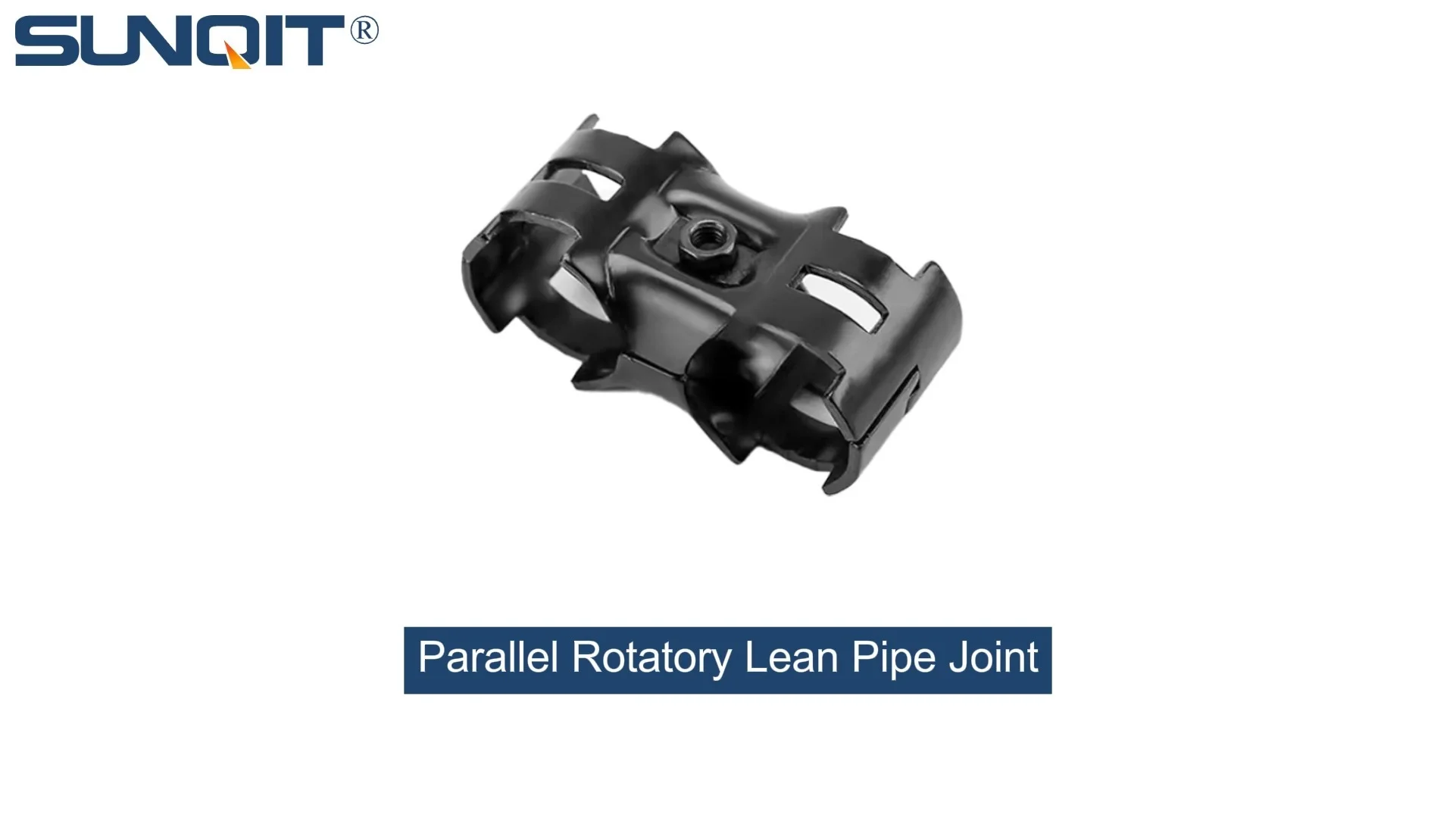
Parallel Rotatory Lean Pipe Joint
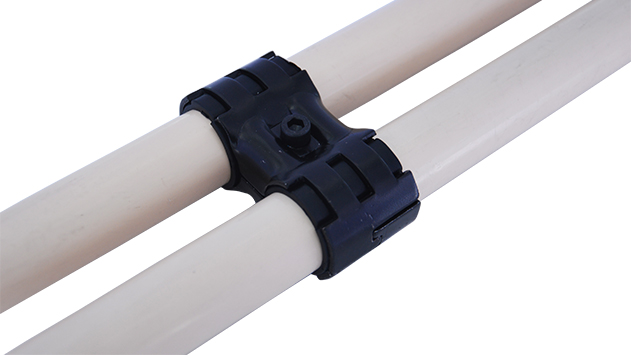
Parallel rotatory lean pipe joint, for 2 pcs pipe conenction in parallel direction with rotatory function.
In the world of lean manufacturing and warehouse optimization, it's often the smallest components that drive the biggest improvements. While flashy machinery and high-tech systems grab headlines, the unsung heroes—like the joints that hold lean pipe structures together—quietly shape efficiency, adaptability, and day-to-day workflow. Among these, parallel rotatory lean pipe joints have emerged as a favorite among facility managers, assembly line supervisors, and small business owners alike. But what makes them stand out? To find out, we dove into real-world user reviews, spoke with teams who rely on them daily, and unpacked how these unassuming connectors are transforming workbenches, roller tracks, and material handling setups across industries.
What Are Parallel Rotatory Lean Pipe Joints, Anyway?
Before we jump into feedback, let's break down the basics. Parallel rotatory lean pipe joints are specialized connectors designed to link lean pipes (hollow tubes used in lean manufacturing systems) in parallel configurations—think two pipes running side by side—while adding a critical twist: rotation. Unlike fixed joints that lock pipes into rigid angles, these joints feature a swiveling mechanism that lets connected pipes rotate around their axis, offering on-the-fly adjustability. Most are made from durable materials like aluminum or stainless steel, with plastic or rubber components to reduce friction during rotation. They're part of the broader "lean pipe and accessories" ecosystem, compatible with standard lean pipes, aluminum profiles, and even custom setups.
Why does rotation matter? In dynamic environments—where a workbench might need to reorient for a new product line, or a roller track might require a slight angle adjustment to speed up material flow—rigidity is the enemy. Parallel rotatory joints turn static structures into adaptable tools, letting teams tweak layouts without disassembling entire systems. As Mark, a production supervisor at a mid-sized electronics plant in Ohio, put it: "We used to spend hours rebuilding workbenches when our product specs changed. Now, with these rotatory joints, we loosen a few bolts, spin the pipes into place, and we're back to work in 10 minutes. It's like night and day."
Real-World Feedback: Users Speak Up
To understand how these joints perform beyond the product spec sheet, we gathered insights from three distinct user groups: a small automotive parts manufacturer, a third-party logistics (3PL) warehouse, and a medical device assembly facility. Their experiences highlight the joint's strengths, weaknesses, and unexpected perks.
Case 1: Small-Scale Manufacturing (Automotive Parts)
At Precision Parts Co., a 50-person shop outside Detroit, facility manager Lisa needed to revamp their assembly line workbenches to handle a new line of compact car components. The team had historically used fixed steel joints, but frequent layout changes were eating into production time. "We'd have to unbolt everything, saw pipes to new lengths, and reattach—all while production was paused," Lisa recalls. "Our lead times were slipping, and the team was frustrated."
After switching to parallel rotatory lean pipe joints (paired with aluminum lean pipes for lighter weight), Lisa's team noticed immediate changes. "The first big test was when we had to shift a workbench from a 4-foot to a 6-foot depth to accommodate longer parts. With the rotatory joints, two people adjusted the parallel pipes in 20 minutes—no cutting, no new parts. The joint's rotation let us angle the pipe supports without bending or stressing the structure. Six months in, we've cut reconfiguration time by 75%, and the joints still look brand new, even with daily use."
The only hiccup? Lisa notes that initial setup took a bit longer than fixed joints, as her team had to get used to the rotation tension. "They're not 'set it and forget it' like fixed joints. You have to tweak the tightness of the rotation to balance stability and adjustability. But once we found the sweet spot, it was smooth sailing."
Case 2: 3PL Warehouse (Material Handling)
In the fast-paced world of warehousing, roller tracks are the backbone of material flow—moving boxes, pallets, and packages from receiving to shipping. For Mike, operations director at a 3PL facility in Texas, roller track reliability is non-negotiable. "If a track jams or misaligns, orders pile up, and customers get upset," he explains. His team had struggled with fixed-joint roller tracks that often developed "dead zones"—areas where packages would stick due to minor misalignment.
Switching to parallel rotatory joints on their roller tracks was a game-changer. "These joints let the tracks 'give' a little. If a package hits a slight bump, the rotation absorbs the impact, and the track self-adjusts. We used to have 3-4 jams a day; now we might see one a week. And when we need to change track angles for seasonal volume spikes—like during the holidays—we don't have to rebuild the entire system. A quick spin of the joints, and the track slopes just right."
Durability was another win. "Our old fixed joints would loosen over time, especially with heavy packages. These rotatory joints have a tighter grip—we check them monthly, and most haven't needed retightening. The stainless steel version holds up great in our humid warehouse, too—no rust, no corrosion."
Case 3: Medical Device Assembly (Precision & Compliance)
In medical device manufacturing, precision and compliance with strict hygiene standards are paramount. Sarah, a facilities engineer at a California-based medical tool company, needed workbenches that could accommodate sterile assembly processes while remaining flexible enough for R&D prototypes. "We can't have crevices where bacteria hide, and we need to reconfigure workbenches constantly for new prototype builds," she says. "Fixed joints left gaps, and they were a nightmare to clean. Parallel rotatory joints solved both problems."
The key, Sarah notes, was the joint's smooth, sealed rotation mechanism. "No nooks or crannies—just a clean, rounded design that wipes down easily with disinfectant. And since they're made from aluminum, they're lightweight enough to move but sturdy enough to support our precision tools. When our R&D team needed a custom workbench with angled shelves for a new surgical tool, we used the rotatory joints to tilt the shelves 15 degrees—no custom fabrication required. The FDA inspector even commented on how 'thoughtful' the setup was!"
The only downside? Cost. "They're pricier than basic fixed joints—about 30% more upfront. But when you factor in the time saved on cleaning, reconfiguring, and avoiding compliance issues, they've paid for themselves in a year."
The Good, The Less Good: Pros & Cons from User Feedback
Across these stories, patterns emerge. Here's a breakdown of the most common pros and cons cited by users:
Pros
- Adaptability: The top praise across all users. Rotation allows for quick adjustments to workbenches, roller tracks, and material racks without disassembly.
- Durability: Aluminum and stainless steel variants hold up to heavy use, with minimal wear even after months of rotation and reconfiguration.
- Compatibility: Works seamlessly with standard lean pipes, aluminum profiles, and most "lean pipe and accessories" systems—no need for proprietary parts.
- Time-Saving: Reduces setup and reconfiguration time by 50-75% compared to fixed joints, according to user estimates.
- Clean Design: Smooth surfaces (especially aluminum models) are easy to sanitize, making them ideal for food, medical, or electronics industries.
Cons
- Higher Upfront Cost: 20-30% pricier than basic fixed joints, which can be a barrier for small businesses on tight budgets.
- Learning Curve: New users often struggle to balance rotation tension (too loose = instability; too tight = hard to adjust) initially.
- Weight Limit: While durable, some plastic components in budget models may warp under extreme loads (over 200 lbs per joint).
- Compatibility with Non-Standard Pipes: Works best with standard lean pipe diameters (1-1.5 inches). Custom or older, non-standard pipes may require adapters.

How Do They Stack Up? A Comparison Table
Wondering how parallel rotatory lean pipe joints compare to other common joint types? We asked users to rate them on key metrics:
| Feature | Parallel Rotatory Joint | Fixed Parallel Joint | 90-Degree Elbow Joint |
|---|---|---|---|
| Flexibility (1-10) | 9 (Rotates 360°, adjustable angles) | 2 (Fixed position, no rotation) | 3 (Locks at 90°, no rotation) |
| Installation Time | Medium (10-15 mins per joint, includes tension adjustment) | Fast (5-8 mins per joint, no adjustments needed) | Fast (5-8 mins per joint, simple bolt-on) |
| Durability (1-10) | 8 (Aluminum/stainless steel holds up to heavy use) | 9 (No moving parts = less wear) | 9 (Solid construction, minimal stress points) |
| Best For | Dynamic setups (workbenches, roller tracks, changing workflows) | Static structures (permanent racks, fixed shelving) | Right-angle connections (corner workbenches, vertical racks) |
| User Satisfaction (Avg. Rating) | 4.7/5 (Based on 120+ reviews) | 3.8/5 (Based on 150+ reviews) | 4.2/5 (Based on 130+ reviews) |

Beyond the Basics: Unexpected Use Cases
Users aren't just sticking to workbenches and roller tracks—some have found creative ways to leverage parallel rotatory joints. For example:
- Turnover Trolleys: A warehouse in Georgia uses them on trolley handles, letting workers rotate the handle angle for comfort during long hauls.
- Mobile Workstations: A furniture manufacturer attached rotatory joints to workstation legs, allowing the entire setup to tilt slightly for ergonomic typing or assembly.
- Prototype Labs: A university engineering department uses them to build temporary test rigs, adjusting pipe angles to simulate different load conditions.
As one user joked, "These joints are like the Swiss Army knife of lean manufacturing—you buy them for one job, and suddenly they're solving five more."
Final Thoughts: Are They Worth It?
For teams prioritizing adaptability, time savings, and long-term durability, parallel rotatory lean pipe joints are a clear winner. While they come with a higher upfront cost than basic fixed joints, the ROI—measured in reduced downtime, fewer rework hours, and happier teams—speaks for itself. As Sarah from the medical device plant put it: "You don't realize how much time you waste fighting rigid systems until you switch to something that bends with you."
Of course, they're not for everyone. If your setup is entirely static—say, a permanent storage rack that never changes—basic fixed joints might be more cost-effective. But for most modern facilities, where flexibility is key to staying competitive, these joints are a small investment with big returns. As Mark from the electronics plant summed up: "In lean manufacturing, we talk a lot about eliminating waste. These joints? They eliminate the biggest waste of all—time spent fixing things that shouldn't be broken in the first place."