- Company Articles
- Products and Technology
- Product knowledge
- Parallel Rotatory Lean Pipe Joints: Weight Capacity & Load Testing

Parallel Rotatory Lean Pipe Joints: Weight Capacity & Load Testing
Related Product
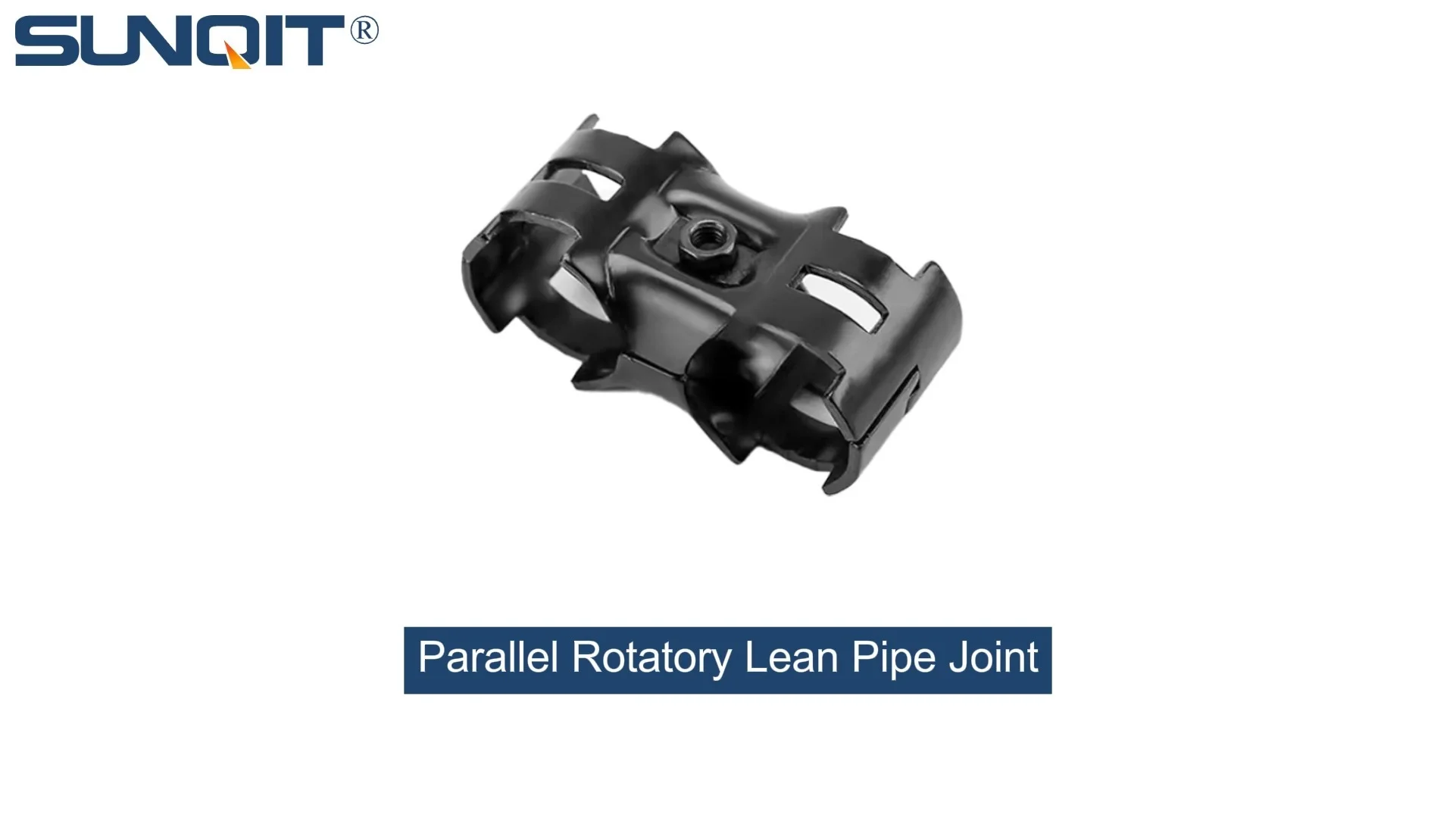
Parallel Rotatory Lean Pipe Joint
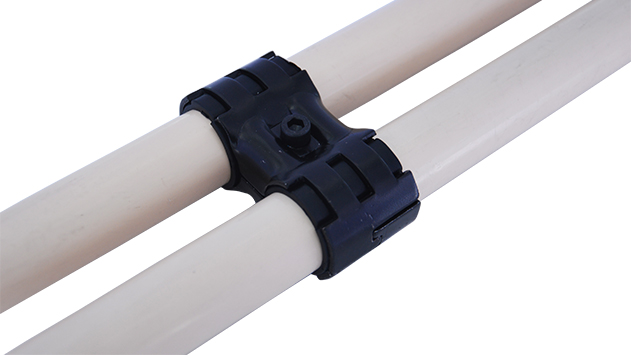
Parallel rotatory lean pipe joint, for 2 pcs pipe conenction in parallel direction with rotatory function.
Introduction: The Backbone of Lean Manufacturing Systems
In the fast-paced world of modern manufacturing, efficiency isn't just a buzzword—it's the cornerstone of survival. Every second saved, every movement optimized, and every resource maximized contributes to a leaner, more profitable operation. At the heart of this efficiency revolution lies the lean system —a philosophy and set of tools designed to eliminate waste, streamline workflows, and enhance productivity. Yet, for all its conceptual elegance, a lean system is only as strong as its physical components. Enter the unsung hero of modular manufacturing: the parallel rotatory lean pipe joint.
Imagine a factory floor where workbenches adjust with a simple twist, material racks reconfigure in minutes to accommodate new products, and conveyor systems adapt to shifting production demands—all without compromising stability or safety. This flexibility is made possible by components like parallel rotatory lean pipe joints, which serve as the connective tissue of lean pipe structures. These unassuming parts link aluminum or steel pipes, enabling the creation of everything from lightweight workstations to heavy-duty material handling racks. But here's the critical question: How much weight can they actually bear? And how do we ensure they won't fail when put to the test?
This article dives deep into the world of parallel rotatory lean pipe joints, focusing on two pivotal aspects: weight capacity and load testing. We'll explore what these joints are, the factors that influence their ability to carry weight, the rigorous testing protocols that validate their performance, and why this matters for anyone building or maintaining a lean system. Whether you're a plant manager overseeing production lines, a procurement specialist sourcing components, or a maintenance technician ensuring daily operations run smoothly, understanding the capabilities of these joints is essential for safety, efficiency, and cost-effectiveness.
What Are Parallel Rotatory Lean Pipe Joints?
Before we delve into weight capacity and testing, let's clarify what parallel rotatory lean pipe joints are and why they're indispensable in lean systems. At their core, these joints are mechanical connectors designed to link lean pipes —hollow tubes typically made of aluminum, steel, or plastic-coated steel—in a way that allows controlled rotation along a parallel axis. Unlike fixed joints, which lock pipes into rigid angles, parallel rotatory joints offer a degree of movement, making them ideal for applications where adjustability is key.
Picture a standard lean pipe workbench: its frame is built from interconnected pipes, with shelves, tool holders, or conveyor tracks attached via joints. A fixed joint might secure the legs to the tabletop at a 90-degree angle, but a parallel rotatory joint could allow a side shelf to swing up or down, or a tool rail to rotate horizontally for easier access. This rotation is constrained within a specific range (often 180 degrees or less) to prevent instability, but it's enough to transform a static structure into a dynamic, user-centric workspace.
Most parallel rotatory lean pipe joints consist of two main parts: a base that attaches to one pipe and a rotating collar that connects to another. The collar pivots around a central axis, often with a locking mechanism (like a setscrew or friction pad) to hold it in place once adjusted. Materials vary by application: aluminum joints are lightweight and corrosion-resistant, making them suitable for cleanrooms or food processing environments; steel joints offer higher tensile strength for heavy loads; and plastic components may be used for low-weight, cost-sensitive projects. Some joints also incorporate rubber or nylon washers to reduce vibration or prevent metal-on-metal wear.
What truly sets these joints apart, however, is their role in modularity. Lean systems thrive on the ability to adapt, and parallel rotatory joints embody this principle. A single joint can be reused across multiple structures, reducing waste and lowering replacement costs. Need to repurpose a material rack into a turnover trolley? Simply loosen the joints, reconfigure the pipes, and retighten. This flexibility not only supports lean manufacturing's "just-in-time" ethos but also future-proofs facilities against changing production needs.
Factors Influencing Weight Capacity: Why Some Joints Carry More Than Others
Not all parallel rotatory lean pipe joints are created equal. A joint designed for a lightweight workbench might buckle under the weight of a loaded material rack, just as a heavy-duty steel joint would be overkill (and unnecessarily expensive) for a small assembly station. The key difference lies in weight capacity—the maximum load a joint can safely support without failing. But what determines this capacity? Let's break down the critical factors.
1. Material Composition: The Foundation of Strength
The first and most obvious factor is the material used to make the joint. Aluminum, steel, and plastic are the primary contenders, each with its own trade-offs:
- Aluminum: Lightweight, corrosion-resistant, and easy to machine, aluminum is a popular choice for joints in medium-load applications (think workbenches or light material racks). Its tensile strength ranges from 70 to 110 MPa (megapascals), depending on the alloy. While not as strong as steel, aluminum joints often incorporate reinforcing ribs or steel inserts at stress points to boost load capacity.
- Steel: For heavy-duty tasks, steel is king. Carbon steel or stainless steel joints offer tensile strengths upwards of 400 MPa, making them suitable for supporting large loads on conveyor systems or industrial shelving. However, steel is heavier and prone to rust if not coated, which can weaken joints over time in humid environments.
- Plastic (Nylon/Polypropylene): Plastic joints are lightweight, inexpensive, and ideal for low-load, non-industrial settings (e.g., office workstations). Their tensile strength is significantly lower (typically 40–80 MPa), and they may deform under sustained heavy loads or high temperatures.
In many cases, joints combine materials for optimal performance. For example, an aluminum joint might use a steel pin for the rotation axis to wear resistance, or a plastic collar to reduce friction during movement.
2. Design Geometry: Stress Points and Load Distribution
Even the strongest material can fail if the joint's design is flawed. The geometry of a parallel rotatory joint—how its parts are shaped and connected—directly impacts how weight is distributed and where stress accumulates.
Consider the rotation mechanism: A joint with a single pivot point concentrates stress on that axis, potentially limiting load capacity. In contrast, a joint with dual bearings or a reinforced hinge spreads the load across a larger area, reducing the risk of deformation. Similarly, the thickness of the joint's walls matters: Thicker walls add strength but increase weight, so designers often use computer-aided simulations (like finite element analysis, or FEA) to identify where material can be added or removed without compromising performance.
Another critical design feature is the "grip" on the lean pipe. Joints that clamp onto pipes using setscrews or friction plates rely on the pipe's integrity to transfer load. If the clamping mechanism is poorly designed—e.g., too shallow a grip or uneven pressure—it can cause the pipe to bend or slip, even if the joint itself is strong. Some high-capacity joints use expandable inserts that press against the pipe's inner wall, distributing force evenly and reducing stress on the pipe's outer surface.
3. Manufacturing Quality: Precision Matters
A well-designed joint is only as good as its manufacturing. Even minor defects can drastically reduce load capacity. For example, a casting with air bubbles (porosity) creates weak spots that may crack under load. Similarly, imprecise machining can result in misaligned pivot points, causing uneven stress distribution during rotation.
High-quality joints are typically made using processes like die casting (for aluminum), CNC machining (for tight tolerances), or forging (for steel, to improve grain structure and strength). Post-production treatments like anodizing (for aluminum) or powder coating (for steel) not only enhance corrosion resistance but also add a protective layer that can prevent micro-cracks from spreading.
4. Environmental Factors: When Context Counts
Weight capacity isn't a fixed number—it can change based on the environment. Temperature extremes, for instance, can weaken materials: Aluminum becomes more brittle at sub-zero temperatures, while plastic joints may soften in high heat, reducing their load-bearing ability. Humidity and chemicals (like oils or solvents) can also degrade materials over time, especially uncoated steel or low-quality plastics.
Even the way a joint is installed affects its performance. Over-tightening a setscrew might strip threads or crack the joint, while under-tightening can lead to slippage. The supporting structure matters too: A joint rated for 500 kg won't hold that weight if the pipe it's attached to bends under pressure. In short, a joint's capacity is only realized when it's part of a well-engineered system.

Load Testing Protocols: Separating Hype from Reality
So, you've selected a parallel rotatory lean pipe joint made from high-grade aluminum, with a reinforced hinge and precision machining. The manufacturer claims it can support 300 kg. But how do you know they're not just making empty promises? The answer lies in load testing—the rigorous process of subjecting joints to controlled stress to measure their real-world performance.
Load testing isn't a one-size-fits-all affair. Different applications demand different tests, and standards vary by industry. Below, we'll walk through the most common protocols, why they matter, and what they reveal about a joint's capabilities.
Static Load Testing: The Foundation of Safety
Static load testing is the most basic—and critical—type of evaluation. It measures how a joint performs under a constant, stationary load over time. Here's how it works:
- Setup: The joint is mounted to a test rig that mimics real-world conditions—e.g., attached to two fixed pipes at the same angle it would be in a workbench. A load cell (a device that measures force) is connected to the free end of the structure, and a hydraulic or mechanical press applies weight gradually.
- Loading: The load starts at 25% of the manufacturer's claimed capacity and increases in increments (often 10–20% each step) until it reaches 150–200% of the rated load. This "overload" testing ensures a safety margin—if a joint is rated for 300 kg, it should ideally withstand 450 kg before failing.
- Monitoring: During testing, engineers measure deflection (how much the joint bends) using dial gauges or laser sensors. Elastic deflection (temporary bending that reverses when the load is removed) is normal, but plastic deflection (permanent bending) indicates the joint is approaching failure.
- Failure Criteria: A joint "fails" when it can no longer support the load without catastrophic deformation (e.g., cracking, snapping, or the rotation mechanism seizing). The maximum load it sustains before failure is recorded as its ultimate capacity.
Static testing is essential for applications where loads are constant, like a workbench holding tools or a material rack storing boxes. It ensures the joint won't collapse under steady pressure.
Dynamic Load Testing: For Moving Loads
Not all loads are stationary. Conveyor systems, for example, carry materials that shift, vibrate, or impact the structure as they move. Dynamic load testing evaluates how joints perform under these changing conditions.
In dynamic testing, the load isn't just applied gradually—it's cycled (repeatedly added and removed) or applied suddenly (to simulate impact). For instance, a joint used in a roller track might be tested with a weighted cart rolling over it 10,000 times to mimic years of use. Engineers measure not just maximum load but also fatigue resistance—how well the joint holds up to repeated stress.
One common dynamic test is the "shock load" test, where a weight is dropped onto the structure from a short height. This simulates accidents like a worker accidentally dropping a heavy tool on a workbench. A joint that passes static testing might still fail under shock if its materials are brittle or its design doesn't absorb impact.
Industry Standards: Ensuring Consistency
To ensure reliability, load testing often follows established standards. Organizations like the International Organization for Standardization (ISO) or the American Society for Testing and Materials (ASTM) publish guidelines for testing structural components. For example, ISO 10248 specifies methods for testing the static load capacity of mechanical connections in modular systems, while ASTM F1554 covers the performance of steel fasteners under tension and shear.
Manufacturers that adhere to these standards provide test reports certifying their joints meet specific load requirements. When sourcing joints, look for certifications like "ISO 10248 compliant" or "ASTM F1554 tested"—these aren't just marketing buzzwords but indicators of rigorous third-party validation.

Real-World Performance Data: How Do Joints Stack Up?
To put all this theory into perspective, let's look at real-world data from load tests on common parallel rotatory lean pipe joints. The table below compares three popular models—aluminum, steel-reinforced aluminum, and stainless steel—across key metrics like material, rotation range, and load capacity. Note that these values are based on industry averages and may vary by manufacturer.
| Joint Type | Material | Rotation Range (°) | Max Static Load (kg) | Max Dynamic Load (kg) | Failure Load (kg) | Typical Application |
|---|---|---|---|---|---|---|
| Standard Aluminum | 6061 Aluminum Alloy | 0–180 | 150–200 | 100–150 | 300–350 | Light workbenches, tool racks |
| Steel-Reinforced Aluminum | Aluminum with Steel insert | 0–120 | 250–300 | 200–250 | 450–500 | Medium material racks, assembly lines |
| Stainless Steel | 304 Stainless Steel | 0–90 | 400–500 | 350–400 | 700–800 | Heavy-duty conveyor systems, industrial shelving |
Key takeaways from this data:
- Trade-off Between Rotation and Load: Joints with wider rotation ranges (like the standard aluminum model) typically have lower load capacities. This is because more rotation requires more moving parts, which introduce additional stress points.
- Steel Reinforcement Boosts Capacity: The steel-reinforced aluminum joint outperforms the standard aluminum model by 60–70% in static load, showing how material combinations can bridge strength and weight.
- Safety Margin: Notice that failure load is significantly higher than max rated load (often 2x). This safety margin is intentional—manufacturers design joints to fail only under extreme overload, ensuring everyday use stays well within safe limits.
For example, a steel-reinforced aluminum joint rated for 300 kg static load will typically fail at 450 kg or more. This means even if a worker accidentally places 350 kg on the structure, the joint should hold—though it's not recommended to push these limits regularly.
Applications in Lean Systems: Where Capacity Meets Flexibility
Understanding weight capacity and load testing isn't just an academic exercise—it directly impacts which joints you choose for specific applications. Let's explore three common scenarios where parallel rotatory lean pipe joints shine, and how their load capabilities make or break success.
1. Workbenches: Balancing Adjustability and Stability
Workbenches are the workhorses of manufacturing, supporting everything from delicate electronics assembly to heavy machinery repair. A typical workbench might have adjustable shelves, tool rails, or overhead racks—all connected via parallel rotatory joints. For example, a technician assembling circuit boards might need a shelf that rotates to bring components within arm's reach, while a mechanic working on engines needs a stable surface that can hold 100+ kg of tools and parts.
Here, a standard aluminum joint (150–200 kg static load) is usually sufficient for light to medium tasks. But if the bench doubles as a testing station for heavy equipment, a steel-reinforced joint (250–300 kg) is a safer bet. The key is matching the joint's capacity to the maximum expected load, plus a buffer for unexpected stress (like leaning on the bench or placing a heavy box temporarily).
2. Material Racks: Storing Heavy Loads Safely
Material racks—used to store raw materials, semi-finished goods, or finished products—are another critical application. A rack with three rows and three floors (like "Material Rack B" in many catalogs) might hold dozens of boxes, each weighing 20–30 kg. Multiply that by 9 shelves, and the total load could exceed 500 kg—all supported by joints connecting the vertical and horizontal pipes.
In this case, stainless steel joints (400–500 kg static load) are often the go-to choice. Their high failure load (700–800 kg) provides a robust safety margin, even if the rack is overloaded. Dynamic load also comes into play here: if workers slide boxes onto the shelves, the joints must withstand the sudden impact of shifting weight. Steel joints, with their superior fatigue resistance, are less likely to loosen or deform over time compared to aluminum.
3. Conveyor Systems: Moving Loads with Precision
Conveyors are the arteries of lean manufacturing, moving products between workstations. Roller tracks, in particular, rely on parallel rotatory joints to adjust angles or connect sections. For example, a gravity-fed roller track might use joints to slope downward, allowing boxes to glide to the next station. Here, dynamic load is critical—joints must support not just the weight of the boxes but also the vibration and friction of rolling motion.
Steel-reinforced aluminum joints are often preferred for conveyors. They offer enough strength (250–300 kg dynamic load) to handle moving boxes while remaining lightweight enough to keep the system energy-efficient. Additionally, their corrosion resistance is a plus in environments where spills or humidity are common.
Maintenance and Longevity: Keeping Joints Strong Over Time
Even the best parallel rotatory lean pipe joint won't last forever without proper care. Over time, wear and tear can reduce load capacity—loose connections, corroded parts, or worn pivot points all compromise performance. The good news is that with regular maintenance, you can extend a joint's lifespan and ensure it continues to meet its rated capacity.
Here are key maintenance tips:
- Inspect Regularly: Check joints monthly for signs of damage—cracks, rust, or excessive play (wobbling). Pay special attention to high-stress areas like pivot points and clamping mechanisms.
- Tighten Connections: Vibration from machinery or daily use can loosen setscrews or bolts. Use a torque wrench to retighten them to the manufacturer's specifications (over-tightening can strip threads).
- Lubricate Moving Parts: Apply silicone grease or dry lubricant to rotatory joints every 3–6 months to reduce friction and prevent seizing. Avoid oil-based lubricants, which can attract dust and debris.
- replace Worn Components: If a joint shows permanent deformation (e.g., a bent pivot pin) or corrosion that can't be cleaned, replace it immediately. A single faulty joint can compromise an entire structure.
- Protect from the Elements: In humid or corrosive environments, coat steel joints with anti-rust spray and ensure aluminum joints are anodized. For outdoor use, consider stainless steel or plastic-coated joints.
By following these steps, you can ensure your parallel rotatory lean pipe joints maintain their weight capacity for years, keeping your lean system safe and efficient.
Conclusion: The Unsung Heroes of Lean Manufacturing
Parallel rotatory lean pipe joints may be small, but their impact on lean manufacturing is enormous. They enable the flexibility that makes lean systems adaptable, the modularity that reduces waste, and the safety that protects workers and products. Understanding their weight capacity and ensuring they pass rigorous load testing isn't just a technical detail—it's a cornerstone of operational excellence.
From the aluminum joints in a lightweight workbench to the stainless steel behemoths supporting industrial racks, these components bridge the gap between lean philosophy and real-world performance. By considering factors like material, design, and testing, and by maintaining them properly, you can build lean systems that not only meet today's needs but also adapt to tomorrow's challenges.
So the next time you walk through a factory floor, take a moment to look at the structures around you. The workbenches that adjust, the racks that reconfigure, the conveyors that flow—they all rely on the quiet strength of parallel rotatory lean pipe joints. And now, you know just how much thought, testing, and care goes into making sure they don't let you down.