- Company Articles
- Products and Technology
- Product knowledge
- Patient Bed Mobility: Flat Swivel Castor Wheel with Brake for Medical Equipment Safety

Patient Bed Mobility: Flat Swivel Castor Wheel with Brake for Medical Equipment Safety
Related Product
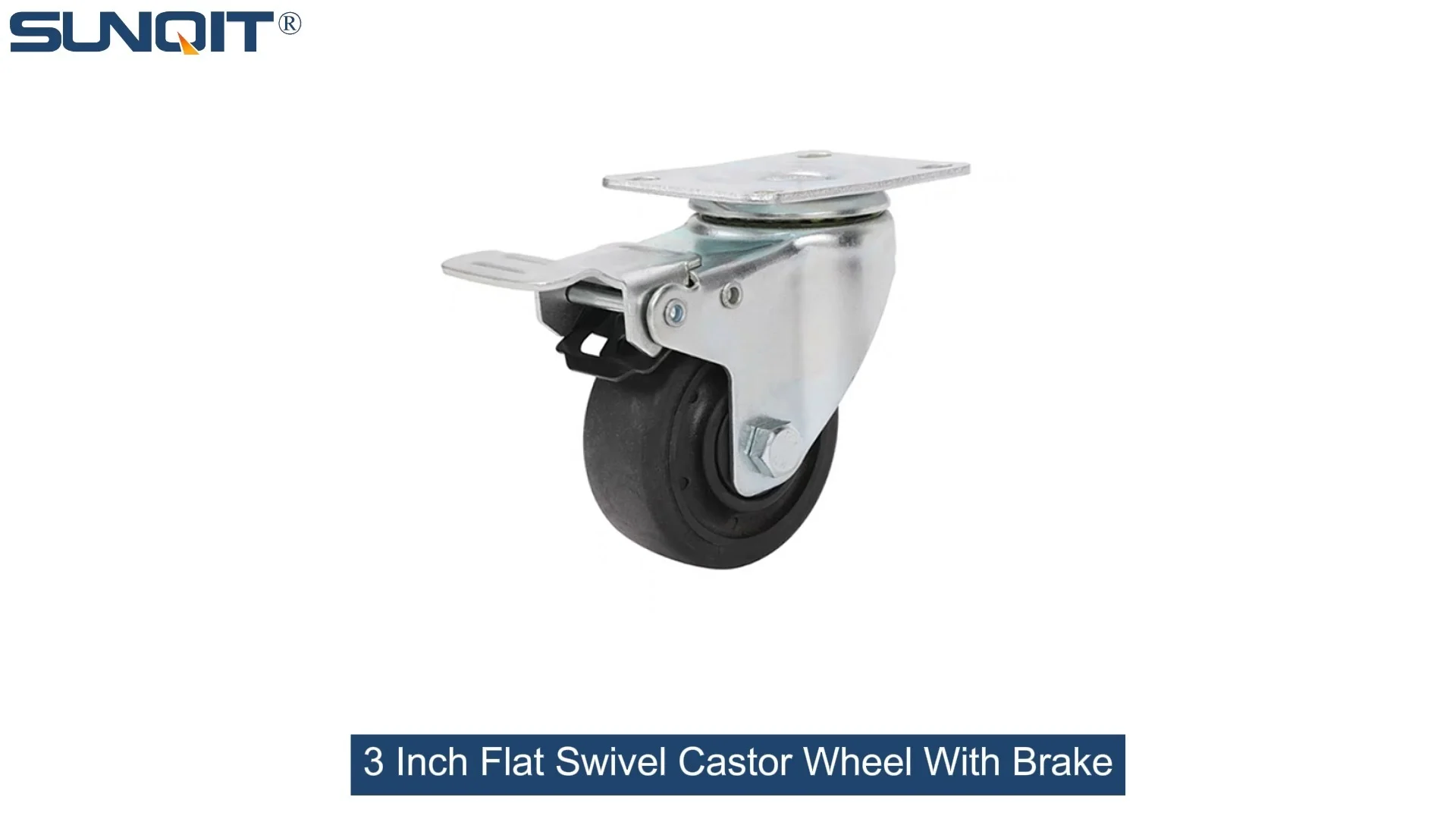
Flat Swivel Castor Wheel With Brake
Chair Casters Ball Bearing Wheels Rubber Base with brake design. Resistant to abrasion, impact and corrosion. Heavy payload can hold 70Kgs per pcs,which can make it works at a stable and smooth status.
The Heartbeat of Hospital Mobility: Why Patient Bed Movement Matters
In the fast-paced world of healthcare, every detail counts—especially when it comes to patient care. From the moment a patient arrives at the hospital to their discharge, mobility plays an invisible yet critical role in their experience. Think about it: moving a patient from the ER to an exam room, repositioning them for a procedure, or simply adjusting their bed for comfort—these actions rely on equipment that moves smoothly, safely, and predictably. At the center of this mobility lies a component so small it's often overlooked: the caster wheel . But not just any caster wheel—medical environments demand precision, and that's where the flat swivel castor wheel with brake steps in as a silent guardian of safety.
Patient beds are more than just a place to rest; they're mobile care stations. They carry monitors, IV stands, and sometimes even life-saving equipment. A bed that jolts unexpectedly, refuses to turn in tight corridors, or—worst of all—slips when stationary can put both patients and staff at risk. Nurses and technicians already face heavy workloads; the last thing they need is equipment that fights against them. That's why choosing the right castor wheels isn't a trivial decision—it's a commitment to patient safety and staff efficiency.
Beyond Basic Wheels: What Makes Medical Castors Unique
Walk into any hardware store, and you'll find caster wheels for office chairs, shopping carts, or industrial racks. But medical caster wheels are in a league of their own. They're designed to meet strict standards: non-marking to protect hospital floors, anti-microbial to prevent germ spread, and shock-absorbent to minimize patient discomfort during movement. Most importantly, they need to balance two conflicting needs: easy mobility and instant stability . This is where the flat swivel castor wheel with brake shines.
Let's break down the "flat swivel" part first. Unlike bulky, curved-base castors, the flat design distributes weight evenly, reducing strain on hospital floors (which are often made of delicate materials like linoleum or vinyl). This even distribution also prevents the wheel from sinking into soft surfaces, like carpeted waiting areas, ensuring smooth movement across different floor types. The "swivel" feature is equally vital: in crowded hospital hallways or small patient rooms, a bed that can pivot 360 degrees without hesitation saves precious time. Nurses don't have to backtrack or maneuver awkwardly—they can guide the bed with minimal effort, reducing the risk of straining their backs.
The Brake: Your First Line of Defense Against Accidents
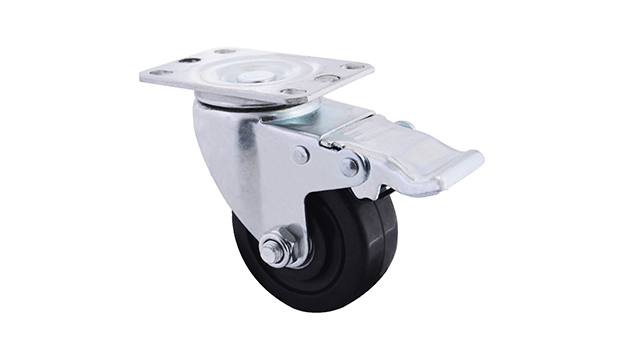
If the swivel and flat base are about movement, the brake is all about control. Imagine a scenario: a nurse is adjusting a patient's IV line while the bed is parked next to a window. A slight bump from a passing cart, a quick turn, or even a gentle push could send the bed rolling—with catastrophic consequences. This is why the brake mechanism on a flat swivel castor wheel with brake isn't an afterthought; it's engineered to be intuitive, reliable, and impossible to ignore.
Foot-operated brakes are the gold standard here. They allow staff to engage or disengage the brake without bending down, keeping their hands free to steady the patient. A good brake should lock both the wheel and the swivel mechanism—so even if someone bumps the bed, it won't spin or roll. Some models even include a "soft brake" feature, which slows the wheel gradually instead of slamming it to a halt, preventing jolts that could discomfort patients with injuries or chronic pain.
But what happens if the brake fails? That's where caster accessories come into play. Regular maintenance kits—including replacement brake pads, lubricants, and inspection guides—ensure that these critical components stay in top shape. A hospital's maintenance team will tell you: checking caster brakes is as routine as changing smoke detector batteries. It's a small task that prevents big problems.

Design Features That Make a Difference in Real-World Care
To truly appreciate the value of a flat swivel castor wheel with brake , let's step into a day in the life of a hospital ward. It's 7 AM, and Nurse Maria is starting her shift. She needs to move Mr. Thompson, an elderly patient with limited mobility, from his bed to a wheelchair for breakfast. The bed's castors glide as she pushes, even over the transition from tile to carpet. When she positions the bed next to the wheelchair, she taps the brake pedal with her foot—a firm "click" tells her it's locked. No slipping, no wobbling. Mr. Thompson feels secure, and Maria can focus on helping him transfer safely.
Later, in the pediatric unit, Nurse Raj is wheeling a young patient to radiology. The corridor is bustling with staff and visitors, but the bed's swivel castors turn smoothly around a corner, narrowly avoiding a food cart. At the radiology door, he locks the brakes again—this time, the bed stays put even when a playful toddler runs past and bumps into it. These moments might seem small, but they add up to a safer, less stressful environment for everyone.
What makes these scenarios possible? It's the combination of design features tailored to healthcare's unique challenges:
- Load capacity: Medical beds can weigh over 500 pounds when fully equipped. Flat swivel castors are built to handle this weight without bending or warping.
- Noise reduction: Hospitals are stressful enough—squeaky wheels only add to the chaos. High-quality castors use precision bearings to move silently.
- Floor protection: Vinyl and linoleum floors are easy to clean but scratch easily. Non-marking rubber wheels prevent scuffs, keeping hospital environments looking professional and hygienic.
- Corrosion resistance: Hospitals are full of moisture—from cleaning solutions to spills. Stainless steel or coated castor frames resist rust, ensuring longevity.

Comparing Castor Types: Why Flat Swivel with Brake Stands Out
Not all castors are created equal. Let's take a closer look at how the flat swivel castor wheel with brake stacks up against other common types in medical settings:
| Castor Type | Mobility | Stability (with Brake) | Floor Compatibility | Best For |
|---|---|---|---|---|
| Fixed Castor (No Swivel) | Limited—only moves forward/backward | Good, but hard to position in tight spaces | Works on smooth floors; struggles with uneven surfaces | Heavy equipment that rarely needs repositioning (e.g., MRI machines) |
| Swivel Castor (No Brake) | Excellent—360° movement | Poor—risk of unintended rolling | Good on most surfaces | Light carts (e.g., meal trays) in low-traffic areas |
| Curved-Base Swivel with Brake | Good, but may "catch" on floor seams | Fair—higher center of gravity can cause tipping | Not ideal for soft floors (sinks into carpet) | General use in non-critical areas (e.g., storage rooms) |
| Flat Swivel Castor with Brake | Excellent—smooth 360° movement, even in tight spaces | Excellent—low center of gravity + dual-locking brake | Great on all surfaces (tile, carpet, vinyl) | Patient beds, stretchers, critical care equipment |
The table tells a clear story: when safety and maneuverability are non-negotiable, the flat swivel castor with brake is the standout choice. Its low profile reduces the risk of tipping, while the swivel function ensures it can navigate the tightest hospital corridors. And with the brake engaged, it becomes a stable platform—exactly what you need when working with vulnerable patients.
Maintaining Your Castors: Small Steps for Long-Term Safety
Even the best flat swivel castor wheel with brake won't perform well if neglected. Regular maintenance is key to ensuring they last and keep patients safe. Here's a quick checklist for healthcare facilities:
Daily Checks: Nurses and technicians should do a quick visual inspection before using a bed. Are the wheels free of debris? Does the brake engage with a clear "click"? If something feels off—like a sticky wheel or a loose pedal—it should be reported immediately.
Weekly Maintenance: Clean the wheels to remove hair, dust, or food particles that can jam the swivel mechanism. A soft brush or damp cloth works well. For brakes, check that the pads aren't worn down—worn pads reduce stopping power.
Quarterly Servicing: This is where caster accessories like lubricants and replacement parts come in. A maintenance technician should lubricate the swivel joints to keep movement smooth and replace any worn components (like brake springs or wheel bearings). It's also a good time to test the load capacity—over time, wear and tear can reduce a castor's ability to handle heavy weights.
Remember: a well-maintained castor isn't just about durability. It's about trust. When staff know the equipment they're using is in top shape, they can focus on what matters most—caring for patients.
Choosing the Right Supplier: More Than Just a Purchase
Investing in flat swivel castor wheel with brake isn't just about buying a product—it's about partnering with a supplier who understands the unique needs of healthcare. Here's what to look for:
Compliance with Standards: Medical equipment must meet strict regulations (e.g., ISO 13485 for medical devices). A reputable supplier will have certifications proving their castors are tested for safety, durability, and infection control.
Customization Options: Not all hospital beds are the same. A supplier should offer castors in different sizes, load capacities, and brake types to fit your specific equipment. For example, pediatric beds may need smaller wheels, while bariatric beds require heavy-duty options.
Responsive Support: If a castor fails unexpectedly, you need a supplier who can provide replacement parts quickly. Look for companies with a track record of fast shipping and knowledgeable customer service—preferably one with experience in healthcare settings.
Conclusion: The Silent Partner in Patient Safety
In the grand scheme of healthcare, the flat swivel castor wheel with brake might seem like a small detail. But in the moments that matter—when a nurse needs to move a patient quickly, when a bed must stay steady during a procedure, or when a family member watches their loved one being cared for—it's the difference between stress and confidence, chaos and control.
These castors don't just move beds—they move care forward. They allow healthcare teams to work efficiently, patients to feel secure, and hospitals to maintain the high standards of safety that define quality care. So the next time you see a patient bed gliding through a hospital corridor, take a moment to appreciate the tiny but mighty caster wheel that makes it all possible. Because in healthcare, the smallest components often have the biggest impact.