- Company Articles
- Products and Technology
- Solution
- Pharmaceutical Cleanrooms: All Direction Roller Track for Sterile Environments

Pharmaceutical Cleanrooms: All Direction Roller Track for Sterile Environments
Related Product
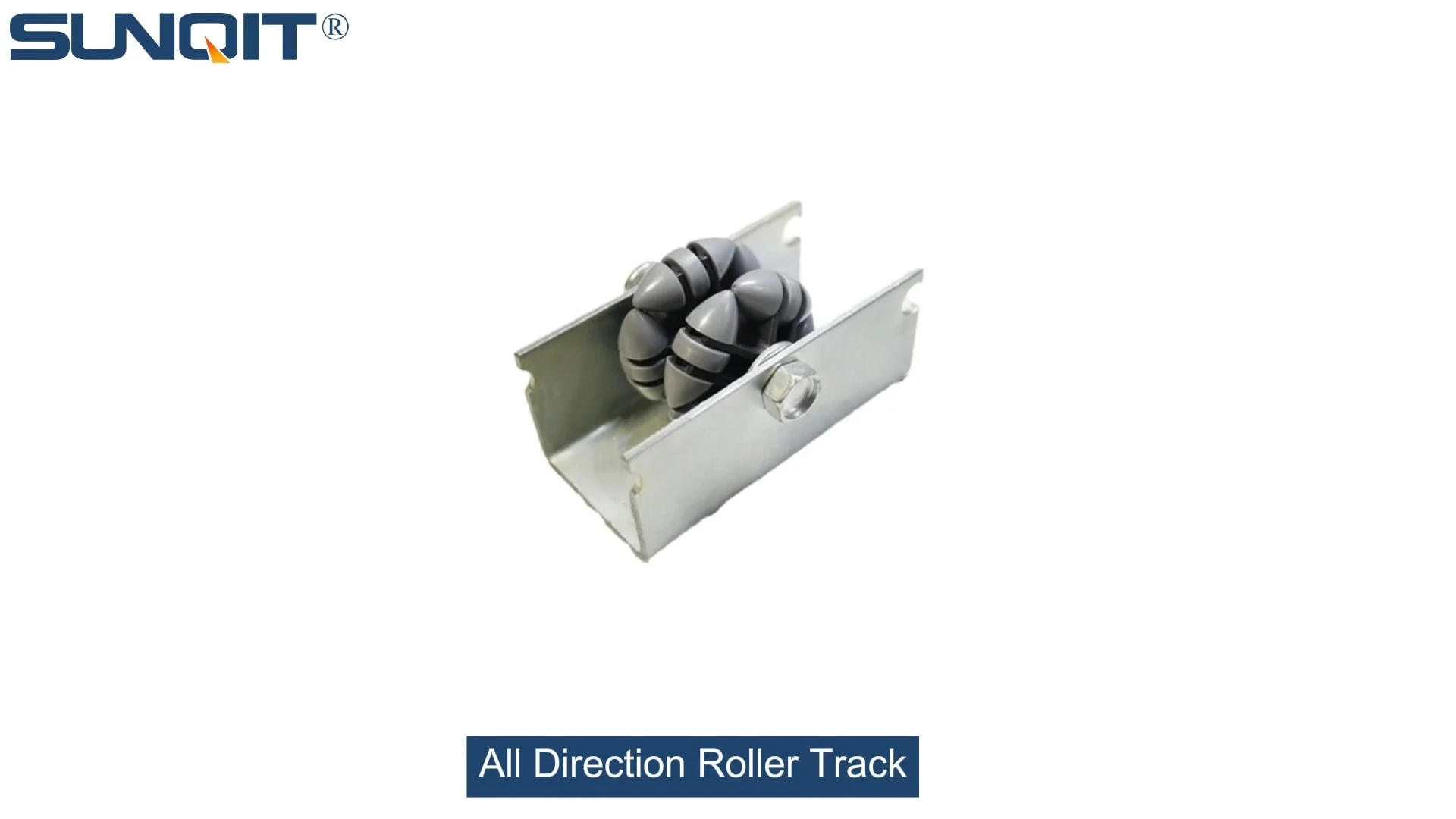
All Direction Roller Track
All direction roller track made of steel frame and multiple direction move wheel which will make boxes are always in contact with the rollers, reducing jams and enhancing flow reliability.
In the high-stakes world of pharmaceutical manufacturing, where precision isn't just a goal but a life-saving necessity, every detail of the production environment matters. From the air filtration systems that maintain ISO 5 standards to the gloved hands of technicians handling sensitive compounds, sterility and efficiency walk hand in hand. Yet one often-overlooked hero in this delicate dance is the equipment that moves materials—raw ingredients, partially finished products, and sterile components—through the cleanroom. This is where all direction roller track steps in, quietly revolutionizing how pharmaceutical facilities maintain sterility while keeping production lines flowing like a well-composed symphony.
Imagine a space where even a single airborne particle can compromise a batch of life-saving medication. Now imagine moving vials, syringes, or powder containers through this space without disrupting the sterile barrier or slowing down the clock. Traditional conveyor systems, with their fixed paths and hard-to-clean crevices, often fall short here. But all direction roller track? It's like giving your cleanroom a set of "magic wheels" that adapt to your needs, protect your products, and align with the lean principles that drive modern pharmaceutical manufacturing.
The Unique Challenges of Pharmaceutical Cleanrooms
To understand why all direction roller track has become a game-changer, let's first step into the shoes of a pharmaceutical production manager. Their to-do list is a high-pressure balancing act:
- Sterility Above All: Any surface that touches products must be non-porous, easy to sanitize, and resistant to harsh cleaning agents like hydrogen peroxide or alcohol. Even microscopic gaps can harbor bacteria, turning a compliant batch into a recall risk.
- Flexibility for Small Batches: Today's pharma landscape isn't just about mass-produced pills. It's about personalized medicine, rare disease treatments, and clinical trial batches—all requiring frequent line reconfigurations. Fixed conveyors feel like trying to fit a square peg into a round hole here.
- Speed Without Sacrifice: From API (Active Pharmaceutical Ingredient) handling to final packaging, every minute counts. Delays in material transfer can ripple through the schedule, delaying shipments and, ultimately, patient access.
- Cost Efficiency: Regulatory compliance, raw material costs, and R&D investments already strain budgets. Wasting money on one-size-fits-all equipment that needs constant replacement is simply not an option.
These challenges aren't just bullet points on a checklist—they're daily realities that keep production teams up at night. And that's where the right material handling tools make all the difference.
All Direction Roller Track: Designed for the Cleanroom's Demands
At its core, all direction roller track is a system of small, free-spinning rollers mounted on a rigid frame. But don't let its simplicity fool you—this design packs a punch when it comes to solving cleanroom headaches. Let's break down its superpowers:
1. Sterility by Design: Smooth, Seamless, and Sanitary
Picture a traditional conveyor belt with its fabric or rubber surface. Over time, tiny fibers wear off, and moisture gets trapped between the belt and rollers—perfect breeding grounds for contaminants. All direction roller track, often made with stainless steel or anodized aluminum rollers, eliminates these risks. The rollers are mounted in precision-aligned tracks with minimal gaps, so there's nowhere for bacteria to hide. And when it's time for cleaning? A quick wipe with a disinfectant cloth or a pass under a sanitizing tunnel is all it takes—no disassembly required.
Take, for example, the stainless steel swivel roller balls (1 inch or 0.5 inch) used in many systems. Their smooth, rounded surfaces repel dust and liquids, while their 360-degree rotation ensures products glide without friction—no static buildup, no particle generation. It's like giving your materials a "first-class ticket" through the cleanroom, where every touchpoint is a sterile one.
2. Unmatched Flexibility: Adapt in Minutes, Not Days
One of the biggest frustrations with fixed conveyors is their "set it and forget it" rigidity. If your team needs to switch from filling vials to packaging syringes, you might spend hours reconfiguring the line—or worse, invest in a whole new conveyor. All direction roller track, built with aluminum pipe and internal rotatary aluminum joints , changes the game. These components are lightweight yet durable, allowing you to adjust the track's direction, height, or length with basic tools. Need a 90-degree turn around a workbench? Add a curved section. Want to lower the track to feed into a filling machine? Swap out a few support brackets. It's modularity at its finest—no engineering degree required.
This flexibility isn't just about saving time; it's about staying competitive. When a clinical trial needs a small batch of a new drug, you can reconfigure your track in the morning and be production-ready by afternoon. That's the lean promise in action: "respond fast, waste less, deliver more."
3. Gentle on Products, Tough on Demands
Pharmaceutical products are delicate. A vial of insulin can crack if dropped, a syringe plunger can misalign if jostled, and a powder blend can separate if shaken too hard. All direction roller track's smooth, low-friction movement ensures products move at a controlled pace, with minimal vibration. The rollers distribute weight evenly, so even fragile items like glass ampoules arrive at their destination intact.
Compare that to manual handling, where human error can lead to spills or damage, or to chain conveyors that jolt products with every link. All direction roller track is the "gentle giant" of material handling—strong enough to handle heavy loads (think 50kg+ pallets of bulk ingredients) but gentle enough to cradle a single vial of vaccine.

Beyond the Track: How All Direction Roller Track Fits Into Lean Systems
Pharmaceutical manufacturing isn't just about moving materials—it's about creating a system where every step adds value, and waste is eliminated. That's where lean solution comes into play, and all direction roller track is a star player in this ecosystem. Let's see how it connects with other lean tools to create a seamless workflow:
1. Paired with Lean Pipe Workbenches: A Match Made in Efficiency
A typical cleanroom workcell might include a lean pipe workbench where technicians assemble kits, inspect products, or label packages. All direction roller track integrates effortlessly with these workbenches, feeding materials directly to the operator's fingertips. No more reaching across the bench or walking to a storage rack—products arrive exactly where they're needed, when they're needed. It's like having a silent assistant who knows your workflow better than you do.
And because both the track and the workbench are built with lean pipe , they share the same modular DNA. Need to adjust the workbench height to reduce operator fatigue? The track adjusts right along with it. Want to add a second workbench for a new task? Simply extend the track to connect them. It's a system that grows with your needs, not against them.
2. Complementing Flow Racks: From Storage to Production, Seamlessly
Many pharmaceutical facilities use flow racks to store raw materials or semi-finished products, using gravity to feed items forward as they're needed. All direction roller track acts as the "bridge" between these flow racks and the production line. Instead of manually transferring materials from the rack to the conveyor, the track lets products glide directly from storage into processing—eliminating double handling and cutting down on wait times. It's a closed-loop system where waste (in this case, unnecessary movement) is squeezed out, leaving only value-adding steps.
3. Working with Conveyors: The Best of Both Worlds
While all direction roller track excels at flexibility and localized movement, longer-distance transfers might still call for a traditional conveyor . The beauty here is that these systems aren't competitors—they're collaborators. A conveyor can move bulk materials from the warehouse to the cleanroom entrance, where all direction roller track takes over, navigating the tight, sterile spaces with ease. It's like a relay race: each runner (system) plays to their strengths, passing the baton (product) smoothly to the next.

Traditional vs. All Direction Roller Track: A Cleanroom Showdown
Still on the fence about whether all direction roller track is right for your cleanroom? Let's put it head-to-head with common alternatives. The table below breaks down how they stack up against key cleanroom priorities:
| Feature | Traditional Belt Conveyor | Manual Handling | All Direction Roller Track |
|---|---|---|---|
| Sterility | High risk—fabric belts trap particles; hard to clean crevices | Moderate risk—human contact introduces contaminants; slow and error-prone | Low risk—smooth, non-porous surfaces; minimal gaps; easy sanitization |
| Flexibility | Low—fixed path; requires professional installation to reconfigure | High—can go anywhere, but labor-intensive and slow | Very high—modular design; reconfigurable in minutes with basic tools |
| Product Protection | Moderate—vibration and friction can damage fragile items | Low—risk of drops, spills, or mishandling | High—smooth, controlled movement; even weight distribution |
| Cost Over Time | High—expensive to install; high maintenance (belt replacements, motor repairs) | Very high—labor costs add up; risk of product loss/damage | Low—modular components reduce replacement costs; minimal maintenance; energy-free (gravity-fed options) |
| Lean Alignment | Poor—fixed design leads to overproduction or bottlenecks | Poor—wastes labor and time; creates uneven workflow | Excellent—eliminates waste; adapts to demand; integrates with other lean tools |

Real-World Impact: How a Global Pharma Brand Transformed Its Cleanroom
Talk is cheap—let's look at a real example of how all direction roller track changed the game for a pharmaceutical manufacturer. A leading producer of injectable medications was struggling with their vial filling line. Their old belt conveyor was prone to jamming, hard to clean, and required a full shutdown for sanitization—costing them 8 hours of production time weekly. Worse, they'd had two minor contamination scares in six months, leading to tightened audits and stressed operators.
Their solution? A custom system built around all direction roller track, paired with aluminum profile workbenches and flow racks . Here's what happened next:
- Sanitization Time Cut by 75%: The smooth, gap-free design of the roller track allowed for in-place cleaning—no disassembly needed. What used to take 8 hours now took 2, freeing up the line for an extra batch daily.
- Contamination Incidents: Zero. The stainless steel rollers and aluminum frame eliminated particle traps, while the controlled movement reduced product contact with operators. Auditors were impressed, and the team breathed easier.
- Line Reconfigurations in Under an Hour: When the company launched a new vaccine, they needed to add a second filling station. With the modular roller track, their team adjusted the layout in 45 minutes—no contractors, no downtime.
- Operator Satisfaction Soared: No more bending to lift heavy vial trays or chasing jams. The track fed materials directly to their workstations, reducing fatigue and turning a stressful job into a smoother, more efficient one.
This isn't just a success story—it's proof that the right material handling tools don't just move products; they transform workplaces, reduce stress, and let teams focus on what matters most: making safe, effective medications.
Beyond Off-the-Shelf: Custom Lean Solutions for Your Unique Needs
Pharmaceutical cleanrooms aren't one-size-fits-all, and neither should your material handling system. That's why the best solutions start with a conversation—not a catalog. A reputable lean system supplier will work with you to design a setup that fits your space, your products, and your goals. Here's what that process might look like:
- Needs Assessment: A consultant visits your facility to map your workflow, measure your space, and understand your pain points. Do you need to move small vials or large pallets? How often do you reconfigure your line? What cleaning protocols do you follow?
- Design & Prototyping: Using 3D modeling, they create a custom layout that integrates all direction roller track with workbenches, flow racks, and conveyors. They might even build a small prototype to test with your actual products—no guesswork, just real-world validation.
- Material Selection: Choosing between stainless steel and aluminum? ESD (Electrostatic Discharge) protection for sensitive electronics? They'll recommend materials that meet your cleanroom class (ISO 5, ISO 7, etc.) and durability needs.
- Installation & Training: The system is installed with minimal disruption to your production, and your team gets hands-on training to adjust, clean, and maintain it. No more struggling with complicated manuals—just clear, simple guidance.
- Ongoing Support: As your needs change, your supplier should be there to help. Need to expand the track? Add a new workbench? They'll provide the parts and expertise to keep your system evolving with you.
This "partnership" approach is key. Your cleanroom is unique, and your supplier should treat it that way—listening, adapting, and building a system that grows with you.
The Future of Cleanroom Material Handling: Where Lean Meets Innovation
As pharmaceutical manufacturing evolves—with more personalized medicine, stricter regulations, and a focus on sustainability—all direction roller track is poised to keep up. Here's what we might see next:
- Smart Roller Track: Sensors embedded in rollers could monitor product flow, alerting teams to jams or slowdowns in real time. Imagine your track "telling" you when a batch is on its way to the filling station—no more guesswork, just data-driven decisions.
- Eco-Friendly Materials: With sustainability top of mind, we'll see more recycled aluminum and biodegradable lubricants, aligning with the "reduce, reuse, recycle" ethos of lean manufacturing.
- Integration with Automation: Pair roller track with robotic arms for fully automated material transfer, reducing human contact even further. It's not about replacing operators—it's about letting them focus on skilled tasks while robots handle the heavy lifting.
Whatever the future holds, one thing is clear: the principles that make all direction roller track successful today—flexibility, sterility, and lean alignment—will remain at the heart of cleanroom innovation.
More Than a Track—A Partner in Your Mission
At the end of the day, pharmaceutical manufacturing is about trust. Patients trust that the medication they take is safe, pure, and effective. Operators trust that their tools won't let them down. Managers trust that their processes are efficient, compliant, and ready to adapt. All direction roller track, when designed and implemented with care, becomes part of that trust. It's not just a piece of equipment—it's a silent partner in your mission to heal, to innovate, and to make the world healthier.
So if you're ready to transform your cleanroom from a place of stress and compromise to one of efficiency and confidence, it might be time to explore the power of all direction roller track. After all, in the race to save lives, every second, every particle, and every innovation counts.