- Company Articles
- Products and Technology
- Product knowledge
- Plastic Clamps vs. Lean Pipe Clamp B Chrome: Industrial Strength Showdown

Plastic Clamps vs. Lean Pipe Clamp B Chrome: Industrial Strength Showdown
Related Product
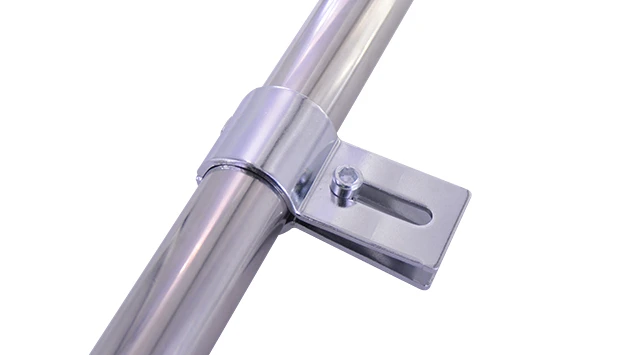
Lean Pipe Clamp B Chrome
Lean pipe clamp is used for turnover trolley, workbench, flowrack adjust the frame or fix some accessory.
Walk into any factory, workshop, or even a small garage-based production line, and you'll notice one thing that ties everything together: the workbench. It's where ideas turn into products, where assemblers spend hours piecing together components, and where the smallest details—like the clamps holding the setup in place—can make or break efficiency. If you've ever stood in front of a wobbly workbench, wondering why the shelves keep sagging or the frame feels unstable, chances are the culprit is hiding in plain sight: the clamps.
Today, we're diving into a debate that's quietly shaping how teams build their workspaces: plastic clamps versus lean pipe clamp B chrome. It might not sound like the sexiest topic, but trust me—once you've experienced the frustration of a clamp snapping mid-shift or watched a carefully organized material rack collapse because the joints couldn't handle the load, you'll realize how critical this choice is. Let's break it down, not with dry specs, but with the real-world impact these small but mighty components have on your day-to-day operations.
First, Let's Talk About Plastic Clamps: The "Budget-Friendly" Option
Plastic clamps have long been the go-to for teams working with lean pipe systems on a tight budget. Made from materials like nylon or polypropylene, they're lightweight, easy to find, and cheap—really cheap. I've seen small businesses start with plastic clamps because they seem like the smart choice when every dollar counts. "Why spend more?" they think. "It's just a clamp, right?"
And to be fair, plastic clamps do have their moments. If you're building a temporary setup—a quick workstation for a short-term project, or a prototype assembly line that might change next month—they're easy to adjust. They snap onto lean pipe with minimal effort, don't require special tools, and come in bright colors that can make organizing parts a little more cheerful. I once visited a startup that used neon pink plastic clamps on their demo workbench, and hey, it made the space feel less industrial. A small win, but a win nonetheless.
But here's the catch: plastic has limits. Let's say you're running a small electronics assembly line. Your workbench holds circuit boards, power tools, and bins of tiny screws—nothing too heavy, right? Maybe 20-30 pounds per shelf. At first, the plastic clamps hold. But then summer hits, and the workshop temperature rises. Plastic softens in heat. By mid-afternoon, you notice the shelves are tilting slightly. A week later, one clamp cracks. Then another. Suddenly, you're spending more time replacing clamps than building products. And those "budget-friendly" savings? They vanish faster than a cold drink on a hot factory floor.
Now, Meet Lean Pipe Clamp B Chrome: The "Built to Last" Contender
On the other side of the ring, we have lean pipe clamp B chrome. If plastic clamps are the underdog, these are the heavyweights. Made from high-grade steel with a chrome plating, they're not just clamps—they're the backbone of a stable, long-term lean system. I remember the first time I saw a lean pipe clamp B chrome up close. It felt solid in my hand, with a heft that screamed "I'm not going anywhere." The chrome finish glinted under the workshop lights, and when I tightened it onto a lean pipe, there was a satisfying click that plastic clamps never quite replicate.
But lean pipe clamp B chrome isn't just about feel. It's about engineering. The steel core is designed to withstand torque, so when you tighten the clamp, it grips the lean pipe like a vice. No slipping, no loosening over time. And that chrome plating? It's not for show. It's a barrier against rust and corrosion, which matters if your workshop is humid, or if you're working with materials that might spill (looking at you, coolant and lubricants). I visited a automotive parts manufacturer last year that had been using lean pipe clamp B chrome for over five years. The clamps still looked new, even with oil splatters and daily wear. "We haven't replaced a single one," the plant manager told me. "Best $2 per clamp we ever spent."
Head-to-Head: Plastic Clamps vs. Lean Pipe Clamp B Chrome
Enough with the introductions—let's put these two to the test. We'll compare them on the factors that actually matter when you're in the trenches: strength, durability, ease of use, cost, and real-world application. Think of this as a workbench survival guide —because your setup deserves better than "good enough."
1. Material & Build: Lightweight vs. Heavy-Duty
Plastic clamps are, well, plastic. Most are injection-molded, which means they're uniform but lack the structural integrity of metal. drop a plastic clamp on the floor, and it might chip or crack. Leave it in direct sunlight, and it'll become brittle over time. I once left a plastic clamp on a windowsill for three months, and by the end, it crumbled in my hand like a stale cookie. Not ideal for a part that's supposed to hold your workspace together.
Lean pipe clamp B chrome, on the other hand, starts with a steel base. Steel is inherently strong, and the chrome plating adds a layer of protection. I've seen these clamps get dropped, banged against metal racks, and even accidentally stepped on (we've all had those days) without so much as a scratch. The difference in build quality is night and day—like comparing a plastic toy car to a steel-reinforced truck.
2. Strength & Load Capacity: When "Good Enough" Isn't Enough
Let's get specific: how much weight can each clamp handle? I reached out to a lean pipe supplier I've worked with for years, and they shared some eye-opening test results. A standard plastic clamp, when properly installed, can hold about 20-30 pounds of static weight. That's fine for a shelf holding a few small bins, but push it further—say, a rack stacked with metal parts or a workbench with a heavy drill press—and you're asking for trouble.
Lean pipe clamp B chrome? Their load capacity starts at 50 pounds and goes up from there. The steel core distributes weight evenly, and the chrome plating ensures the clamp doesn't weaken over time. I visited a furniture manufacturer that uses lean pipe clamp B chrome to build their assembly tables. Each table holds up to 300 pounds of wood, tools, and hardware, and the clamps haven't budged in three years. "We used to replace plastic clamps every month," the foreman told me. "Now? We forget they're there."
3. Durability: How Long Will They Actually Last?
Durability isn't just about strength—it's about longevity. Let's say you're running a 2-shift operation, 5 days a week. Your workbench is in constant use: parts sliding on and off, assemblers leaning on the frame, the occasional bump from a forklift. How do plastic clamps hold up? In my experience, not long. The average plastic clamp lasts 6-12 months in a high-use environment before it starts to loosen or crack. That might not sound terrible until you multiply it by the number of clamps on a single workbench (easily 10-15) and then across your entire facility. Suddenly, you're ordering replacement clamps every quarter, and the "budget-friendly" option becomes a hidden cost.
Lean pipe clamp B chrome, by contrast, is built to outlast the workbench itself. The steel resists wear, and the chrome plating prevents rust, even in damp or dusty environments. I talked to a food packaging plant that uses lean pipe systems near their washing stations—think constant moisture and cleaning chemicals. Their lean pipe clamp B chrome has been in place for seven years, and the only maintenance they've done is an occasional wipe-down. "We haven't replaced one clamp," the operations manager said. "Not one."
4. Ease of Installation & Adjustment: No Tools vs. No Hassle
Plastic clamps have a reputation for being "easy to install," and it's true—if you're working with brand-new, perfectly straight lean pipe. They snap on with a little pressure, and you can adjust them by hand. But here's the problem: plastic stretches. Over time, that "easy adjustment" becomes a headache. I watched a team spend 20 minutes trying to tighten a plastic clamp that had loosened, only to have it slip again an hour later. And if your lean pipe is slightly bent (let's be real, most used pipe is), plastic clamps won't grip evenly, leaving gaps that weaken the joint.
Lean pipe clamp B chrome requires a hex key to tighten, which might sound like a hassle, but hear me out: once it's tight, it stays tight. The steel teeth bite into the lean pipe, creating a bond that doesn't loosen with vibration or temperature changes. I trained a group of new assemblers on installing lean pipe clamp B chrome, and within 10 minutes, they were tightening clamps like pros. "It's like using a wrench on a bolt," one of them said. "You know it's secure because you can feel it." And when you need to adjust? A quick turn of the hex key, and you're done—no wrestling with slippery plastic or worrying about cracks.
5. Cost: The Upfront Price Tag vs. The Long Game
Let's talk money. A plastic clamp costs about $0.50-$1.00, while a lean pipe clamp B chrome runs around $2.00-$3.00. On paper, plastic looks like a steal. But let's do the math. Suppose you build a workbench with 12 clamps. Plastic clamps cost $12 total. But if they need replacement every 6 months, that's $24 a year. Over 5 years, that's $120. Now, lean pipe clamp B chrome: $36 upfront, but if they last 5+ years, that's $36 total. The "expensive" option ends up saving you $84. And that's just for one workbench. Multiply that by 10 workbenches, and you're looking at $840 in savings. Suddenly, the upfront cost feels a lot smarter.
I worked with a small electronics manufacturer that switched from plastic to lean pipe clamp B chrome after two years of constant replacements. "We were spending $500 a year on plastic clamps," the owner told me. "Now, we spent $1,200 upfront, but we haven't bought clamps in three years. It was a no-brainer."
The Comparison Table: At a Glance
| Feature | Plastic Clamps | Lean Pipe Clamp B Chrome |
|---|---|---|
| Material | Nylon/polypropylene (plastic) | Steel with chrome plating |
| Load Capacity | 20-30 lbs per clamp | 50+ lbs per clamp |
| Durability | 6-12 months (high-use) | 5+ years (high-use) |
| Installation | Hand-snapped, no tools; loosens over time | Hex key required; stays tight indefinitely |
| Cost (per clamp) | $0.50-$1.00 | $2.00-$3.00 |
| Best For | Temporary setups, light loads, short-term projects | Permanent workbenches, heavy loads, high-use environments |
Real-World Story: How One Factory Solved Their "Wobbly Workbench" Problem
Let me introduce you to Maria, the production supervisor at a mid-sized automotive parts plant in Ohio. When I met Maria two years ago, she was at her wit's end. "Our workbenches are a disaster," she told me. "The shelves sag, the frames shake, and we're replacing plastic clamps every other week. My team is frustrated—they can't focus when the setup feels like it's going to collapse."
Maria's plant had 15 workbenches, each with about 14 plastic clamps. They were spending $105 every 6 months on replacements, not to mention the downtime when a clamp failed mid-shift. "Last month, a material rack holding 50-pound boxes collapsed because a plastic clamp snapped," she said. "No one got hurt, but we lost two hours cleaning up and rebuilding. That's two hours of production we can't get back."
We suggested switching to lean pipe clamp B chrome. Maria was hesitant at first—"$3 per clamp? That's triple what we're paying now"—but we ran the numbers together. With 15 workbenches and 14 clamps each, the upfront cost was $630. But over 5 years, plastic clamps would cost $1,050 (replacing every 6 months), while chrome clamps would cost $630 total. Plus, no more downtime from collapsed racks.
Maria took the plunge. Six months later, I checked in. "I can't believe the difference," she said. "The workbenches don't shake. The shelves stay level. My team says it feels like working on a whole new setup. And we haven't replaced a single clamp. Best decision we made all year."
So, Which Clamp Should You Choose?
At the end of the day, the choice between plastic clamps and lean pipe clamp B chrome comes down to one question: How long do you need your setup to last?
If you're building a temporary workspace—something you'll take apart in a month or two—plastic clamps might make sense. They're cheap, easy to install, and disposable. But if you're investing in a lean system that's going to be the backbone of your production for years, lean pipe clamp B chrome is the way to go. It's not just a clamp; it's an investment in stability, durability, and peace of mind.
Think about it: your team deserves a workspace that doesn't distract them with wobbles or worries. Your budget deserves to be spent on solutions that save you money in the long run. And your products deserve to be built on a foundation you can trust.
Final Thoughts: It's the Little Things That Matter
Clamps might seem like small fry in the grand scheme of industrial equipment, but they're the glue that holds your lean system together. I've seen companies invest thousands in high-tech machinery only to skimp on clamps, and it always backfires. Wobbly workbenches lead to slower assembly times, frustrated employees, and even safety risks.
Lean pipe clamp B chrome isn't just a better clamp—it's a statement. It says, "We care about our workspace. We care about our team. We're in this for the long haul." And in a world where every detail counts, that's a message that translates to better products, happier employees, and a stronger bottom line.
So the next time you're setting up a workbench or material rack, take a second look at those clamps. They might be small, but their impact? Anything but.