- Company Articles
- Products and Technology
- Product knowledge
- Plastic Pipe End Caps in Consumer Electronics: Precision Fit for 3C Products

Plastic Pipe End Caps in Consumer Electronics: Precision Fit for 3C Products
Related Product
Plastic pipe end cap
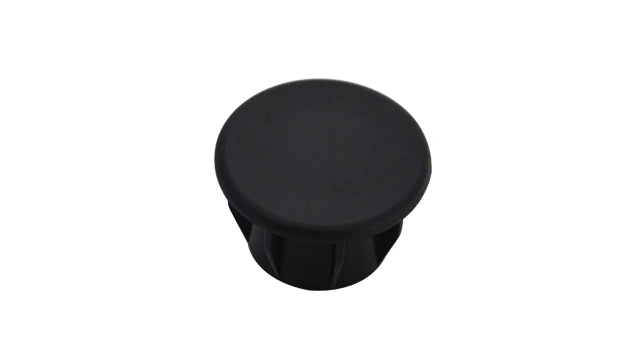
Plastic pipe cover, used for 28mm two end cover and protection, to avoid any scratch from sharp metal surface.
Walk into any electronics store, and your eyes are drawn to the sleek smartphones, ultra-thin laptops, and cutting-edge smartwatches on display. These 3C (computers, communication, consumer electronics) products are marvels of modern engineering, packed with technology that fits in the palm of your hand. But behind every stunning device lies a hidden world of manufacturing—one filled with tiny, often overlooked components that make mass production possible. Among these unsung heroes are plastic pipe end caps: simple in design, but critical to the efficiency, safety, and precision of 3C manufacturing. Let's take a closer look at how these small components play a big role in bringing your favorite gadgets to life.
The Basics: What Are Plastic Pipe End Caps?
At first glance, plastic pipe end caps might seem unremarkable. They're exactly what their name suggests: small caps, typically made of plastic, designed to fit snugly over the ends of pipes, tubes, or rods. But their simplicity is deceptive. In industrial settings, they serve a handful of essential functions: sealing pipes to prevent debris or moisture from entering, protecting sharp pipe edges to keep workers safe, insulating against heat or electricity, and even enhancing the aesthetic finish of a product. While you might find them on everything from furniture legs to automotive parts, in the 3C industry, their role becomes hyper-specialized—tailored to the unique demands of manufacturing tiny, delicate electronics.
In 3C production lines, for example, lean pipes are widely used to build modular workbenches, assembly stations, and material racks. These lightweight, easy-to-assemble pipes form the backbone of flexible manufacturing systems, allowing factories to reconfigure lines quickly as product designs evolve. And plastic pipe end caps? They're the finishing touch that turns a basic pipe into a safe, functional part of the production process. As essential lean pipe accessories, they prevent dust from clogging the pipes, shield workers from scrapes, and ensure that the entire system operates smoothly—no small feat in a industry where even a minor hiccup can cost thousands in lost productivity.
Why Precision Matters in 3C Manufacturing
3C manufacturing is a world of extremes: components are shrinking while complexity is skyrocketing. A modern smartphone, for instance, contains over 3,000 individual parts, many smaller than a grain of sand. Assembling these parts requires a production line that operates with near-surgical precision. Every tool, every workstation, and every component—including plastic pipe end caps—must meet exacting standards. Why? Because even the tiniest margin of error can have cascading consequences.
Consider the esd workstations where circuit boards are assembled. These workstations are designed to prevent static electricity from damaging sensitive microchips—a single static discharge can fry a $50 component in an instant. The lean pipes and roller tracks that frame these workstations rely on plastic end caps to maintain a consistent, static-safe environment. If an end cap is slightly too loose, it might rattle, creating friction and static buildup. If it's too tight, it could warp the pipe, throwing off the alignment of tools or material racks. In either case, the result is the same: production delays, increased waste, and higher costs.
Precision also impacts scalability. 3C manufacturers produce millions of devices annually, so production lines must run 24/7 with minimal downtime. A poorly fitting end cap on a roller track, for example, might cause components to jam as they're transported between stations. Over a single shift, that could slow production by 10%—a loss of thousands of units. For manufacturers operating on razor-thin profit margins, that's a risk they can't afford.

Materials Matter: Choosing the Right Plastic for 3C End Caps
Not all plastic pipe end caps are created equal. In 3C manufacturing, the choice of material is a critical decision that impacts performance, safety, and cost. Let's break down the most common plastics used and why they're favored in this industry:
ABS: The Workhorse of End Cap Materials
Acrylonitrile Butadiene Styrene (ABS) is a go-to for many 3C manufacturers, and for good reason. It strikes an ideal balance of strength, flexibility, and affordability—key traits for high-volume production. ABS end caps are resistant to impact (important in busy factories where tools might bump against workbenches), easy to mold into custom shapes, and available in a range of colors. For standard lean pipe systems and basic workbenches, ABS end caps offer the reliability needed without breaking the bank.
Polycarbonate (PC): When Impact Resistance Matters Most
In areas where durability is non-negotiable—such as heavy-duty workbenches or roller tracks that transport metal components—polycarbonate (PC) end caps shine. PC is virtually unbreakable under normal conditions, making it ideal for environments where end caps might be subjected to frequent drops or collisions. It's also heat-resistant, which is useful in factories with high-temperature soldering stations or automated equipment that generates warmth. While PC is pricier than ABS, its longevity often offsets the upfront cost, especially in high-wear areas.
Nylon: Chemical Resistance for Clean Rooms
Cleanliness is paramount in 3C manufacturing, where even a speck of dust can ruin a circuit board. Factories use harsh cleaning agents to maintain sterile environments, and nylon end caps are up to the task. Nylon resists oils, solvents, and most industrial cleaners, ensuring that end caps won't degrade or leach chemicals onto sensitive components. It's also self-lubricating, which reduces friction—handy for end caps on moving parts like roller track guides, where smooth operation is key.
Conductive Plastics: Static Protection for ESD Workstations
For esd workstations, standard plastics won't cut it. Static electricity is the enemy here, and conductive or antistatic plastics are the solution. These materials are infused with carbon fibers or metal particles that dissipate static charges, preventing them from building up and damaging microchips. Conductive plastic end caps are often black (a visual cue for workers to handle them with care) and are rigorously tested to ensure they meet industry standards for electrostatic discharge protection.

Design Engineering: Crafting End Caps for 3C's Unique Needs
Designing a plastic pipe end cap for 3C manufacturing isn't as simple as 3D-printing a circle and calling it a day. Engineers must consider a laundry list of factors: the diameter of the lean pipe, the environment it will operate in (hot, cold, wet, or dry), whether it needs to be removable for maintenance, and even how it will integrate with other components like roller tracks or workbench surfaces. Let's dive into some of the key design considerations that make 3C end caps stand out.
Custom Fit: One Size Rarely Fits All
3C production lines use lean pipes of various diameters—from small 16mm pipes for lightweight workbenches to larger 30mm pipes for heavy-duty material racks. End caps must be tailored to each size with microscopic precision. A cap that's 0.5mm too small will slip off; one that's 0.5mm too large will crack when forced on. To achieve this, manufacturers use injection molding with high-precision tooling, often with tolerances as tight as ±0.05mm. Some even offer "snap-fit" designs, where the end cap flexes slightly to fit over the pipe, then locks into place—ensuring a snug, secure seal without the need for adhesives or fasteners.
Integration with Roller Tracks and Workbenches
In 3C factories, roller tracks are the arteries that keep components flowing from one station to the next. These tracks rely on smooth, unobstructed movement to prevent jams, and end caps play a subtle but vital role here. Many end caps designed for roller track systems feature notched edges or grooves that align with the track's rails, ensuring a seamless transition as parts move along the line. On workbenches, end caps might include flat surfaces to mount tools or cable management clips, turning a basic pipe into a multi-functional workspace. The goal? To minimize clutter, reduce wasted motion, and keep the assembly line moving at peak efficiency.
Color-Coding for Safety and Efficiency
In a busy 3C factory, visual cues save time and reduce errors. That's why many plastic pipe end caps are color-coded to match specific zones or functions. For example, yellow end caps might mark high-ESD areas where static protection is critical, while grey caps indicate standard work zones. This simple system helps workers quickly identify hazards, locate tools, and ensure that components are moved to the right stations—all without stopping to read labels. It's a small detail, but in a factory producing 10,000 phones a day, those seconds add up.
Applications in 3C Production: A Closer Look
To truly understand the value of plastic pipe end caps in 3C manufacturing, let's explore their real-world applications. From workbenches to roller tracks, these components are everywhere—quietly ensuring that production runs like clockwork.
| End Cap Type | Material | Key Features | Primary 3C Application |
|---|---|---|---|
| Standard Snap-Fit | ABS | Easy installation, snug fit, cost-effective | Lean pipe workbenches, basic material racks |
| Threaded | Nylon | Removable, reusable, chemical resistant | Cleanroom assembly stations, roller track systems |
| ESD-Protective | Conductive PC | Static-dissipative, impact-resistant | ESD workstations, microchip handling areas |
| Heavy-Duty | Reinforced PC | High load-bearing capacity, heat-resistant | Automated assembly line rails, heavy component racks |
Lean Pipe Workbenches: The Heart of 3C Assembly
Walk into any 3C factory, and you'll see rows of lean pipe workbenches—modular, customizable stations where workers assemble circuit boards, install screens, and test components. These workbenches are built using lightweight aluminum or steel pipes, and plastic end caps are the final piece of the puzzle. They cap the ends of the pipes that form the bench's frame, turning sharp metal edges into smooth, safe surfaces. On the shelves beneath the workbench, end caps prevent small screws or connectors from rolling into the pipes and getting lost. Even the tool hooks mounted on the bench? They're often attached to pipes capped with durable end caps, ensuring the hooks stay secure during use.
Roller Tracks: Keeping Components Moving
In automated 3C production lines, roller tracks are used to transport components between stations—think circuit boards moving from soldering to testing, or phone casings moving from molding to painting. These tracks rely on a series of small wheels (or rollers) to glide parts along, and plastic pipe end caps play two key roles here. First, they cap the ends of the track's support pipes, preventing dust from jamming the rollers. Second, on curved or angled tracks, specialized end caps with rounded edges ensure that components transition smoothly without getting stuck. In high-speed lines, where parts move at inches per second, even a minor obstruction can cause a bottleneck—making end caps a critical line of defense against delays.
ESD Workstations: Protecting Sensitive Components
Microchips, sensors, and other sensitive 3C components are (ESD) .,. 3C ESD ,,,..,,.,——,,.
Lean Manufacturing and the Role of End Caps
Lean manufacturing is all about eliminating waste—whether it's time, materials, or labor—and plastic pipe end caps align perfectly with this philosophy. Here's how:
First, their durability reduces replacement waste. A well-made ABS or PC end cap can last for years, even in high-traffic areas, meaning factories don't have to constantly stock and replace worn-out components. Second, their modular design supports flexible production. Lean pipe systems are meant to be reconfigured quickly, and end caps that snap on and off in seconds make it easy to adjust workbenches or roller tracks without specialized tools. This agility is critical in 3C, where product cycles are short and factories must switch from producing one model to the next in weeks, not months.
Third, end caps contribute to a safer workplace, which in turn reduces waste from injuries or downtime. By covering sharp pipe edges, they lower the risk of cuts—a common hazard in factories. And in ESD workstations, they help prevent costly damage to components, reducing the number of defective products that end up in the trash. For lean pipe suppliers, these benefits are a selling point: offering end caps as part of a complete lean solution helps attract manufacturers looking to streamline operations.
Challenges and Innovations in End Cap Production
Despite their simplicity, producing plastic pipe end caps for 3C isn't without challenges. The biggest hurdle? Meeting the industry's tight tolerances. A 0.1mm error in an end cap's diameter might seem insignificant, but in a roller track system, it can cause components to misalign and jam. To solve this, manufacturers are investing in advanced injection molding technology, including computer-controlled machines that monitor and adjust the molding process in real time. Some are even using 3D scanning to inspect every batch of end caps, ensuring that each one meets specifications.
Another challenge is sustainability. As 3C brands face pressure to reduce their environmental footprint, factories are demanding end caps made from recycled plastics or designed for recyclability. In response, suppliers are experimenting with bio-based plastics (made from plant materials like cornstarch) and developing end caps that can be easily disassembled and recycled at the end of their life cycle. It's a small step, but in an industry that produces millions of components annually, it adds up.
Looking ahead, innovation in end cap design is likely to focus on smart features. Imagine end caps embedded with tiny RFID tags that track when they were installed, or sensors that alert maintenance teams when they're starting to wear out. These "smart" end caps could help factories predict failures before they happen, further reducing downtime. While still in the prototype stage, these technologies hint at a future where even the smallest components play a role in Industry 4.0.
Conclusion: Small Parts, Big Impact
Plastic pipe end caps might not grace the cover of tech magazines, but they're indispensable to the 3C industry. From ensuring precision in lean pipe workbenches to protecting sensitive components in ESD workstations, these small, unassuming parts keep production lines running smoothly, safely, and efficiently. As 3C products continue to shrink and evolve, the demand for high-quality, innovative end caps will only grow—driving suppliers to push the boundaries of materials, design, and technology.
The next time you unbox a new smartphone or laptop, take a moment to appreciate the hidden world of manufacturing that brought it to you. Behind that sleek device is a network of workbenches, roller tracks, and lean pipes—all finished with plastic end caps that prove great things really do come in small packages.