- Company Articles
- Products and Technology
- Product knowledge
- Plastic Pipe Sleeve Heat Resistance: Can It Withstand High Temperatures in Industrial Settings?

Plastic Pipe Sleeve Heat Resistance: Can It Withstand High Temperatures in Industrial Settings?
Related Product
Plastic Pipe Sleeve
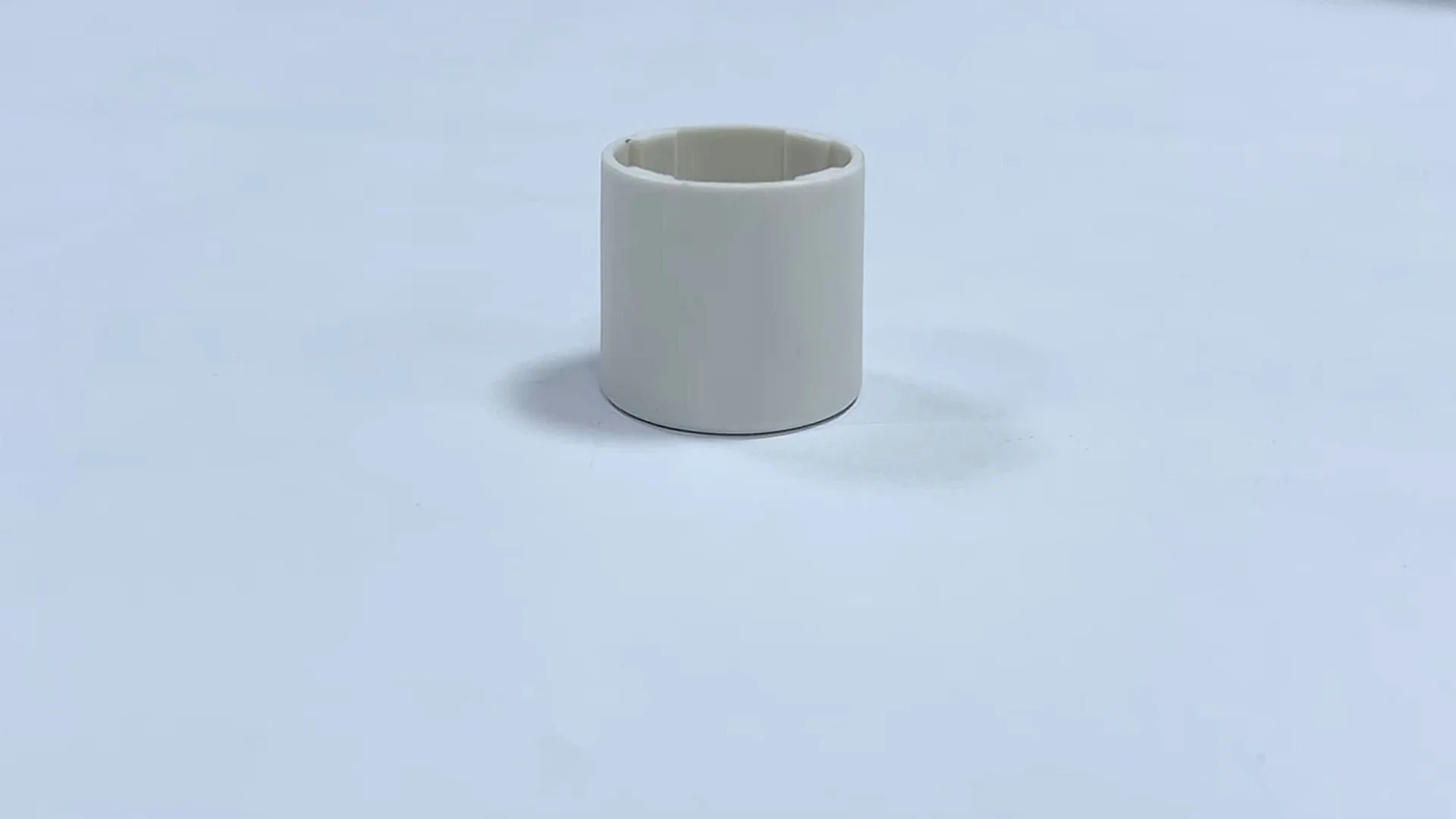
Plastic pipe sleeve to cover dia 28MM aluminum pipe end to contact with ground.
Let's set the scene: It's a sweltering summer afternoon on the factory floor of a mid-sized automotive parts manufacturer. Maria, the production supervisor, is making her rounds, clipboard in hand, when she notices something off. Near the welding stations, where temperatures regularly climb above 100°F, the plastic pipe sleeves connecting the roller tracks on the lean pipe workbench look… different. They're warped, slightly discolored, and one has even started to crack at the joint. "Great," she mutters, "another thing to add to the maintenance list." Later that day, when the third shift starts and the ovens kick into high gear, that small crack turns into a full split, bringing the assembly line to a halt for 45 minutes while the team replaces the sleeve.
If you've ever worked in manufacturing, logistics, or any industrial setting, Maria's frustration might sound familiar. We often focus on the big-ticket items—the heavy machinery, the high-tech robotics, the expensive software that keeps production on track—but it's the small components, the unsung heroes like plastic pipe sleeves, that can make or break a day's output. And when those small components are asked to perform in less-than-ideal conditions, like high heat, their limitations can quickly become major headaches.
So, let's dive in: What exactly are plastic pipe sleeves, why do they matter in industrial setups (especially in lean systems and production assemble lines), and most importantly—can they really withstand the heat of a busy factory floor?
First Things First: What Are Plastic Pipe Sleeves, Anyway?
Before we talk about heat resistance, let's make sure we're all on the same page. Plastic pipe sleeves are exactly what they sound like: hollow, cylindrical tubes made from various plastic materials, designed to slide over or fit around other pipes, rods, or structural components. But their simplicity is deceptive—they play a surprisingly critical role in keeping industrial operations running smoothly.
Think of them as the "protective gloves" of the industrial world. They shield metal pipes from corrosion, reduce friction between moving parts (like the rollers on a roller track), insulate against electrical currents or temperature extremes, and even help connect different components by providing a snug, secure fit. You'll find them everywhere: on lean pipe workbenches where assemblers put together circuit boards, along conveyor systems moving packages through warehouses, in material racks holding heavy parts, and yes, even on the caster wheels of turnover trolleys that zip across factory floors.
In lean manufacturing systems, where efficiency is king, plastic pipe sleeves are particularly valuable. They're lightweight, easy to install, and affordable—perfect for quick reconfigurations of workstations or production lines. Need to adjust the height of a lean pipe workbench? Swap out a sleeve. Want to add a new section to your roller track? Slide on a longer sleeve. They're the duct tape of industrial design, but with a lot more structural integrity.
The Heat Problem: Why Temperature Matters in Industrial Settings
Now, back to Maria's dilemma. Why does heat pose such a big threat to these seemingly humble sleeves? Let's start by understanding just how hot industrial environments can get. It's not just the summer sun streaming through skylights—though that doesn't help. Many industrial processes generate their own heat, and it adds up fast.
Consider a typical automotive assembly plant: welding stations can reach 120–150°F, paint curing ovens operate at 250–350°F, and even the friction from conveyor belts and motors can raise ambient temperatures by 10–15°F in enclosed spaces. In electronics manufacturing, soldering irons and heat guns blast localized temperatures of 500°F or more, while in food processing, ovens and sterilization units push the mercury even higher.
And it's not just the air temperature. The components themselves absorb and retain heat. A metal pipe sitting near a welding torch might not just be warm to the touch—it could be hot enough to burn. When a plastic pipe sleeve is wrapped around that pipe, it's not just dealing with the air around it; it's in direct contact with a heat source. Over time, that constant exposure can cause the plastic to break down.
But heat isn't the only villain here. Industrial settings are chaotic places, and plastic pipe sleeves face a triple threat:
- Mechanical stress: They're squeezed, twisted, and pulled as equipment moves or parts are loaded/unloaded. A sleeve on a roller track, for example, has to withstand the weight of boxes sliding over it all day.
- Chemical exposure: Oils, solvents, cleaning agents, and even humidity can degrade plastic over time, making it more brittle and less resistant to heat.
- UV radiation: If the sleeve is near windows or overhead lights, UV rays can break down the plastic's molecular structure, weakening it from the inside out.
When heat is added to this mix, it's like pouring gasoline on a smoldering fire. The plastic softens, loses its shape, and becomes prone to cracks, splits, or warping. And when a sleeve fails, the consequences range from minor annoyances (like Maria's 45-minute delay) to major safety hazards (think: exposed electrical wires, falling parts, or jammed machinery).

What Makes a Plastic Pipe Sleeve Heat Resistant? The Key Factors
So, why do some plastic pipe sleeves hold up in high heat while others crumble? It all comes down to three things: the type of plastic used, how it's manufactured, and the additives mixed in during production. Let's break each down.
1. The Plastic Material: Not All Plastics Are Created Equal
Plastic is a broad category, and the specific polymer used to make a pipe sleeve has a huge impact on its heat resistance. Here's a quick overview of the most common plastics you'll find in industrial sleeves, and how they stack up when the temperature rises:
| Plastic Type | Maximum Continuous Use Temperature | Common Uses | Heat Resistance Notes |
|---|---|---|---|
| PVC (Polyvinyl Chloride) | 140–160°F (60–70°C) | General-purpose sleeves, low-heat environments | Brittle at low temps; softens quickly above 140°F. Affordable but not ideal for high heat. |
| PE (Polyethylene) | 120–180°F (50–80°C) | Food processing, chemical resistance | HDPE (High-Density PE) is more heat-resistant than LDPE. Still, struggles above 180°F. |
| Nylon (Polyamide) | 250–300°F (120–150°C) | Mechanical parts, high-stress applications | Good heat resistance; retains strength at high temps. Absorbs moisture, which can weaken it over time. |
| PP (Polypropylene) | 180–220°F (80–105°C) | Automotive, electrical insulation | Better chemical resistance than PE; melts at ~320°F, but starts to deform at 220°F. |
| PEEK (Polyether Ether Ketone) | 500°F+ (260°C) | Aerospace, medical, extreme environments | Exceptional heat resistance, but very expensive. Rarely used in standard industrial sleeves. |
As you can see, there's a wide range here. PVC, the most common plastic, tops out at around 160°F—fine for a cool warehouse but disastrous near a welding station. Nylon, on the other hand, can handle up to 300°F, making it a better choice for high-heat zones. PEEK is the superhero of the group, but at 10–20 times the cost of PVC, it's usually reserved for specialized applications (like aerospace manufacturing) where failure isn't an option.
2. Thickness and Wall Design: More Isn't Always Better
You might think: "If a thin sleeve melts, just make it thicker!" But it's not that simple. While a thicker wall can provide more insulation, it also traps heat. A thick PVC sleeve might take longer to heat up, but once it does, the heat gets trapped inside, accelerating degradation. Thinner sleeves, on the other hand, can dissipate heat more quickly—if the material itself is heat-resistant.
The design of the sleeve also matters. Sleeves with ridges or corrugations (like those used on some roller tracks) have more surface area, which helps with heat dissipation. Smooth, solid sleeves, while strong, can act like little ovens, holding onto heat and increasing the risk of warping.
3. Additives: The Secret Sauce for Heat Resistance
Even "plain" plastics can get a heat-resistant boost from additives—chemicals mixed into the polymer during manufacturing to enhance specific properties. Common additives for heat resistance include:
- Heat stabilizers: These slow down the breakdown of plastic molecules when exposed to heat. Calcium-zinc stabilizers are popular in PVC sleeves, while antioxidants (like hindered phenols) protect against thermal oxidation in PE and PP.
- Fillers: Materials like glass fibers or carbon black can reinforce the plastic, making it more rigid and heat-resistant. A nylon sleeve with 30% glass fiber, for example, can withstand temperatures 20–30°F higher than pure nylon.
- Flame retardants: While not directly related to heat resistance, these additives prevent the plastic from catching fire if temperatures get extremely high—a critical safety feature in settings with open flames (like welding).
The catch? Additives can change other properties of the sleeve. Glass fibers, for instance, make the plastic stiffer but also more brittle, which might be a problem in applications with a lot of bending or flexing (like the caster wheels on a trolley). Manufacturers have to balance heat resistance with other needs, like flexibility, durability, and cost.

Testing Heat Resistance: How Do Manufacturers Know What Works?
So, if you're Maria, standing in front of a warped sleeve, you might wonder: "Didn't someone test this thing before it was installed?" The short answer is: probably, but not necessarily under the exact conditions of your factory.
Manufacturers test plastic pipe sleeves for heat resistance using a variety of standardized methods. The most common is the continuous use temperature (CUT) test, where samples are exposed to a constant temperature for an extended period (usually 1,000 hours or more) and monitored for changes in strength, flexibility, or appearance. If the sleeve retains at least 50% of its original strength after the test, that temperature is considered its CUT.
There's also the heat deflection temperature (HDT) test, which measures the temperature at which a plastic sample starts to deform under a specific load. For example, a sleeve with an HDT of 200°F will start to bend if heated to that temperature while supporting a certain weight—useful information if the sleeve is holding up heavy parts on a lean pipe workbench.
But here's the problem: these tests are done in controlled lab environments, not on a noisy, dusty factory floor with fluctuating temperatures, vibrations, and chemical spills. A sleeve might pass a CUT test at 250°F in the lab, but fail in real life if it's also exposed to motor oil and constant jostling from a conveyor belt.
That's why some manufacturers offer "field testing" programs, where they send samples to customers to install in their specific environments and report back on performance. It's a win-win: customers get to test products in real conditions, and manufacturers get valuable data to improve their designs.

Real-World Stories: When Plastic Pipe Sleeves Succeeded (and Failed) in High Heat
To get a better sense of how plastic pipe sleeves perform in real industrial settings, let's look at a few case studies—both the successes and the cautionary tales.
Success Story: Nylon Sleeves in Automotive Paint Shops
A large automotive manufacturer was struggling with frequent sleeve failures in their paint curing ovens. The ovens operated at 320°F, and the original PVC sleeves on their conveyor system were melting after just 2–3 weeks, causing jams and costly downtime.
After consulting with their supplier, they switched to nylon sleeves with 30% glass fiber reinforcement and heat stabilizers. The new sleeves had a CUT of 300°F and an HDT of 340°F—just enough to handle the oven's temperature. After six months of use, the sleeves showed minimal wear and no signs of melting. The manufacturer estimated they saved $50,000 in downtime and replacement costs that year.
Cautionary Tale: PE Sleeves in a Bakery
A commercial bakery installed a new lean pipe workbench near their industrial ovens to streamline the packaging of fresh bread. The workbench came with standard PE pipe sleeves, which the supplier claimed could handle "temperatures up to 180°F." What the supplier didn't mention? The ovens radiated heat, causing the metal pipes under the sleeves to reach 200°F during peak baking hours.
Within a month, the PE sleeves began to soften and stretch, causing the workbench to wobble. When a baker leaned on the bench, the sleeve split, and a metal pipe scraped against the roller track, sparking a small fire (thankfully, quickly extinguished). The bakery switched to nylon sleeves and added heat shields around the ovens, solving the problem—but not before losing a day's production.
The Middle Ground: PP Sleeves in Electronics Manufacturing
An electronics plant making circuit boards needed sleeves for their material racks, which stored components near soldering stations. The ambient temperature was around 95°F, but the soldering irons occasionally heated nearby surfaces to 150°F. They opted for PP sleeves with heat stabilizers, which had a CUT of 200°F—more than enough for their needs.
After a year of use, the sleeves were still in good shape, with only minor discoloration. The plant manager noted that the PP sleeves were more affordable than nylon and flexible enough to handle the occasional bump from workers moving carts. "They're not indestructible," he said, "but for our environment, they're perfect."
When to Choose Plastic (and When to Go with Alternatives)
Plastic pipe sleeves have a lot going for them: they're lightweight, corrosion-resistant, easy to install, and affordable. But there are times when even the most heat-resistant plastic just isn't up to the task. So, how do you decide when to stick with plastic and when to upgrade to something else?
Stick with Plastic When…
- Temperatures are moderate: If your environment stays below 250°F (and preferably below 200°F for long-term use), plastic is a solid choice. Think warehouses, assembly lines without high-heat processes, or offices with light industrial equipment.
- Corrosion is a concern: Plastic won't rust or corrode, making it ideal for damp environments (like food processing plants) or areas with chemical exposure.
- Weight matters: Metal sleeves are strong, but they add weight—important if you're building a mobile workstation or a lightweight conveyor system.
- Cost is a priority: Plastic sleeves are almost always cheaper than metal or composite alternatives, especially in large quantities.
Consider Alternatives When…
- Temperatures exceed 300°F: At this point, even high-performance plastics like PEEK start to struggle. Metal sleeves (aluminum or stainless steel) or ceramic sleeves are better options here.
- Mechanical stress is extreme: If the sleeve is under constant heavy load or friction (like on a high-speed roller track), metal might be more durable. Plastic can wear down over time, leading to cracks.
- Fire safety is critical: In environments with open flames or strict fire codes, metal sleeves are often required, as plastic can melt or catch fire.
Remember, it's not always an either/or choice. Some manufacturers offer hybrid sleeves: a metal core with a plastic outer layer, combining heat resistance with corrosion protection. These are pricier but can be worth it in tricky environments.
Tips for Choosing the Right Plastic Pipe Sleeve for High Heat
So, you've decided plastic is the way to go—now, how do you pick the right sleeve for your high-heat industrial setting? Here's a step-by-step guide to avoid Maria's (and the bakery's) mistakes:
1. Know Your Environment Inside Out
Start by measuring the temperature in the area where the sleeve will be used. Don't just rely on the thermostat—use an infrared thermometer to check the surface temperature of pipes, racks, or other components the sleeve will touch. Note fluctuations (e.g., "day shift is 85°F, night shift with ovens is 120°F") and any other stressors (chemicals, UV light, moisture).
Pro tip: Keep a log for a week to spot patterns. You might be surprised how much temperatures vary throughout the day or week.
2. Check the Specs (and Ask Questions)
Don't just take the manufacturer's word for it—ask for detailed specs. Look for:
- Continuous use temperature (CUT)
- Heat deflection temperature (HDT)
- Material type and additives (e.g., "nylon 6/6 with 30% glass fiber")
- Test reports (if available)
If the manufacturer can't provide this info, consider it a red flag. A reputable supplier will be happy to share test data or recommend products for your specific temperature range.
3. Test Before You Commit
Whenever possible, buy a small batch of sleeves and test them in your actual environment. Install them in the hottest, busiest spot and monitor them for a few weeks. Look for signs of failure: warping, discoloration, cracks, softening, or changes in fit. If they hold up, you're good to go. If not, try a different material or design.
Many suppliers offer free samples or small-quantity orders for testing—take advantage of this! It's cheaper to test 10 sleeves than to replace 100 after they fail.
4. Consider the Whole System
A sleeve doesn't work in isolation. Think about how it interacts with other components: the pipe it's covering, the joints connecting it to the lean pipe workbench, the roller track it's guiding. If the pipe is metal and gets hot, even a heat-resistant sleeve might struggle. In that case, adding insulation to the pipe (before adding the sleeve) could help. Or, if the sleeve is on a caster wheel, make sure the wheel itself is heat-resistant—otherwise, the sleeve might be fine, but the wheel could melt, rendering the trolley useless.
5. Plan for Maintenance
Even the best sleeves won't last forever in high heat. Create a maintenance schedule to inspect sleeves regularly—look for cracks, warping, or discoloration. replace them proactively, before they fail. It might seem like an extra cost, but it's nothing compared to the downtime from a broken sleeve.
Conclusion: Yes, Plastic Pipe Sleeves Can Withstand High Heat—If You Choose Wisely
So, can plastic pipe sleeves withstand high temperatures in industrial settings? The answer is a qualified "yes." They're not invincible, but with the right material (like nylon or PP with heat stabilizers), proper design, and careful selection, they can hold up to the heat of most manufacturing, logistics, and warehouse environments.
The key is to treat them like the critical components they are—not as afterthoughts. Take the time to understand your environment, check the specs, test before installing, and plan for maintenance. Do that, and you'll avoid the frustration of warped sleeves, jammed roller tracks, and halted production lines.
As for Maria? After her factory incident, she worked with her supplier to switch to nylon sleeves with glass fiber reinforcement for the welding area. Six months later, during her rounds, she paused to inspect the sleeves—still smooth, still snug, no signs of warping. She smiled, checked "sleeve maintenance" off her list, and moved on to the next task. Sometimes, it's the small wins that make the biggest difference in keeping a factory running like clockwork.