- Company Articles
- Products and Technology
- Product knowledge
- Plastic Pipe Sleeve Specifications: Thickness, Length, and Tolerance for Industrial Use

Plastic Pipe Sleeve Specifications: Thickness, Length, and Tolerance for Industrial Use
Related Product
Plastic Pipe Sleeve
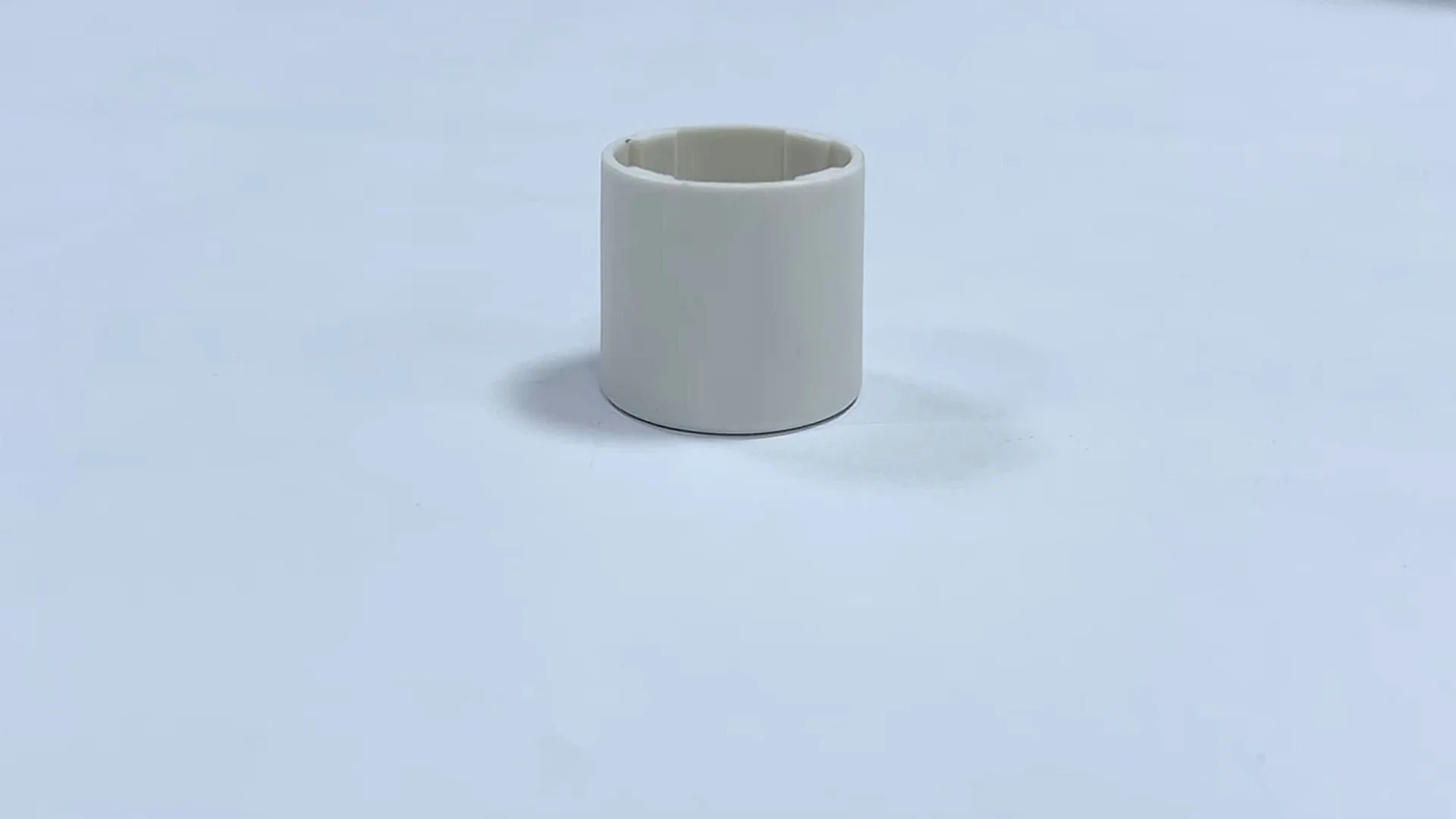
Plastic pipe sleeve to cover dia 28MM aluminum pipe end to contact with ground.
In the fast-paced world of industrial manufacturing and lean system setup, every component plays a quiet but critical role in keeping operations running smoothly. Among these unsung heroes are plastic pipe sleeves—simple yet indispensable tools that protect, stabilize, and enhance the performance of everything from lean pipe workbenches to material racks and conveyor systems. Whether you're assembling a production line, organizing a warehouse, or fine-tuning a lean workflow, understanding the specifications of plastic pipe sleeves is key to building structures that are durable, efficient, and tailored to your needs. In this guide, we'll dive deep into the details that matter most: thickness, length, and tolerance. We'll explore how these factors impact real-world applications, from fitting snugly with lean pipe joints to supporting heavy loads on a busy factory floor.
Why Plastic Pipe Sleeves Matter in Industrial Settings
Before we jump into specifications, let's take a moment to appreciate what plastic pipe sleeves actually do. Think of them as the protective (outer layer) for lean pipes, aluminum pipes, or stainless steel pipes in industrial setups. They act as a buffer, reducing friction between moving parts—like when materials glide along a roller track—or shielding pipes from scratches, corrosion, or chemical exposure. For example, in a food processing plant, a plastic sleeve might prevent metal lean pipes from coming into direct contact with food products, ensuring compliance with safety standards. In a automotive assembly line, they might dampen vibrations between lean pipe joints, keeping workbenches steady during precision tasks. But their role goes beyond protection. Plastic pipe sleeves also influence the fit and functionality of the entire system. A sleeve that's too thin might tear under pressure, while one that's too thick could make it impossible to connect lean pipe joints securely. Similarly, a sleeve with inconsistent length or poor tolerance (the allowable variation in size) can throw off the alignment of an entire material rack, leading to jams, inefficiencies, or even safety hazards. In short, getting the specs right isn't just about meeting a checklist—it's about building systems that work smarter, last longer, and adapt to your unique workflow.
Thickness: Balancing Durability and Practicality
When it comes to plastic pipe sleeves, thickness is often the first specification engineers and procurement teams consider—and for good reason. It directly impacts how much weight the sleeve can support, how resistant it is to wear and tear, and how well it fits over the base pipe (whether that's a lean pipe, aluminum pipe, or stainless steel pipe). Let's break down the key details.Common Thickness Ranges and Their Uses
Plastic pipe sleeves typically range in thickness from 0.5mm to 5mm, though custom options can go thicker for specialized applications. Here's a quick overview of how these thicknesses translate to real-world use: - 0.5mm to 1mm: These ultra-thin sleeves are lightweight and flexible, making them ideal for applications where minimal bulk is key. Think of delicate electronics assembly lines, where workers need to maneuver small parts on a lean pipe workbench without adding unnecessary weight. They're also cost-effective for temporary setups or low-stress environments, like light-duty material racks for office supplies. - 1mm to 3mm: The sweet spot for most industrial applications. This range offers a balance of durability and flexibility, handling everything from standard lean pipe joints to moderate weight loads. You'll find these sleeves in general manufacturing workbenches, turnover trolleys, and roller tracks where materials like boxes or small components are moved regularly. A 2mm sleeve, for example, is often the go-to choice for lean pipe systems in automotive parts assembly—strong enough to withstand daily use but not so thick that it complicates joint connections. - 3mm to 5mm: Heavy-duty sleeves designed for high-stress environments. These are built to handle heavy loads, frequent impact, or exposure to harsh conditions (like chemicals, extreme temperatures, or outdoor use). For instance, a 4mm sleeve might be used on a material rack B (3 row and 3 floor) in a warehouse storing metal parts, where the weight of the materials could otherwise scratch or dent the underlying lean pipe. They're also common in industries like construction or mining, where sleeves need to resist abrasion from rough materials.Factors That Influence Thickness Selection
Choosing the right thickness isn't just about picking a number—it's about matching the sleeve to the demands of your environment. Here are the top factors to consider: - Load Requirements: How much weight will the sleeve bear? A sleeve used on a roller track carrying 50kg boxes needs to be thicker than one on a workbench holding small tools. Engineers often calculate the "compressive strength" of the sleeve material (e.g., polypropylene vs. PVC) to ensure it won't deform under load. - Environmental Conditions: Will the sleeve be exposed to oil, chemicals, UV light, or extreme temperatures? Thicker sleeves often have better resistance to these factors, but the material matters too. For example, a 3mm nylon sleeve can withstand higher temperatures than a 3mm PVC sleeve, making it better for use near industrial ovens or in outdoor storage racks. - Fit with Base Pipes and Joints: The sleeve must slide over the base pipe (lean pipe, aluminum pipe, etc.) and still leave enough room for lean pipe joints to connect securely. A sleeve that's too thick might make the pipe diameter too large, preventing joints from tightening properly. This is especially critical for modular systems, where components need to be easily assembled and disassembled. For example, a standard 28mm lean pipe paired with a 2mm sleeve results in an outer diameter of 32mm—perfect for most standard lean pipe joints, which are designed to grip pipes in that range.Measuring Thickness: Accuracy Matters
Even within the same thickness range, consistency is key. A sleeve that's 2mm thick in one section and 1.5mm in another can lead to uneven wear or weak points. Most manufacturers use calipers or micrometers to measure thickness, ensuring a tolerance of ±0.1mm for high-precision applications. For critical systems—like cleanrooms or medical device manufacturing—some suppliers even offer ultrasonic thickness testing to verify uniformity across the entire sleeve length.Material Matters: How Thickness Interacts with Plastic Type
Thickness alone doesn't tell the whole story; the type of plastic used also plays a role. For example: - Polypropylene (PP): Stiff and chemical-resistant, PP sleeves often perform well at thinner thicknesses (1-2mm) for chemical processing plants, where resistance to acids or solvents is more important than flexibility. - Polyvinyl Chloride (PVC): More flexible than PP, PVC sleeves may need to be slightly thicker (2-3mm) to achieve the same durability in high-impact scenarios, like roller tracks where heavy boxes are dropped occasionally. - Nylon: Known for its toughness and abrasion resistance, nylon sleeves can handle higher loads at moderate thicknesses (2-4mm). They're a favorite for lean pipe systems in logistics warehouses, where turnover trolleys are constantly moving and sleeves need to resist scuffs from concrete floors. In short, thickness isn't a one-size-fits-all specification—it's a balance between the material, the environment, and the demands of your workflow.
Length: From Standard Cuts to Custom Solutions
If thickness is about strength, length is about versatility. Plastic pipe sleeves come in a range of standard lengths, but they can also be cut to size, making them adaptable to everything from tiny workbench components to sprawling conveyor systems. Let's explore how length impacts design, installation, and efficiency.Standard Lengths: The Backbone of Lean Systems
Most industrial plastic pipe sleeves are manufactured in standard lengths of 1 meter, 2 meters, 3 meters, or 6 meters. These lengths align with the standard sizes of the pipes they protect—lean pipes, for example, are often sold in 3-meter or 6-meter sections to minimize waste. Using standard-length sleeves reduces cutting time and material waste, making them the most cost-effective choice for large-scale projects. A 3-meter sleeve, for instance, can be easily paired with a 3-meter lean pipe to create a seamless, full-length protective layer for a material rack or conveyor rail. Standard lengths also simplify inventory management. If your facility uses mostly 2-meter lean pipes, stocking 2-meter sleeves means you can quickly replace a damaged sleeve without waiting for custom cuts. This is especially valuable in high-volume manufacturing, where downtime from missing parts can cost thousands of dollars per hour.Custom Lengths: Tailoring to Unique Needs
Of course, not every project fits neatly into standard lengths. Maybe you're building a compact workbench with a 1.2-meter lean pipe, or a curved conveyor system that requires sleeves cut at odd angles. In these cases, custom lengths are the way to go. Most suppliers offer cutting services with precision saws, ensuring clean, straight edges that won't fray or crack. Tolerances for custom lengths are typically ±1mm, though some can achieve ±0.5mm for applications where alignment is critical—like the roller track guide rails in a pharmaceutical packaging line, where even a small misalignment could cause bottles to jam. When ordering custom lengths, it's important to consider the "kerf"—the width of the material removed by the saw blade. For example, a 0.3mm kerf means a 2-meter sleeve cut from a 4-meter stock piece will actually result in two 1.9997-meter sleeves (since 0.3mm is lost to the cut). While this is negligible for most projects, it can add up in large orders, so be sure to factor it into your calculations.Handling and Storage: Keeping Lengths Straight and Intact
Long plastic sleeves can be tricky to store and transport without bending or warping, especially if they're thin-walled. Most suppliers ship sleeves in rigid cardboard tubes or on spools (for flexible materials) to prevent damage. On-site, storing them horizontally on racks—rather than leaning them against walls—helps maintain straightness, which is crucial for proper installation. A warped sleeve, for example, might not slide evenly over a lean pipe, leading to wrinkles that trap dirt or create weak points. Cutting sleeves on-site? Invest in a high-quality pipe cutter or miter saw with a fine-tooth blade to avoid crushing or tearing the plastic. For PVC or nylon sleeves, a hot knife can create a clean, sealed edge that resists fraying—handy for applications where moisture resistance is important, like outdoor lean pipe systems.Length and System Design: The Big-Picture Impact
The length of your plastic pipe sleeves can also influence the overall design of your lean system. For example, using shorter sleeves (e.g., 1-meter sections) on a long lean pipe workbench allows for easy replacement of individual damaged sections without removing the entire sleeve. This is a favorite trick in maintenance-heavy environments, like automotive repair shops, where sleeves near the edge of the workbench often wear out faster from constant foot traffic or tool impacts. Conversely, longer sleeves (6 meters) are ideal for continuous runs, like the aluminum guide rails on a high-speed conveyor. Fewer seams mean less friction and smoother material flow, reducing the risk of jams and extending the life of both the sleeve and the underlying pipe.
Tolerance: The Hidden Spec That Ensures Precision
Tolerance is the allowable variation in a dimension—in this case, the acceptable difference between the measured thickness or length of a sleeve and its intended specification. It's a small number (often just a fraction of a millimeter), but it has a huge impact on how well your lean system performs. Let's unpack why tolerance matters and how it's managed.Why Tolerance Can Make or Break a System
Imagine assembling a material rack with lean pipe joints that require a sleeve outer diameter of exactly 32mm. If one sleeve is 31.8mm and another is 32.2mm, the first might slip inside the joint (causing instability), while the second might not fit at all. Over time, these small inconsistencies can lead to loose connections, misaligned roller tracks, or uneven weight distribution—all of which increase the risk of system failure. In high-precision industries, tolerance is even more critical. Take semiconductor manufacturing, where even a 0.1mm misalignment in a lean pipe workbench could cause microscopic defects in circuit boards. For these applications, sleeves with tight tolerances (±0.05mm) are non-negotiable, often requiring specialized manufacturing processes like injection molding with precision tooling.Common Tolerance Standards for Industrial Sleeves
Tolerance standards vary by industry and application, but here are the most common benchmarks: - Commercial Grade (±0.2mm to ±0.5mm): Suitable for non-critical applications where minor variations won't affect performance. Examples include general storage racks, office supply trolleys, or temporary event setups. These sleeves are typically made with extrusion molding, a cost-effective process that produces consistent but not ultra-precise dimensions. - Industrial Grade (±0.1mm to ±0.2mm): The standard for most manufacturing and logistics systems. These sleeves are used in lean pipe workbenches, roller tracks, and conveyor systems where reliability is key. They're often made with calibrated extrusion dies or secondary machining (like sanding) to refine dimensions. - Precision Grade (±0.05mm or better): Reserved for high-tech, medical, or aerospace applications. These sleeves may require injection molding with computer-controlled tooling, followed by 100% inspection with coordinate measuring machines (CMMs) to ensure every piece meets specs.How Manufacturers Control Tolerance
Achieving tight tolerances requires careful control of the manufacturing process. For extruded sleeves (the most common type), factors like temperature, extrusion speed, and die design all play a role. If the plastic melt is too hot, the sleeve might expand more than intended; if the die is worn, the thickness could vary along the length. To combat this, modern extrusion lines use sensors to monitor dimensions in real time, adjusting speed or temperature automatically to keep tolerances in check. Post-production inspection is also critical. Most suppliers sample-test sleeves from each batch, measuring thickness at multiple points (top, bottom, sides) and length at both ends. For precision-grade sleeves, every unit is inspected, and any that fall outside the tolerance range are rejected or reworked.Tolerance and Cost: Finding the Right Balance
It's no secret that tighter tolerances cost more. A precision-grade sleeve with ±0.05mm tolerance can be 2-3 times the price of a commercial-grade sleeve with ±0.5mm tolerance. The key is to match the tolerance to your actual needs. Ask yourself: Will a 0.1mm variation really affect my system's performance? If you're building a heavy-duty material rack for steel parts, probably not—commercial grade is fine. But if you're integrating sleeves into a robotic assembly line where components must align with sub-millimeter precision, the extra cost for precision tolerance is worth every penny.
Putting It All Together: Specs in Action
To see how thickness, length, and tolerance work together, let's walk through a real-world example: building a lean pipe workbench for a small electronics assembly line. Scenario: The workbench will be 1.8 meters long, with a lean pipe frame (28mm diameter) and a wooden top. Workers will place circuit boards and small tools on it, and occasionally slide parts across the surface using a mini roller track. The workbench needs to be lightweight but sturdy, and the sleeves must protect the lean pipes from scratches caused by metal tools. Thickness Choice: A 1.5mm sleeve is ideal here. It's thick enough to resist scratches but not so thick that it adds unnecessary weight. Nylon is the material of choice for its abrasion resistance—important since tools will be set down roughly. Length Choice: Standard 2-meter sleeves are perfect. Cutting them to 1.8 meters leaves a small buffer for error, and the leftover 0.2 meters can be saved for repairs. The cut tolerance is ±1mm, which is more than tight enough for this application. Tolerance Choice: Industrial grade (±0.1mm) ensures the sleeves fit snugly over the 28mm lean pipes, allowing lean pipe joints to connect securely. No need for precision grade here—minor variations won't affect the workbench's stability. The result? A workbench that's easy to assemble, durable enough for daily use, and cost-effective—all because the sleeve specs were tailored to the project's unique needs.Key Specifications at a Glance: A Quick Reference Table
To help you compare and choose the right specs for your project, here's a summary of the key considerations for thickness, length, and tolerance:| Specification | Common Range | Typical Tolerance | Best For | Material Considerations |
|---|---|---|---|---|
| Thickness | 0.5mm – 5mm | ±0.1mm (Industrial Grade) |
0.5-1mm: Light-duty, temporary setups
1-3mm: General manufacturing, workbenches 3-5mm: Heavy loads, harsh environments |
PP: Chemical resistance, thinner options
PVC: Flexibility, mid-range thicknesses Nylon: Abrasion resistance, heavy-duty thicknesses |
| Length | 1m – 6m (standard); custom cuts available | ±1mm (standard); ±0.5mm (precision cuts) |
Standard lengths: Large-scale projects, inventory efficiency
Custom lengths: Compact setups, unique angles |
Longer lengths require rigid storage to prevent warping; flexible materials (PVC) handle bending better than rigid ones (PP) |
| Tolerance | ±0.05mm (Precision) – ±0.5mm (Commercial) | N/A (tolerance is the variation itself) |
±0.05mm: Semiconductor, medical, aerospace
±0.1-0.2mm: Manufacturing, logistics ±0.2-0.5mm: General storage, non-critical uses |
Tighter tolerances require higher-quality materials and manufacturing (e.g., injection molding vs. extrusion) |