- Company Articles
- Products and Technology
- Product knowledge
- Plastic Pipe Sleeves for Workbench E: Enhancing Stability and Component Protection

Plastic Pipe Sleeves for Workbench E: Enhancing Stability and Component Protection
Related Product
Plastic Pipe Sleeve
Plastic pipe sleeve to cover dia 28MM aluminum pipe end to contact with ground.
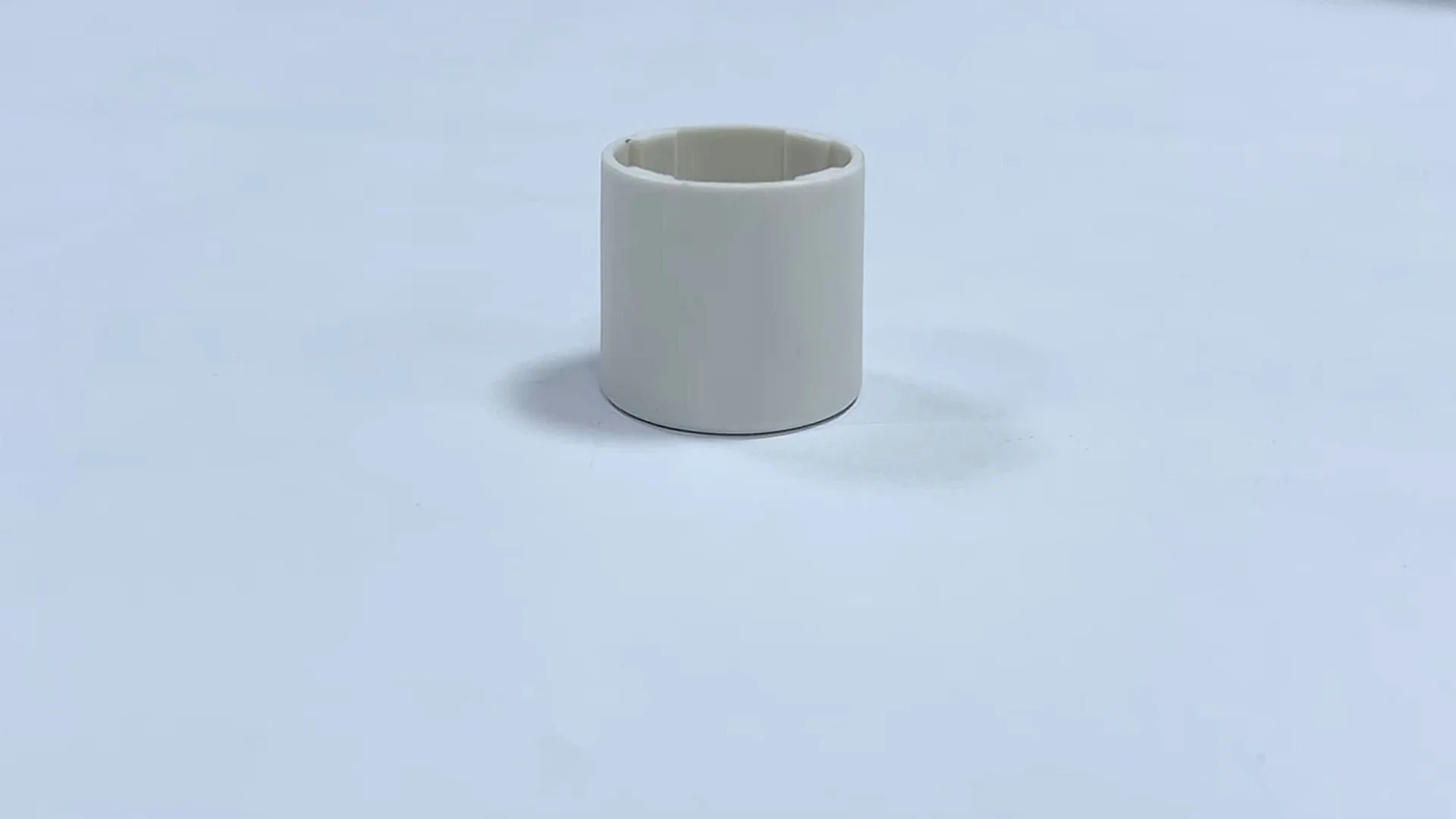
In the bustling heart of any manufacturing or assembly facility, the workbench stands as more than just a piece of equipment—it's the silent backbone of productivity. It's where ideas take shape, where components are meticulously assembled, and where the rhythm of production finds its steady beat. But not all workbenches are created equal. Some are built for heavy-duty tasks, others for precision work, and a few—like the Workbench E (single deck-without caster)—strike a balance between simplicity and functionality, making them a staple in lean manufacturing environments. Yet even the most well-designed workbench can fall short without the right accessories to support its purpose. Today, we're diving into a small but mighty component that often goes unnoticed: the plastic pipe sleeve. Specifically, how this unassuming accessory transforms Workbench E from a reliable surface into a stability powerhouse, all while safeguarding the valuable components that cross its deck.
Let's start by acknowledging a truth many floor supervisors and assembly line workers know firsthand: stability isn't just a nice-to-have—it's non-negotiable. A wobbly workbench doesn't just slow down tasks; it introduces risk. A slight shake can misalign a delicate part, a loose joint can lead to uneven surfaces, and over time, that instability wears on both the equipment and the people using it. Then there's component protection. Whether you're handling circuit boards, precision gears, or fragile electronics, the last thing you want is for a sharp edge on the workbench frame to scratch a part, or for metal-on-metal contact to create micro-abrasions that compromise quality. This is where plastic pipe sleeves step in. They're not flashy, they don't require complex installation, and they won't break the bank—but their impact on Workbench E's performance? It's nothing short of transformative.
Understanding Workbench E: More Than Just a Flat Surface
Before we unpack the role of plastic pipe sleeves, let's take a closer look at the star of the show: Workbench E (single deck-without caster). If you've spent time in a facility that prioritizes lean principles, you've probably encountered this workbench. Its design is intentionally straightforward: a single, sturdy deck supported by a frame, no casters to complicate mobility, and a focus on durability without unnecessary frills. Why is this simplicity so valued? In lean systems, every component has a purpose—no excess, no waste. Workbench E fits this ethos perfectly. It's lightweight enough to be positioned permanently in a workflow yet robust enough to handle daily use, making it ideal for assembly stations, inspection areas, or temporary storage zones where mobility isn't a priority.
But let's get specific. Workbench E's frame is typically constructed from metal pipes—often lean pipe or aluminum profile, depending on the manufacturer—connected by joints that provide structural rigidity. The single deck, usually made of plywood, MDF, or a metal sheet, sits atop this frame, creating a flat, even surface for tasks. Without casters, it relies entirely on the stability of its base to stay grounded. This simplicity is its strength, but it also means that any weakness in the frame—whether from loose joints, metal fatigue, or everyday wear—directly impacts its performance. Over time, the metal pipes that form the frame can develop small dents or scratches from repeated contact with tools, parts, or even the occasional bump from a turnover trolley. These imperfections might seem minor, but they add up. A scratched pipe can catch on sleeves or gloves, a dented section can create uneven weight distribution, and exposed metal is prone to rust in humid environments—all issues that chip away at the workbench's reliability.
To put it plainly: Workbench E is designed to be a workhorse, but even workhorses need proper care. And that's where plastic pipe sleeves enter the conversation. They're not an afterthought; they're a proactive solution to the very challenges that come with Workbench E's no-frills design. By adding a layer of protection and reinforcement to the frame's pipes, they address both stability and component safety in one fell swoop.
The Role of Plastic Pipe Sleeves: Small Design, Big Impact
At first glance, a plastic pipe sleeve might look like little more than a tube of colored plastic. But that's part of its beauty—its simplicity. Made from durable materials like PVC (polyvinyl chloride), polyethylene, or polypropylene, these sleeves are designed to slip over the metal pipes of Workbench E's frame, creating a snug, protective barrier. They come in various lengths and diameters to fit different pipe sizes, including the lean pipe and aluminum profile commonly used in Workbench E construction. Some are smooth, others have textured exteriors for better grip, and many are tinted in neutral colors like grey or yellow to blend seamlessly with factory aesthetics. But beyond their basic appearance, their design is engineered for function: flexibility to fit snugly, resilience to withstand daily wear, and a softness that contrasts with the hard metal of the frame.
So, how exactly do these sleeves work with Workbench E? Let's break it down. The frame of Workbench E (single deck-without caster) is typically assembled using a series of interconnected pipes—vertical supports, horizontal crossbars, and sometimes diagonal braces for added stability. These pipes are often made of steel or aluminum, which are strong but prone to the issues we mentioned earlier: scratches, corrosion, and noise from contact. When a plastic pipe sleeve is slid over these metal pipes, it creates a buffer zone. Think of it as a protective jacket for the frame. The sleeve absorbs shocks, reduces friction, and acts as a barrier between the metal and anything that comes into contact with it—whether that's a component being set down, a tool leaning against the frame, or even the occasional bump from a passing trolley.
But the role of plastic pipe sleeves isn't just protective. They also enhance stability by addressing a common culprit of wobble: loose joints. Over time, the constant vibration of a busy workbench can cause the joints connecting the frame pipes to loosen slightly. A plastic sleeve adds a tiny amount of extra thickness to the pipe, creating a tighter fit within the joint. It's not a replacement for proper tightening, of course, but it acts as a preventive measure, reducing the likelihood of joints becoming loose in the first place. This might sound minor, but anyone who's ever adjusted a wobbly table leg knows—sometimes it's the smallest adjustments that make the biggest difference in stability.

Stability Enhancement: How Plastic Pipe Sleeves Keep Workbench E Grounded
Stability is the foundation of any productive workbench, and Workbench E is no exception. Without casters, its stability relies entirely on the integrity of its frame and the even distribution of weight across its deck. Let's say you're using Workbench E for assembling small electronic components—tasks that require steady hands and precise movements. A slight () in the workbench can throw off your alignment, leading to misassembled parts or even damaged components. Now, multiply that by eight hours a day, five days a week, and you're looking at a recipe for reduced efficiency and increased frustration. Plastic pipe sleeves tackle this problem from multiple angles, starting with their ability to dampen vibration.
Metal pipes are excellent conductors of vibration. When a tool drops onto the workbench, or a heavy component is set down, that energy travels through the frame, causing the entire structure to resonate. Over time, this vibration can loosen joints, wear down connections, and create that telltale wobble. Plastic, by contrast, is a natural vibration dampener. Its flexibility absorbs that energy instead of transmitting it, reducing the overall movement of the frame. Imagine placing a soft mat under a noisy appliance—it quiets the sound by absorbing vibrations. Plastic pipe sleeves do the same for Workbench E, but instead of sound, they're taming movement. The result? A workbench that feels solid under your hands, even during repetitive tasks that would otherwise rattle a less protected frame.
Then there's the issue of surface contact. Workbench E's frame sits directly on the factory floor, and over time, the metal feet or base pipes can develop small dents or become uneven due to wear. This unevenness is often invisible to the eye but becomes noticeable when you place a level on the deck—suddenly, that "flat" surface isn't so flat. Plastic pipe sleeves can be used on the base pipes or feet of the workbench, creating a more uniform contact point with the floor. Their flexibility allows them to conform slightly to minor floor irregularities, distributing the workbench's weight more evenly. It's like adding a set of shock absorbers to the base, ensuring that even if the floor isn't perfectly level, the workbench itself remains steady.
Let's hear from someone who's experienced this difference firsthand. Maria, a production supervisor at a mid-sized electronics manufacturer, recalls a time when her team was struggling with Workbench E stability. "We had a line where we assemble circuit boards, and the workbench just wouldn't stay steady," she says. "Our operators were complaining about parts slipping, and we noticed an uptick in rework because of misalignments. We checked the joints, tightened everything down, but the wobble kept coming back. Then a colleague suggested trying plastic pipe sleeves on the frame. We were skeptical at first—how could a piece of plastic make that much difference? But we installed them, and within a week, the operators were asking why we hadn't done it sooner. The workbench felt rock-solid. No more slipping parts, no more rework. It was a game-changer for that line."

Component Protection: Safeguarding What Matters Most
If stability is about keeping the workbench steady, component protection is about keeping the products on it safe. Let's face it: manufacturing isn't always gentle. Parts are moved quickly, tools are set down with a clatter, and in the rush to meet deadlines, even the most careful operator can accidentally scrape a component against the workbench frame. For companies that prioritize quality control, these small scratches or dents aren't just cosmetic—they can lead to failed inspections, customer returns, or even product recalls. Plastic pipe sleeves act as a first line of defense, turning the hard, unforgiving edges of Workbench E's metal frame into a soft, forgiving surface.
Consider the scenario: You're placing a batch of aluminum profile components on Workbench E. These profiles are smooth, shiny, and critical to the final product's appearance. Without a plastic sleeve, the sharp edge of the workbench's steel pipe frame could easily leave a scratch as you set the profile down. With a sleeve, that contact is between the aluminum and the plastic—no scratch, no damage, just a safe, smooth placement. It's a simple interaction, but multiplied across hundreds of parts a day, it adds up to significant savings in scrap and rework costs. "We used to have a problem with our stainless steel components picking up micro-scratches from the workbench frame," says Raj, a quality control inspector at an automotive parts supplier. "We tried padding the edges with tape, but it would peel off after a shift, and the adhesive left residue. Then we switched to plastic pipe sleeves. Now, when parts touch the frame, they glide instead of scrape. Our defect rate for surface scratches dropped by 70%—that's a huge win for us."
Beyond scratches, plastic pipe sleeves also protect components from corrosion. In facilities with high humidity or where cleaning solutions are used regularly, metal frames can develop rust over time. A rusty spot on the frame might seem harmless, but when a component comes into contact with it, that rust can transfer, creating blemishes or even compromising the part's integrity. Plastic sleeves create a waterproof barrier, preventing moisture from reaching the metal pipe and stopping rust in its tracks. This is especially valuable for Workbench E setups in food processing, pharmaceutical, or electronics manufacturing, where cleanliness and corrosion resistance are non-negotiable.
There's also the matter of noise reduction—a side benefit that indirectly protects components. Metal-on-metal contact is loud, and constant noise in a workspace can lead to operator fatigue, which in turn increases the likelihood of accidents. When components are set down on a metal frame, the clang can startle an operator, causing them to fumble a part. Plastic pipe sleeves muffle that noise, creating a quieter, calmer environment. A quieter workspace isn't just more pleasant—it's safer, as operators stay more focused and less prone to mistakes. It's a ripple effect: plastic sleeves reduce noise, noise reduction improves focus, focus reduces errors, and errors reduction protects components. It's a small change with a surprisingly far-reaching impact.

Material Matters: Why Plastic Stands Out for Workbench E
Not all pipe sleeves are created equal, and choosing the right material is key to maximizing their benefits for Workbench E. While rubber and metal sleeves exist, plastic has emerged as the top choice for this specific application—and for good reason. Let's compare plastic to other common materials to see why it's the ideal match for Workbench E (single deck-without caster).
| Material | Stability Enhancement | Component Protection | Durability | Cost-Effectiveness |
|---|---|---|---|---|
| Plastic (PVC/Polyethylene) | Excellent vibration dampening; tight fit reduces joint looseness | Soft surface prevents scratches; corrosion-resistant | Resistant to chemicals, moisture, and UV light; long lifespan | Low upfront cost; minimal replacement needed |
| Rubber | Good vibration absorption but can compress over time, reducing fit | Very soft, excellent for delicate parts but prone to tearing | Degrades in high temperatures; not ideal for industrial use | Moderate cost; requires frequent replacement |
| Metal (Coated) | High rigidity but poor vibration dampening; adds weight | Hard surface; risk of scratching components | Durable but prone to chipping; corrosion if coating wears | High upfront cost; no noise or scratch benefits |
As the table shows, plastic excels in the areas that matter most for Workbench E. Its durability is a standout feature—PVC and polyethylene sleeves can withstand daily use, exposure to industrial cleaning agents, and temperature fluctuations without cracking, warping, or losing their shape. Unlike rubber, which can degrade in hot environments or become brittle in cold ones, plastic sleeves maintain their flexibility across a wide range of conditions, making them suitable for diverse factory settings. And when compared to metal sleeves, plastic's cost-effectiveness is undeniable. A set of plastic pipe sleeves for Workbench E costs a fraction of what metal alternatives would, and since they rarely need replacement, the long-term savings are substantial.
Another material advantage is customization. Plastic pipe sleeves come in a variety of colors, which might seem like a purely aesthetic choice, but in reality, it can improve workflow. For example, yellow sleeves can be used to mark "no" zones on the workbench frame, while grey sleeves indicate safe areas for component placement. This visual cue helps operators quickly identify where to set parts, reducing the risk of accidental contact with unprotected edges. "We color-code our sleeves based on the type of component being worked on," explains Priya, a production planner at a consumer electronics company. "Red sleeves mean 'static-sensitive parts only,' so operators know to handle those components with extra care. It's a simple system, but it's cut down on mix-ups and improved our overall organization."
Installation and Compatibility: Making Plastic Pipe Sleeves Work for You
One of the biggest advantages of plastic pipe sleeves is how easy they are to install. You don't need specialized tools, you don't need to shut down production for hours, and you don't need a team of technicians. In most cases, a single operator can sleeve an entire Workbench E in under 15 minutes. The process is straightforward: measure the length of the frame pipes, cut the sleeves to size (if necessary), and slide them over the metal pipes. The sleeves are designed to fit snugly, so they stay in place without adhesive or fasteners. If you need to reposition a sleeve or remove it for maintenance, it peels off easily, leaving no residue behind.
But what about compatibility with other components? Workbench E is rarely used in isolation—it's often part of a larger lean system, paired with flow racks, conveyors, or material trolleys. Plastic pipe sleeves are designed to play well with these setups, including compatibility with lean pipe, aluminum profile, and even stainless steel pipe series. For example, if your Workbench E is connected to a material rack via lean pipe, the sleeves on the workbench frame will align seamlessly with the rack's pipes, creating a uniform look and preventing any metal contact points between the two. "We use Workbench E alongside our aluminum profile workstations," says Mike, a facility manager at a medical device manufacturer. "The plastic sleeves on the workbench frame match the diameter of our aluminum pipes, so when we roll components from the workstation to the bench, there's no gap or rough edge. It's a smooth transition, which keeps our workflow moving without hiccups."
It's also worth noting that plastic pipe sleeves are reversible and reusable. If a sleeve becomes worn or damaged (though this is rare), you can simply slide it off and replace it with a new one. This makes them a sustainable choice, as there's minimal waste compared to adhesive tapes or permanent padding solutions. "We've had sleeves on our Workbench E for over two years, and we've only needed to replace a couple that got nicked by a forklift," says Lisa, a maintenance supervisor. "They're tough, they last, and when we reconfigure our workbench layout, we just move the sleeves to the new frame setup. It's a no-brainer for us."
"I've been an assembly line operator for 12 years, and I've worked on more workbenches than I can count. Workbench E was always solid, but after we added plastic pipe sleeves? It's like night and day. The bench doesn't shake when I use my power tools anymore, and I don't have to worry about scratching the circuit boards we build. Last month, I dropped a resistor onto the frame—would've left a mark before, but the sleeve just bounced it back. No damage, no stress. These sleeves might be simple, but they make my job a whole lot easier." — Carlos, Assembly Line Operator
Conclusion: The Unseen Hero of Workbench E
As we wrap up, let's circle back to that initial thought: the workbench is the backbone of productivity. But even the strongest backbone needs support, and plastic pipe sleeves provide that support for Workbench E in ways that are both subtle and profound. They enhance stability by dampening vibration and creating tighter joint fits. They protect components by absorbing shocks, preventing scratches, and blocking corrosion. They reduce noise, improve workflow, and even add a layer of customization with color-coding. And they do all this with minimal cost, effort, and disruption to production.
In the world of manufacturing, where every efficiency gain and defect reduction counts, it's easy to overlook the small components. But as we've seen through the experiences of Maria, Raj, Carlos, and others, the plastic pipe sleeve is proof that big impact often comes in small packages. It's not about reinventing the wheel—it's about making the wheel roll smoother, last longer, and protect what's precious along the way.
So, if you're using Workbench E (single deck-without caster) in your facility, take a moment to look at its frame. Are those metal pipes exposed, vulnerable to wear and ready to scratch the next component that comes their way? Or are they wrapped in the quiet protection of plastic pipe sleeves? The answer might just be the difference between a good workbench and a great one—a workbench that doesn't just support your production, but elevates it.
After all, in manufacturing, success is in the details. And when it comes to Workbench E, few details are as impactful as the plastic pipe sleeve.