- Company Articles
- Products and Technology
- Product knowledge
- Plastic Tracks vs. 60 Steel Roller Track Green: Durability & Eco-Cost Comparison

Plastic Tracks vs. 60 Steel Roller Track Green: Durability & Eco-Cost Comparison
Related Product
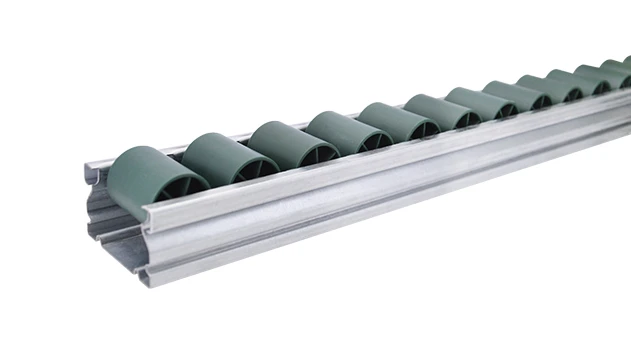
60 Steel Roller Track Green
The roller track can be installed with multiple accessories to create different slopes and configurations of flow racks.All steel conveyor 60 roller track accessories are engineered to perfectly fit the sliding rail.It is enable the movement of SLC boxes.
Plastic Tracks vs. 60 Steel Roller Track Green: Durability & Eco-Cost Comparison
Material handling is the unsung hero of efficient manufacturing and warehouse operations. The right track system can turn a chaotic workflow into a streamlined process—cutting down on waste, boosting productivity, and keeping your team safe. Today, we're putting two of our most popular track options head-to-head: plastic roller tracks and the 60 Steel Roller Track Green. Both are staples in our product lineup, but how do they stack up when it comes to durability, cost-effectiveness, and environmental impact? Let's dive in.
1. What Are These Tracks, Anyway?
1.1 Plastic Roller Tracks: Lightweight & Versatile
If you've ever walked through a warehouse with bright yellow or neutral grey guide rails on flow racks, you've seen plastic roller tracks in action. Our plastic roller track guide rails (available in both colors) are crafted from high-impact polypropylene—often reinforced with a steel core for added stability. They're designed to be lightweight, easy to snap into place, and whisper-quiet, making them a top pick for environments where noise levels matter (like medical device assembly lines).
Common uses for plastic tracks include:
The biggest draws of plastic tracks? They're corrosion-resistant (perfect for damp cold storage), low-maintenance, and budget-friendly. For small businesses or teams with tight upfront budgets, our plastic track wholesale options are a great way to get quality without overspending.
1.2 60 Steel Roller Track Green: Heavy-Duty Workhorse
On the opposite end of the spectrum is the 60 Steel Roller Track Green. This product is built to handle the toughest material handling challenges—engineered from high-gauge steel with a green anti-rust coating that protects against wear, corrosion, and static electricity. It's the go-to choice for industries like automotive manufacturing, heavy machinery assembly, and large-scale warehouse logistics.
Key features of the 60 Steel Roller Track Green include:
- Exceptional load capacity (up to 200 lbs per linear foot—four times that of plastic tracks)
- Green ESD-safe coating that prevents static buildup (critical for electronics manufacturing)
- Impact-resistant construction that stands up to forklift bumps and heavy item drops
This track aligns perfectly with our lean solution philosophy: it's reusable, scalable, and designed to last for decades. Whether you're setting up a new flow rack or upgrading an existing conveyor system, our 60 Steel Roller Track Green wholesale options are a smart long-term investment.
2. Durability Showdown: Plastic vs. Steel Green
Durability isn't just a buzzword—it's the foundation of reliable material handling. Let's compare these two tracks across the metrics that matter most.
2.1 Load Capacity
Load capacity is non-negotiable. A track that can't handle your inventory's weight will lead to breakdowns, delays, and safety risks. Here's how plastic and steel green tracks compare:
| Metric | Plastic Roller Tracks | 60 Steel Roller Track Green |
|---|---|---|
| Max Dynamic Load (per linear foot) | 40 lbs | 180 lbs |
| Max Static Load (per linear foot) | 150 lbs | 500 lbs |
| Recommended Item Weight (per unit) | Up to 10 lbs | Up to 50 lbs |
| Optimal Roller Spacing | 2–3 inches | 4–6 inches |
What does this mean for your business? If you're moving small phone cases or medical syringes, plastic tracks are more than enough. But if you're handling heavy engine parts or large warehouse bins, the 60 Steel Roller Track Green is the clear winner. The wider roller spacing for steel green also means you'll need fewer tracks per system—cutting down on upfront costs and installation time.
2.2 Wear Resistance
Wear resistance refers to how well a track holds up to constant friction from moving items. Plastic tracks glide smoothly and won't scratch light, non-abrasive items like plastic components. However, if you're moving sharp metal parts (like screws or bolts), plastic tracks can wear down quickly—leading to uneven rolling and potential jams.
The 60 Steel Roller Track Green is built for wear. Its green coating adds an extra layer of protection against scratches and abrasion, so it can handle sharp metal parts for years without showing signs of damage. This makes it ideal for conveyor systems in automotive assembly lines, where parts are often heavy and metal.
2.3 Corrosion Resistance
Corrosion is a silent killer in warehouses with high humidity or exposure to liquids. Plastic tracks are inherently waterproof—they don't rust or degrade when exposed to water, making them perfect for cold storage facilities or pharmaceutical warehouses (though we don't recommend direct food contact).
The 60 Steel Roller Track Green isn't far behind. Its green anti-rust coating protects against moisture and mild chemicals, so it can handle damp environments like outdoor storage yards or washdown areas. If the coating gets scratched (a rare occurrence with normal use), a quick touch-up with green paint will keep rust at bay.
2.4 Impact Resistance
Accidents happen—boxes fall, carts collide, and forklifts make mistakes. How do these tracks handle impacts? Plastic tracks are lightweight, but they're not as tough as steel. A heavy impact (like a 50 lb box falling from 3 feet) can crack or split a plastic track, requiring immediate replacement to avoid jams.
The 60 Steel Roller Track Green is built to take a hit. Its thick steel construction and durable coating mean it can absorb heavy impacts without denting or breaking. For example, if a forklift accidentally bumps into a flow rack using steel green tracks, the tracks will likely remain intact—no replacement needed. This makes it a must-have for busy warehouses where accidents are more common.
2.5 Expected Lifespan
Lifespan is a key indicator of durability. Plastic tracks typically last 5–7 years with regular use. However, if you're using them for heavy items or in harsh environments, their lifespan can drop to 3–4 years. You'll need to replace them more often, which adds to your long-term costs.
The 60 Steel Roller Track Green is built to last 10+ years. With minimal maintenance (like lubricating rollers every 6 months), it can serve your business for 15 years or more. This means fewer replacements and less downtime for your team.
3. Eco-Cost Analysis: Budget & Planet-Friendly?
Durability is important, but you also need to consider cost and environmental impact. Let's break down the total cost of ownership (TCO) and eco-friendliness of both tracks.
3.1 Initial Cost
Plastic tracks are cheaper upfront. Our plastic roller track guide rail wholesale prices start at around $8 per linear foot. The 60 Steel Roller Track Green costs more—around $25 per linear foot. For a 100-foot flow rack, that's a $1,700 difference upfront. If you're on a tight budget, plastic tracks might seem like the better choice at first glance.
3.2 Maintenance Cost
Maintenance costs add up over time. Plastic tracks require almost no upkeep—just occasional wiping to remove dust. The only cost is the time it takes to clean them.
The 60 Steel Roller Track Green needs a bit more care: lubricate rollers every 6 months ($0.5 per linear foot per year) and touch up scratches ($0.3 per linear foot per year). For a 100-foot track, that's $80 per year in maintenance costs—affordable, but more than plastic.
3.3 Total Cost of Ownership (TCO) Over 10 Years
TCO is the best way to compare long-term costs. Let's calculate it for a 100-foot track (note: steel green tracks require wider spacing, so we'll adjust for that):
Plastic Tracks:
- Initial cost: $8 x 100 = $800
- Replacements: 2 (every 5 years) → $800 x2 = $1600
- Maintenance: $0 → Total: $2400
60 Steel Roller Track Green (60 feet needed due to wider spacing):
- Initial cost: $25 x60 = $1500
- Replacements: 0 → $0
- Maintenance: $80 x (60/100) x10 = $480 → Total: $1980
Surprise! The steel green track is cheaper over 10 years. Its wider spacing means you need fewer tracks, and its long lifespan eliminates replacement costs.
3.4 Eco-Friendliness
Eco-friendliness is at the core of our lean solution philosophy. Let's see how these tracks stack up:
Recyclability:
Both tracks are recyclable. Plastic tracks are made from PET/PP, which can be melted down and reused. The 60 Steel Roller Track Green is 100% steel—one of the most recycled materials globally.
Waste Reduction:
Plastic tracks need to be replaced more often, leading to more waste (200 feet over 10 years). The steel green track generates zero waste over the same period—no replacements needed.
Reusability:
The 60 Steel Roller Track Green is designed to be reused across multiple projects. For example, if you reconfigure a flow rack, you can take the steel green tracks and use them in a new conveyor system. Plastic tracks are often damaged during disassembly, so they're less reusable.
4. Which Track Should You Choose?
The answer depends on your specific needs. Here's a quick guide:
Choose Plastic Tracks If:
- You're handling light items (up to 10 lbs per unit)
- Noise reduction is critical (like medical device assembly)
- You're on a tight upfront budget
- You need waterproofing for damp environments
- Examples: 3C assembly lines, small parts warehouses, pharmaceutical storage
Choose 60 Steel Roller Track Green If:
- You're handling heavy items (over 10 lbs per unit)
- You want long-term durability (10+ years)
- You're looking for lower TCO
- You need impact resistance for busy warehouses
- Examples: Automotive assembly lines, heavy machinery storage, outdoor yards
Our Custom Lean Solutions
At our core, we offer more than just tracks—we design custom lean solutions tailored to your business. Our team will work with you to create a system that uses the right tracks for your workflow. For example:
- A 3C assembly line might use plastic tracks on a lean pipe workbench for light components.
- An automotive warehouse could use 60 Steel Roller Track Green on flow racks for heavy engine parts.
- A medical facility might integrate plastic tracks into conveyors to reduce noise and support sterile environments.
All our solutions align with our lean: reusable, scalable, and built to improve efficiency over time. Whether you need wholesale tracks or a full custom system, we're here to help.
5. Final Thoughts
Plastic tracks and the 60 Steel Roller Track Green are both great options, but they serve different purposes. Plastic tracks are perfect for light, quiet, budget-friendly needs. The 60 Steel Roller Track Green is the best choice for heavy-duty, long-term, and eco-friendly applications.
When making your decision, don't just look at upfront costs—consider TCO and environmental impact. The steel green track may cost more initially, but it's a smarter investment in the long run. It's durable, reusable, and aligns with our commitment to sustainable manufacturing.
If you're still unsure which track is right for you, our team is here to help. We offer free consultations to assess your needs and recommend the best solution. Whether you need flow rack wholesale, conveyor systems, or custom lean solutions, we're your trusted partner in material handling.