- Company Articles
- Products and Technology
- Product knowledge
- Plastic vs. 40 Steel Roller Track White Wheel: Cost-Effectiveness Analysis

Plastic vs. 40 Steel Roller Track White Wheel: Cost-Effectiveness Analysis
Related Product
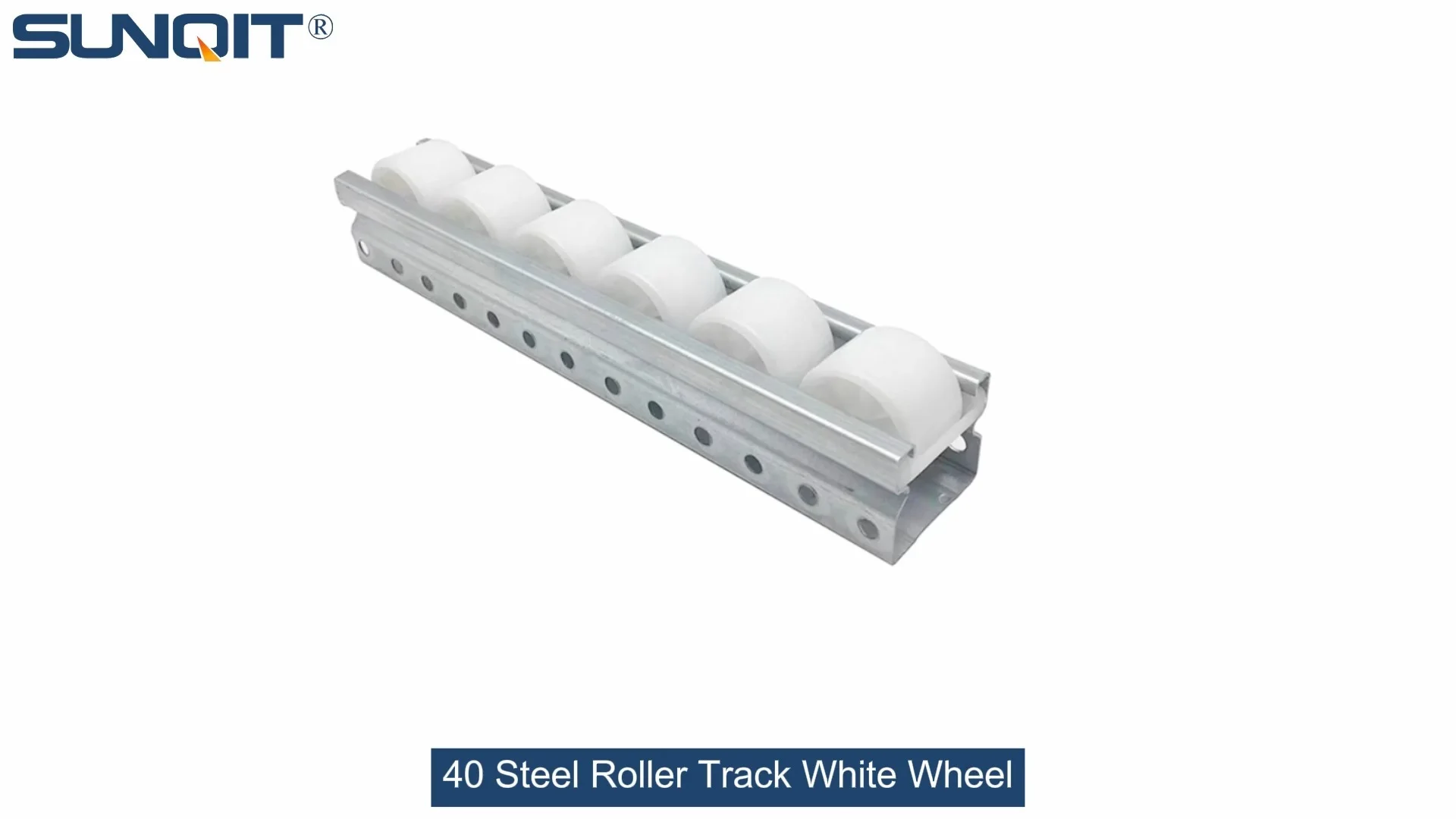
40 Steel Roller Track White Wheel
The roller track can be installed with multiple accessories to create different slopes and configurations of flow racks.All steel conveyor 40 roller track accessories are engineered to perfectly fit the sliding rail.
Plastic vs. 40 Steel Roller Track White Wheel: Cost-Effectiveness Analysis
When it comes to building efficient lean systems for your production line or warehouse, every component choice carries weight—literally and figuratively. Roller tracks are the unsung heroes of smooth material flow, whether you're setting up a flow rack for parts storage or integrating conveyors into your assembly process. Today, we're diving deep into two popular options: plastic roller tracks and 40 steel roller track white wheels. We'll break down their performance, costs, and ideal use cases to help you make the most cost-effective decision for your operations.
What Are Roller Tracks & Their Role in Lean Systems?
Roller tracks are essential for creating seamless material handling paths in lean environments. They enable parts to glide from one station to the next, reducing manual effort and minimizing bottlenecks. Whether you're using them on a lean pipe workbench for 3C assembly or a large flow rack in a warehouse, the right roller track can boost productivity and align with lean principles like waste reduction and continuous improvement. Sunqit, a leading supplier of lean pipe systems and solutions, offers both plastic and steel roller tracks to cater to diverse industry needs—from light-duty 3C assembly to heavy-duty automotive logistics.
Deep Dive into Plastic Roller Tracks
Plastic roller tracks are a go-to choice for teams looking for flexibility and affordability. Made from high-quality engineering plastics like PA6 or PP, these tracks are lightweight yet durable enough to handle light to medium loads. Let's break down their key attributes:
Material & Construction
Plastic roller tracks feature interlocking sections that are easy to install and reconfigure—perfect for lean systems that need frequent adjustments. The plastic rollers are smooth, corrosion-resistant, and designed to dampen noise, making them ideal for quiet work environments. Sunqit's plastic roller track guide rails (available in yellow and grey) are a popular example, with a modular design that fits seamlessly into lean pipe workbenches and flow racks.
Performance Metrics
- **Load Capacity**: Most plastic roller tracks can handle up to 50 kg per meter, which is sufficient for small parts like 3C components (phones, tablets) or medical device parts.
- **Noise Level**: Extremely low—usually below 50 dB—so workers can focus without distractions.
- **Durability**: Resistant to chemicals and moisture, making them suitable for clean rooms or environments where sanitization is key.
- **Flexibility**: Easy to cut and modify, so you can adapt your flow rack or conveyor to changing production needs quickly.
Ideal Applications
Plastic roller tracks shine in scenarios where light loads and flexibility are priorities:
- 3C assembly lines (consumer electronics like smartphones and laptops)
- Medical device manufacturing (clean rooms for surgical tools or diagnostic equipment)
- Small parts storage in warehouses (flow racks for tiny components)
- Temporary or frequently reconfigured production stations
- Medical device manufacturing (clean rooms for surgical tools or diagnostic equipment)
- Small parts storage in warehouses (flow racks for tiny components)
- Temporary or frequently reconfigured production stations
Cost Breakdown
- **Initial Purchase Cost**: Typically ranges from $15 to $30 per meter, depending on the material and load capacity. This is significantly lower than steel options.
- **Maintenance Cost**: Almost negligible—just wipe down with a damp cloth occasionally to remove dust. No rust prevention or lubrication needed.
- **Lifespan**: 3–4 years for light-duty use; may need replacement sooner if used for heavier loads (above 40 kg per meter).
- **Total Cost of Ownership (TCO)**: For a 100-meter track used in a 3C assembly line over 5 years: $15/m *100m + $0 maintenance + $15/m*100m (replacement at year4) = $3,000.
Deep Dive into 40 Steel Roller Track White Wheel
For heavy-duty applications that demand durability and high load capacity, the 40 steel roller track white wheel is the way to go. These tracks feature steel rollers coated with a white PVC layer, which reduces noise and prevents scratches on delicate parts. Let's explore their key features:
Material & Construction
The 40 steel roller track white wheel is built with a sturdy steel frame and precision-machined rollers. The white PVC coating on the rollers serves two purposes: it dampens noise and protects sensitive parts (like automotive components) from scratches. Sunqit's 40 steel roller track white wheel is designed to integrate with lean pipe systems and flow racks, making it a versatile choice for industrial settings.
Performance Metrics
- **Load Capacity**: Up to 200 kg per meter—ideal for heavy parts like automotive engine components, large warehouse boxes, or industrial machinery parts.
- **Noise Level**: Slightly higher than plastic (around 60 dB) but still quiet enough for most production environments.
- **Durability**: Built to last—steel rollers resist wear and tear even under constant use. The PVC coating adds an extra layer of protection against rust and corrosion.
- **Stability**: Rigid frame ensures minimal deflection, so parts glide smoothly without jamming.
Ideal Applications
The 40 steel roller track white wheel is perfect for heavy-duty scenarios:
- Automotive assembly lines (engine parts, chassis components)
- Warehouse logistics (flow racks for large boxes or pallets)
- Heavy machinery manufacturing (parts like gears or hydraulic systems)
- Long-term production stations that require stability and reliability
- Warehouse logistics (flow racks for large boxes or pallets)
- Heavy machinery manufacturing (parts like gears or hydraulic systems)
- Long-term production stations that require stability and reliability
Cost Breakdown
- **Initial Purchase Cost**: Ranges from $35 to $60 per meter, depending on the load capacity and coating quality. This is 2–3 times higher than plastic options.
- **Maintenance Cost**: Low—requires lubrication once a year ($2–$5 per meter annually) and occasional checks for coating damage.
- **Lifespan**: 7–10 years for regular use; can last longer if maintained properly.
- **Total Cost of Ownership (TCO)**: For a 100-meter track used in an automotive warehouse over 5 years: $35/m*100m + $3/m*100m*5 = $3,500 + $1,500 = $5,000.
Cost-Effectiveness Analysis: Plastic vs. Steel
To make an informed decision, we need to compare both options across key metrics. Below is a detailed comparison table:
| Metric | Plastic Roller Track | 40 Steel Roller Track White Wheel |
|---|---|---|
| Initial Cost per Meter | $15–$30 | $35–$60 |
| Max Load Capacity per Meter | 50 kg | 200 kg |
| Lifespan | 3–4 years | 7–10 years |
| Annual Maintenance Cost per Meter | $0 | $2–$5 |
| Noise Level | Below 50 dB | Around 60 dB |
| Ideal Applications | Light loads, flexible scenarios (3C, medical) | Heavy loads, long-term use (automotive, warehouse) |
| TCO Over 5 Years (100m Track) | $3,000–$6,000 | $4,500–$7,500 |
The table shows that plastic tracks have a lower initial cost, but steel tracks offer better value for heavy-duty, long-term use. Let's look at three real-world scenarios to see which option is better:
Scenario 1: 3C Assembly Line
A 3C manufacturer needs a 100-meter roller track for small parts (20 kg per meter) and plans to reconfigure the line every 2 years. Plastic tracks are the best choice here: they're cheap, easy to modify, and their 3–4 year lifespan aligns with the line's reconfiguration cycle. The TCO for plastic is $3,000, which is $1,500 less than steel.
Scenario 2: Automotive Warehouse
An automotive warehouse needs a 200-meter track for engine components (150 kg per meter) and plans to use it for 10 years. Plastic tracks can't handle the load, so steel is the only viable option. The TCO for steel over 10 years is $35/m*200m + $3/m*200m*10 = $7,000 + $6,000 = $13,000—far less than replacing plastic tracks every 3 years (which would cost $15/m*200m*3 = $9,000, plus downtime for replacements).
Scenario3: Medical Device Manufacturing
A medical device factory needs a 50-meter track for surgical tools (30 kg per meter) in a clean room. Plastic tracks are ideal here: they're corrosion-resistant, easy to sanitize, and their low noise level fits the clean room environment. The TCO for plastic over 5 years is $15/m*50m + $0 = $750 (no replacement needed if used correctly).
How to Choose the Right Roller Track for Your Lean System
Follow these steps to pick the best option for your operations:
1. Assess Your Load Requirements
If your parts weigh less than 50 kg per meter: Go for plastic. If they weigh more than 50 kg: Choose steel.
2. Consider Your Environment
Clean rooms or chemical-heavy environments: Plastic (resistant to moisture and chemicals). Heavy-duty industrial settings: Steel (durable and rust-resistant).
3. Calculate Long-Term Costs
Don't just look at the initial cost—think about lifespan and maintenance. Steel tracks have a higher initial cost but lower TCO for long-term use.
4. Evaluate Flexibility Needs
If you need to reconfigure your flow rack or conveyor often: Plastic (easy to modify). If your setup is stable: Steel (rigid and reliable).
Conclusion
Both plastic and 40 steel roller track white wheels have their place in lean systems. Plastic is perfect for light, flexible scenarios like 3C assembly, while steel is ideal for heavy-duty, long-term use like automotive warehouses. The key is to align your choice with your specific needs—load capacity, environment, and lifespan. Sunqit offers both options, plus custom lean solutions to help you build the perfect system for your operations. Whether you need a flow rack, conveyor, or lean pipe workbench, Sunqit's products are designed to support your lean journey and help you achieve continuous improvement.