- Company Articles
- Products and Technology
- Product knowledge
- Plastic vs. 60 Aluminum Roller Track Yellow: Which Lasts Longer?

Plastic vs. 60 Aluminum Roller Track Yellow: Which Lasts Longer?
Related Product
60 Aluminum Roller Track Yellow
Modular syetem roller tracks aluminum gravity roller tracks are an excellent solution for transporting materials within industrial environments, warehouses and distribution centres.
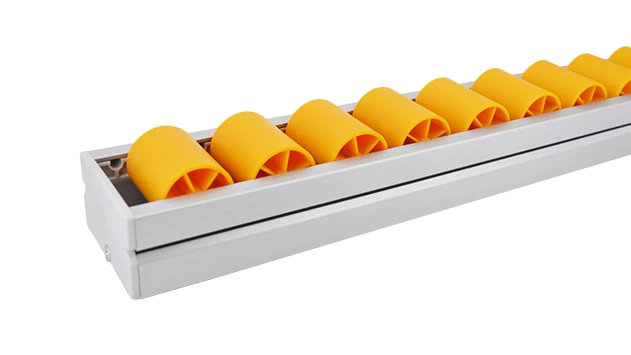
Ever been in the middle of a busy shift when a roller track gives out? One minute everything's flowing smoothly, the next you're stuck with a pile of parts and a halted assembly line. It's frustrating, costly, and totally avoidable—if you pick the right track for the job. Today, we're pitting two popular options against each other: the plastic roller track guide rail yellow and the 60 aluminum roller track yellow. Which one will keep your operations running longer without breaking a sweat?
Whether you're setting up a new flow rack in your warehouse or upgrading your production line, the choice between plastic and aluminum tracks can make or break your efficiency. Let's not beat around the bush—let's dive deep into what makes each tick, how they hold up over time, and which one's the better long-term investment.
What Are These Tracks Made Of, Anyway?
First things first: let's get to know the materials. The 60 aluminum roller track yellow isn't just any metal—it's a 60-series aluminum alloy, a go-to for industrial extrusion because it's strong, lightweight, and easy to shape. The yellow coating you see? That's probably a protective anodized layer or paint, designed to fend off scratches, corrosion, and everyday wear. It's like a suit of armor for your track.
On the other side, the plastic roller track guide rail yellow is typically crafted from high-density polyethylene (HDPE). HDPE is a tough thermoplastic that's used in everything from milk jugs to cutting boards because it's cheap, impact-resistant, and easy to mold. But here's the catch: while HDPE is sturdy, it's no match for metal when it comes to long-term durability.
Durability Showdown: Which Track Can Take a Beating?
1. Load Capacity: How Much Weight Can They Handle?
Let's talk numbers. A standard plastic roller track guide rail yellow can usually support around 50 to 75 kilograms per meter. That's fine for small parts—like the tiny components in a 3C assembly line (think phone screens or battery packs). But if you're moving heavier stuff, like automotive engine parts or large warehouse boxes, plastic just won't cut it. It'll start to warp, bend, or even crack under the pressure.
The 60 aluminum roller track yellow? It's a heavyweight champion. Depending on the design, it can handle anywhere from 100 to 200 kilograms per meter. That's triple the load of plastic in some cases. So if your operations involve moving bulky items, aluminum is the way to go—no question.
2. Wear Resistance: Will They Stay Smooth Over Time?
Every time a wheel rolls over your track, it's causing a little bit of friction. Over months and years, that friction adds up. Plastic tracks tend to develop grooves where the wheels make contact. These grooves slow down movement, make things jittery, and eventually render the track useless. It's like driving a car on a road full of potholes—you won't get far without issues.
Aluminum tracks, though? Their hard, smooth surface resists wear like a pro. Even after thousands of rolls, the track stays flat and even. The yellow coating helps too— it acts as a barrier against scratches, so the track looks and performs like new for longer. No more jittery parts or slow-moving lines.
3. Environmental Factors: How Do They Handle Extreme Conditions?
Warehouses and factories aren't always cozy. Some are freezing cold (like food storage facilities), others are sweltering hot (like metalworking shops). How do these tracks hold up?
Plastic tracks hate extreme temps. In cold environments, HDPE becomes brittle—one small bump and it cracks. In hot environments, it softens and deforms, losing its shape and functionality. If your track is exposed to the elements (like a loading dock), UV rays from the sun can even cause plastic to fade and become weak over time.
Aluminum tracks? They laugh at extreme conditions. Cold? No problem—aluminum retains its flexibility even in sub-zero temps. Hot? It stays rigid and doesn't deform. UV rays? The yellow coating protects against that too. So whether your track is in a freezer or a sun-baked loading dock, aluminum will keep going strong.
4. Impact Resistance: Can They Survive a Bump or Two?
Let's be real—accidents happen. A forklift driver takes a tight turn and nicks the track. A heavy box slips and slams into it. How do plastic and aluminum react?
Plastic tracks are fragile in these situations. A hard impact will crack or shatter them. And once they're cracked, there's no fixing them—you have to replace the whole thing. That's a costly and time-consuming hassle.
Aluminum tracks are more forgiving. A bump might bend a section, but you can usually bend it back into shape with a little effort. If a roller gets damaged, you can just unscrew it and pop a new one in. No need to replace the entire track. That's a huge win for durability and cost savings.

Where Does Each Track Shine?
It's not all black and white—both tracks have their place. Let's break down the best use cases for each:
Plastic Roller Track Guide Rail Yellow: Best For Light, Low-Impact Jobs
- 3C Assembly Lines: Small parts like phone components or computer accessories are perfect for plastic tracks. They're light, quiet, and easy to clean.
- Clean Environments: Medical device manufacturing or food processing often uses plastic tracks because they're non-porous and easy to sanitize. No crevices for dirt or bacteria to hide in.
- Budget-Friendly Setups: If you're just starting out and don't have heavy loads, plastic tracks are a cheap way to get up and running.
60 Aluminum Roller Track Yellow: Best For Heavy-Duty, High-Impact Operations
- Automotive Manufacturing: Moving engine blocks, transmission parts, or large body panels? Aluminum tracks can handle the weight without breaking a sweat.
- Warehouse Logistics: Flow racks in busy warehouses need to support heavy boxes and pallets. Aluminum tracks are the backbone of these systems, keeping things moving smoothly all day long.
- Extreme Environments: Freezers, hot factories, or outdoor loading docks—aluminum tracks thrive where plastic fails.
- Lean Solution Setups: If you're following lean manufacturing principles (like reusability and sustainability), aluminum tracks are a no-brainer. They last longer, are recyclable, and can be modified as your needs change.

Maintenance: How Much Work Do They Need?
Let's face it—no one wants to spend hours maintaining their roller tracks. Let's see how plastic and aluminum stack up:
Plastic Tracks: Low Initial Maintenance, High Replacement Cost
Plastic tracks are easy to clean—just wipe them down with a damp cloth. But here's the problem: once they get damaged, you're out of luck. A cracked section means replacing the entire track. And since plastic wears out faster, you'll be replacing them more often. Over time, those small replacement costs add up to a big bill.
Aluminum Tracks: Higher Initial Effort, Lower Long-Term Cost
Aluminum tracks need a little more care upfront—you might have to tighten bolts occasionally or lubricate rollers. But the payoff is huge. If a roller wears out, you can replace just that roller instead of the whole track. The aluminum itself is resistant to rust and corrosion, so you don't have to worry about painting or treating it. And since it lasts longer, you'll spend less time and money on replacements.
Cost-Benefit Analysis: Cheap Now vs. Cheap Later?
Let's do some math. Suppose you need 10 meters of track for your warehouse:
- Plastic roller track guide rail yellow: $50 per meter → Total: $500. Lifespan: 2-3 years.
- 60 aluminum roller track yellow: $100 per meter → Total: $1000. Lifespan: 5-10 years.
Over 10 years, how much would you spend?
- Plastic: You'd need to replace it 3-5 times → $1500-$2500.
- Aluminum: You'd replace it once or not at all → $1000-$2000.
That's a savings of $500-$1500 with aluminum. And that doesn't even include the cost of downtime from broken plastic tracks. Every time a plastic track fails, you lose production time—time that could be spent making money. Aluminum tracks rarely fail, so you keep your line moving and your profits up.
Plus, aluminum is 100% recyclable. When it finally does reach the end of its life, you can melt it down and turn it into something new. Plastic? Well, some plastics are recyclable, but many end up in landfills. If sustainability is part of your lean solution strategy, aluminum is the clear choice.
Side-by-Side Comparison: Plastic vs. Aluminum
| Feature | Plastic Roller Track Guide Rail Yellow | 60 Aluminum Roller Track Yellow |
|---|---|---|
| Load Capacity per Meter | 50-75 kg | 100-200 kg |
| Wear Resistance | Moderate (develops grooves over time) | High (stays smooth for years) |
| Temperature Tolerance | Limited (-10°C to 60°C) | Wide (-40°C to 120°C) |
| Impact Resistance | Low (cracks easily) | High (bends but doesn't break) |
| Maintenance Needs | Low cleaning, high replacement | Occasional lubrication, easy part replacement |
| Initial Cost (10m) | $500 | $1000 |
| 10-Year Cost | $1500-$2500 | $1000-$2000 |
| Recyclability | Partial (some HDPE) | 100% Recyclable |
So, Which Lasts Longer?
Let's cut to the chase: the 60 aluminum roller track yellow lasts longer in most industrial settings. It's stronger, more resistant to wear and tear, and can handle extreme conditions that would destroy plastic tracks.
But wait—there's a catch. If you're working with light loads in a controlled environment (like a 3C assembly line), plastic tracks might serve you well for a few years. They're cheaper upfront and quieter. But for almost every other use case—heavy loads, extreme temps, rough handling—aluminum is the better choice.
At the end of the day, it's all about your long-term needs. If you want a track that will keep your operations running smoothly for years without breaking the bank, the 60 aluminum roller track yellow is the way to go. It's an investment that pays off in less downtime, fewer replacements, and more efficient operations.
So next time you're shopping for roller tracks, don't just look at the price tag. Think about how long it'll last—and choose the one that's built to go the distance.