- Company Articles
- Products and Technology
- Application Cases
- Precision Handling: 40 Steel Roller Track Black Wheels in 3C Electronics Assembly Lines

Precision Handling: 40 Steel Roller Track Black Wheels in 3C Electronics Assembly Lines
Related Product
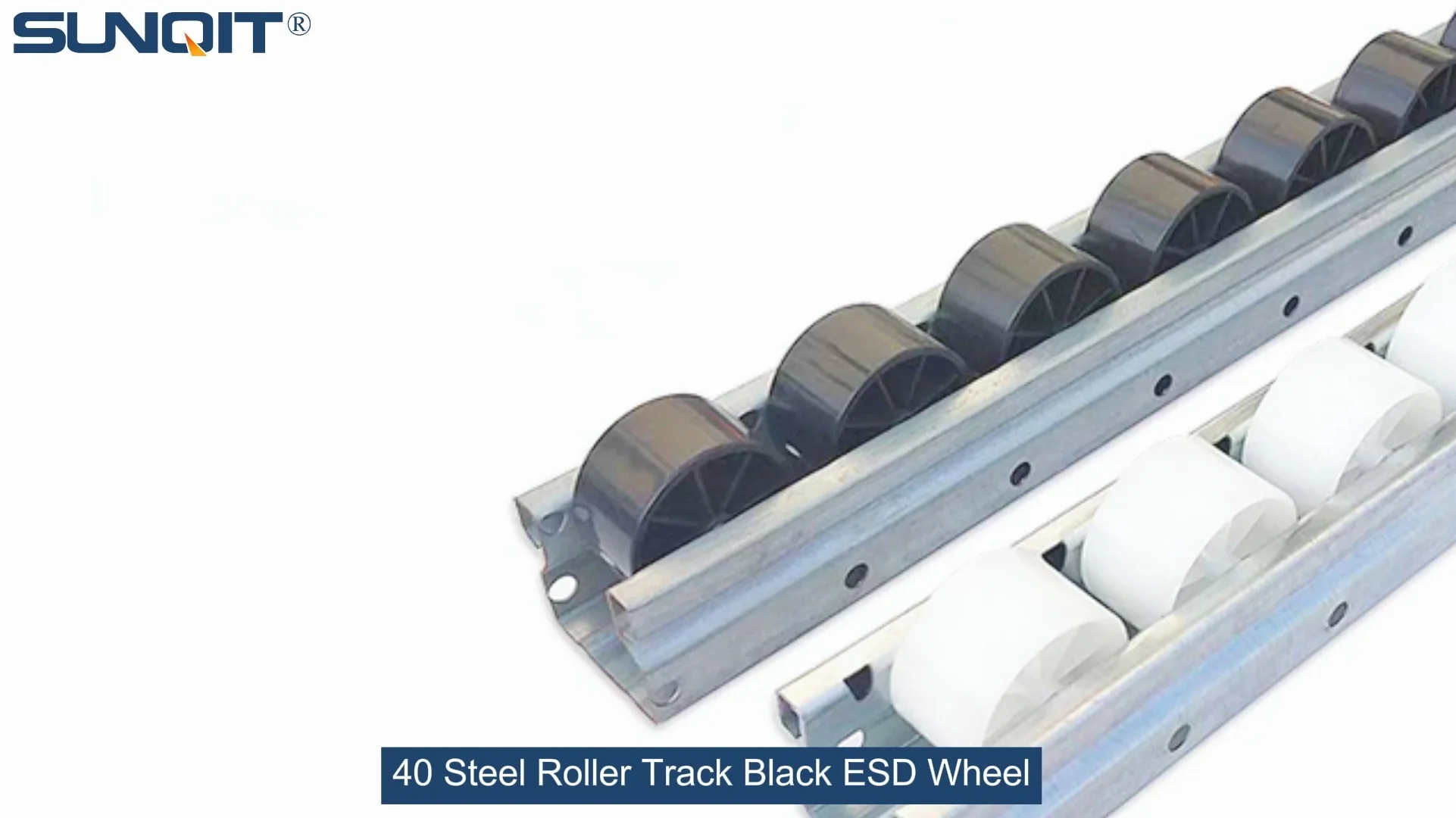
40 Steel Roller Track Black Wheel
The roller track can be installed with multiple accessories to create different slopes and configurations of flow racks.All steel conveyor 40 roller track accessories are engineered to perfectly fit the sliding rail.
In the fast-paced world of 3C electronics assembly—where smartphones, laptops, and wearables are born—every second and every movement matters. Imagine a production line where a single misaligned component or a split-second delay can derail an entire batch of devices. Now, picture the unsung hero that keeps this chaos in check: the material flow system. Among its most critical components? The 40 Steel Roller Track Black Wheels. More than just metal and plastic, these unassuming parts are the backbone of precision, ensuring that delicate components glide from station to station without a hitch. Let's dive into how they're transforming 3C assembly lines, one smooth roll at a time.
The Critical Role of Material Flow in 3C Assembly
3C electronics—computers, communications, and consumer electronics—are marvels of miniaturization. A modern smartphone, for example, packs thousands of tiny components: microchips smaller than a fingernail, fragile display panels, and sensitive sensors. These parts demand more than just careful handling; they require a material flow system that's invisible in its efficiency. When components get stuck, jostled, or exposed to static, the results are costly: damaged parts, production delays, and frustrated workers.
Traditional conveyor systems often fall short here. Rigid belts can generate static electricity, while clunky rollers might jar delicate components. In high-volume 3C factories, where lines run 24/7, these issues compound quickly. Workers waste time troubleshooting jams, and quality control teams scramble to catch defects caused by mishandled parts. It's a bottleneck that no manufacturer can afford—especially in an industry where profit margins hinge on speed and precision.
Meet the 40 Steel Roller Track Black Wheels: Engineering for Precision
Enter the 40 Steel Roller Track Black Wheels—designed not just to move parts, but to protect them. Let's break down what makes them stand out:
Built for the Demands of 3C Components
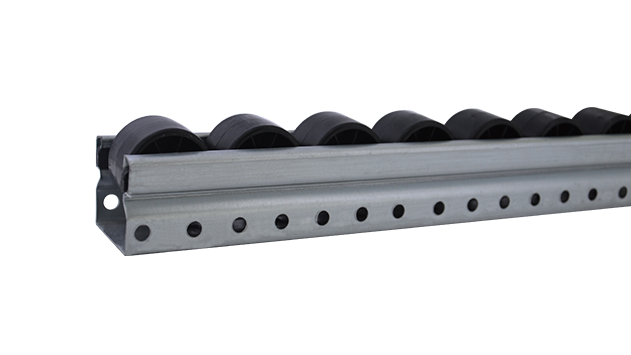
First, the basics: these tracks consist of sturdy steel rails paired with black polymer wheels. The "40" refers to the wheel diameter (40mm), a sweet spot that balances stability and agility. Unlike larger wheels that might overshoot workstation edges or smaller ones that struggle with heavier loads, 40mm wheels glide smoothly even when carrying circuit boards or battery modules.
Black Wheels: More Than a Color Choice
That black hue isn't just for aesthetics. The wheels are made from conductive polymer, a material engineered to dissipate static electricity—a must in 3C assembly. Static charges, even tiny ones, can fry microchips or disrupt sensor calibration. With these wheels, components stay grounded as they move, drastically reducing the risk of electrostatic discharge (ESD) damage. It's a quiet safeguard that saves manufacturers from costly rework and warranty claims.
Engineered to Glide, Not Grind
Ever tried pushing a cart with a stuck wheel? It's frustrating, right? Now imagine that cart is a production line moving thousands of parts daily. The 40 Steel Roller Track Black Wheels eliminate that frustration with precision bearings and low-friction design. Each wheel spins freely, even under load, ensuring that trays of components move at a steady, predictable pace. No more sudden jerks, no more "sticky" spots—just smooth, consistent flow that workers can rely on.
Why 40 Steel Roller Track Black Wheels Outperform Traditional Systems
To truly appreciate their impact, let's compare them to common alternatives. The table below highlights key differences in performance, cost, and usability:
| Feature | Traditional Belt Conveyors | 40 Steel Roller Track Black Wheels |
|---|---|---|
| ESD Protection | Limited; belts generate static | Built-in; conductive black wheels dissipate charge |
| Maintenance Needs | High; belts wear out, require frequent replacement | Low; steel rails and durable wheels resist wear |
| Flexibility | Rigid; hard to reconfigure for new products | Modular; easy to adjust length or angle for changing needs |
| Component Safety | Risk of jostling; rough surfaces may scratch parts | Smooth rolling; minimal contact pressure protects delicate parts |
The verdict? While traditional systems might work for heavy machinery or non-sensitive goods, 3C assembly demands the precision of 40 Steel Roller Track Black Wheels. They're not just a tool—they're a partner in maintaining the delicate balance between speed and care.

Integration with Lean Systems: A Holistic Approach to Efficiency
In today's manufacturing world, "lean" isn't just a buzzword—it's a survival strategy. Lean principles focus on eliminating waste, improving flow, and empowering workers to adapt and innovate. The 40 Steel Roller Track Black Wheels fit seamlessly into this philosophy, working hand-in-hand with other lean tools like flow racks, workbenches, and modular conveyors to create a system that's both efficient and adaptable.
From Flow Rack to Workstation: A Unified Ecosystem
Imagine a typical 3C assembly line: components start in a flow rack, where they're organized by type and frequency of use. From there, they need to move to the assembly workstation—often an ESD-safe bench where workers install chips or solder connections. The 40 Steel Roller Track Black Wheels bridge this gap. They can be integrated directly into flow rack designs, allowing trays to slide gently from storage to the workstation without manual lifting. Once at the bench, the same tracks can feed components to the exact spot where the worker needs them, reducing reach and fatigue.
Sustainability and Cost Savings
Lean isn't just about efficiency—it's about sustainability, too. These roller tracks are built to last, with steel rails that withstand years of heavy use and wheels that can be replaced individually (no need to swap out an entire track). This "reuse and repair" model cuts down on waste and lowers long-term costs. Plus, their modular design means manufacturers can reconfigure lines quickly when product designs change—no need to invest in entirely new conveyor systems for each new device model.

Real-World Impact: How Factories Are Winning with 40 Steel Roller Track Black Wheels
Let's hear from the front lines. A mid-sized 3C manufacturer in southern China recently upgraded its assembly lines with 40 Steel Roller Track Black Wheels. Before the switch, their workers were spending 15% of their shifts clearing jams from old belt conveyors, and ESD-related defects were costing them $50,000 monthly in rework. Within three months of installation:
- Jam-related downtime dropped by 80%—workers now focus on assembly, not troubleshooting.
- ESD damage fell by 92%, saving over $45,000 monthly.
- Line throughput increased by 18%, allowing the factory to take on a new client order without adding shifts.
Another example: a global laptop manufacturer was struggling with ergonomic complaints. Workers were straining to lift heavy component trays from static conveyors. By installing 40 Steel Roller Track Black Wheels that fed trays directly to waist height, they reduced reported injuries by 60% and saw a 12% boost in worker satisfaction scores. "It's the little things," one production manager noted. "When the parts come to you smoothly, you don't just work faster—you work happier."
Choosing the Right Partner for Your Roller Track Needs
Not all roller tracks are created equal. To maximize the benefits of 40 Steel Roller Track Black Wheels, you need a supplier who understands both the technical specs and the real-world challenges of 3C assembly. Look for partners who offer:
- Customization : Every factory has unique layouts and component sizes. A good supplier will help you design tracks that fit your space and workflow.
- Quality Materials : Steel rails should be corrosion-resistant, and wheels should meet strict ESD standards (look for certifications like ANSI/ESD S20.20).
- Lean Expertise : Beyond selling parts, they should advise on how to integrate tracks with flow racks, workbenches, and other lean tools for a cohesive system.
Remember, the goal isn't just to buy a product—it's to invest in a solution that grows with your business. The right 40 Steel Roller Track Black Wheels won't just improve today's production line; they'll keep your factory agile and competitive for years to come.
The Future of 3C Assembly: Smooth, Safe, and Smart
In the world of 3C electronics, where innovation never stops, the unsung heroes are often the ones that keep things moving—literally. The 40 Steel Roller Track Black Wheels may not make headlines, but they're quietly revolutionizing how we build the devices that connect our world. By prioritizing precision, ESD protection, and lean integration, they're not just solving today's problems; they're paving the way for smarter, more efficient factories tomorrow.
So the next time you pick up your smartphone or power up your laptop, take a moment to appreciate the journey it took to reach your hands. Behind that sleek design is a production line where every component was treated with care—thanks in no small part to the smooth roll of a 40mm black wheel.