- Company Articles
- Products and Technology
- Product knowledge
- Preventing Workbench Shaking: Suction Cup Anti-Slip Foot Adjusters in Action

Preventing Workbench Shaking: Suction Cup Anti-Slip Foot Adjusters in Action
Related Product
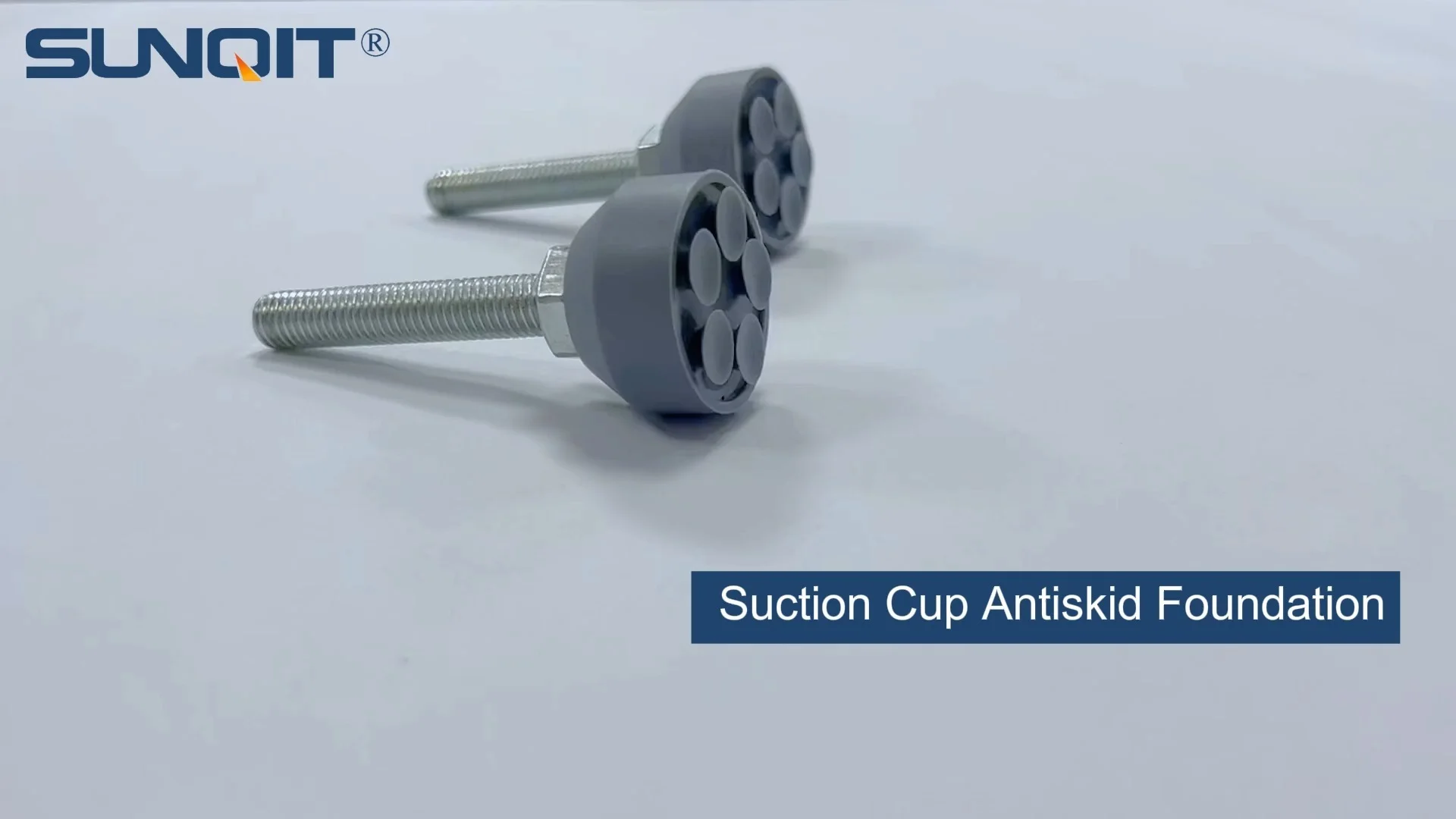
Suction Cup Anti-slip Foot Adjuster
D=35mm suction cup anti-slip foot adjusterï¼screw M10*55ï¼with a blot, used for workbench, flowrack pipe contact with groud.
Walk into any busy workshop, manufacturing floor, or lab, and you'll likely spot a common frustration: workbenches that just won't stay steady. A technician carefully aligns a circuit board, only for the table to wobble mid-solder. A mechanic tightens a bolt, and tools slide off the edge. A lab researcher measures a sample, and the slight shake throws off the readings. These aren't just minor annoyances—unstable workbenches disrupt productivity, compromise precision, and even create safety hazards. But what if there was a simple, affordable fix that could turn a shaky workbench into a rock-solid foundation? Enter the unsung hero of workplace stability: the suction cup anti-slip foot adjuster. In this article, we'll explore why workbench shaking happens, how these clever devices solve the problem, and why they've become a must-have for anyone relying on a steady workspace—from lean pipe workbench operators to hobbyists in home garages.
Why Does Workbench Shaking Happen? The Hidden Culprits
Before we dive into solutions, let's get to the root of the problem. Workbench shaking rarely has a single cause; it's usually a mix of environmental factors, design flaws, and everyday wear and tear. Let's break down the most common culprits:
Uneven Floors: The Silent Saboteur Most industrial and workshop floors aren't perfectly level. Years of foot traffic, heavy equipment rolling over surfaces, or even minor foundation shifts can create tiny dips and bumps. A workbench with rigid, fixed-height feet will teeter on these uneven spots, turning a small slope into a noticeable wobble. Even in newer facilities, concrete floors can have variations of 1/8 inch or more over a few feet—enough to make a table feel unstable.
Loose Joints and Worn Components Many workbenches, especially modular ones like lean pipe workbenches, rely on joints and connectors to hold their structure together. Over time, repeated vibrations from tools, heavy loads, or just daily use can loosen these joints. A single loose bolt or a worn lean pipe joint can throw off the entire balance, making the bench feel "spongy" or prone to shaking. Add in heavy tools or materials, and that small looseness becomes a major stability issue.
Poor-Quality Feet: The Weak Link The feet of a workbench are its first line of defense against shaking—but they're often an afterthought. Cheap plastic feet can crack, lose grip, or wear down quickly. Rubber feet might start out grippy but harden over time, reducing friction with the floor. Even adjustable feet with basic pads can fail if they don't conform to the floor's texture or lack enough surface area to distribute weight evenly. When the feet can't hold their ground, the whole bench suffers.
Dynamic Loads: When Movement Creates Instability Workbenches aren't static—they're alive with activity. Drilling, sawing, or hammering sends vibrations through the table. Placing heavy objects on one side (like a 50-pound toolbox) can shift the center of gravity. Even something as simple as leaning on the bench while working can cause it to rock if the feet aren't secure. These dynamic loads expose weaknesses in the bench's base, turning small movements into big shakes.
The consequences of these issues go beyond irritation. A shaky workbench can lead to: - Wasted Time: Re-doing tasks because of mistakes caused by instability. - Damaged Materials: Scratched parts, spilled liquids, or broken tools from slips. - Safety Risks: Tools falling off edges, workers losing balance, or even the bench tipping over with heavy loads. - Poor Quality: Precision work—like electronics assembly or lab measurements—requires stability to meet tight tolerances. Shaking compromises accuracy, leading to faulty products or incorrect data.
Suction Cup Anti-Slip Foot Adjusters: How They Fix the Problem
If traditional feet and basic adjusters fall short, what makes suction cup anti-slip foot adjusters different? These devices combine two key features: adjustable height to level the bench and a suction cup base to grip the floor. Let's break down how they work and why they're so effective.
The Science of the Suction Cup: Grip That Doesn't Let Go The star of the show is the suction cup itself, typically made from high-quality, oil-resistant rubber or silicone. When pressed against a smooth, clean surface (like concrete, tile, or sealed wood), the cup creates a vacuum seal. This seal increases friction dramatically—far more than a standard rubber pad. The result? The foot "sticks" to the floor, resisting both lateral movement (sliding) and vertical movement (tipping). Even on slightly textured floors, the flexible rubber conforms to small irregularities, maintaining contact and grip.
Adjustable Height: Leveling the Playing Field Uneven floors? No problem. Most suction cup adjusters have a threaded stem that screws into the workbench leg, allowing you to raise or lower each foot individually. Turn the stem clockwise, and the foot extends; counterclockwise, it retracts. This means you can fine-tune each corner of the bench to match the floor's contours, eliminating wobble at the source. Unlike fixed feet, which force the bench to "teeter" on high spots, adjustable suction cup feet let you create a perfectly level base, even on floors that look flat but aren't.
Durable Design: Built for the Workshop Grind These aren't your average desk feet. Suction cup anti-slip adjusters are built to withstand the harsh conditions of industrial environments. The stems are often made from zinc-plated steel or aluminum, resisting rust and corrosion. The suction cups are thick and tear-resistant, handling oils, solvents, and daily abrasion without losing their seal. Even under heavy loads—think 500+ pounds on a workbench—they maintain their grip, ensuring stability no matter what you throw at them.

Traditional Feet vs. Suction Cup Adjusters: A Side-by-Side Comparison
Still not convinced? Let's put suction cup anti-slip foot adjusters head-to-head with three common alternatives: fixed rubber feet, basic adjustable pads, and caster wheels (a popular choice for mobile workbenches). The table below breaks down how they stack up in key areas:
| Feature | Fixed Rubber Feet | Basic Adjustable Pads | Caster Wheels (Locked) | Suction Cup Anti-Slip Foot Adjusters |
|---|---|---|---|---|
| Grip Strength | Low-Medium: Rubber provides some friction but wears down quickly; no vacuum seal. | Medium: Pads contact the floor, but small surface area limits grip on smooth floors. | Low: Locking mechanisms prevent rolling but don't add grip; wheels can still slide. | High: Suction cup creates vacuum seal; rubber conforms to floor texture for maximum friction. |
| Height Adjustment | None: Fixed height; can't level on uneven floors. | Limited: Basic thread adjustment, but no fine-tuning for minor floor variations. | None: Caster height is fixed; locking doesn't adjust leveling. | High: Precise threaded stem allows micro-adjustments (often 1/4 inch to 1 inch range). |
| Floor Protection | Good: Soft rubber won't scratch, but may leave marks if dirty. | Fair: Hard plastic pads can scuff floors under heavy loads. | Poor: Metal caster locks can scratch or indent floors; wheels may leave tracks. | Excellent: Soft rubber suction cup cushions floors; no metal contact with surfaces. |
| Stability Under Vibration | Poor: No adjustment means vibrations amplify shaking on uneven floors. | Fair: Levels the bench but lacks grip to dampen tool vibrations. | Very Poor: Wheels act as "shock absorbers," making vibrations worse. | Excellent: Suction cup grip dampens vibrations; level base prevents amplification. |
| Best For | Light-duty, perfectly level floors, temporary setups. | Basic workshops with minimal floor variation, low vibration tools. | Mobile workbenches that need frequent repositioning (but sacrifice stability). | Precision work, heavy loads, uneven floors, high-vibration tools (drills, grinders). |
The verdict? While other feet have their uses, suction cup anti-slip adjusters stand out for their ability to address both leveling and grip —the two biggest drivers of workbench shaking. They're not just a band-aid; they're a long-term solution for anyone who can't afford instability.

Real-World Impact: How Suction Cup Adjusters Transform Workspaces
To understand the difference these adjusters make, let's look at a few real-world scenarios where they've turned shaky workbenches into reliable workhorses.
Case Study 1: A Lean Pipe Workbench in Electronics Manufacturing A mid-sized electronics plant was struggling with a common issue: their lean pipe workbenches, used for assembling circuit boards, were shaking during soldering and component placement. The problem? The concrete floor in their production area had small dips from years of forklift traffic, and the standard plastic feet on the benches couldn't compensate. Workers were reworking 15% of boards due to misaligned solder joints, and tools frequently slid into bins below. After switching to suction cup anti-slip foot adjusters, the results were immediate. The adjustable stems leveled the benches across the uneven floor, and the suction cups gripped tightly, even when technicians leaned on the benches or used vibrating tools like electric screwdrivers. Rework dropped to 3%, and tool-related accidents stopped entirely. The plant manager noted, "We thought we'd need to resurface the floor, but these adjusters solved the problem for a fraction of the cost."
Case Study 2: A Home Workshop Hobbyist Mark, a hobbyist woodworker, had built his own workbench using aluminum profile frames—a sturdy design, but the garage floor sloped slightly toward the door. Even with shims under the feet, the bench wobbled when he used his table saw or drill press. "I'd be cutting a piece of wood, and the bench would shift, ruining the cut," he recalls. "I almost gave up on precision projects." A quick online search led him to suction cup anti-slip adjusters. He swapped out the fixed feet on his aluminum profile bench, adjusted the stems to level the surface, and was amazed by the difference. "It's like the bench is glued to the floor," he says. "Now I can trust my measurements, and I don't have to chase tools around the table anymore. Best $50 I ever spent on my workshop."
Case Study 3: A Laboratory with Sensitive Equipment A university chemistry lab had a problem with their analytical balance table: even the smallest vibration from nearby centrifuges or foot traffic caused the scale to fluctuate, throwing off measurements. The table had adjustable metal feet, but they conducted vibrations from the floor and didn't grip well on the lab's smooth tile. Installing suction cup anti-slip adjusters solved two issues at once: the adjustable stems isolated the table from floor unevenness, and the rubber suction cups dampened vibrations by absorbing shocks. The lab technician reported, "Our readings are now consistent within 0.001 grams—something we couldn't achieve before. It's made our research data far more reliable."

Installing Suction Cup Anti-Slip Foot Adjusters: A Step-by-Step Guide
One of the best things about these adjusters is how easy they are to install. You don't need special tools or technical expertise—just a few minutes and a little elbow grease. Here's how to do it:
Step 1: Gather Your Tools You'll need: - The suction cup anti-slip foot adjusters (one per workbench leg; most benches have 4 legs). - A wrench or pliers (to remove old feet, if needed). - A level (to check for wobbles after installation). - A clean cloth (to wipe the floor and suction cups). - Optional: Thread sealant (if your workbench legs have loose threads).
Step 2: Remove Old Feet If your workbench already has feet, twist or unscrew them from the legs. For stuck feet, use pliers to grip the base and turn counterclockwise. Clean the threads on the leg with a cloth to remove dirt or rust—this ensures a tight fit for the new adjusters.
Step 3: Attach the Suction Cup Adjusters Screw the new adjusters into the leg threads by hand, turning clockwise until they're snug. Don't overtighten yet—you'll need to adjust the height later. Repeat for all legs.
Step 4: Level the Workbench Place your level on the workbench surface, first along the length, then the width. If one side is higher, adjust the corresponding foot: turn the stem counterclockwise to lower it, or clockwise to raise it. Check the level again and tweak until the bubble is centered. For extra precision, rock the bench gently—if it still wobbles, fine-tune the adjusters until it feels solid.
Step 5: Engage the Suction Cups Once the bench is level, press down firmly on each corner to activate the suction cups. The rubber should flatten slightly, creating a seal with the floor. For maximum grip, clean the floor first with a damp cloth to remove dust or oil—this helps the suction cup form a tighter seal.
Step 6: Test for Stability Give the bench a good shake—push and pull from different sides. It should feel rooted to the floor. Place a heavy object (like a toolbox) on one corner and check again. If it still moves, recheck the level and ensure the suction cups are fully engaged. You're done!
Maintaining Your Suction Cup Adjusters: Keep Them Gripping Strong
Like any tool, suction cup anti-slip foot adjusters work best when properly maintained. Here's how to keep them in top shape:
Clean the Suction Cups Regularly Dust, oil, and debris can break the suction seal. Wipe the cups with a damp cloth weekly (or more often in dirty environments like garages or machine shops). For stubborn grime, use mild soap and water—avoid harsh chemicals that can degrade the rubber.
Check for Wear and Tear Inspect the suction cups for cracks, tears, or hardening (rubber that's lost its flexibility). If the cup is damaged, replace the adjuster—even a small split can reduce grip. Most adjusters last 1-2 years with heavy use, but checking monthly ensures you catch issues early.
Tighten Loose Stems Over time, the threaded stem may loosen from vibrations. Every few months, give each adjuster a gentle twist clockwise to ensure it's snug against the leg. This prevents the foot from spinning or changing height unexpectedly.
Re-Seal the Suction Cups After Moving If you need to move the workbench (e.g., to clean underneath), the suction cups will lose their seal. After repositioning, press down firmly on each corner to re-engage the suction—this only takes a few seconds and ensures the bench stays stable.
Choosing the Right Suction Cup Anti-Slip Foot Adjuster: What to Look For
Not all suction cup adjusters are created equal. To find the best fit for your workbench, keep these key factors in mind:
Weight Capacity Check the adjuster's weight rating—this is the maximum load each foot can support. For a standard workbench, aim for adjusters rated for at least 200-300 pounds per foot. Heavier benches (e.g., those holding industrial equipment) may need 500+ pound capacity.
Floor Type Suction cups work best on smooth, non-porous floors like concrete, tile, or sealed wood. If your floor is highly textured (e.g., rough concrete or carpet), look for adjusters with larger suction cups or extra-grip rubber to compensate.
Adjustment Range Measure the unevenness of your floor (use a level to find the highest and lowest points). Choose adjusters with a stem length that can bridge that gap—most have a range of 1/2 inch to 2 inches. More adjustment means more flexibility for uneven surfaces.
Material Quality Opt for adjusters with rubber suction cups (silicone is more durable than standard rubber) and metal stems (zinc-plated steel or aluminum resists rust). Avoid plastic stems—they can crack under heavy loads.
Thread Size Workbench legs come in standard thread sizes (e.g., M10, M12). Check your old feet or measure the leg threads to ensure the new adjusters fit. Most manufacturers list thread sizes in their product descriptions.
The Future of Workbench Stability: What's Next?
As workplaces prioritize efficiency and safety, tools like suction cup anti-slip foot adjusters will only grow in popularity. But innovation doesn't stop here. Manufacturers are already experimenting with smart features, like built-in sensors that alert workers when a foot loses suction or when the bench becomes unlevel. Eco-friendly options, made from recycled rubber and sustainable metals, are also on the rise, appealing to companies focused on green initiatives.
For now, though, the humble suction cup anti-slip foot adjuster remains the most practical, affordable solution for stabilizing workbenches. Whether you're running a lean pipe workbench in a factory, tinkering with an aluminum profile setup in your garage, or conducting sensitive research in a lab, these small devices deliver big results—turning frustration into focus, and shaky surfaces into solid foundations.
Final Thoughts: Stability Matters More Than You Think
A steady workbench isn't a luxury—it's a necessity. It's the difference between smooth, efficient work and constant frustration. It's the line between precise, high-quality results and costly mistakes. And in many cases, it's the key to keeping workers safe and productive. Suction cup anti-slip foot adjusters may not be the flashiest tools in the workshop, but they're a game-changer for anyone who values stability. They solve the root causes of shaking—uneven floors, poor grip, and dynamic loads—with a simple, elegant design. Best of all, they're affordable, easy to install, and built to last. So the next time your workbench wobbles, don't just tolerate it. Upgrade to suction cup anti-slip foot adjusters and experience the difference a solid foundation makes. Your tools, your projects, and your peace of mind will thank you.