- Company Articles
- Products and Technology
- Installation And Maintenance
- Proper Alignment of 40 Steel Roller Track Black Wheels: Ensuring Optimal Performance

Proper Alignment of 40 Steel Roller Track Black Wheels: Ensuring Optimal Performance
Related Product
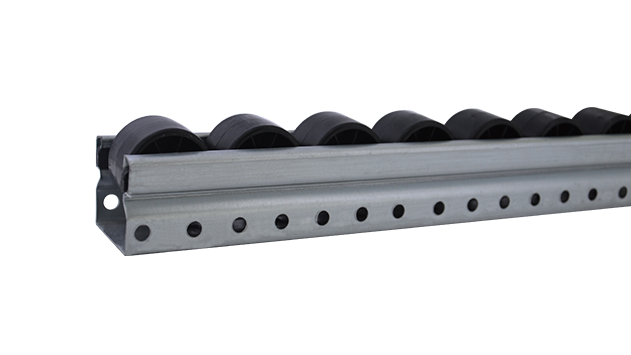
40 Steel Roller Track Black Wheel
The roller track can be installed with multiple accessories to create different slopes and configurations of flow racks.All steel conveyor 40 roller track accessories are engineered to perfectly fit the sliding rail.
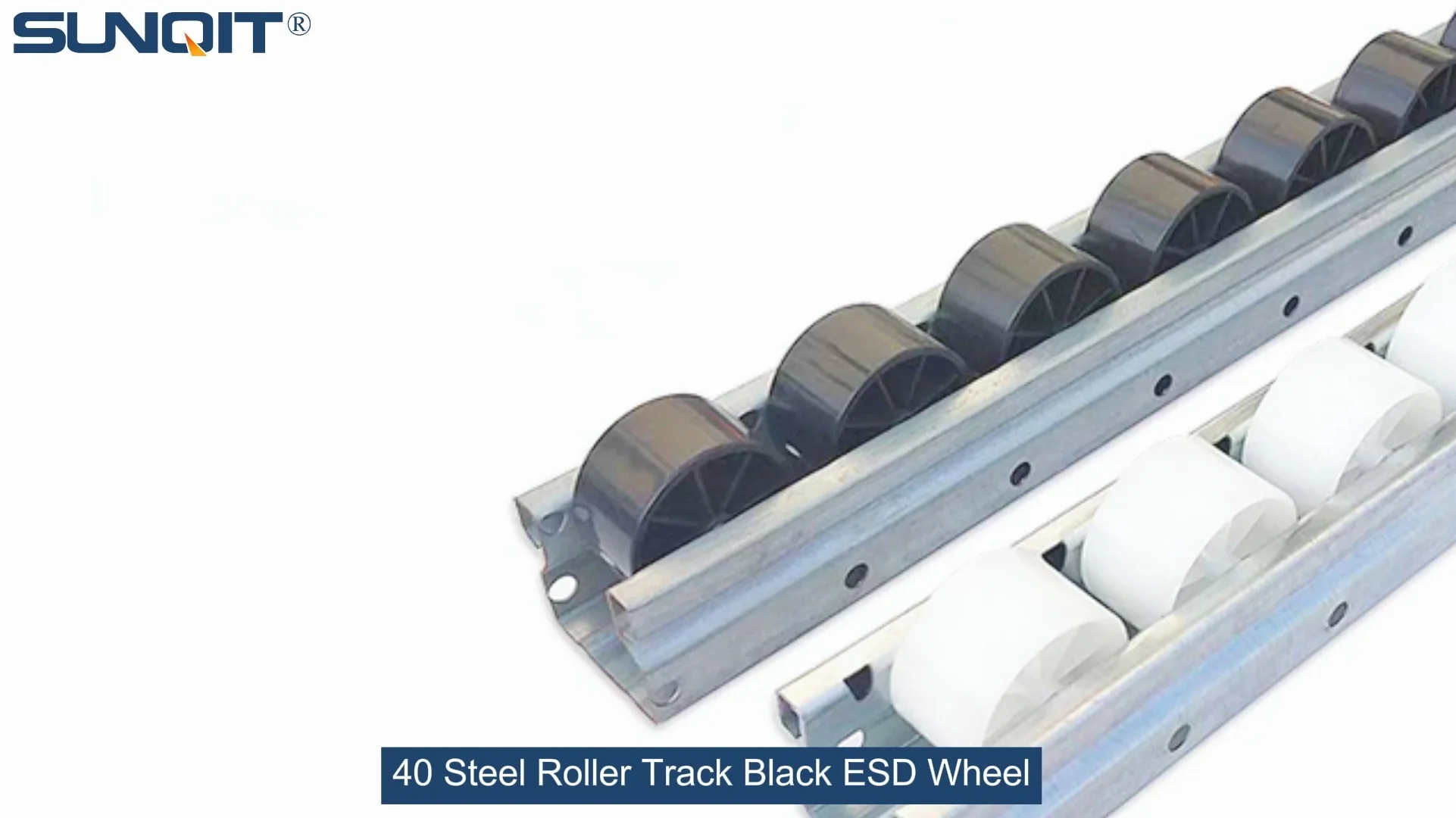
In the heart of a bustling manufacturing facility, where every second counts and precision is the backbone of productivity, there's a silent workhorse that keeps the rhythm of production steady—the 40 steel roller track with black wheels. These unassuming components might not grab headlines, but ask any production manager, and they'll tell you: when these wheels are perfectly aligned, materials glide from station to station like water flowing down a gentle stream. Workers don't waste time wrestling with stuck parts, downtime becomes a rarity, and the entire line hums with the efficiency that defines top-tier manufacturing. But when alignment slips? Suddenly, that smooth stream turns into a rocky river—jams, delays, and even safety risks crop up, throwing a wrench into the carefully calibrated workflow.
Whether you're running a 3C assembly line churning out smartphones, a medical device workshop where sterility and precision are non-negotiable, or a warehouse logistics hub moving pallets around the clock, the 40 steel roller track black wheels play a critical role in keeping operations on track. In this article, we'll dive deep into why proper alignment matters, walk through the step-by-step process to get it right, troubleshoot common issues, and explore how this seemingly small detail can have a big impact on your overall lean system performance. Because in the world of manufacturing, it's often the little things—like a well-aligned wheel—that add up to big results.
Why Proper Alignment Isn't Just "Nice to Have"—It's Essential
Let's start with the basics: why does aligning 40 steel roller track black wheels deserve so much attention? Think of it this way: if you've ever tried to push a shopping cart with a misaligned wheel, you know how frustrating it is—you're constantly fighting against the cart's tendency to veer off course, wasting energy and time. Now multiply that frustration by 100 in a manufacturing setting, where instead of a cart, you're moving heavy components, delicate parts, or time-sensitive materials. The stakes are higher, and the costs of misalignment go far beyond irritation.
1. Productivity Takes a Direct Hit
Misaligned wheels create friction—literally and figuratively. When wheels aren't aligned, materials might slow down, get stuck, or even tip over. A single jam can bring a section of the line to a halt, forcing workers to stop what they're doing, clear the blockage, and reset the flow. In a high-speed production environment, those minutes add up fast. A study by manufacturing efficiency experts found that unplanned downtime due to equipment misalignment can cost a facility up to 20% of its daily output. For a line producing 1,000 units a day, that's 200 units lost—all because of a few wheels that weren't set straight.
2. Equipment Longevity Suffers
Steel roller tracks and their wheels are built to last, but misalignment turns them into self-destructive machines. When wheels aren't aligned, they don't bear weight evenly. Some wheels take more pressure than others, leading to uneven wear and tear. Over time, this can warp the track, crack wheel bearings, or even bend the axle. Replacing a wheel is manageable, but replacing an entire track? That's a costly repair that could have been avoided with proper alignment. It's like driving a car with misaligned tires—you'll burn through rubber faster, and eventually, you'll damage the suspension.
3. Safety Risks Creep In
Safety is non-negotiable in any manufacturing space, and misaligned wheels are a hidden hazard. If a heavy component gets stuck and then suddenly breaks free, it could fly off the track, endangering nearby workers. Even minor jams can lead to ergonomic issues: workers might strain their backs pushing stuck materials or reach awkwardly to adjust misaligned parts, increasing the risk of injuries. OSHA reports that overexertion and contact with objects are leading causes of workplace injuries—and misaligned equipment is a contributing factor in many of these cases.
4. Quality Control Slips
In precision industries like 3C assembly or medical device manufacturing, even the smallest disruption can affect product quality. Imagine a circuit board sliding down a misaligned roller track—if it jostles or tilts, components might shift, leading to faulty connections or defective products. When quality slips, you're not just losing time—you're losing customer trust and incurring costs from rework, returns, or recalls. Proper alignment ensures materials move smoothly and consistently, keeping your products up to the high standards your clients expect.
Step-by-Step Guide to Aligning 40 Steel Roller Track Black Wheels
Now that we've covered why alignment matters, let's get into the "how." Aligning 40 steel roller track black wheels isn't rocket science, but it does require patience, attention to detail, and the right tools. Follow these steps, and you'll have your roller track running like a well-oiled machine in no time.
Step 1: Gather Your Tools (and Prep the Area)
First things first: you'll need the right gear. Here's what we recommend having on hand:
- A spirit level (digital or bubble—either works, but digital gives more precise readings)
- A tape measure or ruler (to check wheel spacing)
- Adjustable wrenches or hex keys (to loosen/tighten wheel bolts)
- A rubber mallet (for gentle adjustments—never use a metal hammer, as it can damage the track)
- A straightedge (a long, flat piece of metal or wood to check track straightness)
- Cleaning supplies (a brush, rag, and degreaser to wipe away dirt and debris—gunk can throw off alignment readings)
Before you start, clear the area around the roller track. Remove any materials, tools, or debris that might get in the way. If the track is part of a larger conveyor system, power down the line and lock it out (following your facility's safety protocols) to prevent accidental startup. Safety first—always!
Step 2: Inspect the Track and Wheels for Wear
Alignment won't fix a wheel that's already damaged. Take a few minutes to inspect each black wheel and the track itself. Look for:
- Uneven wear on wheel treads (one side worn down more than the other)
- Cracks, chips, or dents in the wheels
- Bent or warped track rails
- Loose or missing bolts holding the wheels in place
- Debris buildup in wheel bearings (this can cause wheels to stick)
If you spot any damaged parts, replace them before moving on. Using worn wheels is like trying to build a house on a cracked foundation—your alignment work will be for nothing, and you'll just end up repeating the process sooner than later. For replacement parts, opt for high-quality options—we've found that using durable aluminum pipe accessories here can reduce future wear, as they're resistant to corrosion and stand up well to heavy use.
Step 3: Check Track Level (Horizontal Alignment)
A roller track that's not level is a recipe for misalignment. Place your spirit level along the length of the track, both horizontally (side to side) and vertically (front to back). The bubble should sit dead center in both directions. If it's off:
- Loosen the bolts that secure the track to its supports (use your adjustable wrench for this).
- Place shims under the low side of the track until the level shows it's even. Shims can be made of metal, plastic, or hardwood—just make sure they're strong enough to support the track's weight.
- Tighten the bolts back up, but don't over-tighten—you don't want to warp the track.
- Double-check with the level to make sure it's still even after tightening.
Pro tip: Check level at multiple points along the track, not just one spot. Floors in older facilities can be uneven, so what's level at the start might dip or rise a few feet down the line. Take readings every 2-3 feet to ensure the entire track is consistent.
Step 4: Align the Wheels (Vertical and Lateral Spacing)
Now it's time to focus on the wheels themselves. Each black wheel should be aligned both vertically (so they're all the same height) and laterally (so they're spaced evenly along the track).
Vertical Alignment (Height Check):
All wheels should sit at the same height—if one is higher than the others, it will bear more weight and cause materials to tilt. To check this:
- Place your straightedge across the tops of two adjacent wheels.
- Look for gaps between the straightedge and the wheel treads. If you can slide a piece of paper under one wheel but not the other, that wheel is too low.
- Loosen the wheel bolt, adjust the wheel height by adding or removing small washers under the wheel mount, then retighten the bolt.
- Repeat for every wheel along the track.
Lateral Alignment (Spacing Check):
Wheels should also be spaced evenly from the track's centerline. If they're too far left or right, materials can rub against the track sides, causing friction and jams. Here's how to set spacing:
- Measure the distance from the inside edge of the track rail to the center of each wheel. This distance should be the same for all wheels (check your roller track's specs for the ideal measurement—most 40 steel tracks use a standard spacing of 2-3 inches).
- If a wheel is off-center, loosen the mounting bolts and gently tap the wheel into place with your rubber mallet.
- Tighten the bolts and remeasure to confirm the spacing is correct.
Step 5: Test Run and Fine-Tune
You've leveled the track and aligned the wheels—now it's time to put it to the test. Place a test material (similar to what you'll be running in production, like a plastic bin or metal part) on the track and give it a gentle push. It should roll smoothly from one end to the other without veering to the left or right, slowing down, or getting stuck.
Watch closely as it rolls. If it drifts to one side, one of the wheels is likely slightly higher or spaced unevenly. Go back and check the wheels in the area where the drift starts—small adjustments here can make a big difference. You might also want to run a few test materials of different weights to ensure alignment holds under varying loads.
Quick Reference: Common Alignment Issues & Fixes
| Issue During Test Run | Likely Cause | Fix |
| Material veers left consistently | Wheels on the right side are slightly higher | Lower right-side wheels by adding washers under mounts |
| Material slows down halfway | Debris in wheel bearings or misaligned wheel spacing | Clean bearings; recheck lateral spacing in that section |
| Material tips forward/backward | Track not level vertically (front to back) | Adjust track supports to level front/back |
| Wheels make grinding noise | Wheels not aligned with track rails; metal-on-metal contact | Realign lateral spacing to center wheels on rails |
Beyond Alignment: Maintaining Optimal Performance Long-Term
Proper alignment isn't a one-and-done task. To keep your 40 steel roller track black wheels performing at their best, you'll need a simple maintenance routine. Think of it like changing the oil in your car—skip it, and you'll pay the price later. Here's how to keep things running smoothly:
1. Schedule Regular Inspections
Set a calendar reminder to inspect the track and wheels every 2-4 weeks (more often if you're running heavy loads or operating 24/7). During these checks, repeat the alignment steps we covered—focus on level, wheel height, and spacing. Even small shifts (from vibrations, temperature changes, or heavy use) can throw things off over time. We've seen facilities that stick to this schedule reduce downtime by up to 35% compared to those that "wait until something breaks."
2. Keep Wheels and Track Clean
Dust, grease, and debris are alignment enemies. Wipe down the track rails and wheel treads with a rag and degreaser once a week. For hard-to-reach spots (like wheel bearings), use a small brush or compressed air to blow out dirt. If your facility deals with oily or sticky materials, consider adding a simple guard over the track to keep contaminants out—it's a small investment that pays off in fewer jams and longer wheel life.
3. Lubricate Wheel Bearings
Even the best-aligned wheels will struggle if their bearings are dry. Every 6-8 weeks, apply a high-quality lubricant to each wheel bearing. Avoid over-lubricating, though—excess grease can attract dirt, which will gum up the works. A few drops per bearing is usually enough. We recommend using a lithium-based grease here, as it holds up well under high pressure and doesn't break down easily in warm manufacturing environments.
4. Train Your Team to Spot Issues Early
Your frontline workers are the first to notice when something's off with the roller track. Train them to recognize signs of misalignment, like unusual noises (grinding, squeaking), materials veering off course, or wheels that feel "sticky" when touched. Encourage them to report issues immediately—don't let small problems turn into big ones because someone thought, "It's probably fine." A quick fix today can save hours of downtime tomorrow.

Aligning with Lean Principles: How This Fits Into Your Lean System
At this point, you might be thinking, "This is all great, but how does aligning a few wheels tie into our bigger lean system goals?" Great question. Lean manufacturing is all about eliminating waste, improving efficiency, and creating systems that can adapt and improve over time—and proper roller track alignment is a perfect example of lean in action.
Think about it: misalignment causes waste in every form. There's the waste of time (workers fixing jams), the waste of materials (damaged parts from jostling), the waste of energy (pushing stuck materials), and the waste of money (replacing worn equipment). By taking the time to align your 40 steel roller track black wheels, you're directly attacking these wastes, making your entire operation more lean.
What's more, this focus on small, consistent improvements is exactly what "sustainable" (sustainable improvement) is all about—the core of many lean solutions we provide. A lean system isn't just about buying the right equipment (though high-quality flow rack and conveyor systems help); it's about creating a culture where every detail matters. When your team sees that even wheel alignment is prioritized, it reinforces the idea that no improvement is too small—and that mindset leads to bigger wins down the line.
We've worked with clients in industries like 3C assembly and where this attention to detail has paid off. One client, a smartphone manufacturer, was struggling with frequent jams on their conveyor and flow rack system. After we helped them implement a regular alignment and maintenance routine for their 40 steel roller tracks, they saw a 22% reduction in line downtime and a 15% increase in daily output. And because the improvements were sustainable, those gains held steady month after month—not just a one-time boost.

Final Thoughts: The Power of Precision
At the end of the day, proper alignment of 40 steel roller track black wheels is about more than just keeping materials moving. It's about respecting the hard work of your team, protecting your equipment investment, and honoring the lean principles that drive successful manufacturing. It's a small task, but it has a ripple effect—smoother production, happier workers, fewer headaches, and a bottom line that reflects the care you put into every detail.
So the next time you walk past your roller track, take a minute to listen. Is it humming quietly, or is there a grind, a squeak, a sign that something's off? If it's the latter, roll up your sleeves (or grab your maintenance team) and give those black wheels the attention they deserve. Your future self—and your production numbers—will thank you.
Remember: in manufacturing, precision isn't perfection. It's progress. And progress, one aligned wheel at a time, is how great operations are built.