- Company Articles
- Products and Technology
- Technology Sharing
- Prototype Development: Fast Iteration with T-Groove Aluminum Pipe Structures

Prototype Development: Fast Iteration with T-Groove Aluminum Pipe Structures
Related Product
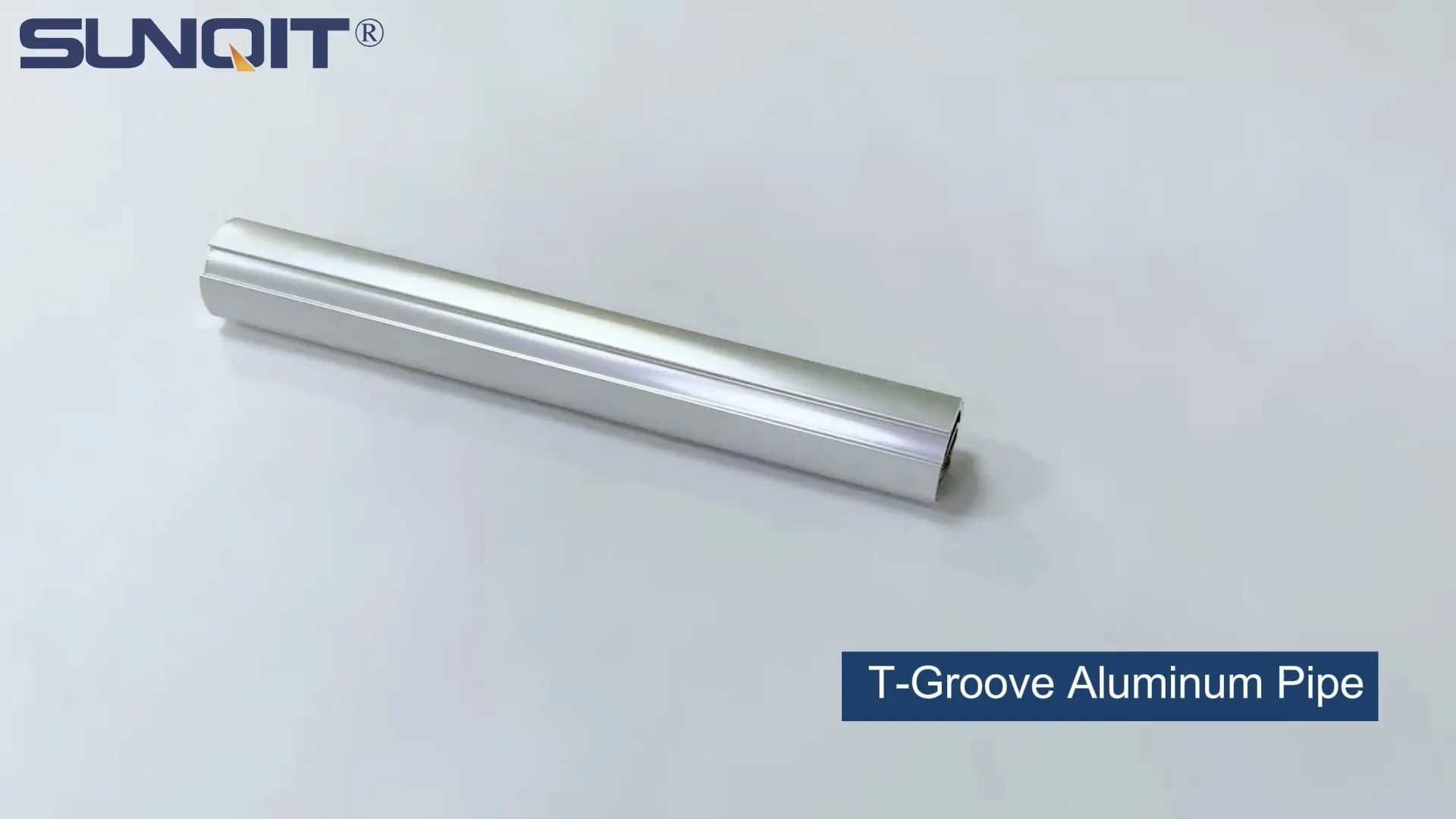
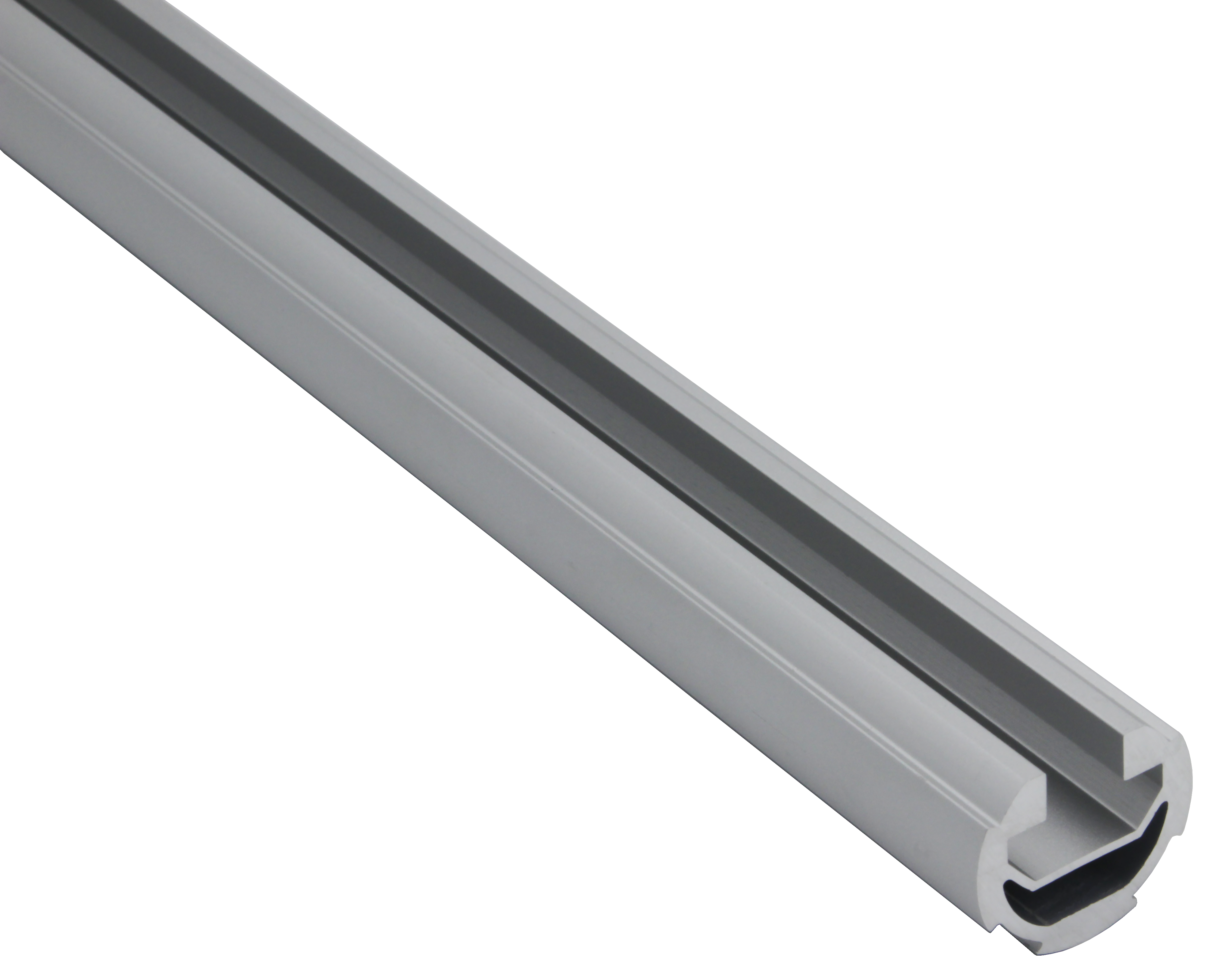
T-Groove Aluminum Pipe
The aluminum pipe opening 10mm is installed into the T-shaped slider, which can be installed with casters or other matching functional parts. The groove can be used for positioning and is used for the track of the roller.
The Race to Innovate: Why Fast Prototyping Matters
In today's product development landscape, speed isn't just an advantage—it's a necessity. Whether you're a startup racing to launch a minimum viable product (MVP) or an established manufacturer refining a decades-old design, the ability to test ideas, gather feedback, and iterate quickly can make or break a project. Yet, traditional prototyping methods often act as bottlenecks. Woodworking requires skilled labor and leaves little room for adjustments. Welded steel frames are strong but permanent; a single miscalculation means starting over. Even 3D printing, while revolutionary, struggles with large-scale structures and material limitations like durability. So, what if there was a way to build, test, and redesign prototypes without the hassle of cutting, welding, or waiting for printers? Enter T-groove aluminum pipe structures—a game-changer for engineers, designers, and innovators who refuse to be slowed down by their tools.
What Are T-Groove Aluminum Pipe Structures, Anyway?
Let's start with the basics. T-groove aluminum pipes—also called T-slot aluminum profiles—are extruded aluminum components designed with a continuous "T" shaped groove running along their length. This groove isn't just a design quirk; it's the secret to their versatility. During manufacturing, aluminum is heated and pushed through a die, creating long, uniform profiles with precise cross-sections. The T-slot acts as a built-in channel for attaching accessories: brackets, shelves, panels, casters, and more. Unlike traditional pipes or rigid frames, these profiles don't require drilling, welding, or adhesives. Instead, you slide a bolt or nut into the T-slot, position your accessory, and tighten it down. It's like building with an advanced set of modular blocks—one that's strong enough to support industrial-grade loads but flexible enough to reconfigure in minutes.
At first glance, they might look like simple metal bars, but their magic lies in their ecosystem. T-groove aluminum systems are more than just pipes; they're a complete toolkit. Pair a 20x20mm aluminum profile with a corner bracket, and you've got the start of a frame. Add a caster wheel (from the long list of caster accessories available) to the base, and suddenly it's mobile. Need a shelf? Slide a panel into the T-slot and secure it with a few bolts. This modularity is why industries from automotive manufacturing to laboratory research have embraced them—but nowhere is their impact more felt than in prototype development.
Why T-Groove Aluminum Pipes Are a Prototyper's Dream
Let's cut to the chase: What makes these aluminum profiles so effective for fast iteration? It boils down to five key advantages that address the biggest pain points of traditional prototyping.
1. Modularity: Build, Break, Rebuild—No Consequences
Traditional prototypes are often "one and done." A wooden frame glued together or a steel structure welded into shape can't be easily modified. If your team decides the workbench needs to be 6 inches taller, you're looking at hours of sawing, sanding, or welding. With T-groove aluminum, height adjustments take minutes. Loosen the bolts on the vertical profiles, slide them up, retighten, and you're done. Need to add a crossbar? Slide a connector into the T-slot, bolt it on, and you're ready to test. This modularity turns "what if?" into "let's try it right now."
2. Reusability: Your Parts Are an Investment, Not Waste
How many prototypes end up in the trash after a single test? With wood or 3D-printed plastics, most materials are too damaged or deformed to reuse. T-groove aluminum profiles, though? They're built to last. Aluminum is corrosion-resistant, and the T-slot system doesn't degrade with repeated assembly and disassembly. That means the vertical pipes from your failed "tall workbench" prototype can become the horizontal rails of your next "mobile cart" design. Over time, this reusability slashes material costs and reduces waste—a win for both your budget and sustainability.
3. Strength Without the Weight: Test Real-World Loads
3D printers are great for small, detailed parts, but they struggle with structural strength. A PLA-printed frame might wobble under 10 pounds, making it useless for testing real-world loads. T-groove aluminum, on the other hand, balances strength and weight perfectly. Aluminum extrusion profiles are engineered to handle significant weight—think 200+ pounds for a standard 40x40mm profile—while remaining light enough to move by hand. This means you can prototype everything from assembly line workbenches to industrial shelving and trust that the structure will behave like the final product, not a fragile mockup.
4. Accessory Ecosystem: The Right Part for Every Idea
A T-groove aluminum profile is only as useful as the accessories that connect it. Fortunately, the ecosystem is vast—and growing. Need to add wheels? Caster accessories like swivel wheels or brake-equipped casters bolt directly into T-slots. Want to guide materials along a track? Roller track and accessories (like plastic roller track guide rails in yellow or grey) slide into place, turning your frame into a functional conveyor. Even specialized parts, like stainless steel swivel roller balls for smooth material transfer, integrate seamlessly. This ecosystem means you're never limited by "can we build it?"—only by "what do we want to test next?"
5. No Special Skills Required: Engineers, Not Craftsmen
You don't need to be a master woodworker or a certified welder to build with T-groove aluminum. All you need is a hex key (or Allen wrench) and a basic understanding of how the connectors work. This lowers the barrier to entry for cross-functional teams. Designers, engineers, and even interns can collaborate on prototyping, reducing reliance on specialized labor and speeding up the process. When everyone on the team can jump in and adjust the prototype, iteration cycles shrink from days to hours.

The Building Blocks: Key Components of T-Groove Systems
To truly leverage T-groove aluminum for fast iteration, it helps to know the core components that make these systems tick. While the options can seem overwhelming, focusing on a few basics will get you 90% of the way there.
Aluminum Profiles: The Backbone of Your Design
Profiles come in standard sizes, defined by their width and height (e.g., 20x20mm, 30x30mm, 40x40mm, 40x80mm). The size you choose depends on your prototype's needs: smaller profiles for lightweight structures like display stands, larger ones for heavy-duty applications like workbenches or material racks. Most profiles also feature multiple T-slots (on 2, 3, or 4 sides), giving you flexibility in where you attach accessories. For example, a 40x40mm profile with T-slots on all four sides lets you add components to the front, back, left, and right—perfect for complex frames.
Aluminum Profile Accessories: The Glue That Holds It All Together
You can't build much with just profiles—you need accessories to connect them. This is where terms like "aluminum profile accessories" (a key part of any T-groove system) come into play. Connectors, brackets, and fasteners turn individual profiles into functional structures. Corner brackets join two profiles at 90-degree angles. Flange brackets attach panels or shelves. Slide-in nuts (also called "T-nuts") fit into the T-slots, allowing you to bolt accessories on without drilling. Even specialized joints, like internal rotatary aluminum joints, let you create hinges or rotating components—ideal for prototypes that need moving parts, like foldable workbenches or adjustable shelves.
Specialized Add-Ons: From Casters to Conveyors
Once your basic frame is up, specialized accessories let you add functionality. Need mobility? Caster wheels (and their accompanying accessories like caster installation bases) bolt onto the bottom of profiles, turning static frames into mobile carts. For material handling, roller tracks (like the 40 steel roller track with yellow wheels or 38 aluminum roller track with side guides) create smooth pathways for parts to slide or roll. Even small details, like plastic roller track guide rails (available in yellow or grey for visibility), ensure materials stay on track during testing. These add-ons transform simple frames into working prototypes that mimic real-world conditions.

Fast Iteration in Action: A Case Study
The Problem: A Startup Needs a Custom Workbench—Yesterday
Let's walk through a real-world example of how T-groove aluminum accelerates prototyping. Imagine a small electronics startup developing a new wearable device. Their assembly team needs a workbench that: (1) holds tools and components within arm's reach, (2) has a shelf for a laptop (to track inventory), (3) is mobile (to move between testing stations), and (4) is height-adjustable (to accommodate team members of different heights). With a launch deadline in 2 weeks, they can't wait for a custom wooden workbench or a welded steel frame.
Day 1: Initial Prototype
The team starts with 40x40mm aluminum profiles for the legs and 40x80mm profiles for the tabletop frame. Using corner brackets and T-nuts, they assemble a basic frame in 2 hours. They add a plywood tabletop (secured with flange brackets) and a lower shelf using 30x30mm profiles. To make it mobile, they bolt on 4-inch caster wheels with brakes. Total time: 3 hours.
Day 2: First Iteration—Height and Mobility Issues
Testing reveals two problems: the workbench is too short for most team members, and the casters wobble under the weight of the laptop and tools. The solution? They swap the 40x40mm legs for longer ones (no cutting needed—just loosening bolts and sliding), raising the height by 8 inches. For the casters, they upgrade to heavy-duty swivel casters with larger wheels, attaching them using reinforced caster installation bases. Total time: 45 minutes.
Day 3: Second Iteration—Tool Storage and Accessibility
The team realizes tools are scattered across the tabletop, slowing assembly. They add a vertical 30x30mm profile along the back edge of the workbench, using aluminum profile accessories like tool hooks and small shelves (attached via T-slots). They also add a roller track (38 aluminum roller track with yellow wheels) along the front edge to slide components like PCBs and cables. Total time: 1 hour.
Day 4: Final Prototype—Ready for Launch
The workbench now meets all requirements: height-adjustable, mobile, with organized tool storage and a roller track for components. Because the team used T-groove aluminum, they iterated three times in 4 days—something that would have taken weeks with wood or steel. And when production scales up, they can reuse the same profiles and accessories to build 10 more workbenches—no new materials needed.
T-Groove Aluminum vs. Traditional Prototyping Materials: A Comparison
Still on the fence about whether T-groove aluminum is right for your project? Let's compare it to three common prototyping materials: wood, welded steel, and 3D-printed PLA. The table below breaks down key factors like assembly time, reusability, and strength.
| Material | Assembly Time (Basic Frame) | Reusability | Strength (Load Capacity) | Weight | Cost (Per Linear Foot) |
|---|---|---|---|---|---|
| T-Groove Aluminum | 1–2 hours | High (unlimited reassembly) | High (200–500 lbs per profile) | Light to Medium | $5–$15 |
| Plywood | 3–4 hours (cutting, sanding, gluing) | Low (glued joints weaken when disassembled) | Medium (50–150 lbs) | Medium to Heavy | $2–$5 |
| Welded Steel | 4–6 hours (cutting, welding, grinding) | Very Low (welds must be cut to modify) | Very High (500+ lbs) | Heavy | $8–$20 |
| 3D-Printed PLA | 8–12 hours (printing, post-processing) | Low (brittle, prone to cracking) | Low (10–30 lbs) | Very Light | $10–$30 (filament + energy) |
The table tells a clear story: T-groove aluminum offers the best balance of speed, strength, and reusability. While wood and PLA are cheaper upfront, their low reusability means you'll spend more over time replacing materials. Welded steel is strong but slow and immobile—great for final products, but terrible for prototypes that need to evolve.
Beyond Prototyping: Scaling to Production
One of the most underrated benefits of T-groove aluminum is its ability to bridge the gap between prototyping and production. Unlike 3D-printed parts or wooden mockups, which often need to be completely redesigned for manufacturing, T-groove prototypes can evolve into final products—or at least inform mass production. For example, if your team prototypes a material rack using 40x40mm profiles and 3-row, 3-floor shelves (similar to "material rack B" in industrial catalogs), you can either: (1) Use the prototype as a production unit for small-scale runs, or (2) Use the design to source custom aluminum extrusions for mass manufacturing. This continuity reduces time-to-market and ensures your final product performs exactly like the prototype you tested.
Even better, many suppliers offer bulk pricing for aluminum profiles and accessories, making it cost-effective to scale from a single prototype to dozens of units. Whether you need 5 workbenches for a small workshop or 500 material racks for a factory, the same modular system that accelerated your prototyping can now streamline production.
Getting Started: Tips for First-Time T-Groove Users
If you're ready to dive into T-groove aluminum prototyping, here are a few tips to avoid common pitfalls and maximize speed:
Start Simple: Focus on Core Functionality
Don't overcomplicate your first prototype. Start with the basic frame and add accessories as needed. For example, build a simple workbench before adding roller tracks or tool hooks. This helps you get comfortable with assembly and identify issues early.
Buy a Starter Kit
Many suppliers offer starter kits with a variety of profiles, connectors, and basic accessories. These kits take the guesswork out of sizing and compatibility, ensuring you have everything you need to start prototyping immediately.
Measure Twice, Bolt Once
While T-groove systems are forgiving, taking precise measurements upfront saves time. Use a laser level or measuring tape to ensure profiles are straight and square—this prevents wobbling or misalignment during testing.
Keep Spare Parts Handy
Nothing kills momentum like running out of T-nuts or brackets mid-prototype. Stock up on basics like slide-in nuts, corner brackets, and hex bolts—you'll thank yourself later.
Conclusion: Iterate Faster, Innovate More
In a world where product cycles grow shorter and customer expectations higher, the ability to prototype quickly isn't just a luxury—it's survival. T-groove aluminum pipe structures transform prototyping from a slow, frustrating process into a dynamic, collaborative effort. With modularity that lets you build, test, and rebuild in hours (not days), reusability that turns parts into long-term investments, and strength that mimics real-world conditions, these systems empower teams to iterate faster, test bolder ideas, and bring better products to market.
Whether you're building a lean pipe workbench, a mobile material rack, or a custom assembly line, T-groove aluminum isn't just a tool—it's a catalyst for innovation. So, the next time your team asks, "Can we prototype this by Friday?" you'll be ready to say, "We'll have three versions ready by lunch."