- Company Articles
- Products and Technology
- Product knowledge
- Quality Control Stations: Ensuring Precision with Aluminum Workbench C

Quality Control Stations: Ensuring Precision with Aluminum Workbench C
Related Product
Aluminum Workbench C
aluminum-tube-workbench-is-more-flexible-and-durable,-compared-with-traditional-pe/abs-coated-steel-tube.-it-is-easy-to-assemble,-anti-corrosion,-rust-protection,-and-recycle-use-after-disassemble.
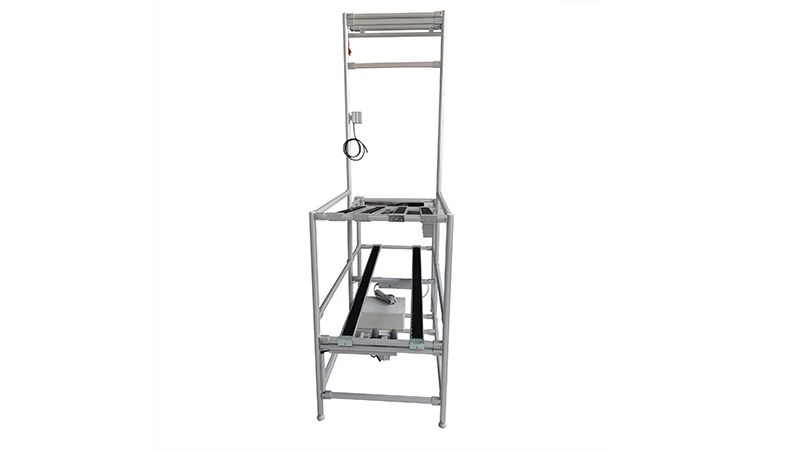
The factory floor hums with purpose at 7:30 a.m. Maria, a quality control technician with 12 years under her belt, pulls on her gloves and heads to her station. For weeks, she's been wrestling with a workbench that feels like it's working against her: the wooden top warped from years of cleaning solvents, drawers that stick when she needs to grab calipers in a hurry, and a surface so cluttered with tools she can barely fit the circuit boards she's inspecting. "Another day of fighting the bench instead of focusing on the parts," she mutters, adjusting a wobbly lamp. But today, something's different. By her station stands a sleek, silver structure with clean lines and a smooth, matte surface. A note taped to it reads: Meet your new Aluminum Workbench C—let's make precision easier.
Quality control isn't just about checking boxes on a list. It's about creating an environment where accuracy thrives, where technicians like Maria can focus on the tiny details that separate a flawless product from a costly recall. And at the heart of that environment? The workbench. Not just any workbench, but one designed with the realities of the factory floor in mind. Aluminum Workbench C isn't just a piece of equipment—it's a partner in precision. Let's dive into why it's becoming the backbone of modern quality control stations, and how it's redefining what it means to build a workspace that works with you, not against you.
The Heart of Quality Control: Why the Workbench Matters
Walk into any manufacturing facility, and you'll notice a pattern: the most efficient teams have workstations that feel intentional. Tools are within arm's reach, materials flow smoothly to the bench, and the surface itself is a blank canvas for the task at hand. In quality control, this intentionality is even more critical. A technician inspecting a 0.5mm tolerance on a medical device can't afford to waste 30 seconds searching for a micrometer. A team testing automotive components can't risk static electricity frying sensitive electronics. And in high-volume environments, a wobbly workbench or disorganized layout can turn a 5-minute inspection into a 15-minute ordeal—multiply that by hundreds of parts a day, and suddenly you're looking at lost productivity, missed deadlines, and frustrated employees.
Traditional workbenches often fall short here. Wooden tops, once popular for their affordability, absorb moisture and chemicals, leading to warping and bacteria growth—hardly ideal for cleanroom or medical device settings. Steel benches, while durable, are heavy and inflexible; reconfiguring them for a new product line means calling in a maintenance crew with wrenches. And most off-the-shelf options treat "customization" as an afterthought, offering a few drawers and a pegboard but little else. For facilities aiming to adopt lean system principles—eliminating waste, streamlining flow, and empowering workers—these one-size-fits-all solutions are a bottleneck, not a tool.
Aluminum Workbench C: Built for the Way You Work
Aluminum Workbench C doesn't just address these pain points—it reimagines what a workbench can be. Let's start with the material itself: aluminum profile . Unlike wood or generic steel, the aluminum used here is precision-extruded, creating a lightweight yet incredibly strong frame. Maria, who's 5'4" and has struggled moving tools on her old steel bench, was shocked the first time she adjusted the height of her new workbench: "I just loosened two knobs, lifted the top to my elbow height, and locked it back. No grunting, no asking for help. It's like it was designed to remember that technicians come in all sizes."
The magic of aluminum profile lies in its versatility. The T-slot design—those grooves running along the edges of the bench's frame—means accessories snap into place without drilling or welding. Need a tool rail for your screwdrivers? Slide a bracket into the slot. Want to add a LED light bar overhead? Clip it on and tighten a thumb screw. Maria added a small parts bin holder to her bench in 2 minutes flat: "Before, I kept washers and screws in a coffee can under the bench. Now they're right in front of me, sorted by size. I haven't dropped a single one since."
But Aluminum Workbench C isn't just about adjustability. It's about durability, too. The aluminum surface resists corrosion from cleaning agents, so Maria can wipe it down with isopropyl alcohol at the end of her shift without worrying about discoloration. The edges are rounded to prevent snags on gloves or delicate parts, and the entire structure is rated to hold up to 500 lbs—more than enough for heavy inspection equipment like coordinate measuring machines (CMMs). Even the feet are adjustable, with rubber pads that grip the floor to prevent slipping, a lifesaver in facilities where oil or water might find their way onto the shop floor.

Lean System Integration: From Waste to Flow
"Lean isn't just a buzzword here—it's how we stay competitive," says Raj, Maria's supervisor and a 20-year manufacturing vet. "We used to spend hours each week rearranging workstations when we switched product lines. Now? With Aluminum Workbench C, we can reconfigure a station in 15 minutes. That's not just time saved—that's empowering the team to own their space." Lean systems thrive on three principles: flow, pull, and perfection. Aluminum Workbench C nails all three.
Take flow, for example. In a traditional setup, materials often sit in bins on the floor, forcing technicians to bend down or walk to fetch parts. Aluminum Workbench C pairs seamlessly with flow rack systems—those gravity-fed shelves that let materials glide to the front. Maria's station now has a flow rack mounted to the side of her bench, stocked with circuit boards in order of production. "The parts come to me, not the other way around," she says. "I used to take 10 steps per hour to grab bins; now I just reach over. That adds up to more time inspecting, less time moving."
Pull systems—only producing what's needed, when it's needed—get a boost too. The workbench's modular design means adding a barcode scanner holder or a label printer is as simple as attaching a bracket. Maria now scans each part as she inspects it, updating the production system in real time. If a batch starts showing anomalies, the line stops immediately, preventing a warehouse full of defective parts. "Before, I'd jot down issues on a clipboard and hand it to the supervisor at lunch. Now, the system alerts him the second I flag a problem. We caught a misaligned drill bit last week before it ruined 200 boards. That's lean in action."

Workbench Accessories: The Little Things That Make a Big Difference
Aluminum Workbench C is only as good as the accessories that make it your own. And unlike generic workbenches that offer a "one-accessory-fits-all" approach, this system is built around customization. Let's break down the add-ons that have Maria and her team singing its praises:
- Adjustable Height Legs: "I'm 5'2", and my coworker Jake is 6'1". We used to trade stations every shift because the old bench was either too high or too low. Now we just tweak the legs—no tools needed. My back pain? Gone."
- ESD-Safe Surface: For electronics inspection, static electricity is public enemy number one. The workbench's surface dissipates static, protecting sensitive components. "I used to wear a wrist strap and a heel grounder. Now the bench does half the work. Less hassle, more focus."
- Tool Balancers: Heavy tools like torque wrenches used to dangle from the ceiling, swinging into the bench when Maria moved. Now, a tool balancer clipped to the T-slot keeps her wrench suspended at exactly the right height—ready to grab, no swinging.
- Lockable Drawers with Dividers: "My old drawers were a junk drawer of tools. Now I have dividers for hex keys, calipers, and tweezers. I can find what I need in 2 seconds flat."
These aren't just "nice-to-haves." They're the details that turn a good workbench into a great one. When every tool, every bin, and every inch of space has a purpose, technicians can focus on what matters: the quality of the product.

Traditional vs. Aluminum Workbench C: A Side-by-Side Look
| Feature | Traditional Wooden/Steel Workbench | Aluminum Workbench C |
|---|---|---|
| Weight & Mobility | Heavy (500+ lbs); requires 2+ people to move | Lightweight (200-300 lbs); adjustable height with minimal effort |
| Customization | Limited: pre-drilled holes, fixed shelves | Unlimited: T-slot profile accepts any accessory (tool rails, bins, lights) |
| Durability | Wood warps; steel rusts; surfaces scratch easily | Aluminum resists corrosion; surface withstands solvents and impacts |
| Lean System Compatibility | Poor: hard to reconfigure; no integration with flow racks | Excellent: quick reconfiguration; pairs with flow racks, tool balancers, and ESD tools |
| Worker Comfort | Fixed height; no ergonomic adjustments | Adjustable height; rounded edges; optional anti-fatigue mat compatibility |
Why Aluminum? The Sustainability and Cost-Savings Angle
In a world where sustainability is no longer optional, aluminum stands out as a material with a conscience. Aluminum Workbench C is made from 60% recycled aluminum, and because it's infinitely recyclable, at the end of its long life (we're talking 20+ years), it won't end up in a landfill. "Our company set a goal to reduce waste by 30% this year," Raj explains. "Switching to aluminum workbenches wasn't just about productivity—it was about meeting our sustainability targets. The old wooden benches? We had to replace them every 5 years. These aluminum ones? I'll retire before they need upgrading."
Then there's the cost factor. While aluminum workbenches have a higher upfront price tag than basic wooden models, the total cost of ownership tells a different story. Maria's old bench cost $300 but needed replacement every 5 years, plus $100/year in repairs (sanding warped tops, fixing stuck drawers). Aluminum Workbench C costs $1,200 but lasts 20+ years with minimal maintenance. Do the math: $300 + ($100 x 5) = $800 over 5 years for the old bench vs. $1,200 over 20 years for the new one. That's $160/year vs. $60/year—and that doesn't include the productivity gains from reduced downtime and faster inspections.
Real Stories: How Aluminum Workbench C is Changing the Game
It's one thing to talk about features and specs, but it's another to hear from the people using the workbench every day. Let's check in with a few more teams:
Auto Parts Manufacturer, Detroit: "We make fuel injectors, and precision is everything. Our old steel benches vibrated so much from the nearby stamping machines that our measurements were off by 0.02mm—enough to cause a recall. Aluminum Workbench C has a solid, stable base that dampens vibrations. Now our CMM readings are consistent, and we haven't had a recall in 18 months." — Mike, Quality Control Lead
Medical Device Plant, Boston: "Cleanroom standards are strict. Our wooden benches were impossible to sanitize properly—we were failing audits because of bacteria in the cracks. Aluminum Workbench C has a seamless surface that wipes clean with peroxide. We passed our last audit with zero findings. Plus, the ESD surface protects our pacemakers from static damage." — Sarah , Compliance Manager
Electronics Assembly, Austin: "We switch product lines weekly—one day it's smartwatches, the next it's drone controllers. With our old benches, reconfiguring took 4 hours and a maintenance crew. Now, with Aluminum Workbench C, the team does it themselves in 30 minutes. We're launching products faster, and the technicians love that they can design their own stations." — Raj (yes, the same Raj from earlier!)
Conclusion: Precision Starts with the Right Foundation
Back at Maria's station, it's 3:00 p.m., and she's already inspected 20% more circuit boards than her average day before Aluminum Workbench C. "I don't dread coming to work anymore," she says, smiling as she places a certified board into the "pass" bin. "The bench doesn't fight me. It just… works. And when the tools work, I work better. That's the difference between going through the motions and actually taking pride in what I do."
Quality control isn't about perfection—it's about creating an environment where perfection is possible. Aluminum Workbench C isn't just a piece of furniture; it's a commitment to that environment. It's about recognizing that the people on the factory floor deserve tools that respect their expertise, their time, and their need to focus on what really matters: building products that make a difference.
So, if you're ready to stop fighting your workbench and start partnering with it, maybe it's time to meet Aluminum Workbench C. Because precision? It starts with the right foundation.