- Company Articles
- Products and Technology
- Solution
- Quick Changeover: Reducing Downtime with Lean Pipe Clamp B Reconfiguration

Quick Changeover: Reducing Downtime with Lean Pipe Clamp B Reconfiguration
Related Product
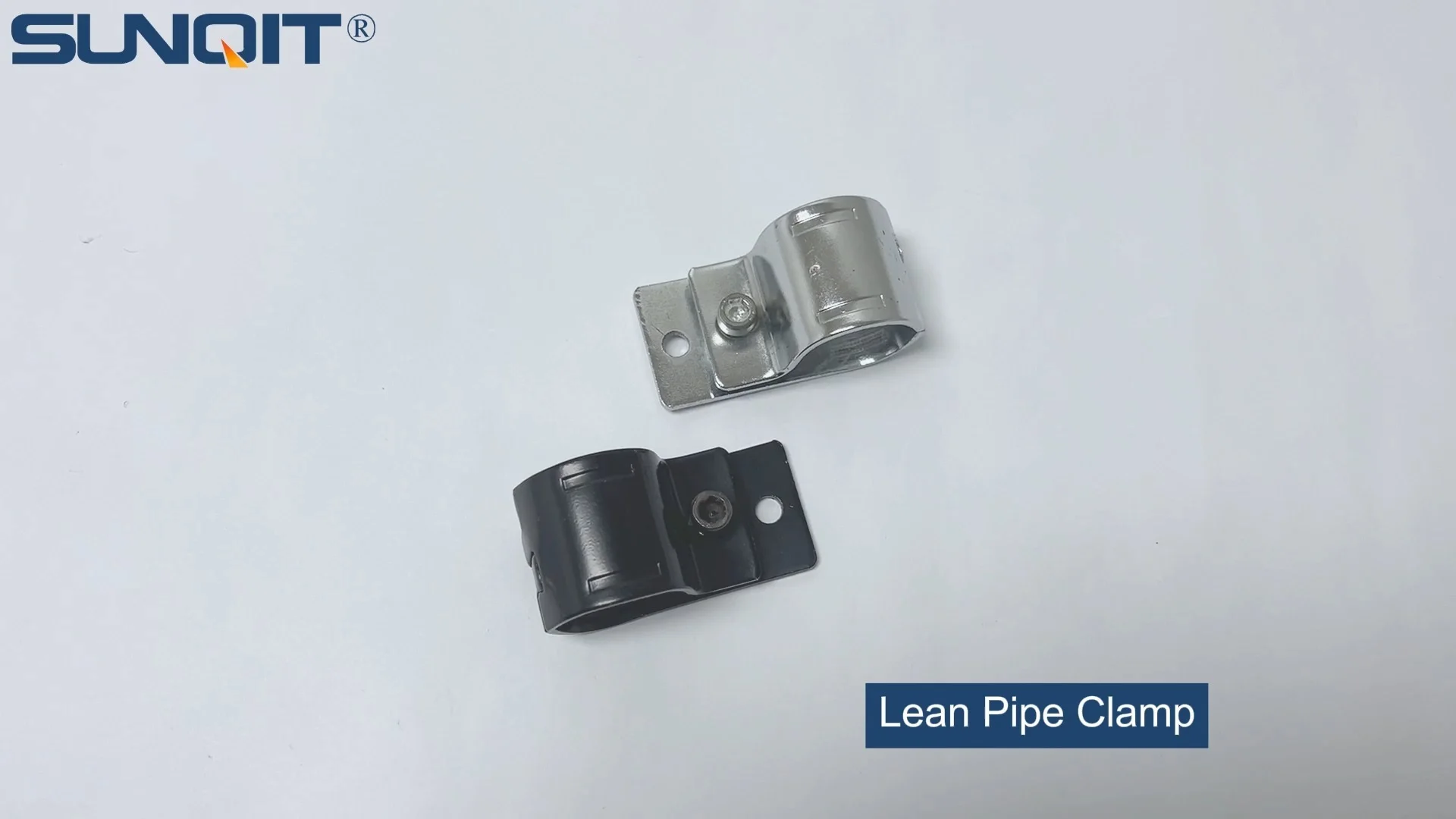
Lean Pipe Clamp
Lean pipe clamp is used for rack system hang monitor or other panel for workbenck, flowrack in production daily use.
Picture this: It's 9 a.m. on a Tuesday, and the production floor of a mid-sized electronics factory is humming. Conveyor belts glide, workers assemble circuit boards, and the air smells faintly of solder and machine oil. Then suddenly—*clunk*. The line stops. A new batch of products is due to start, but the current lean pipe workbench is set up for the previous model. Two workers kneel, fumbling with wrenches to loosen bolts; another fetches a saw to cut a metal bracket that's too short. By the time the workbench is adjusted, 45 minutes have slipped by. The supervisor sighs, staring at the production dashboard: that's 45 minutes of wages, energy, and opportunity gone—all because the setup couldn't keep up with the product change.
Downtime isn't just a hassle; it's a silent profit killer. In manufacturing, every minute a line isn't running can cost hundreds—even thousands—of dollars. And in today's world, where customers demand more product variety, shorter lead times, and faster innovation, the old "set it and forget it" approach to factory setups is obsolete. That's where lean manufacturing steps in—and more specifically, tools like the Lean Pipe Clamp B. This unassuming little component is a game-changer for quick changeover, turning hours of downtime into minutes and rigid workspaces into adaptable hubs. Let's dive into how it works, why it matters, and how it's reshaping the way factories stay agile.
The Cost of Stagnation: Why Quick Changeover Matters Now More Than Ever
Quick changeover—often called "SMED" (Single-Minute Exchange of Die) in lean circles—isn't just a buzzword. It's the art of switching a production line from making one product to another in 10 minutes or less. But why is this so critical today? Let's break it down.
First, customer expectations have shifted. Decades ago, factories could mass-produce a single product for years. Now, consumers want personalized options: a phone case in 10 colors, a laptop with custom specs, a medical device tailored to a specific clinic. To meet this, factories need to switch between product runs constantly. If each switch takes hours, they'll never keep up.
Second, product life cycles are shrinking. A (hottest) gadget today might be outdated in six months. Factories can't afford to build permanent, dedicated lines for products that won't exist next year. They need setups that can evolve—quickly.
Third, labor costs are rising. Skilled workers are harder to find, and paying them to spend hours disassembling and reassembling workbenches or flow racks is a waste of their expertise. Employees want to build, create, and problem-solve—not wrestle with outdated tools.
The solution? Ditch rigidity for flexibility. Traditional setups rely on welded steel, fixed bolts, and custom-made parts—all of which take time to modify. Lean pipe systems, on the other hand, are built on modularity: lightweight pipes, joints, and clamps that can be rearranged on the fly. And at the heart of this modularity? Components like the Lean Pipe Clamp B.
Lean Pipe Systems 101: The Backbone of Flexible Manufacturing
Before we zoom in on the Lean Pipe Clamp B, let's get clear on what lean pipe systems are. Imagine a construction set for adults—but instead of plastic bricks, you're building workbenches, flow racks, conveyor supports, and material carts. Lean pipe systems (also called "flexible pipe systems") use lightweight tubes—usually steel, aluminum, or plastic-coated steel—and a variety of joints and clamps to create custom workspaces. They're designed to be strong enough for industrial use but flexible enough to reconfigure without welding, drilling, or specialized tools.
The magic of lean pipe systems lies in their simplicity. Unlike traditional metal fabrication, which requires skilled welders and days of lead time, lean setups can be built by regular factory workers with basic training. Need a taller shelf? Add a pipe. Need to move a flow rack to the other side of the line? Unclamp the joints, disassemble, and rebuild. It's like Legos for manufacturing—and it's revolutionized how factories adapt.
But not all clamps are created equal. Early lean pipe systems used basic plastic joints that could loosen under heavy loads, or metal clamps that required tools to tighten. Then came the Lean Pipe Clamp B—a design that prioritizes speed, strength, and ease of use. Let's take a closer look at what makes it special.

Lean Pipe Clamp B: The Unsung Hero of Quick Changeover
At first glance, the Lean Pipe Clamp B looks simple: a small, usually plastic or aluminum component with a cam lever, a rubberized grip, and a slot to hold a lean pipe. But don't let its size fool you. This clamp is engineered to solve the biggest pain points of reconfiguration: time, tools, and torque.
Design That Puts Speed First
Traditional clamps or bolts require tools—wrenches, screwdrivers, hex keys—and even then, they're slow. You might spend 10 minutes just loosening four bolts to adjust a shelf height. The Lean Pipe Clamp B changes that with a "twist and lock" mechanism. To adjust a pipe, you flip the cam lever, slide the pipe to the new position, and flip the lever back down. The rubberized grip tightens around the pipe, creating a secure hold without any tools. It's so intuitive that a worker can reposition a pipe in 10 seconds flat—no training required.
Take the earlier workbench example: with traditional bolts, adjusting the height might take 20 minutes (loosen bolts, move legs, retighten, check level). With Lean Pipe Clamp B? Flip four levers, slide the legs up or down, flip the levers back, and you're done in 2 minutes. That's a 90% reduction in setup time.
Strength Without Sacrifice
You might be thinking: "If it's that easy to adjust, is it strong enough?" The answer is a resounding yes. Lean Pipe Clamp B is built to handle industrial loads—up to 50 kg per clamp, depending on the material. The secret is in the grip: the rubberized inner lining creates friction, so the harder the pipe is pulled (by tools, materials, or workers leaning on the workbench), the tighter the clamp holds. For heavier loads, you can use two clamps per joint, doubling the stability.
Materials matter too. Many Lean Pipe Clamp B models are made from glass-reinforced nylon, which is lightweight but resistant to impact, heat, and chemicals—perfect for factory environments. For ESD (electrostatic discharge) sensitive areas (like electronics manufacturing), there are even conductive versions that prevent static buildup.
Flexibility in Every Angle
Factories aren't one-size-fits-all, and neither are their setups. A flow rack might need a 45-degree incline for gravity feeding parts, while a workbench might need a 90-degree corner brace. The Lean Pipe Clamp B isn't limited to straight lines. Many models swivel 360 degrees, allowing pipes to be positioned at any angle. Need a diagonal support for extra stability? Rotate the clamp, lock it, and you're good to go. This adaptability means one lean pipe system can be a workbench in the morning, a material cart in the afternoon, and a flow rack by evening—all with the same components.

From Theory to Practice: Real-World Applications of Lean Pipe Clamp B
Enough talk—let's see the Lean Pipe Clamp B in action. Here are three common factory setups where it turns downtime into uptime:
1. Lean Pipe Workbench Reconfiguration
Workbenches are the workhorses of production lines, but they're also the most likely to need adjustment. A workbench for assembling small circuit boards needs a flat surface and shallow shelves; one for larger machinery might need a lower height and deeper storage. With Lean Pipe Clamp B, workers can:
- Adjust height : Flip clamps, slide legs up/down, lock—done in 2 minutes.
- Add/remove shelves : No drilling or cutting. Slide shelf supports into place, lock with clamps, and set the shelf on top.
- Swap accessories : Attach tool hooks, bin holders, or ESD mats by clamping them to the frame.
A electronics manufacturer in (Suzhou) recently switched to Lean Pipe Clamp B workbenches. They reported cutting changeover time from 45 minutes to 8 minutes per workbench—saving 37 minutes per change, and with 5 changes per day, that's 185 minutes (over 3 hours) of recovered production time daily.
2. Flow Rack Adjustments for Variable Loads
Flow racks—those sloped racks where materials glide down to workers via gravity—are essential for just-in-time production. But when material sizes change (e.g., from small boxes to larger bins), the roller track spacing needs to adjust too. With traditional flow racks, this might mean removing and re drilling holes for the roller track, a 2-hour job. With Lean Pipe Clamp B:
The roller track is mounted on lean pipes, which are held in place by Clamp Bs. To widen the spacing, workers flip the clamps, slide the pipes apart, and relock. The roller track adjusts automatically, no drilling required. A automotive parts supplier in (Chongqing) used this to reduce flow rack reconfiguration time from 2 hours to 15 minutes, allowing them to handle 3x more product variants without adding new racks.
3. Roller Track Rerouting for Dynamic Lines
Conveyor systems and roller tracks often need to change direction or length to accommodate new layouts. For example, a seasonal product might require a detour to a packaging station. With fixed metal tracks, rerouting means cutting and welding—days of work. With lean pipe roller tracks and Clamp Bs, it's a matter of unclamping sections, repositioning them, and reclamping. A food packaging plant in (Guangzhou) did this when launching a new snack line: they rerouted 10 meters of roller track in 40 minutes, compared to the 2 days it would have taken with traditional metal tracks.
| Aspect | Traditional Setup (Bolts/Welding) | Lean Pipe with Clamp B |
|---|---|---|
| Reconfiguration Time | 45–120 minutes | 5–15 minutes |
| Tools Required | Wrenches, drills, saws | None (hand-adjustable) |
| Skill Level Needed | Skilled labor (welders, fabricators) | Any factory worker (no training) |
| Cost per Changeover | High (labor, tools, material waste) | Low (minimal labor, no waste) |
| Flexibility for Future Changes | Low (permanent modifications) | High (unlimited reconfigurations) |

Beyond Time Savings: The Ripple Effects of Lean Pipe Clamp B
The benefits of Lean Pipe Clamp B go far beyond faster changeover. They create a ripple effect that touches every part of the factory—from worker morale to bottom-line profits.
Empowering Workers, Reducing Frustration
Ever watched a worker struggle with a tool they don't know how to use? It's demoralizing. Traditional setups require workers to rely on specialists (welders, maintenance crews) for adjustments, making them feel powerless. With Lean Pipe Clamp B, any worker can reconfigure a setup independently. This autonomy boosts confidence and pride—"I can fix this myself" instead of "I have to wait for the expert." A survey of workers at the electronics factory found a 32% increase in job satisfaction after switching to Clamp B setups.
Cutting Costs, Not Corners
Reconfigurable setups mean fewer dedicated tools. Instead of buying 5 different workbenches for 5 product lines, you can buy 1 lean pipe workbench and reconfigure it. A furniture manufacturer in (Dongguan) saved ¥120,000 ($16,500) in equipment costs by replacing 10 fixed workbenches with 3 lean pipe workbenches using Clamp Bs.
There's also less waste. Traditional setups often require cutting metal or plastic to size, leaving scraps. With Clamp B, pipes are reused, so there's no waste—aligning with lean's "reduce, reuse, recycle" ethos.
Agility to Seize Opportunities
When changeover is fast, factories can take on smaller, more profitable orders they might have turned down before. A toy manufacturer in (Shenzhen) used to only accept orders of 10,000+ units because smaller orders weren't worth the setup time. With Clamp B, they can now handle orders of 1,000 units—opening up a new market of boutique toy brands and increasing revenue by 25%.
Case Study: How a Medical Device Maker Cut Downtime by 70%
Company : A medical device manufacturer in (Shanghai) producing surgical tools.
Problem : They made 8 different tool types, each requiring a unique workbench setup. Changeover took 60 minutes per workbench, with 4 workbenches per line—total 4 hours of downtime daily.
Solution : Switched to lean pipe workbenches with Lean Pipe Clamp B, aluminum profile frames, and adjustable roller tracks.
Results
:
• Changeover time per workbench dropped from 60 minutes to 18 minutes.
• Total daily downtime reduced from 4 hours to 1.2 hours (70% reduction).
• Increased production output by 15% in 3 months.
• Workers reported 40% less fatigue from setup tasks.
Implementing Lean Pipe Clamp B: Tips for Success
Ready to bring Lean Pipe Clamp B to your factory? Here's how to start:
1. Start Small, Then Scale
Don't overhaul your entire factory at once. Pick one high-changeover area—like a single workbench or flow rack—and test Clamp B there. Measure the time saved, get worker feedback, and adjust before rolling out to other areas.
2. Train Teams on "No-Tool" Culture
Even though Clamp B is intuitive, some workers might be hesitant to abandon tools they've used for years. Hold a 15-minute demo: show how to flip the lever, adjust the pipe, and lock it. Let them practice—most will be hooked after the first try.
3. Invest in Quality Clamps
Not all Clamp Bs are created equal. Cheaper plastic models might crack under heavy loads or wear out quickly. Look for clamps with reinforced hinges, heat-resistant materials, and a rubber grip that doesn't degrade over time. A few extra yuan per clamp will pay off in durability.
4. Measure, Iterate, Celebrate
Track changeover time before and after implementation. Share the results with your team—nothing motivates like seeing hard numbers (e.g., "We saved 5 hours this week!"). Celebrate small wins, like the first time a changeover takes under 10 minutes.
The Future of Manufacturing: Flexible, Fast, and Focused on People
As factories evolve, the lines between "workers" and "problem-solvers" are blurring. Tools like the Lean Pipe Clamp B don't just make setups faster—they empower workers to take ownership of their space, adapt to change, and drive efficiency. In a world where agility is survival, rigid systems are relics. The factories that thrive will be the ones that can pivot quickly, and it all starts with the smallest components: a clamp, a pipe, and a team ready to flip the lever on downtime.
So the next time you walk through a factory, take a closer look at the workbenches and flow racks. If you see workers adjusting pipes with a quick flip of a lever, you'll know: that's a factory that's not just making products—it's making the most of every minute. And in manufacturing, time isn't just money—it's the difference between falling behind and leading the pack.