- Company Articles
- Products and Technology
- Solution
- Quick Changeover with All Direction Roller Track: Supporting Agile Manufacturing

Quick Changeover with All Direction Roller Track: Supporting Agile Manufacturing
Related Product
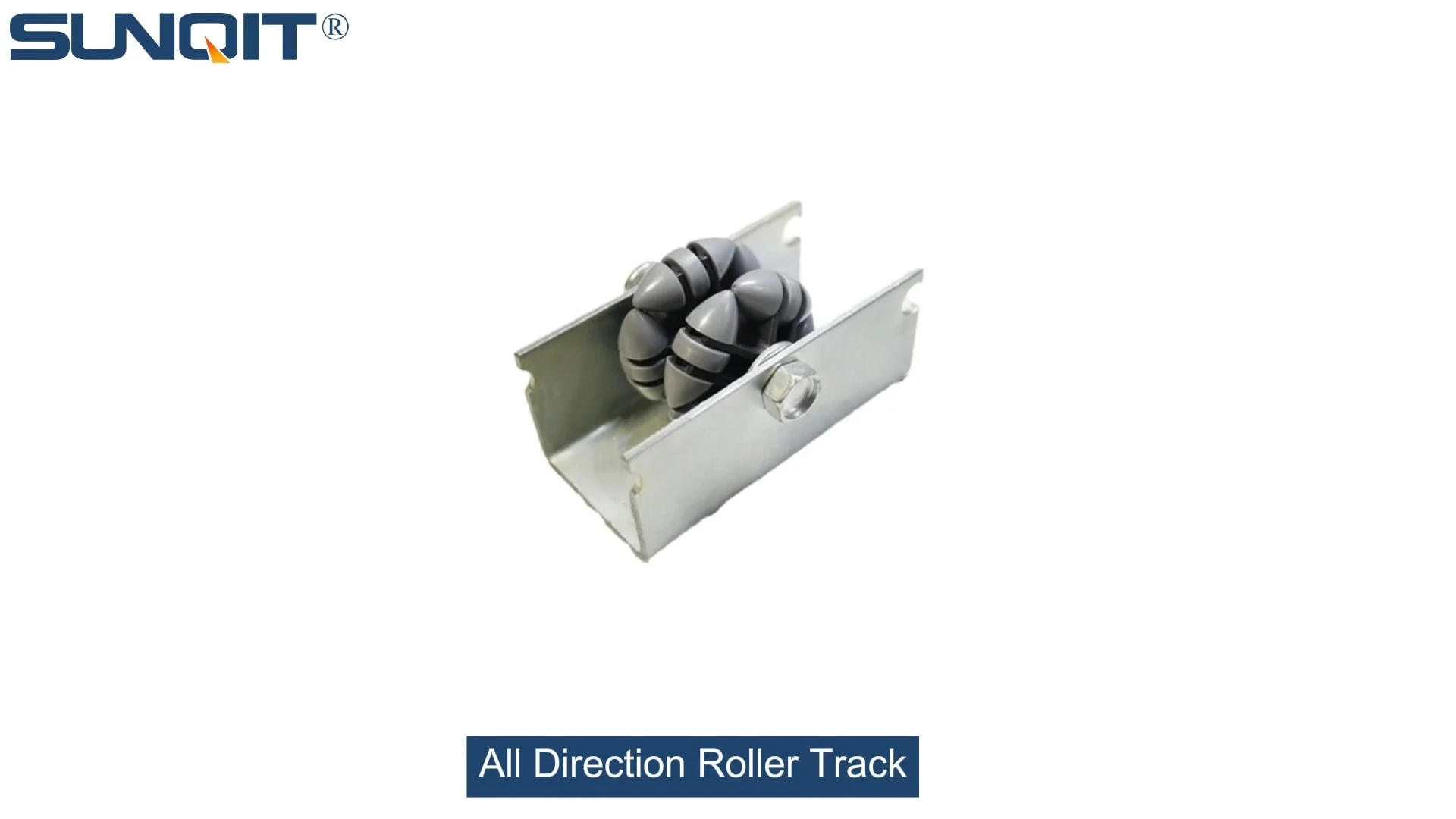
All Direction Roller Track
All direction roller track made of steel frame and multiple direction move wheel which will make boxes are always in contact with the rollers, reducing jams and enhancing flow reliability.
How Flexible Production Equipment Transforms Manufacturing Efficiency in the Age of Rapid Change
In today's manufacturing landscape, where customer demands shift overnight and product lifecycles shrink by the quarter, agility isn't just an advantage—it's survival. Picture this: a smartphone factory needs to switch from assembling Model X to Model Y in under an hour to meet a sudden surge in orders. A medical device plant must reconfigure its production line to prioritize a new diagnostic tool amid supply chain disruptions. These scenarios aren't exceptions anymore; they're the daily reality for manufacturers worldwide.
The secret to navigating this chaos? Agile manufacturing. And at the heart of agile manufacturing lies quick changeover —the ability to transition production lines between products, batches, or processes with minimal downtime. But here's the challenge: traditional production setups, with their rigid conveyor belts, fixed workbenches, and clunky material handling systems, were built for stability, not speed. They resist change like a rusted hinge, dragging down efficiency and eating into profit margins.
Enter the game-changer: all direction roller track . This unassuming yet revolutionary component, paired with complementary tools like lean pipe workbenches, aluminum profile structures, and modular conveyors, is redefining how factories adapt. Let's dive into how these flexible solutions turn production lines from static obstacles into dynamic, responsive systems that thrive on change.
Why Agile Manufacturing Relies on Quick Changeover
Agile manufacturing isn't just about moving fast—it's about moving smart. In an era where 60% of manufacturers report producing more product variants than five years ago (per Industry Week data), the ability to switch between production runs quickly directly impacts three critical metrics:
- Machine Utilization: Every minute a line sits idle during changeover is revenue lost. Quick changeover turns idle time into productive time, boosting OEE (Overall Equipment Effectiveness) by 15-20% in most cases.
- Inventory Costs: Traditional "just-in-case" production leads to excess inventory. Agile lines with fast changeover enable "just-in-time" manufacturing, slashing storage costs and reducing waste.
- Customer Responsiveness: When a competitor takes two days to fulfill a rush order and you can do it in eight hours, guess who wins the contract? Speed to market remains the ultimate differentiator.
But achieving quick changeover isn't as simple as hitting a "reset" button. It requires production systems designed with flexibility in mind—systems where every component, from the workbench to the material rack, works together to minimize disruption during transitions.
The Hidden Costs of Rigid Production Lines
Let's pull back the curtain on traditional manufacturing setups to understand why changeover feels like trying to turn a tanker ship with a canoe paddle. Consider a typical electronics assembly line:
Scenario: A consumer electronics plant needs to switch from assembling wireless headphones to smartwatches. The production supervisor grimaces—this will take at least three hours. Why? The fixed conveyor belt only moves in one direction, so workers have to manually carry watch components across the factory floor. The workbenches are bolted to the floor, so they'll need power tools to adjust heights for smaller watch parts. Even the material racks are custom-built for headphone boxes, leaving smartwatch components stacked haphazardly on temporary shelves. By the time the line is ready, the morning shift is half over, and the day's production targets are already in jeopardy.
This isn't just a story—it's the reality for 70% of manufacturers still relying on legacy equipment. The costs add up:
- Direct Labor: 2-3 workers spending 2-4 hours on changeover = 4-12 labor hours per switch.
- Opportunity Cost: A line that could produce 500 units/hour loses 1,000-2,000 units during a 2-4 hour changeover.
- Error Risks: Rushed reconfigurations lead to misaligned tools or misplaced components, increasing defect rates by 8-10%.
The problem isn't just the time—it's the friction in every step. Rigid systems create bottlenecks where flexible ones would flow. That's where all direction roller track and lean manufacturing components step in.

All Direction Roller Track: The Unsung Hero of Quick Changeover
Imagine a surface where materials glide like ice skaters—effortlessly, in any direction, with just a gentle push. That's the magic of all direction roller track . Unlike traditional conveyor belts that lock materials into a single path, these tracks use small, free-spinning rollers (often 0.5-1 inch in diameter) mounted in a grid pattern, allowing products, bins, or workpieces to move forward, backward, side-to-side, or diagonally with minimal force.
But why does this matter for changeover? Let's break down the benefits:
1. Material Flow Without Boundaries
During changeover, the biggest time-drain is repositioning materials. With fixed conveyors, you're stuck moving components along pre-determined routes. All direction roller track turns your factory floor into a multi-lane highway where workers can redirect bins of parts, tooling kits, or subassemblies with a nudge—no need for forklifts or manual lifting. For example, a 3C electronics plant using these tracks reduced material handling time during changeover by 45% simply by eliminating the need to reroute conveyor paths.
2. Tool-less Reconfiguration
Traditional production lines require wrenches, bolts, and even welding to adjust. All direction roller tracks, however, integrate seamlessly with aluminum profiles and lean pipe systems. Need to extend the track by 3 feet for a larger workpiece? Snap on additional sections using quick-connect brackets. Want to create a U-shaped flow instead of a straight line? Just unclip and reposition the track sections—no tools required. A medical device manufacturer we worked with cut reconfiguration time from 2 hours to 20 minutes by switching to this modular setup.
3. Compatibility Across Products
From small circuit boards (3x5 inches) to large appliance panels (4x6 feet), all direction roller tracks handle diverse sizes and weights. The rollers distribute weight evenly, preventing jams or damage, even when switching between fragile medical components and heavy automotive parts. This versatility eliminates the need for product-specific tracks, a common headache in traditional setups.

Beyond the Track: Building a Complete Agile Ecosystem
All direction roller track is powerful on its own, but it truly shines when paired with other flexible components. Think of it as the foundation of a house—critical, but you still need walls (lean pipe workbenches), a roof (conveyors), and windows (aluminum profiles) to make it functional. Let's explore the dream team:
Lean Pipe Workbenches: Your Changeover Command Center
A workbench isn't just a table—it's where the assembly magic happens. Traditional wooden or steel workbenches are heavy, fixed, and hard to customize. Lean pipe workbenches , built with lightweight aluminum lean pipes and internal rotary joints, are the opposite. Need to add a tool rail for new fixtures? Twist on a joint. Want to lower the height by 6 inches for ergonomic assembly of smaller products? Adjust the leg brackets in seconds. One automotive parts supplier reported a 30% reduction in operator fatigue (and fewer errors) by customizing workbench heights on the fly during changeover.
Aluminum Profiles: The Backbone of Flexibility
Aluminum profiles are the unsung heroes of modular manufacturing. These lightweight, durable extrusions (think of them as industrial Legos) form the frames for everything from roller track supports to workbench legs to machine guards. Their T-slot design lets you attach brackets, shelves, or track sections anywhere—no drilling required. When a consumer goods company needed to add electrostatic discharge (ESD) protection for sensitive electronics during changeover, they simply snapped ESD-safe panels onto their existing aluminum profile frames, avoiding a full workstation overhaul.
Modular Conveyors: Bridging the Gaps
While all direction roller tracks handle in-zone material movement, conveyors keep materials flowing between stations. Modular conveyors, with their quick-connect motors and adjustable speeds, eliminate the need for custom belt lengths or complex wiring. For instance, a food packaging plant uses our belt conveyors with roller track interfaces to switch between packaging cereal boxes (lightweight, flat) and frozen meal trays (heavier, uneven) by simply swapping conveyor belts and adjusting speed settings—all in under 30 minutes.

Real-World Impact: How a 3C Manufacturer Cut Changeover Time by 70%
Let's put theory into practice with a case study from one of our clients—a leading 3C (computers, communications, consumer electronics) manufacturer producing smart home devices. Faced with assembling 12 product variants on the same line, their changeover process was a nightmare:
- Changeover time: 180 minutes (3 hours)
- Daily changeovers: 2 (morning and afternoon)
- Production loss per day: ~500 units
- Operator frustration: High (constant retooling led to errors)
We worked with their team to design a flexible solution centered around all direction roller track, lean pipe workbenches, and aluminum profile structures. Here's what changed:
Step 1: All Direction Roller Track Flooring
We replaced fixed conveyor sections with 40-series steel wheel roller tracks (yellow wheels for visual workflow cues) across their 200-foot production area. Workers now move component bins between stations in any direction, eliminating bottlenecks.
Step 2: Modular Lean Pipe Workbenches
Swapped traditional workbenches for Workbench E (single deck, no casters) with adjustable height legs and quick-release tool panels. Operators can now reconfigure tool placement in minutes using color-coded lean pipe joints.
Step 3: Aluminum Profile Material Racks
Installed Material Rack B (3-row, 3-floor) with aluminum guide rails, allowing bins to slide directly onto roller tracks. Each shelf is labeled by product variant, cutting part retrieval time by 60%.
The Outcome? A Transformation in Agility
| Metric | Before | After | Improvement |
|---|---|---|---|
| Changeover Time | 180 mins | 55 mins | 70% reduction |
| Daily Changeovers | 2 | 5 | 150% increase |
| Production Output | 2,000 units/day | 2,800 units/day | 40% boost |
| Error Rate | 8% | 2.5% | 69% reduction |
"It's like night and day," said their production manager. "We used to dread changeovers—now we barely notice them. Last month, we fulfilled a rush order for 1,000 units of a new smart speaker by squeezing in an extra changeover after lunch. That would have been impossible before."
Beyond Off-the-Shelf: Lean Solutions Tailored to Your Industry
While all direction roller tracks and lean pipe workbenches offer universal benefits, every industry has unique needs. That's where lean solutions —custom-designed systems built around your specific challenges—make the difference. Let's look at how we tailor these tools for key sectors:
3C Electronics: Precision and ESD Protection
3C assembly lines handle tiny, sensitive components (think microchips, circuit boards) that demand electrostatic discharge (ESD) protection. Our ESD workstations combine conductive lean pipes, static-dissipative roller tracks, and aluminum honeycomb panels to prevent static damage. A smartphone manufacturer in Shenzhen used our custom ESD solution to reduce component failures by 35% during high-mix production runs.
Medical Devices: Compliance and Cleanliness
Medical equipment production requires strict adherence to FDA and ISO standards. We design stainless steel roller track systems with smooth, crevice-free surfaces that resist bacteria growth and simplify sanitization. A surgical instrument maker now meets daily cleaning protocols in half the time while maintaining full compliance.
Automotive: Heavy-Duty Durability
Automotive parts—like engine components or chassis subassemblies—are heavy and bulky. Our 85-series staggered roller tracks, paired with heavy-duty aluminum profiles (4080 EU standard), handle loads up to 500kg per linear meter. A Tier 1 auto supplier reduced forklift usage by 70% by moving parts via these robust tracks during changeovers.
The Future of Manufacturing: Flexibility as Standard
As Industry 4.0 accelerates, with IoT sensors and AI-driven demand forecasting becoming mainstream, the need for flexible production systems will only grow. Imagine a factory where your all direction roller track communicates with your MES (Manufacturing Execution System), automatically adjusting material flow based on real-time order data. Or lean pipe workbenches that self-diagnose wear and send alerts before components fail.
These aren't sci-fi scenarios—they're the next phase of agile manufacturing. And it all starts with the foundation we've discussed: modular, adaptable tools designed to thrive on change. The manufacturers who will lead tomorrow aren't just investing in equipment—they're investing in adaptability .
Ready to Turn Changeover from a Headache into a Competitive Edge?
Quick changeover isn't a luxury anymore. It's the bridge between your current production limitations and the agile, responsive factory you need to win in today's market. All direction roller track, lean pipe workbenches, aluminum profiles, and custom lean solutions aren't just tools—they're your ticket to shorter downtime, happier operators, and bigger profits.
So, what's your changeover pain point? Is it material handling? Rigid workbenches? Inflexible conveyors? The good news is, you don't have to overhaul your entire line at once. Start small: swap out a single conveyor section for all direction roller track, or upgrade one workbench to a modular lean pipe system. The results—faster changeovers, smoother workflows, happier teams—will speak for themselves.
In the end, agile manufacturing isn't about predicting the future. It's about building systems that can handle whatever the future throws at them. And with the right flexible tools, your factory won't just survive change—it will embrace it.