- Company Articles
- Products and Technology
- Product knowledge
- Quick-Connect Three Way Lean Pipe Joint: Time-Saving Installation

Quick-Connect Three Way Lean Pipe Joint: Time-Saving Installation
Related Product
Three Way Lean Pipe Joint
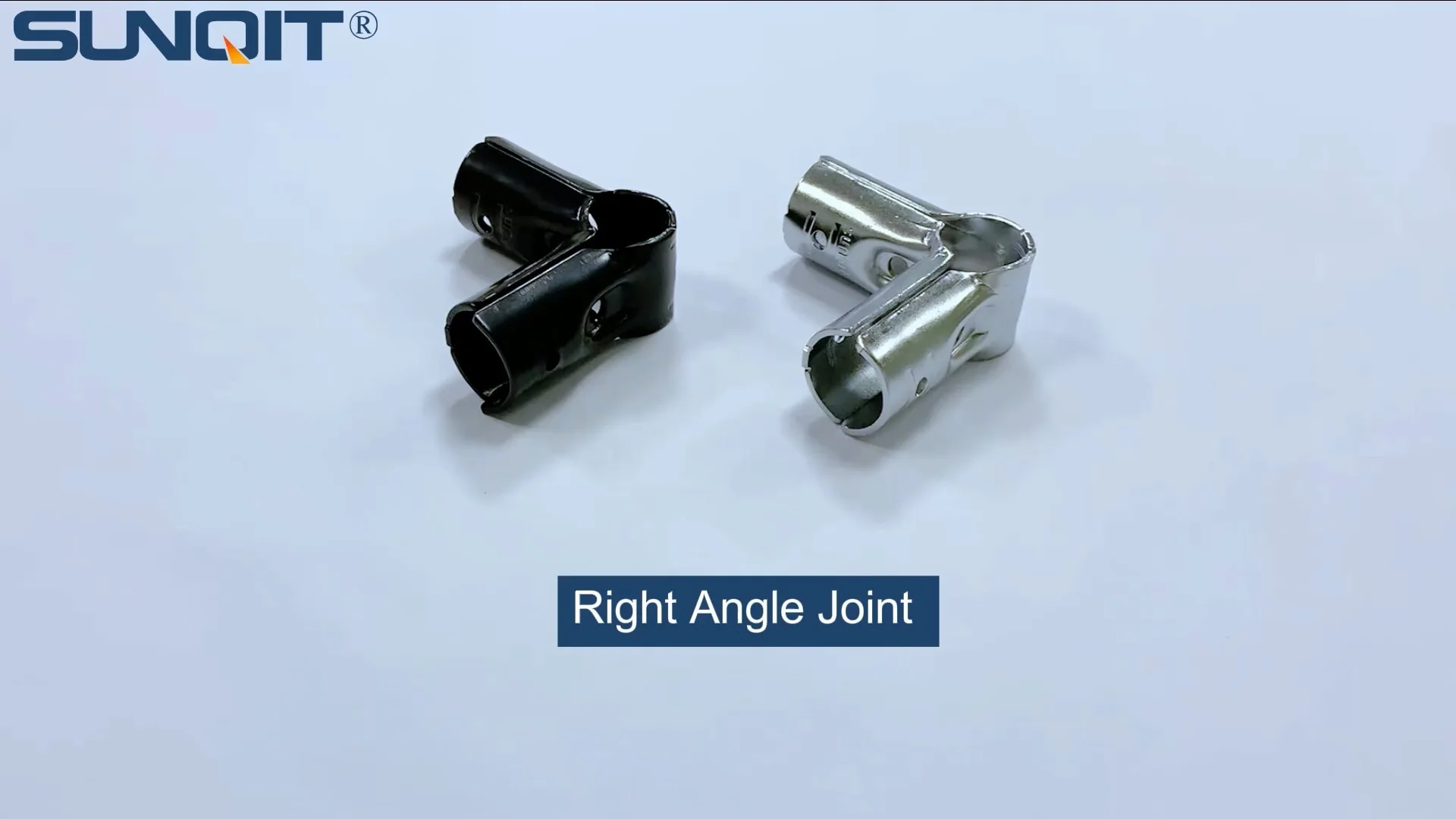
Three way lean pipe joint for 3 pcs 28MM lean pipe connection in straight angle, which used widely in workbench, flow rack, hand trolley frame connection.
Introduction: The Hidden Cost of Slow Assembly in Lean Systems
Walk into any manufacturing plant, warehouse, or workshop, and you'll likely see the backbone of daily operations: workbenches where products are assembled, flow racks that keep materials moving, and carts that transport goods across the floor. These structures are the unsung heroes of productivity, but what if the very components holding them together are quietly eating away at your team's time? For years, traditional pipe joints—those clunky, bolt-heavy connectors—have forced workers to spend hours fumbling with tools, aligning parts, and tightening fasteners. In a world where lean manufacturing demands efficiency, every minute wasted on assembly is a minute taken from innovation, quality control, or customer service.
Enter the quick-connect three way lean pipe joint: a small but mighty component designed to revolutionize how we build and reconfigure lean systems. Imagine a joint that lets you connect three pipes in seconds, no wrenches or screws required. A joint that stays rock-solid under pressure but can be disassembled just as quickly when your workflow needs a makeover. This isn't just a "nice-to-have" upgrade—it's a game-changer for anyone serious about lean principles. In this article, we'll dive into how this unassuming connector saves time, boosts flexibility, and becomes the cornerstone of a truly agile lean system, from the lean pipe workbench on the factory floor to the flow rack in the warehouse.
What Is a Quick-Connect Three Way Lean Pipe Joint, Anyway?
Let's start with the basics. A lean pipe joint is the "glue" of lean systems—those modular structures used in manufacturing, warehousing, and logistics to organize workflows, reduce waste, and improve efficiency. Traditional joints typically require bolts, nuts, or welding to fasten pipes together, which is not only time-consuming but also limits how easily you can reconfigure the system later. The quick-connect three way lean pipe joint, however, is engineered for speed and simplicity. As the name suggests, it connects three pipes at once (often at 90-degree angles, though some designs offer flexibility) using a clamping mechanism that locks into place with a twist or a push—no tools needed.
These joints are usually made from durable materials like high-strength plastic, aluminum, or even stainless steel, depending on the application. For example, aluminum lean pipe joints are lightweight yet strong, making them ideal for environments where corrosion resistance or portability is key. The magic lies in their design: internal springs, locking tabs, or cam mechanisms that grip the pipe tightly when engaged, creating a secure connection that can withstand the rigors of daily use—think heavy toolboxes on a workbench or boxes sliding down a flow rack.
But what makes the "three way" aspect so valuable? In lean systems, structures rarely stick to simple straight lines. A lean pipe workbench might need a shelf above, a side rail for tools, or a material bin holder—all of which require branching off from the main frame. A three way joint eliminates the need for multiple two-way joints and extra pipes, streamlining the build process and reducing the number of components you need to stock. It's like having a Swiss Army knife in your lean toolkit: one joint, multiple possibilities.

How It Works: The Mechanics of "Quick" in Quick-Connect
You might be wondering: If it's so fast, is it really secure? Let's break down the mechanics. Most quick-connect three way lean pipe joints use a "push-and-twist" or "snap-lock" design. Here's a typical scenario: You take a length of aluminum lean pipe, slide it into one of the joint's three openings, and twist the outer collar or inner sleeve. This action engages small metal or plastic teeth that bite into the pipe's surface, creating friction that holds it tight. Some designs add a secondary lock—a small lever or button—to ensure the joint doesn't loosen under vibration, which is crucial for high-traffic areas like assembly lines.
Compare this to a traditional bolted joint. With a standard two-way joint, you'd need to align the pipe with the joint's holes, insert a bolt through both, add a washer and nut, and tighten with a wrench—all of which takes at least 2–3 minutes per connection, even for experienced workers. Multiply that by 20 joints on a single lean pipe workbench, and you're looking at an hour or more just for assembly. With a quick-connect joint, each connection takes 10–15 seconds. That same workbench? Assembled in under 10 minutes. The difference is staggering, especially when you're building multiple structures or reconfiguring existing ones.
Another key feature is compatibility. Most quick-connect three way joints are designed to work with standard lean pipe sizes—typically 28mm (1.1 inches) for steel pipes or 30mm for aluminum lean pipe. This means you don't have to overhaul your entire system to switch; you can mix and match with existing pipes, as long as they're the right diameter. Some manufacturers even offer adapters for different pipe types, making it easy to upgrade gradually without disrupting operations.
Testing these joints is rigorous, too. Manufacturers subject them to pull tests, vibration tests, and load tests to ensure they can handle the weight of tools, materials, and products. For example, a standard quick-connect three way joint might be rated to hold 50kg per arm—more than enough for most workbench or flow rack applications. And because the connection is mechanical (not chemical, like glue, or permanent, like welding), you can disassemble and reuse the joint and pipes as many times as needed, reducing waste and keeping costs down.

Beyond Speed: The Hidden Benefits of Quick-Connect Joints
Time savings are the headline benefit, but the quick-connect three way lean pipe joint offers a host of other advantages that ripple through your entire operation. Let's start with flexibility—the cornerstone of lean manufacturing. In today's fast-paced markets, product lines change, order volumes fluctuate, and new processes are introduced regularly. A rigid, bolted-together workbench or flow rack can't keep up. With quick-connect joints, you can reconfigure a system in hours instead of days. Need to add a shelf to your lean pipe workbench to accommodate a new tool? Disconnect the joint, add a pipe, and lock it back in—done. Want to shorten a flow rack to make space for a new machine? Simply detach the sections you don't need and rejoin the rest. This agility lets you adapt to change without halting production or hiring a team of contractors.
Then there's labor cost reduction. Let's do the math: Suppose a traditional joint takes 5 minutes to install, and a quick-connect joint takes 30 seconds. For a project requiring 100 joints, traditional assembly would take 500 minutes (over 8 hours), while quick-connect would take 50 minutes (under an hour). If your workers are paid $25 per hour, that's $200 vs. $20 in labor costs for assembly alone. Multiply that by multiple projects per year, and the savings add up fast. Plus, less time spent on assembly means more time spent on value-added tasks—like training, quality checks, or process improvement. It's not just about saving time; it's about reallocating time to what truly moves the needle.
Safety is another underrated benefit. Traditional bolted joints can loosen over time due to vibration, which poses a risk of structures collapsing. Quick-connect joints, with their locking mechanisms, are less prone to loosening because the friction-based grip tightens under load (within limits, of course). Many designs also include visual indicators—like a color-coded ring or a "locked" symbol—to show when the joint is secure, reducing human error during assembly. And because there's no need for sharp tools like wrenches or drills, the risk of on-the-job injuries (cuts, pinched fingers) drops significantly. In busy workshops, where every second counts, a safer workspace also means fewer disruptions from accidents.
Finally, there's the sustainability angle. Lean systems are all about reducing waste, and quick-connect joints align perfectly with that ethos. Since they're reusable, you won't throw away old joints when you reconfigure a system—just disconnect and reuse them elsewhere. Aluminum lean pipe joints, in particular, are recyclable, adding to their eco-friendly credentials. Even the packaging is often minimal, as these joints are compact and lightweight, reducing shipping-related emissions. For companies aiming to meet sustainability goals, this is a small change with a big impact.

Applications: Where Quick-Connect Joints Shine Brightest
Now that we understand the "why," let's look at the "where." Quick-connect three way lean pipe joints excel in any lean system that requires modularity, speed, and durability. Here are a few common applications where they make the biggest difference:
1. Lean Pipe Workbenches: The Heart of the Workshop
A lean pipe workbench is more than just a table—it's a customized workspace tailored to a specific task, whether it's assembling electronics, packing orders, or repairing machinery. These workbenches often include shelves, tool hooks, bin holders, and even integrated lighting or ESD (electrostatic discharge) mats for sensitive components. Building such a workbench with traditional joints would involve measuring, cutting pipes, aligning holes, and tightening bolts—each step a potential bottleneck. With quick-connect three way joints, you can build the frame in minutes, add accessories on the fly, and adjust the height or width as needed.
For example, a small electronics manufacturer might need a workbench with a top shelf for test equipment, a side rail for holding PCBs, and a lower shelf for spare parts. Using three way joints, they can branch off the main legs to add the shelf supports and rail, all without stopping to fetch tools. If a new employee with a different height joins the team, they can adjust the workbench height in 10 minutes by swapping out pipe lengths—no disassembly required. It's customization without the hassle.
2. Flow Racks: Keeping Materials Moving
Flow racks are the backbone of just-in-time (JIT) inventory systems, allowing materials to slide from the back (where they're restocked) to the front (where they're used) via gravity. These racks need to be sturdy enough to hold heavy boxes but flexible enough to adjust for different box sizes. Quick-connect three way joints simplify building and modifying flow racks by letting you adjust the angle of the rollers, add dividers between lanes, or extend the rack's length as inventory needs grow. For instance, a warehouse handling seasonal products might expand a flow rack in the summer and shrink it in the winter—all with minimal downtime.
The three way joint is especially useful for adding support beams or side rails to prevent boxes from falling off. Instead of using two separate two-way joints to create a T-shape, you can use one three way joint, reducing the number of parts and potential weak points. This not only speeds up assembly but also makes the rack more stable overall.
3. Turnover Trolleys and Material Carts
Trolleys and carts are essential for moving materials around a facility, but they take a beating—bumping into walls, rolling over uneven floors, and carrying heavy loads. A wobbly cart due to loose joints is a safety hazard and a productivity killer. Quick-connect three way joints, with their secure locking mechanisms, keep carts stable even under stress. Plus, when a cart needs a repair (e.g., a bent pipe), you can replace the damaged section in minutes by disconnecting the joint, swapping the pipe, and re-locking. No need to take the entire cart out of service for hours.
Traditional vs. Quick-Connect: A Side-by-Side Comparison
Still on the fence about making the switch? Let's put traditional bolted joints and quick-connect three way lean pipe joints head-to-head in a table that breaks down key factors like time, cost, and flexibility:
| Factor | Traditional Bolted Joints | Quick-Connect Three Way Joints |
|---|---|---|
| Installation Time | 5–10 minutes per joint (requires tools, aligning holes, tightening bolts) | 30 seconds–2 minutes per joint (no tools, push-and-twist or snap-lock) |
| Reconfiguration Ease | Difficult: Requires tools, may damage threads; often need to replace bolts | Easy: Disconnect in seconds, reuse joints and pipes; no damage to components |
| Labor Cost (per 100 joints) | $150–$300 (8–16 hours of labor at $20/hour) | $10–$30 (0.5–1.5 hours of labor at $20/hour) |
| Secure Under Vibration | Prone to loosening; requires regular retightening | Locking mechanisms maintain grip; less need for maintenance |
| Tool Requirements | Wrenches, drills, screwdrivers, hex keys | None (some designs use a simple lever or tab) |
| Compatibility | Often limited to specific pipe sizes/threads | Most fit standard pipe diameters (e.g., 28mm, 30mm); adapters available |
As the table shows, the quick-connect three way joint outperforms traditional options in nearly every category that matters for lean systems. The only area where traditional joints might have a edge is in extremely high-load applications (e.g., supporting tons of weight), but even then, heavy-duty quick-connect designs (using steel or reinforced aluminum) are catching up. For most manufacturing, warehousing, and workshop needs, the trade-off is clear: speed, flexibility, and cost savings win.
Materials Matter: Why Aluminum Lean Pipe and Quick-Connect Joints Are a Match Made in Lean Heaven
While quick-connect joints work with various pipe materials—steel, stainless steel, even plastic—they shine brightest when paired with aluminum lean pipe. Aluminum is lightweight (about 1/3 the weight of steel), corrosion-resistant, and strong enough for most lean system applications (think workbenches, flow racks, and carts). This combination of properties makes aluminum lean pipe easy to handle during assembly, reducing worker fatigue and the risk of injury. When you're building a 10-foot flow rack, carrying steel pipes can be backbreaking; aluminum pipes are manageable even for one person.
Aluminum's smooth surface also complements quick-connect joints' locking mechanisms. Unlike steel, which can develop burrs or rust over time (which might interfere with the joint's grip), aluminum stays clean and smooth, ensuring consistent performance. Plus, aluminum lean pipe is often anodized—a process that adds a protective layer, enhancing durability and giving it a professional, clean look. This is a nice bonus for customer-facing areas, like a workshop in a retail store or a demonstration line in a factory tour.
Another advantage of aluminum is its sustainability. Aluminum is 100% recyclable, and recycling it uses just 5% of the energy required to produce new aluminum. For companies committed to green manufacturing, switching to aluminum lean pipe and quick-connect joints (which are also often recyclable) is a tangible way to reduce their carbon footprint. Steel, while durable, is heavier to ship (increasing transportation emissions) and more energy-intensive to recycle.
Of course, there are situations where steel might still be preferable—for example, in extremely high-temperature environments or where the structure needs to support abnormally heavy loads. But for the vast majority of lean systems, aluminum lean pipe and quick-connect three way joints are a partnership that delivers on both performance and practicality.
Real-World Impact: Stories from the Factory Floor
Numbers and specs tell part of the story, but real-world examples bring it to life. Let's look at two businesses that transformed their operations with quick-connect three way lean pipe joints:
Case Study 1: Small Electronics Manufacturer Cuts Setup Time by 70%
A family-owned electronics company in California, with about 50 employees, was struggling to keep up with demand for their custom circuit boards. Their production line relied on old, bolted-together workbenches that took days to reconfigure whenever they switched to a new product model. "We were losing a full day of production every time we changed layouts," says Maria, the plant manager. "By the time we finished setting up, we'd already fallen behind on the next order."
They decided to test quick-connect three way joints and aluminum lean pipe for one of their workbenches. The results were immediate: What used to take a team of two workers two days to build now took one worker two hours. Encouraged, they replaced all 12 workbenches and their flow racks. "Last month, we launched three new product lines, and we reconfigured the entire line in a single afternoon," Maria reports. "Our on-time delivery rate went from 75% to 95%, and our workers are less stressed because they're not wasting time on setup. It's like night and day."
Case Study 2: Warehouse Slashes Labor Costs with Reconfigurable Flow Racks
A large e-commerce warehouse in Texas handles seasonal spikes, with inventory levels doubling during the holiday season. Before switching to quick-connect joints, they had to build extra flow racks months in advance and store them in a separate facility, wasting space and labor. "We'd hire temporary workers for a week just to assemble the holiday racks, and then spend another week taking them apart in January," explains Raj, the warehouse operations director. "It was a logistical nightmare."
They invested in quick-connect three way joints and aluminum lean pipe flow racks. Now, instead of building new racks, they reconfigure existing ones. "In October, we take our regular racks, add extensions using three way joints, and we're ready for the rush," Raj says. "In January, we shrink them back down. No more storage, no more temp workers. We estimate we've saved $50,000 in labor and storage costs in the first year alone."
Choosing the Right Quick-Connect Joint: What to Look For
Not all quick-connect three way lean pipe joints are created equal. To ensure you're getting a product that delivers on its promises, here are a few key factors to consider:
-
Load Capacity:
Check the manufacturer's specs for how much weight each joint can support per arm. Most standard joints handle 30–50kg, but heavy-duty models may go up to 100kg or more. Make sure it matches your needs—you don't want a workbench shelf collapsing under the weight of tools.
-
Material Compatibility:
Ensure the joint fits your existing pipes. Most are designed for 28mm or 30mm pipes, but double-check the diameter and whether they work with aluminum, steel, or both.
-
Locking Mechanism:
Push-and-twist, snap-lock, or lever-based? Snap-lock is fastest but may not be as secure for heavy loads. Push-and-twist often offers a tighter grip. Choose based on your priorities: speed vs. maximum security.
-
Durability:
Look for joints made from high-quality materials—reinforced plastic (like nylon), aluminum, or stainless steel. Avoid cheap plastic joints that may crack under stress.
-
Warranty:
A reputable manufacturer will stand behind their product with a warranty (e.g., 1–5 years). This is a good indicator of quality.
-
Supplier Support:
Choose a supplier who offers technical support, replacement parts, and maybe even design assistance. Building a lean system can be tricky, and it helps to have experts to turn to.
It's also a good idea to order a small sample pack first. Test the joints with your pipes, assemble a mini structure (like a small shelf), and see how they hold up. This way, you can avoid buyer's remorse and ensure the joints work as advertised in your specific environment.
Conclusion: Time to Stop Wasting Time
In lean manufacturing, every second counts. The quick-connect three way lean pipe joint isn't just a tool—it's a mindset shift. It's about recognizing that the way we build our workspaces and systems should be as efficient as the work we do in them. Traditional joints, with their bolts, tools, and endless tightening, belong to an era of rigid production lines and one-size-fits-all workflows. Today, agility, flexibility, and speed are the keys to staying competitive.
Whether you're building a lean pipe workbench, a flow rack, or an entire assembly line, these joints save time, reduce labor costs, improve safety, and make reconfiguration a breeze. Paired with aluminum lean pipe, they offer a lightweight, durable, and sustainable solution that aligns with modern manufacturing goals. The case studies speak for themselves: companies that adopt quick-connect technology see immediate improvements in productivity, morale, and bottom-line results.
So, what are you waiting for? The next time you need to build or upgrade a lean system, skip the bolts and wrenches. Give quick-connect three way lean pipe joints a try. Your workers will thank you for the easier assembly, your budget will thank you for the savings, and your customers will thank you for the faster, more reliable service. In the world of lean, waste is the enemy—and time wasted on assembly is one of the easiest wastes to eliminate.