- Company Articles
- Products and Technology
- Product knowledge
- Quick Disassembly & Reassembly: T-Groove Aluminum Pipe for Temporary Projects

Quick Disassembly & Reassembly: T-Groove Aluminum Pipe for Temporary Projects
Related Product
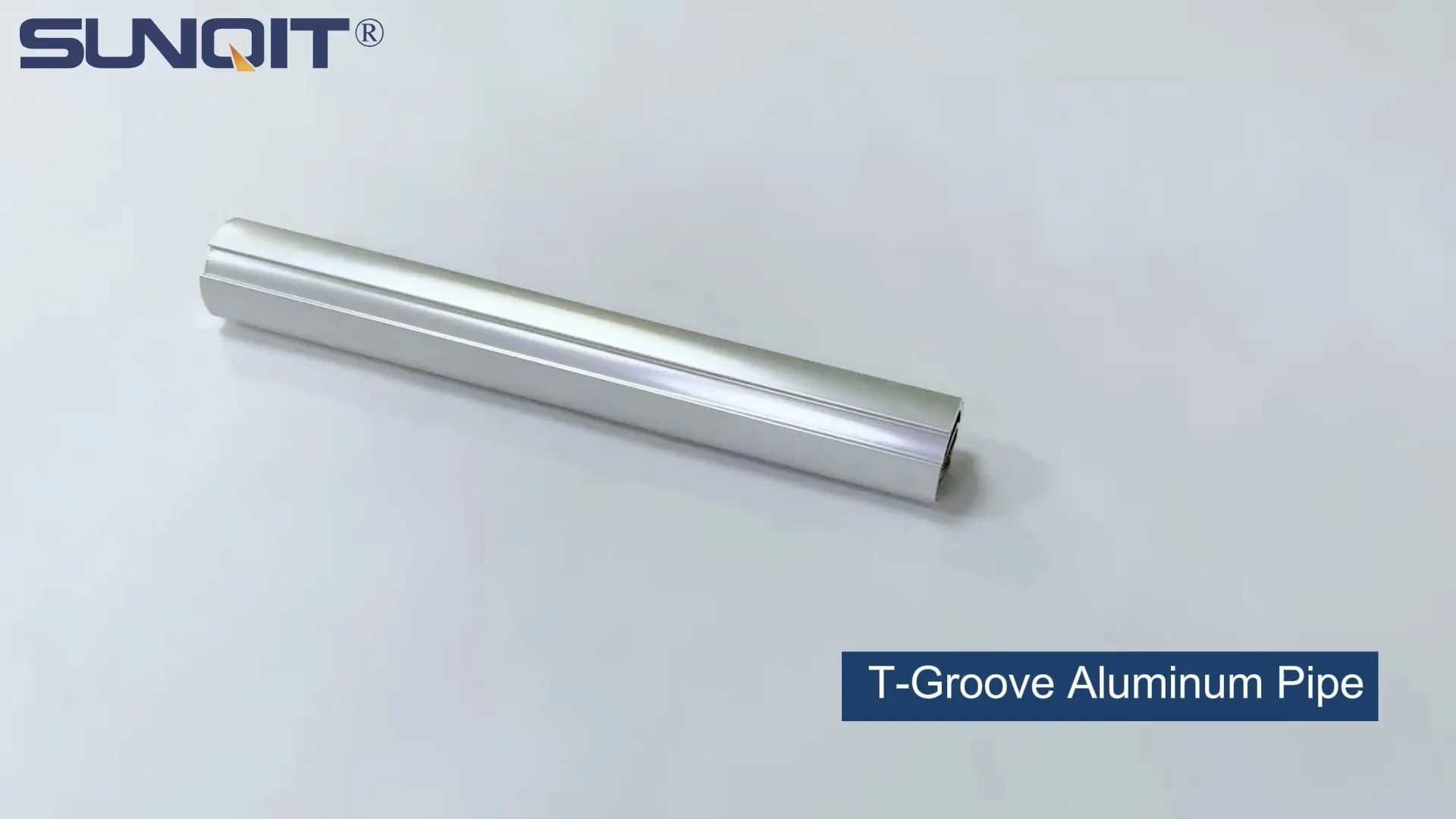
T-Groove Aluminum Pipe
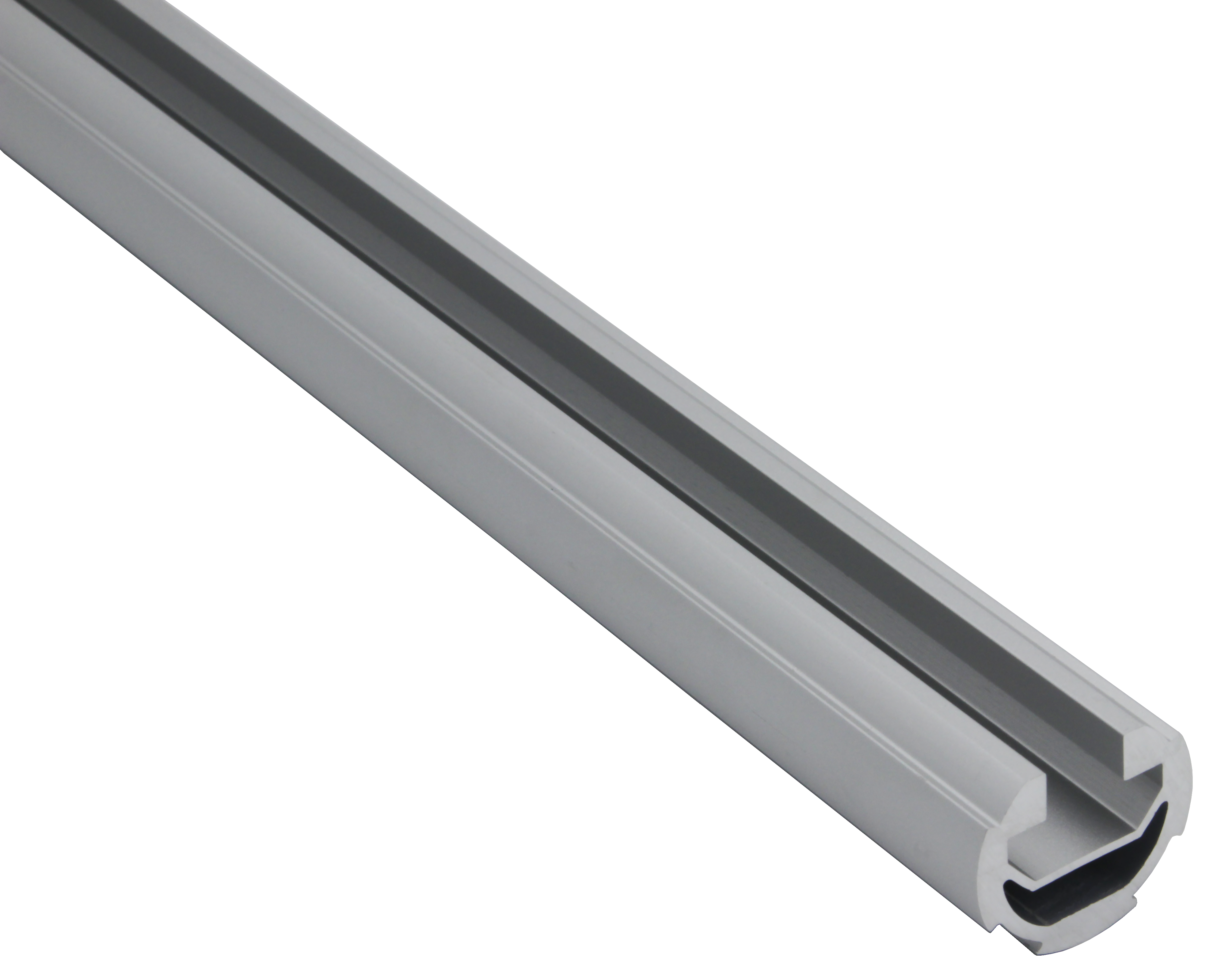
The aluminum pipe opening 10mm is installed into the T-shaped slider, which can be installed with casters or other matching functional parts. The groove can be used for positioning and is used for the track of the roller.
Let's start with a scenario we've all been part of, or at least heard of: You're knee-deep in a temporary project. Maybe it's a holiday rush at your small workshop, and you need a extra packaging station. Or perhaps your team is setting up a pop-up booth for a weekend trade show, and you need sturdy display shelves that won't take hours to build. Maybe it's even a community event where you're cobbling together a volunteer check-in desk. Whatever the case, temporary projects come with a unique set of headaches: tight deadlines, limited space for storage afterward, and the nagging fear that your "quick fix" will either collapse mid-use or take so long to set up that you miss your deadline.
I've been there. A few years back, I helped a friend set up a temporary woodworking workshop in his garage for a month-long furniture-making course. We bought sheets of plywood, 2x4s, and a truckload of screws, thinking we'd "just build a couple of workbenches and call it a day." Six hours later, covered in sawdust and nursing a blister from the drill, we had two rickety tables that wobbled if you breathed too hard. And when the course ended? Those workbenches sat in his driveway for weeks because they were too heavy to move, let alone take apart. We'd wasted time, money, and sanity—all for something that was supposed to be "temporary."
That's when I first heard about t-slot aluminum pipe. A neighbor, who runs a small manufacturing business, stopped by, shook his head at our plywood monstrosities, and said, "You know, there's a better way to do this." He introduced us to these sleek, silver pipes with grooves running along their length—t-slot aluminum pipe—and explained how they could have built those workbenches in under an hour, taken them apart in 10 minutes, and stored them in a closet until next time. I was skeptical at first (aluminum? For a workbench? Would it hold a power saw?), but after seeing his own setup—a modular workstation with adjustable shelves, rolling casters, and a surface sturdy enough to clamp wood—my mind was made up. Temporary projects didn't have to mean "shoddy" or "time-consuming." They just needed the right tools.
In this article, we're diving deep into t-slot aluminum pipe: what it is, why it's a game-changer for temporary projects, and how you can use it to build everything from workbenches to turnover trolleys without breaking a sweat. Whether you're a small business owner, a DIY enthusiast, or someone who just needs a flexible solution for short-term needs, this stuff might just become your new best friend.
What Even Is T-Slot Aluminum Pipe, Anyway?
Let's start with the basics. T-slot aluminum pipe—sometimes called t-groove aluminum or aluminum extrusion profile—is exactly what it sounds like: long, hollow tubes of aluminum with a T-shaped groove (or "slot") running along their length. These slots aren't just for show; they're the secret sauce that makes the whole system work. The idea is simple: instead of welding, drilling, or nailing pieces together, you slide accessories (like brackets, shelves, or casters) into the T-slots and secure them with bolts or screws. No special tools, no messy adhesives, no permanent commitments.
But why aluminum? Why not steel, or wood, or plastic? Aluminum checks a lot of boxes for temporary projects. It's lightweight—way lighter than steel, so you can carry pieces around without a forklift. But don't let the weight fool you: aluminum extrusion profile is engineered to be surprisingly strong. Thanks to the extrusion process (where molten aluminum is pushed through a die to create the T-slot shape), the pipes have consistent thickness and structural integrity, meaning they can handle everything from a laptop on a workbench to boxes of inventory on a shelf.
Another perk? It's resistant to rust and corrosion. Unlike steel, you don't have to worry about painting it to protect it from moisture, which is a big plus if your temporary project is outdoors (like a farmers' market booth) or in a humid environment (hello, basement workshops). And when you're done with it? Wipe it down, take it apart, and store it—no rusty mess to deal with next time.
But the real magic is in the "modularity." T-slot aluminum pipe isn't just a single product; it's a system. You can mix and match different lengths of pipe, connect them with aluminum profile accessories (more on those later), and build almost anything. Need a taller shelf? Add longer pipes. Want to make a workbench mobile? Throw on some caster wheels. The slots let you adjust, reconfigure, and repurpose your creation as many times as you need—no sawing or gluing required. It's like building with adult Legos, but sturdier and way more practical.
Why Temporary Projects Hate Traditional Materials (And Love T-Slot Aluminum)
Let's be real: Most of us default to traditional materials when we need something "quick." Wood is cheap and easy to find, right? Steel is strong. Plastic is lightweight. But when you're dealing with temporary projects, these materials start to show their flaws fast. Let's break it down:
Wood: Sure, a plywood workbench can be built in a few hours, but have you ever tried moving one? Even a small 4-foot workbench weighs a ton. And if you need to adjust the height or add a shelf later? You're back to drilling holes and hoping the screws don't split the wood. Plus, wood warps with moisture, gets dented easily, and once you cut it, it's hard to reuse for a different project. I still have a pile of warped 2x4s in my garage from that woodworking workshop disaster—total waste.
Steel: Steel is strong, but it's heavy, expensive, and requires welding or specialized tools to cut and join. Unless you're a metalworker, building a steel shelf is going to involve hiring someone or buying prefab parts that are hard to customize. And don't even get me started on storage: a disassembled steel frame takes up way more space than a stack of aluminum pipes.
Plastic: Lightweight, yes, but flimsy. A plastic shelf might hold a few light items, but try putting a power tool on it, and you'll be picking up broken plastic shards. It also fades in sunlight and cracks in cold temperatures—not great for outdoor use.
T-slot aluminum pipe, on the other hand, solves all these problems. Let's make a quick comparison with a common temporary project: building a workbench. Here's how traditional wood stacks up against t-slot aluminum:
| Feature | Traditional Wood Workbench | T-Slot Aluminum Workbench |
|---|---|---|
| Setup Time | 2–3 hours (cutting, drilling, screwing) | 30–45 minutes (sliding accessories into slots, tightening bolts) |
| Weight | Heavy (50–80 lbs for a 4-foot bench) | Lightweight (20–30 lbs for the same size) |
| Reusability | Low (cut pieces are hard to repurpose; wood warps/cracks) | High (disassemble, store, and rebuild into something else later) |
| Customization | Limited (drilling new holes weakens wood; hard to adjust height/shelves) | Unlimited (slide accessories anywhere along the T-slots; add/remove parts in minutes) |
| Durability | Low (scratches, dents, moisture damage) | High (resistant to dents, rust, and moisture; aluminum is tough) |
| Storage | Bulky (needs to be stored as a whole or in odd-shaped pieces) | Compact (pipes stack; accessories fit in a bin) |
See the pattern? T-slot aluminum pipe isn't just better for temporary projects—it's designed for them. It's like the Swiss Army knife of building materials: adaptable, reliable, and ready for whatever you throw at it.
From Workbenches to Trolleys: What You Can Build (In an Afternoon)
Okay, so t-slot aluminum pipe sounds great in theory. But what can you actually build with it? The short answer: almost anything temporary. Let's walk through some of the most common (and useful) projects, with a focus on two staples: workbenches and turnover trolley and rack systems. These are the bread and butter of temporary setups, and they'll give you a sense of how versatile the system is.
Project 1: The "I Need This By Friday" Workbench
Workbenches are the backbone of any temporary workspace. Whether you're packing orders, assembling products, or even just need a surface to spread out plans, a sturdy, adjustable workbench is non-negotiable. With t-slot aluminum pipe, building one is so easy, you could do it on your lunch break.
Here's what you'll need (don't worry—all these parts are available from t-slot suppliers, and you can buy pre-cut lengths to skip the sawing):
- 4 pieces of t-slot aluminum pipe (2 for the legs, 2 for the frame; length depends on your desired height/width—standard is 36" tall, 48" wide)
- 4 corner brackets (to connect the legs to the frame—these slide into the T-slots)
- 1 sheet of plywood or MDF (for the work surface; cut to fit the frame)
- 4 caster wheels (optional, but highly recommended for mobility—look for locking casters to keep the bench steady when in use)
- Aluminum profile accessories: end caps (to cover sharp pipe ends), hex bolts, and a hex key (the only tool you'll need!)
Steps? Simple: Slide the corner brackets into the T-slots of the frame pipes, attach the legs, secure with bolts using the hex key, add the casters to the bottom of the legs, and lay the plywood on top (you can even secure the plywood to the frame with more brackets if you want it extra sturdy). Total time? 30–45 minutes. No drilling, no sawing (unless you need to cut the pipes, but most suppliers will do that for you), no frustration.
And the best part? When you're done with it, take the bolts out, stack the pipes, and store the surface under your bed. Need a taller workbench next time? Just swap out the leg pipes for longer ones. Want a shelf halfway up? Add two more pipes and some shelf brackets. It's infinitely adjustable.
Project 2: Turnover Trolley and Rack for Hauling Stuff
Now, let's talk about moving materials. If your temporary project involves shifting boxes, tools, or inventory from point A to point B, a turnover trolley and rack is a lifesaver. These are basically rolling shelves—think of them as a mobile storage unit that you can customize to fit whatever you're hauling.
Building a turnover trolley with t-slot aluminum pipe is just as easy as the workbench, but with a few extra shelves. Here's the breakdown:
- 4 leg pipes (taller than the workbench legs—say, 48" to fit multiple shelves)
- 8 frame pipes (2 per shelf—top, middle, bottom)
- Shelf brackets (one for each corner of each shelf)
- 4 heavy-duty caster wheels (with brakes, since you don't want the trolley rolling away mid-load)
- Optional: A handle (made from a short piece of t-slot pipe and a handle bracket) for pushing
Assembly is similar to the workbench: Connect the legs to the frame pipes with brackets, add the shelves at your desired height (slide the brackets up or down the T-slots to adjust), attach the casters, and bolt on the handle. Boom—you've got a trolley that can hold hundreds of pounds, roll smoothly over concrete, and disassemble into a stack of pipes when you're done. I built one of these for a friend's bakery during wedding season—she used it to cart cake boxes from the kitchen to the delivery van, and now she uses it as extra storage in her pantry. Talk about multitasking.
Beyond Workbenches and Trolleys: The Sky's the Limit
These are just the basics. T-slot aluminum pipe can do so much more. Need a temporary material rack for storing boxes? Build one with adjustable shelves. Hosting a craft fair and need display shelves? Use shorter pipes and lightweight brackets to create a modular booth setup. Even event organizers are getting in on the action—some wedding planners use t-slot aluminum to build temporary bars or seating areas that look sleek but break down into a van in 20 minutes.
One of my favorite examples is a local makerspace that hosts weekend workshops. Every week, they reconfigure their entire layout: one weekend it's a jewelry-making studio with small workbenches, the next it's a woodworking area with larger tables and tool storage. Instead of buying 10 different workbenches, they have a pile of t-slot pipes and accessories. They just snap together whatever they need that weekend, then take it apart Sunday night. It's brilliant—and way cheaper than buying custom furniture.

The Accessories: Your Secret Weapon for Customization
At this point, you might be thinking, "Okay, the pipes are great, but how do I actually connect everything?" That's where aluminum profile accessories come in. These are the little (and not-so-little) parts that turn plain pipes into functional tools. Think of them as the glue that holds the system together—except instead of glue, they're reusable, adjustable, and designed to make your life easier.
Let's walk through the most useful ones. You don't need all of these for every project, but having a few on hand will let you get creative:
Brackets: The "How Did I Live Without These" Connectors
Brackets are the foundation of any t-slot build. They come in all shapes and sizes to connect pipes at different angles: 90-degree brackets for corners, 45-degree brackets for slopes, and even multi-angle brackets for complex shapes. Most brackets have a "T" shape that slides into the slot, with a hole for a bolt to secure them in place. Twist the hex key, and they're locked tight—twist it the other way, and you can slide them to a new position. It's like having a infinite number of drill holes, but without the holes.
Casters: Because Everything's Better on Wheels
Caster wheel and caster accessories are non-negotiable if you want mobility. There are light-duty casters for small workbenches, heavy-duty ones for trolleys, and even locking casters to keep things steady. Pro tip: Look for casters with rubber wheels if you're working on hardwood or tile floors—they won't scratch, and they roll more smoothly than plastic.
End Caps: Safety First (And Aesthetics Second)
Aluminum pipes have sharp ends where they're cut, so end caps are a must if you don't want to accidentally slice your hand. They're little plastic or rubber caps that pop onto the ends of the pipes, and they come in colors (black, gray, even bright yellow) to match your setup. Bonus: They keep dust and debris out of the T-slots when you're storing the pipes.
Hinges and Latches: For Foldable or Lockable Structures
Need a fold-down shelf or a cabinet door for your temporary setup? Hinges (both aluminum and nylon) slide into the T-slots and let you attach doors or flaps that swing open and shut. Latches add security—great if you're storing tools or valuable inventory on a temporary rack.
Panels and Surfaces: The "Work" in Workbench
You can't work on a pipe frame alone—you need a surface. Most suppliers sell pre-cut plywood or MDF panels that fit standard frame sizes, but you can also use melamine (for a smooth, easy-to-clean surface) or even pegboard (for hanging tools). To attach them, use surface brackets—small metal plates that slide into the T-slots and have holes to screw the panel in place. No more clamping plywood to frames and hoping it doesn't slide off.
Handles and Knobs: For Pushing, Pulling, and Grabbing
Handles turn trolleys into… well, trolleys. They're simple: a short pipe or curved bar that attaches to the frame with brackets. Some are even adjustable, so you can set the height to fit your grip. Knobs are great for doors or drawers—just screw them into a bracket, and you've got a handle in seconds.
The best part about aluminum profile accessories? You don't need to be an engineer to use them. Most come with clear instructions, and since they're all designed to work with the T-slots, you can mix and match brands without worrying about compatibility. Start with a basic kit (brackets, casters, end caps), and add more as you need them.

But Wait—Is It Strong Enough? Let's Talk Durability
I can almost hear you thinking it: "This all sounds great, but aluminum? Really? Will it hold up to actual work?" It's a fair question. When we think of aluminum, we often picture flimsy soda cans, not sturdy work surfaces. But remember: t-slot aluminum pipe is made from aluminum extrusion profile, which is a far cry from a soda can. The extrusion process creates a dense, uniform structure that's surprisingly rigid. Let's put it to the test with some real-world numbers.
Most standard t-slot aluminum pipes (the kind you'd use for a workbench or trolley) have a load capacity of 200–300 pounds per linear foot. That means a 4-foot workbench frame could theoretically hold 800–1200 pounds—way more than you'd ever need for a temporary setup. Even the smaller pipes (like the 20mm x 20mm ones used for light-duty shelves) can hold 50–100 pounds per foot. I've personally stood on a t-slot aluminum shelf (don't tell OSHA) to reach a high cabinet, and it didn't budge. These things are tough.
Another durability win: aluminum doesn't dent easily. drop a tool on a wood workbench, and you'll get a permanent gouge. Do the same on an aluminum frame, and you might get a small scratch—if that. And since the surface is smooth, it's easy to clean. Spill paint? Wipe it up with a cloth. Get sawdust everywhere? Vacuum it off. No more scrubbing stains or sanding down rough spots.
What about long-term use? Even if your "temporary" project turns into a permanent one (hey, it happens), t-slot aluminum pipe will hold up. Unlike wood, it won't warp or rot. Unlike steel, it won't rust. I know a mechanic who's had the same t-slot workbench in his shop for five years—it's covered in oil stains, has dents from dropped wrenches, and still looks better than the wooden shelves he replaced it with.
The only real "weakness" is flexibility—but that's a feature, not a bug. Aluminum is slightly flexible, which means it can absorb shocks (like dropping a heavy box on a shelf) without cracking. Steel might be stiffer, but it's more likely to bend permanently under impact. For temporary projects, a little give is a good thing—it makes the system more forgiving.
The Verdict: Why T-Slot Aluminum Pipe Is a No-Brainer for Temporary Projects
Let's circle back to where we started: temporary projects are stressful enough without adding "build a sturdy structure" to your to-do list. T-slot aluminum pipe takes that stress and throws it out the window. It's lightweight but strong, easy to assemble but infinitely customizable, and reusable enough to justify the initial cost (which, by the way, is often lower than buying prefab wood or steel structures, especially if you reuse it).
Whether you're building a workbench for a weekend craft fair, a turnover trolley and rack for a holiday rush, or a temporary storage system for a renovation, this stuff delivers. No more hours wasted on assembly, no more bulky storage, no more worrying if your setup will hold. It's not just a material—it's a solution.
So the next time you're staring down a temporary project, skip the plywood and the 2x4s. Give t-slot aluminum pipe a try. I promise, you'll wonder how you ever did without it. And when you're done? Disassemble it, stack the pipes in a closet, and pat yourself on the back for being the person who solved the temporary project problem—once and for all.