- Company Articles
- Products and Technology
- Product knowledge
- Quick-Install 3030 Aluminum Profile End Caps: Saving Time in Assembly

Quick-Install 3030 Aluminum Profile End Caps: Saving Time in Assembly
Related Product
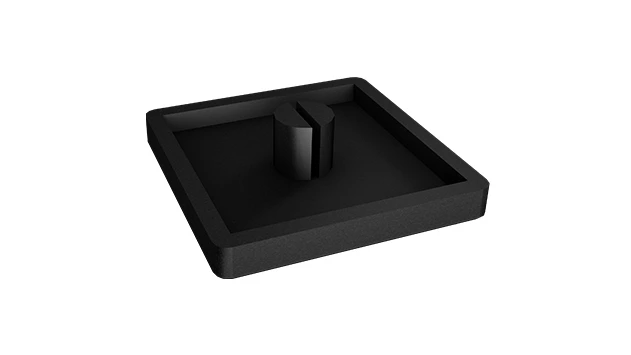
3030 Aluminum Profile End Cap
The aluminum profile end cap adds a finishing touch to your project and closes off profile ends to limit dust and debris buildup, also it can avaid some scratch for material and labor during the assemble work.
The Hidden Cost of Slow Assembly: A Supervisor's Frustration
It's 9 AM on a Tuesday at PrecisionTech, a mid-sized electronics manufacturer, and Maria, the production supervisor, is staring at the assembly floor with a growing sense of urgency. Her team was supposed to have three new workbenches set up by noon to handle a rush order for medical devices, but progress is crawling. "What's the holdup?" she asks Carlos, the lead assembler, who's kneeling by a half-finished workstation, forehead creased in concentration. He holds up a small plastic cap in one hand and a screwdriver in the other. "These end caps—they take forever to screw on. The threads strip half the time, and we're already behind."
Sound familiar? For anyone who works with aluminum extrusion profiles—whether building workbenches, material racks, or lean system setups—end caps are a but critical component. They seal the open ends of profiles, preventing sharp edges, keeping out dust and debris, and giving finished structures a clean, professional look. But traditional end caps, which often require tools, adhesives, or tedious manual labor to install, can turn a simple assembly task into a time-consuming headache. That's where quick-install 3030 aluminum profile end caps come in: a small innovation that's quietly revolutionizing how teams build, adapt, and maintain their workspaces.
What Are 3030 Aluminum Profile End Caps, Anyway?
First, let's get clear on the basics. Aluminum extrusion profiles are the backbone of modern manufacturing and workshop setups. These are lightweight, durable, and infinitely customizable metal rails with T-slots running along their length, designed to connect with bolts, brackets, and other aluminum profile accessories to build everything from workbenches to conveyor systems. The "3030" in 3030 aluminum profile refers to its dimensions: 30mm wide by 30mm tall—one of the most popular sizes for medium-duty applications like workstations, material racks, and turnover trolleys.
Now, imagine the end of that 3030 profile: a raw, open edge that's not just unsightly but also a safety hazard (think: scraped knuckles or snagged gloves). Enter the end cap: a small, often plastic or rubber cover that snaps or fits over the end of the profile to solve those problems. But not all end caps are created equal. Traditional versions might require screws to secure them, or they might be press-fit so tightly that you need a hammer (and a steady hand) to install them—only to crack or warp if you ever need to remove them. Quick-install 3030 aluminum profile end caps, by contrast, are engineered for speed and simplicity: they're designed to slide or snap into place with minimal effort, no tools required, and they stay put until you need to take them off.

Why Time-Saving Matters in Assembly (Spoiler: It's About More Than Just Speed)
In manufacturing, time is the most finite resource. Every minute spent fumbling with an end cap is a minute not spent assembling products, optimizing workflows, or troubleshooting bottlenecks. This is especially true in lean system environments, where the goal is to eliminate "muda"—waste in all its forms, including wasted time, motion, and effort. When Maria's team spends 10 minutes per end cap (screwing, adjusting, re-screwing), and a single workbench has 8 profile ends (four legs, four crossbars), that's 80 minutes just on end caps for one workstation. Multiply that by three workbenches, and suddenly you're looking at 4 hours of labor—time that could have been spent training new hires, maintaining equipment, or prepping for the next day's orders.
But the cost of slow assembly goes beyond labor hours. Frustration builds when teams are stuck on trivial tasks, leading to lower morale and higher turnover. Deadlines get missed, which strains client relationships. And in dynamic environments where production needs change weekly (or daily), the ability to reconfigure workspaces quickly is critical. A lean system thrives on flexibility—being able to adjust a material rack to fit a new part size, or reposition a workbench to streamline a workflow. If reconfiguring means spending hours wrestling with end caps, that flexibility disappears.
Real Talk: At a facility using traditional end caps, a recent survey found that assemblers spent 15% of their setup time just on installing and adjusting end caps. Switching to quick-install versions cut that number to 2%—freeing up nearly 7 hours per week per team for value-adding tasks.

Traditional vs. Quick-Install End Caps: A Side-by-Side Showdown
Curious how much of a difference quick-install end caps really make? Let's break down the key differences between traditional and quick-install 3030 aluminum profile end caps in a head-to-head comparison:
| Feature | Traditional End Caps | Quick-Install 3030 End Caps |
|---|---|---|
| Installation Time | 2–5 minutes per cap (tools, screws, or force required) | 5–10 seconds per cap (snap or slide into place) |
| Tools Needed | Screwdriver, hammer, or pliers | None—just your hands |
| Reusability | Low (screws strip, plastic cracks when removed) | High (can be removed and reinstalled repeatedly without damage) |
| Safety Risk During Installation | Higher (risk of slipping with tools, cracked plastic fragments) | Lower (no tools, smooth edges, flexible materials) |
| Cost Over Time | Higher (replacement costs for damaged caps, labor hours) | Lower (fewer replacements, reduced labor time) |
The numbers speak for themselves: quick-install end caps aren't just faster—they're safer, more durable, and more cost-effective in the long run. But what makes them work so well? Let's dive into their key features.
Key Features of Quick-Install 3030 Aluminum Profile End Caps
Quick-install end caps might seem simple, but their design is the result of careful engineering. Here's what sets them apart:
1. Snap-Fit or Slide-On Design
The star of the show is the fit mechanism. Most quick-install end caps use a snap-fit design: flexible plastic tabs or ridges that compress slightly when inserted into the profile, then expand to lock into place. Others slide on and are held secure by friction or a small, built-in clip. Either way, the result is the same: you align the cap with the end of the profile, apply gentle pressure, and "click"—it's installed. No screws, no glue, no hammer.
2. Precision-Molded for 3030 Profiles
These end caps aren't one-size-fits-all. They're molded to the exact dimensions of 3030 aluminum extrusion profiles, ensuring a snug, rattle-free fit. This precision matters: a loose end cap will fall off, defeating the purpose, while one that's too tight won't be "quick-install" at all. Reputable suppliers design their end caps using 3D scans of standard 3030 profiles to ensure compatibility.
3. Durable Materials
Quick-install doesn't mean flimsy. Most are made from high-impact ABS plastic, which is resistant to chemicals, temperature changes, and daily wear and tear—important in busy workshops where profiles might get bumped or moved. Some versions even use ESD (electrostatic discharge) plastic, which is critical in electronics manufacturing to prevent static damage to sensitive components.
4. Easy Removal (When You Need It)
What if you need to reconfigure your workspace? Traditional end caps might crack when you try to pry them off, but quick-install versions are designed to be removable. A gentle pull (or a slight twist, depending on the design) releases the tabs, allowing you to reuse the cap on another profile. This is a game-changer for lean systems, where adaptability is key.
How Quick-Install End Caps Fit Into Your Lean System
Lean manufacturing isn't just a buzzword—it's a philosophy centered on continuous improvement, waste reduction, and creating value for customers. Quick-install 3030 aluminum profile end caps align perfectly with these principles, and here's how:
1. Eliminating "Muda" (Waste) in Setup
Lean identifies seven types of waste, and "motion" (unnecessary movement) and "waiting" (delays in processes) are two big ones. Traditional end caps require assemblers to fetch tools, apply force, and double-check alignment—all unnecessary motion. Quick-install caps cut that motion to zero, letting teams set up workspaces faster and with less physical strain.
2. Enabling Rapid Reconfiguration
A core tenet of lean is "just-in-time" production, which often requires workspaces to adapt to changing order sizes or product designs. For example, if a material rack (like Material Rack B, a 3-row, 3-floor setup) needs to be adjusted to hold taller parts, you might need to shorten or extend the profiles. With quick-install end caps, you can remove the caps, cut the profile (if needed), and reinstall new caps in minutes—no downtime waiting for tools or replacement parts.
3. Supporting Kaizen (Continuous Improvement)
Kaizen encourages small, incremental changes to improve efficiency. If a team suggests rearranging their workbench to reduce reach time, the last thing you want is a barrier like "it'll take 2 hours to set up the new bench." Quick-install end caps make those small changes feasible, empowering teams to experiment and iterate without worrying about setup time. Over time, those small improvements add up to big gains in productivity.
Beyond End Caps: How They Work with Other Aluminum Profile Accessories
End caps don't exist in a vacuum—they're part of a larger ecosystem of aluminum profile accessories that make your workspace functional. Let's look at how quick-install 3030 end caps complement other key components:
1. Aluminum Guide Rails and Roller Tracks
Many workbenches and material racks use aluminum guide rails or roller tracks (like 38 aluminum roller track or 40 steel roller track) to move parts smoothly from one station to another. The 3030 profiles form the frame for these tracks, and end caps ensure the frame ends are safe and clean—no sharp edges to catch on roller track connectors or derail parts.
2. Casters and Leveling Feet
Mobile workbenches or trolleys rely on casters (like swivel stem casters with brakes) for mobility, and leveling feet to stabilize when parked. The 3030 profiles act as the legs, and end caps at the bottom (where the casters or feet attach) prevent debris from collecting inside the profile—keeping the threads clean and ensuring casters stay securely fastened.
3. Workbench Tops and Panels
A workbench like Workbench E (single deck, without casters) typically has a wooden or metal top mounted on a 3030 frame. End caps on the frame's upper edges prevent the top from shifting or snagging, and they give the bench a polished look that makes the workspace feel more professional—boosting team morale in the process.
Installation Guide: How to Use Quick-Install 3030 Aluminum Profile End Caps (It's Easier Than You Think)
If you're used to struggling with traditional end caps, installing quick-install versions will feel like a breath of fresh air. Here's a step-by-step guide to get you started:
- Prep the profile end: First, make sure the end of your 3030 aluminum extrusion profile is clean and free of burrs. A quick wipe with a cloth removes dust, and a file (or sandpaper) can smooth any rough edges from cutting—this ensures the end cap fits snugly.
- Align the end cap: Hold the end cap so that any tabs or locking mechanisms are facing the inside of the profile. Most end caps have a "top" and "bottom" (or "front" and "back")—check for a logo or text to orient it correctly (if there's no logo, just make sure it sits flush with the profile edges).
- Apply gentle pressure: Push the end cap straight onto the profile end. You should feel a slight resistance as the tabs compress, then a "snap" or "click" when they lock into place. If it's too tight, double-check alignment—don't force it (you could damage the tabs).
- Test the fit: Give the end cap a light tug to ensure it's secure. It should stay in place without wiggling. If it falls off, check if the profile is the correct size (remember, these are for 3030 profiles—using them on a 2020 or 4040 profile won't work).
- Removal (if needed): To take off the end cap, grip it firmly with both hands and pull straight out. For stubborn caps, gently wiggle side to side while pulling—this releases the tabs. Avoid prying with tools, as this can crack the cap.
Pro Tip: If you're installing end caps on a large project (like a 3-row material rack), pre-sort the caps by orientation first. This saves time and ensures consistency—no more flipping caps around mid-installation!
Choosing the Right Quick-Install End Cap for Your Needs
Not all quick-install 3030 aluminum profile end caps are identical. Here's what to consider when shopping for them:
1. Material: Plastic, Rubber, or ESD?
ABS plastic is the standard for general use—it's durable and affordable. Rubber end caps are better for environments where noise reduction is key (think: trolleys that get moved frequently). ESD plastic end caps are a must in electronics manufacturing, as they prevent static buildup that could damage circuit boards or sensitive components.
2. Color: Function or Aesthetics?
End caps come in standard colors like black, white, or gray, but you can also find them in bright hues (yellow, red) for color-coding workspaces. For example, use red end caps on profiles that are part of a safety barrier, or yellow on material racks for high-priority parts. Color-coding adds clarity and reduces errors in busy environments.
3. Supplier Reliability
Not all suppliers produce end caps to the same quality standards. Look for a supplier that specializes in aluminum extrusion profiles and accessories—they'll have the expertise to ensure their end caps fit standard 3030 profiles perfectly. Check reviews for feedback on durability (do the caps crack easily?) and consistency (are they all the same size?).
4. Quantity: Bulk vs. Small Packs
If you're setting up a new facility or frequently building workspaces, buying in bulk will save money. Many suppliers offer wholesale pricing for quantities of 100+ caps. For smaller projects, opt for small packs (10–20 caps) to avoid waste.
The Bottom Line: Small Accessory, Big Impact
Quick-install 3030 aluminum profile end caps might seem like a minor detail, but in the world of manufacturing and lean systems, details matter. They turn a tedious, time-consuming task into a 10-second job, reduce frustration, and free up your team to focus on what really matters: building quality products and improving workflows. They're a testament to the idea that innovation doesn't always have to be flashy—sometimes, the most impactful solutions are the ones that make everyday tasks just a little bit easier.
So, the next time you're setting up a workbench, material rack, or any structure with 3030 aluminum extrusion profiles, ask yourself: Are we still using those old end caps that take forever to install? If the answer is yes, it might be time to make the switch. Your team's hands (and your production schedule) will thank you.