- Company Articles
- Products and Technology
- Product knowledge
- Quiet Flat Swivel Castor Wheels: Reducing Noise in 3C Assembly Lines

Quiet Flat Swivel Castor Wheels: Reducing Noise in 3C Assembly Lines
Related Product
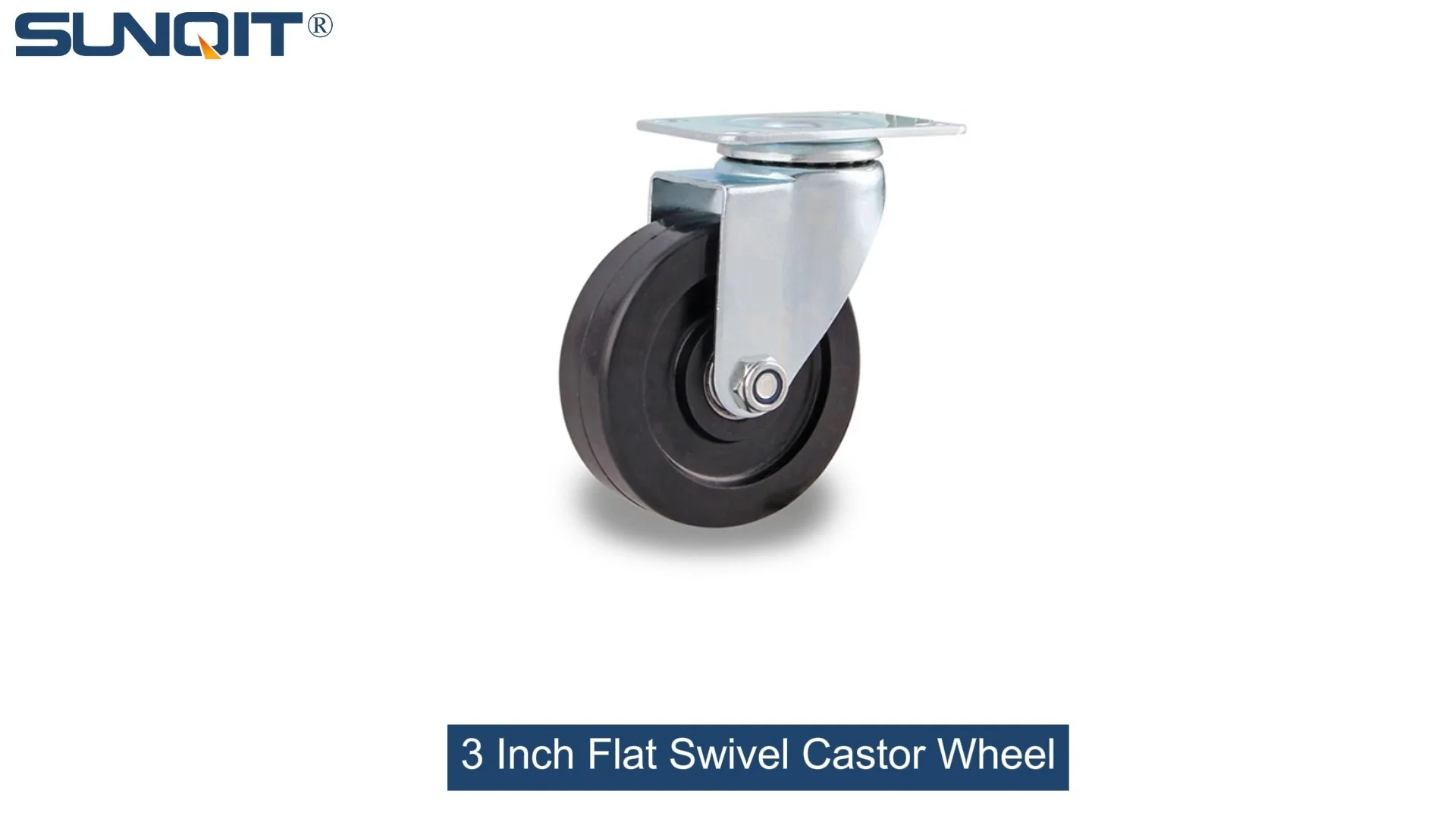
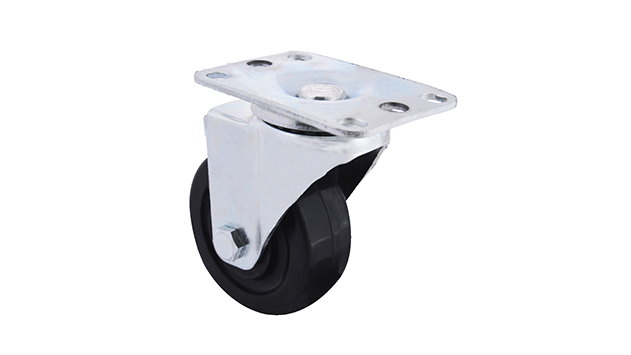
Flat Swivel Castor Wheel
Chair Casters Ball Bearing Wheels Rubber Base. Resistant to abrasion, impact and corrosion. Heavy payload can hold 70-90Kgs per pcs,which can make it works at a stable and smooth status.
How the right caster wheel transforms chaotic workspaces into hubs of focus and efficiency
The Unseen Battle: Noise in 3C Assembly Lines
Walk into any 3C (computers, communications, consumer electronics) assembly plant, and the first thing that hits you isn't the precision of the machines or the speed of the production line—it's the noise. The high-pitched whir of conveyor belts, the clatter of metal tools hitting workbenches, the constant hum of ventilation systems, and perhaps most grating of all, the squeak and rumble of mobile equipment being shifted across the floor. For workers on these lines, this isn't just an annoyance; it's a daily reality that chips away at focus, productivity, and even long-term health.
Consider this: A typical smartphone assembly line operates at 85–90 decibels (dB) during peak hours—roughly the noise level of a lawnmower. OSHA's recommended exposure limit for noise is 90 dB over an 8-hour shift, but many workers in 3C plants report levels creeping above that, especially when multiple workbenches or trolleys are in motion. Over time, this can lead to noise-induced hearing loss, increased stress hormones like cortisol, and even reduced cognitive performance. "It's hard to concentrate when you can barely hear your colleague next to you," says Maria, a line supervisor at a major electronics manufacturer in Guangdong. "We've had workers miss small defects on circuit boards because they were straining to focus over the racket."
But noise isn't just a human problem—it's an operational one. In 3C manufacturing, where precision is measured in millimeters, a distracted worker is more likely to make errors. A 2019 study in the Journal of Manufacturing Systems found that noise levels above 80 dB correlated with a 12% increase in assembly defects and a 9% slowdown in production speed. For a plant producing 5,000 smartphones per hour, that's 600 defective units and 450 lost units per hour—costing millions annually. Worse, noise often masks other issues: a squeaking bearing on a conveyor, a loose part on a workbench, or a misaligned tool. By the time these problems are audible over the chaos, they've often escalated into costly breakdowns.
So, what's the biggest culprit behind this noise? Surprisingly, it's not the heavy machinery. It's the small, often overlooked components that keep the line moving: the caster wheels on workbenches, turnover trolleys, and material racks. Every time a worker pushes a loaded trolley to restock parts, or repositions a mobile workbench to access a new assembly station, those caster wheels are in contact with the floor—creating friction, vibration, and noise. Traditional caster wheels, often made of hard rubber or plastic with basic bearings, are designed for durability and load capacity, not quiet operation. They squeak when dry, rattle over floor imperfections, and amplify every bump in the concrete.
This is where the quiet flat swivel castor wheel enters the picture. More than just a "silent wheel," it's a solution that addresses the root cause of noise in assembly lines while supporting the lean system principles that 3C manufacturers rely on to stay competitive. In the following sections, we'll explore how these specialized caster wheels are changing the game—reducing noise, boosting productivity, and creating workspaces that prioritize both people and performance.
From Squeak to Silence: What Makes a Caster Wheel "Quiet"?
Not all caster wheels are created equal—and when it comes to noise reduction, the difference between a traditional caster and a quiet one is night and day. So, what sets the quiet flat swivel castor wheel apart? It starts with intentional design choices that target every potential source of noise: rolling friction, material hardness, bearing quality, and even the way the wheel interacts with the floor.
Let's break it down, starting with the wheel itself. Traditional caster wheels often use hard rubber or polypropylene, which are tough but unforgiving. When these hit a rough spot on the floor, they vibrate—sending sound waves through the air and the equipment they're attached to. Quiet castors, by contrast, typically use polyurethane wheels. Polyurethane is a elastomer that combines the durability of plastic with the flexibility of rubber. Its microcellular structure acts like a shock absorber, dampening vibrations and reducing rolling noise by up to 50% compared to hard rubber. "We tested polyurethane against standard rubber wheels on our workbenches," says Li Wei, an operations manager at a Shenzhen-based electronics plant. "The difference was staggering—from 75 dB to 58 dB when rolling at the same speed. Workers noticed immediately; they said it felt like someone turned down the volume in the entire factory."
But the wheel material is just the first layer. The (bearing) inside the wheel is equally critical. Basic casters use "plain bearings," which are little more than metal sleeves that rub against the axle—creating friction and, eventually, squeaks as they wear down. Quiet castors, however, use precision ball bearings or roller bearings , which reduce friction by using small metal balls or cylinders to distribute weight evenly. These bearings are often sealed to keep out dust and debris (a common cause of squeaking) and pre-lubricated with silicone-based grease, which lasts longer and is quieter than petroleum-based alternatives. Some high-end models even use double-sealed bearings, adding an extra layer of protection against contamination.
Then there's the swivel mechanism—the part that allows the caster to rotate 360 degrees. On cheap casters, this is often a simple metal-on-metal joint that grinds and squeaks when turned. Quiet flat swivel castor wheels, though, feature nylon or composite swivel races (the ring that holds the swivel mechanism). These materials are self-lubricating and reduce friction between moving parts, eliminating that telltale "creak" when a workbench is repositioned. "We had a problem with our old casters where the swivel would lock up or squeal if not greased weekly," recalls Maria. "The new ones? We've had them for six months, and I don't think I've greased them once. They still spin as smoothly as day one."
Finally, let's not forget the flat swivel castor wheel with brake —a feature that's essential for safety in assembly lines, but can be a noise source if poorly designed. Traditional brake mechanisms use metal levers that snap into place, creating a loud "clack" when engaged or released. Quiet castors, however, use soft-touch brakes with rubberized pads that press gently against the wheel, muffling the sound. Some models even have "no-slam" brakes that engage gradually, preventing the sudden jolt (and noise) of a hard stop. For workers who need to lock and unlock their workbenches multiple times a day, this small change adds up to a much calmer workspace.
Beyond the Wheel: Caster Accessories That Enhance Quiet Performance
A quiet caster wheel is only as good as the accessories that support it. Even the best polyurethane wheel with precision bearings will start to squeak if debris gets stuck in the axle, or if the swivel joint isn't protected from dust. That's where caster accessories come in—small, often overlooked components that extend the life of quiet casters and keep noise levels low over time.
Take caster accessories like dust covers, for example. These simple rubber or plastic caps fit over the swivel joint and axle, preventing dirt, metal shavings, and other debris from entering the bearing housing. In 3C plants, where tiny metal particles from circuit boards or screws are everywhere, this is a game-changer. "We used to have casters that would start squeaking after a week because of metal dust," says Li Wei. "Now, with dust covers, we're seeing quiet performance for 6–8 months instead of 1–2 weeks. It's a small cost for a huge reduction in maintenance."
Another unsung hero is the axle bushing . Made from rubber or polyurethane, these sleeves fit between the axle and the wheel, absorbing vibration and preventing metal-on-metal contact. Without them, the axle can rattle inside the wheel hub, creating a low-frequency hum that's surprisingly loud in a quiet environment. "We added bushings to our workbench casters last year, and the difference was subtle but noticeable," Maria explains. "The low, constant buzz we had before? It's gone. Workers say their heads feel clearer at the end of the day."
Lubrication is also key, but not all lubricants are created equal. Petroleum-based greases can harden over time, attracting dust and causing friction. Instead, manufacturers of quiet casters recommend silicone-based lubricants , which remain fluid in a wide range of temperatures and don't attract debris. Some even sell pre-packaged lubrication kits with small applicators designed to reach the swivel joint and bearings without disassembling the caster—making maintenance quick and easy. "We train our line workers to do a monthly 'quiet check'—a five-minute inspection where they wipe down the casters and apply a drop of silicone lube," says Li Wei. "It's become part of their routine, and it keeps the casters performing like new."
Finally, there's the caster wheel guard —a plastic or metal shield that wraps around the wheel, protecting it from impacts and reducing noise from flying debris. In busy assembly lines, where trolleys and workbenches are often moved quickly, a stray screw or tool can get caught under a wheel, causing a loud "thump" and potentially damaging the wheel. Guards prevent this by deflecting debris away from the wheel, keeping the ride smooth and quiet. "We had a incident where a worker dropped a small wrench, and it got stuck under a trolley caster," Maria remembers. "The noise was like a gunshot, and the wheel was ruined. Now, with guards, that wrench would have bounced off, and we'd never have heard a thing."

Quiet Castors and Lean Systems: A Match Made in Efficiency
3C manufacturers live and die by lean system principles—eliminating waste, optimizing flow, and continuous improvement. But for years, noise was treated as an unavoidable byproduct of production, not a form of waste. That's changing, though, as forward-thinking plants realize that quiet workspaces align perfectly with lean goals. Quiet flat swivel castor wheels aren't just about reducing noise—they're about creating a more efficient, productive, and sustainable operation.
Let's start with waste reduction . In lean terms, "waste" includes anything that doesn't add value to the product—defects, overproduction, waiting, and yes, noise. Noise wastes energy (vibrations that don't contribute to production), wastes time (workers pausing to shout over the din), and wastes talent (distracted workers making more mistakes). By cutting noise with quiet casters, plants reduce all three. A study by the Lean Enterprise Institute found that factories with noise levels below 75 dB reported a 15% reduction in defects and a 10% increase in on-time deliveries compared to louder counterparts. "It makes sense," says Li Wei. "If your workers can hear instructions clearly, if they're not straining to focus, they're less likely to miss a step or install a part incorrectly."
Then there's flow optimization . Lean systems emphasize the smooth movement of materials and workers—no bottlenecks, no delays. Mobile workbenches and trolleys are critical to this flow, allowing lines to be reconfigured quickly for new products or higher demand. But if moving a workbench requires earplugs and a team of workers to push through the noise, that flexibility is lost. Quiet castors solve this by making mobility silent and effortless. "Last month, we needed to reconfigure our line to start producing a new tablet model," Maria explains. "With the old casters, moving six workbenches took two hours—half the time was just waiting for the noise to die down so we could communicate. With the new quiet casters? We did it in 45 minutes. The workbenches glided, no one had to shout, and we were back to production before lunch."
Quiet casters also support employee engagement —a key pillar of lean, though often overlooked. Workers who feel valued and comfortable in their environment are more likely to contribute ideas for improvement, stay with the company longer, and take pride in their work. "Before, we had a 30% turnover rate on the assembly line," says Li Wei. "Workers cited 'stress from noise' as a top reason for leaving. Since switching to quiet casters, turnover has dropped to 12%. People are happier, they stay longer, and we're not spending so much time training new hires. That's lean in action—investing in your people to reduce waste."
Perhaps most surprisingly, quiet casters can even reduce energy costs . How? By allowing plants to lower the volume of their ventilation systems. Many 3C factories crank up fans and air conditioning to mask noise, but with quieter equipment, they can reduce airflow without sacrificing comfort. A study by the China Energy Conservation Association found that a 10% reduction in ventilation fan speed can cut energy use by 20–25%. "We used to run our fans at full blast 24/7," Maria says. "Now, we can turn them down by 15% and still keep the air fresh. Our monthly electricity bill dropped by 18%—that's money we can reinvest in better tools or worker bonuses."

Choosing the Right Quiet Caster: A Buyer's Guide
Not all quiet flat swivel castor wheels are created equal, and choosing the right one for your 3C assembly line requires careful consideration of your specific needs. To help, we've broken down the key factors to keep in mind, from load capacity to floor type—and even included a comparison table to simplify the process.
1. Load Capacity : Start by calculating the total weight the caster will need to support. This includes the weight of the workbench or trolley itself, plus the maximum load of materials, tools, and workers (if the workbench is occupied). Most quiet casters are rated for 100–500 kg per wheel, but it's always best to choose a caster with a 20–30% safety margin. For example, if your workbench weighs 150 kg and holds 200 kg of parts, each of the four casters should be rated for at least (350 kg / 4) + 30% = 113.75 kg. "We made the mistake of underrating our casters once," Li Wei admits. "The wheels started to flatten under the weight, and the noise came back. Now we always oversize by 30%—it's cheaper than replacing them early."
2. Floor Type : The condition of your factory floor will dictate the wheel material. For smooth concrete or epoxy floors, polyurethane wheels are ideal—they're soft enough to absorb noise but hard enough to resist wear. For rough or uneven floors (like tiled or cracked concrete), consider a harder polyurethane blend or even rubber-reinforced wheels to prevent flat spots. Avoid plastic wheels on rough floors—they'll scratch easily and create more noise as they catch on imperfections.
3. Brake Needs : Do you need a flat swivel castor wheel with brake ? In most 3C assembly lines, the answer is yes—workbenches and trolleys need to stay stationary during operation to prevent accidents. Look for brakes that engage smoothly and quietly, with a clear "on/off" indicator (like a red/green tab). Some casters have "total lock" brakes that lock both the wheel and the swivel, preventing movement in any direction—a good choice for workbenches that need to stay perfectly aligned.
4. Temperature and Chemical Resistance : 3C assembly lines often use cleaning solvents or operate in high-temperature environments (near soldering stations, for example). Make sure your caster wheels and bearings can withstand these conditions. Polyurethane is generally resistant to most chemicals, but extreme heat (over 80°C) can cause it to soften. In hot areas, consider high-temperature polyurethane or even metal wheels with heat-resistant bearings.
5. Maintenance Requirements : How much time are you willing to spend maintaining your casters? Sealed bearings and self-lubricating swivel joints reduce maintenance, but they cost more upfront. If you have a dedicated maintenance team, basic casters with regular lubrication might be sufficient. If not, invest in low-maintenance models—your workers will thank you.
| Feature | Traditional Caster Wheel | Quiet Flat Swivel Castor Wheel (with Brake) |
|---|---|---|
| Noise Level (at 5 km/h) | 75–85 dB (loud, comparable to a vacuum cleaner) | 55–65 dB (quiet, comparable to normal conversation) |
| Wheel Material | Hard rubber or polypropylene | Soft or medium-density polyurethane |
| Bearing Type | Plain metal bearings (prone to squeaking) | Sealed ball or roller bearings (pre-lubricated) |
| Brake Noise | Loud "clack" when engaged (metal-on-metal) | Soft "muffle" (rubber pad on wheel) |
| Load Capacity (per wheel) | 100–300 kg (lower due to poor bearing design) | 150–500 kg (higher due to reinforced construction) |
| Maintenance Interval | Weekly lubrication required | Quarterly lubrication (or less with sealed bearings) |
| Best For | Low-weight, low-frequency use (e.g., storage trolleys) | High-weight, high-frequency use (e.g., assembly line workbenches) |
At the end of the day, the "right" caster depends on your unique needs. But one thing is clear: investing in quiet flat swivel castor wheels isn't just about reducing noise—it's about building a leaner, more efficient, and more human-centered assembly line. As Li Wei puts it: "We used to think of casters as just 'wheels on a stick.' Now? We see them as a tool to make our factory better—for our workers, for our products, and for our bottom line."
The Future of Quiet: Where Caster Technology is Headed
As 3C manufacturing continues to evolve—with faster production times, smaller components, and higher demands for precision—the role of quiet caster wheels will only grow. Manufacturers are already exploring new materials, smart technologies, and design innovations to make casters even quieter, more durable, and more integrated with the smart factories of tomorrow.
One emerging trend is smart casters with built-in sensors . Imagine a caster that can detect when it's starting to make noise (due to a worn bearing or low lubrication) and send an alert to maintenance via the factory's IoT system. This "predictive maintenance" would prevent unexpected breakdowns and keep noise levels consistent over time. Some prototypes even include accelerometers to measure vibration—data that can be used to optimize floor conditions (like repairing cracks) or adjust workbench loads to reduce noise further.
Another area of innovation is sustainable materials . As manufacturers push for greener operations, we're seeing casters made from recycled polyurethane or bio-based elastomers (derived from plants like soybeans). These materials perform as well as traditional polyurethane but have a lower carbon footprint. "We're testing a caster wheel made from 30% recycled plastic," says a product developer at a leading caster manufacturer. "Early results show it's just as quiet and durable as our standard wheels, but uses 25% less energy to produce. That's a win for both noise reduction and the planet."
Finally, there's the integration of quiet casters with collaborative robots (cobots) —a growing trend in 3C assembly. Cobots work alongside humans, often on mobile platforms, and their small size means they're more sensitive to noise. Quiet casters allow these cobots to move freely without disturbing workers or creating additional noise pollution. "We have a cobot that delivers parts to the assembly line," Maria explains. "With the old casters, it was so loud that workers would step away when it approached. Now, it glides up quietly, and people barely notice. They can keep working while the cobot unloads—no interruptions, no lost time."
But perhaps the most exciting development is the recognition that quiet isn't just a "nice-to-have"—it's a competitive advantage. In a global market where 3C manufacturers are constantly vying for top talent and customers who demand sustainable, ethical production, a quiet, worker-friendly factory sends a powerful message. "Our clients now ask about our working conditions during audits," Li Wei says. "When we show them our quiet assembly lines with ergonomic workbenches and low noise levels, it sets us apart. They know we care about our workers, and that translates to better quality products. Quiet casters aren't just changing our factories—they're changing how the world sees 3C manufacturing."
Conclusion: The Sound of Progress
Noise in 3C assembly lines has long been accepted as an unavoidable part of the job—a necessary evil in the pursuit of speed and efficiency. But as we've explored, it's neither necessary nor evil. Quiet flat swivel castor wheels, with their polyurethane wheels, precision bearings, and thoughtful design, are proving that you can have both speed and silence, both productivity and peace. They're not just a tool for reducing noise—they're a tool for reimagining what a manufacturing workspace can be: a place where workers thrive, where precision is second nature, and where progress doesn't have to come with a price.
So, the next time you pick up a smartphone or tablet, take a moment to think about the hands that assembled it. Imagine those hands working in a space where the noise is low, the air is calm, and the tools glide silently. That's the future of 3C manufacturing—and it starts with something as simple as a better caster wheel.