- Company Articles
- Products and Technology
- Product knowledge
- Quiet Operation: Flat Swivel Castor Wheel with Brake for Noise-Sensitive Work Environments

Quiet Operation: Flat Swivel Castor Wheel with Brake for Noise-Sensitive Work Environments
Related Product
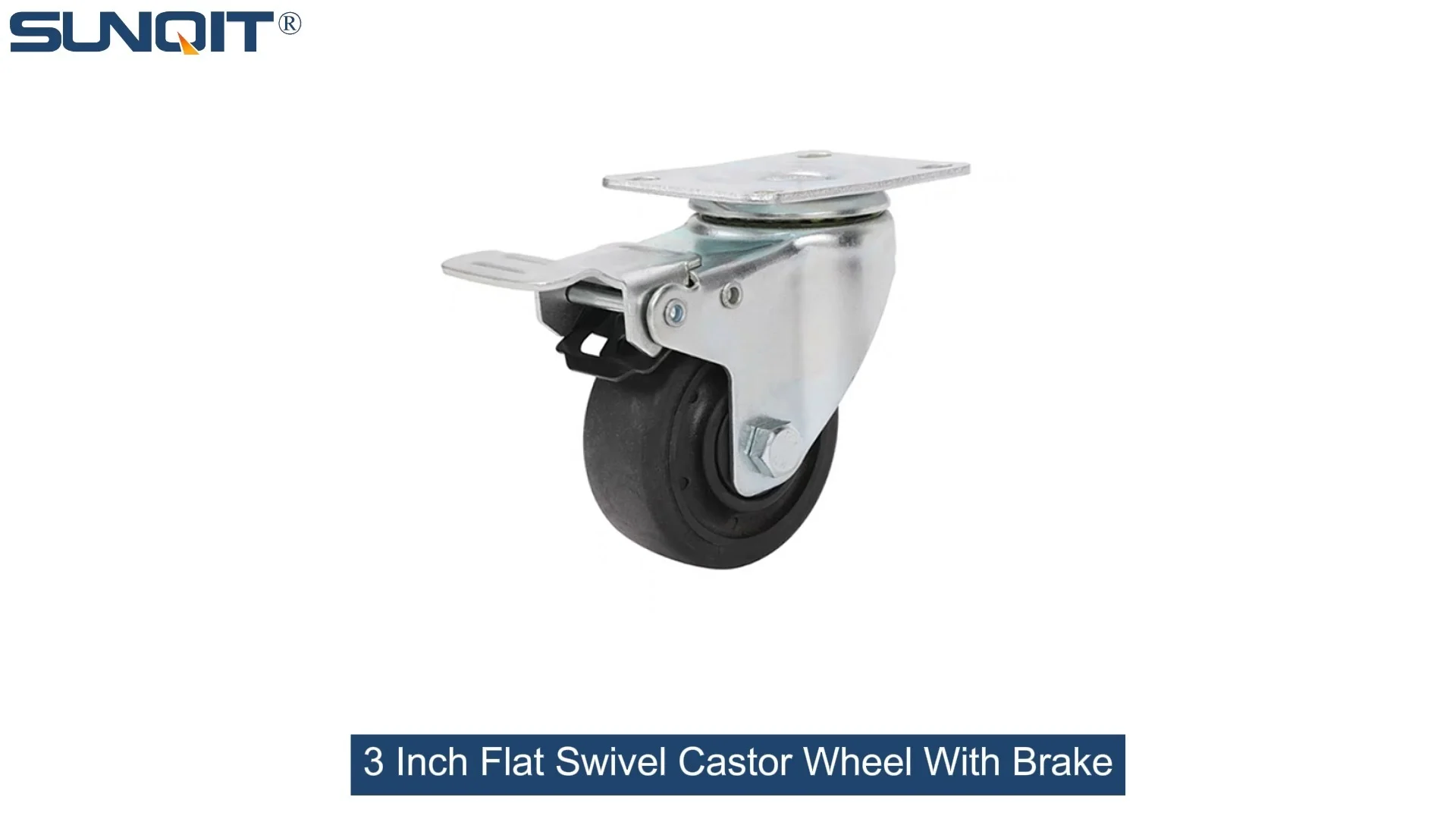
Flat Swivel Castor Wheel With Brake
Chair Casters Ball Bearing Wheels Rubber Base with brake design. Resistant to abrasion, impact and corrosion. Heavy payload can hold 70Kgs per pcs,which can make it works at a stable and smooth status.
The Unseen Disruptor: How Noise Creeps Into Critical Workspaces
In a bustling microbiology lab, a researcher leans in to observe a Petri dish, her eyes fixed on a delicate colony of bacteria. Just as she adjusts the microscope, a squeal cuts through the air—the sound of a metal cart being wheeled past, its castors protesting every turn. Her hand jerks, and the slide shifts. Hours of careful work hang in the balance. Down the hall, in a hospital's neonatal intensive care unit (NICU), a premature baby startles awake, its tiny chest heaving, as a medication trolley rattles by. Nearby, a nurse sighs; she knows interrupted sleep can slow the baby's recovery. In an open-plan office, a team's brainstorming session grinds to a halt when the printer cart, wheels squeaking like a rusty gate, is moved to the next desk.
Noise, in these and countless other settings, isn't just an annoyance—it's a disruptor. It frays nerves, distracts focus, and even compromises outcomes. Yet, for all the attention paid to soundproof walls or quiet HVAC systems, one of the most common sources of workplace noise often goes overlooked: the humble castor wheel. Those small, unassuming components that let us move workbenches, trolleys, and conveyor systems with ease are often silent culprits behind the clatter. But what if there was a way to keep the mobility without the racket? Enter the flat swivel castor wheel with brake —a quiet revolution in how we build and move equipment in noise-sensitive environments.
Why Noise Matters: The High Stakes of Quiet Workspaces
Not all workplaces are created equal when it comes to noise. For some, a little background buzz is par for the course—think a busy restaurant kitchen or a construction site. But for others, silence (or near-silence) is critical. Let's step into a few of these environments to understand why noise isn't just a nuisance, but a barrier to success.
Healthcare Settings: In hospitals, especially ICUs, patient rooms, and NICUs, noise directly impacts healing. Studies show that excessive noise in hospitals can raise patients' blood pressure, disrupt sleep cycles, and even increase the risk of complications. For staff, constant noise leads to burnout and errors—critical in a field where split-second decisions matter. The World Health Organization (WHO) recommends nighttime noise levels in hospitals stay below 30 decibels (dB); to put that in perspective, a typical conversation is around 60 dB, and a squeaky castor can hit 50 dB or more.
Research Labs: Whether it's a lab studying quantum mechanics, where vibrations (often caused by noise) can skew measurements, or a behavioral science lab tracking subtle human reactions, precision is everything. A sudden clatter from a moving cart can ruin an experiment that took weeks to set up. In acoustics labs, even the smallest noise can render data useless—imagine trying to measure sound waves when your own equipment is creating interference.
ESD Workstations: In electronics manufacturing, ESD (Electrostatic Discharge) workstations are designed to protect sensitive components from static electricity. But noise is a hidden threat here too. Technicians assembling microchips or circuit boards need steady hands and focus; a loud, unexpected noise can lead to fumbling, damaging expensive parts. What's more, many ESD workstations are mobile, relying on castors to adjust layouts as production needs change—making quiet movement a must.
Open-Plan Offices & Focus Zones: The modern office prides itself on collaboration, but that often means open layouts where noise travels freely. For employees in focus zones—coding, writing, or analyzing data—even low-level, unpredictable noise (like a cart rolling past every 15 minutes) can break concentration. Studies by the University of California, Irvine, found that workers interrupted by noise take 23% longer to complete tasks and make more errors.
In all these spaces, noise isn't just about comfort—it's about compliance, productivity, and safety. Regulatory bodies like OSHA set limits on workplace noise (90 dB over 8 hours for general industry), but for sensitive environments, the bar is much lower. That's where the right equipment comes in—and it starts with the parts we often overlook.
The Culprit: Why Traditional Castors Are So Noisy
Let's get technical for a moment: Why do some castors sound like a symphony of squeaks, while others glide silently? The answer lies in design, materials, and mechanics. Traditional castors—especially older or budget models—are often built with noise in mind… but not in a good way.
Metal-on-Metal Chaos: Many cheap castors use metal wheels or metal bearings. When metal rubs against metal—whether it's the wheel rolling on a hard floor or the swivel mechanism turning—it creates friction. Friction leads to vibration, and vibration becomes noise. Over time, as bearings wear down or rust forms, the squeaking gets worse. Imagine dragging a metal chair across a tile floor—that's the same principle, amplified in a castor that's supposed to move smoothly.
Poorly Designed Swivel Joints: The swivel part of a castor—the mechanism that lets it turn 360 degrees—is a common noise source. If the joint is loose or the ball bearings are low-quality, every turn causes rattling or grinding. Dirt and debris can also get trapped in the joint, turning a smooth rotation into a jerky, noisy mess.
Hard, Unforgiving Wheels: Wheels made of hard plastic or rubber (the kind that's more "bouncy" than "flexible") don't absorb shocks. When the castor hits a small bump or crack in the floor, it sends a jolt through the cart or workbench, creating a loud "thud." On smooth floors, these wheels might also skid slightly, adding a high-pitched scrape to the mix.
Missing or Worn Brakes: Even when a cart is stationary, a loose or poorly designed brake can cause noise. If the brake doesn't fully lock the wheel, the cart might "creep" slightly, leading to a constant, low-level squeak as the wheel rubs against the brake pad. Over time, this wears both the wheel and the brake, making the noise worse.
The result? A workplace where every movement—whether it's a nurse moving a medication trolley, a lab tech adjusting a mobile workbench, or a warehouse worker shifting a conveyor component—adds to the noise. And in environments where quiet is critical, that's a problem.

The Solution: Flat Swivel Castor Wheel with Brake—Quiet by Design
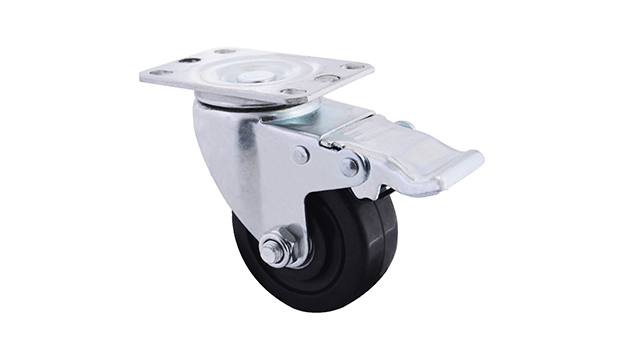
Enter the flat swivel castor wheel with brake . At first glance, it might look like any other castor, but under the hood (or under the wheel), it's engineered for silence. Let's break down the features that make this castor a game-changer for noise-sensitive spaces.
1. Precision Swivel Mechanism: No More Rattling Turns
The swivel joint is where many castors go wrong—but not this one. Instead of loose, generic ball bearings, the flat swivel castor uses sealed, precision-engineered bearings. These bearings are lubricated for life, meaning they won't dry out and start squeaking. The swivel housing is also designed to fit tightly, with minimal play, so there's no rattling when you turn the castor. Think of it like the difference between a rusty door hinge and a well-oiled one—smooth, quiet, and consistent.
2. Quiet Wheel Materials: Soft, Shock-Absorbing, and Non-Marking
The wheel itself is the star of the show. Instead of hard plastic or metal, most flat swivel castors with brakes use materials like polyurethane (PU) or thermoplastic rubber (TPR). These materials are soft enough to absorb shocks—so rolling over a small bump doesn't result in a loud thud—but firm enough to handle heavy loads. PU, in particular, is a favorite: it's quiet, non-marking (so it won't scuff hospital floors or lab tiles), and resistant to oils and chemicals—important in environments where spills happen.
The wheel's tread is also designed for silence. Many have a tread pattern that reduces friction with the floor, cutting down on the "squeal" of hard wheels. Some even have a slight "give" to them, acting like a cushion between the castor and the floor—further dampening noise.
3. Flat Top Plate: Stability That Reduces Vibration
The "flat" in "flat swivel castor" refers to the top plate—the part that attaches to the cart, workbench, or conveyor. A flat, wide top plate distributes weight evenly, reducing vibration. When a castor is wobbly or unevenly mounted, it vibrates as it moves, creating noise. The flat design ensures a tight, stable fit, so the castor moves smoothly without shaking the equipment above it. This is especially important for mobile workbenches, where stability (and thus quiet) is key.
4. Enclosed Brake System: No Squeaks, No Surprises
The brake is often an afterthought in castor design, but not here. The flat swivel castor's brake is fully enclosed, protecting it from dust, dirt, and debris that can cause squeaking. It's foot-operated, with a large, easy-to-reach pedal—no fumbling with tiny levers. When engaged, the brake locks the wheel firmly, preventing movement and the noise that comes with it (like a cart rolling away unexpectedly). And because the brake mechanism is sealed, it won't start squeaking over time, even with heavy use.
5. Load Capacity: Quiet Doesn't Mean Weak
You might think quiet materials mean sacrificing strength, but that's not the case. These castors are built to handle real-world loads—from lightweight mobile workbenches (around 100 lbs) to heavy-duty conveyor components (up to 500 lbs or more). The secret? Reinforced housings and high-quality wheel cores (often made of aluminum or steel) that provide strength without adding noise. So whether you're moving a cart full of lab samples or a workbench loaded with electronics, the castor stays quiet and steady.

From Workbench to Conveyor: Where Quiet Castors Make the Biggest Difference
The flat swivel castor wheel with brake isn't a one-trick pony. Its quiet, durable design makes it a fit for a range of equipment—especially in environments where mobility and silence go hand in hand. Let's explore a few key applications where these castors shine.
Mobile Workbenches: In labs, ESD workstations, or even home offices, mobile workbenches let users adjust their workspace on the fly. But a workbench with noisy castors is a liability—imagine trying to focus on soldering a circuit board while your bench squeaks every time you shift it. The flat swivel castor turns these workbenches into silent partners: smooth to move, easy to lock in place, and quiet enough for even the most focused tasks.
Conveyor Systems: Conveyors are the backbone of many manufacturing and distribution operations, but they're not always fixed in place. Some conveyor components—like transfer stations or adjustable sections—use castors to adapt to changing layouts. Traditional castors here can create a constant hum of noise as parts move. With quiet castors, the conveyor system blends into the background, letting workers communicate clearly and focus on quality control.
Lean System Trolleys: In lean manufacturing, efficiency is king—and that includes reducing waste, whether it's time, materials, or noise. Lean systems rely on trolleys to move materials from one workstation to the next, keeping production flowing. Noisy trolleys disrupt this flow, slowing down workers and creating stress. The flat swivel castor with brake supports lean principles by enabling quiet, efficient movement—so materials glide to where they're needed without a hitch (or a squeak).
ESD Workstations: As we mentioned earlier, ESD workstations need to protect sensitive electronics from static, but they also need to keep technicians focused. A mobile ESD workstation with quiet castors lets teams reconfigure their space quickly (for example, shifting from assembling phones to tablets) without disrupting concentration. Plus, the non-marking wheels won't scratch anti-static flooring—a win for both quiet and safety.
Healthcare Trolleys: Medication carts, linen trolleys, and mobile medical equipment are constant fixtures in hospitals. With quiet castors, nurses can move these trolleys through patient rooms without waking sleeping patients or disturbing exams. The brake feature is especially handy here—nurses can lock the trolley in place with a quick tap of their foot, ensuring it doesn't roll away during procedures.
Beyond Quiet: The Hidden Benefits of Quality Castors
Sure, quiet operation is the star feature, but the flat swivel castor wheel with brake brings more to the table. Let's talk about the bonus perks that make this castor a smart investment for any workspace.
- Safety First: The brake isn't just for noise—it's for preventing accidents. A cart that rolls away unexpectedly can someone or knock over equipment. The foot-operated brake is easy to engage, even when hands are full, giving workers peace of mind.
- Durability = Less Maintenance: Cheap castors wear out quickly, leading to frequent replacements and downtime. These castors, with their sealed bearings, high-quality materials, and reinforced design, last longer. That means fewer trips to the supply closet, less time spent swapping out castors, and lower long-term costs.
- Non-Marking Wheels: Hard wheels can scuff floors, leading to expensive repairs. PU and TPR wheels are gentle on all floor types—tile, hardwood, concrete, even anti-static mats—so your workspace stays looking professional.
- Ergonomics: A smooth-rolling castor is easier to move, even when loaded. That reduces strain on workers' backs and shoulders, cutting down on injuries and fatigue. In lean systems, where materials are moved constantly, this can boost productivity significantly.
- Compliance Made Easy: For workplaces subject to noise regulations (like OSHA or WHO standards), upgrading to quiet castors is a simple way to stay compliant. No more worrying about noise audits or fines—your castors are doing their part to keep levels low.
Choosing the Right Castor: What to Look For
Not all flat swivel castors with brakes are created equal. To find the perfect fit for your workspace, keep these factors in mind:
| Factor | What to Consider | Example Scenario |
|---|---|---|
| Load Capacity | Calculate the total weight of your equipment + typical load. Choose a castor rated for 20% more than this weight to be safe. | A mobile workbench weighing 150 lbs, plus 50 lbs of tools = 200 lbs total. Choose a castor rated for at least 240 lbs. |
| Floor Type | Soft wheels (PU/TPR) are best for smooth floors (tile, hardwood). For rough floors (concrete), look for wheels with thicker treads. | A hospital with polished tile floors → PU wheels to avoid scratches. |
| Environment | Wet or chemical-heavy areas need corrosion-resistant castors (stainless steel housing). ESD workstations need non-conductive wheels. | A lab with frequent chemical spills → Stainless steel housing, chemical-resistant PU wheels. |
| Mounting Type | Flat top plates are best for workbenches and trolleys. Stem mounts (for holes in tubing) work for lean system components. | A mobile cart with a flat wooden base → Flat top plate castor with screws. |
| Brake Type | Look for "total lock" brakes, which lock both the wheel and the swivel, preventing movement in any direction. | A medication trolley in a hospital → Total lock brake to keep it steady during patient care. |
When in doubt, reach out to a supplier who specializes in lean system or ESD workstation components—they can help you match the right castor to your needs.
The Quiet Revolution: Small Parts, Big Impact
It's easy to overlook the little things—the nuts, bolts, and castors that hold our workplaces together. But as we've seen, these small parts can have a huge impact on how we work, heal, and create. The flat swivel castor wheel with brake is a reminder that innovation doesn't always mean flashy new gadgets; sometimes, it's about reimagining the basics to solve everyday problems.
Imagine that microbiology lab again, now with mobile workbenches that glide silently across the floor. The researcher adjusts her setup without a sound, her focus unbroken. In the NICU, the medication trolley moves like a ghost, and the premature baby sleeps soundly. In the ESD workstation, the technician assembles a circuit board with steady hands, undisturbed by clattering equipment. These aren't just better workdays—they're better outcomes.
So, the next time you're setting up a workspace—whether it's a hospital, a lab, an office, or a manufacturing floor—don't forget the castors. Choose quiet. Choose stable. Choose the flat swivel castor wheel with brake. Your team, your patients, your experiments, and your peace of mind will thank you.