- Company Articles
- Products and Technology
- Product knowledge
- Quiet Swivel Stem Caster Wheels with Brake: Ideal for Indoor Production Environments

Quiet Swivel Stem Caster Wheels with Brake: Ideal for Indoor Production Environments
Related Product
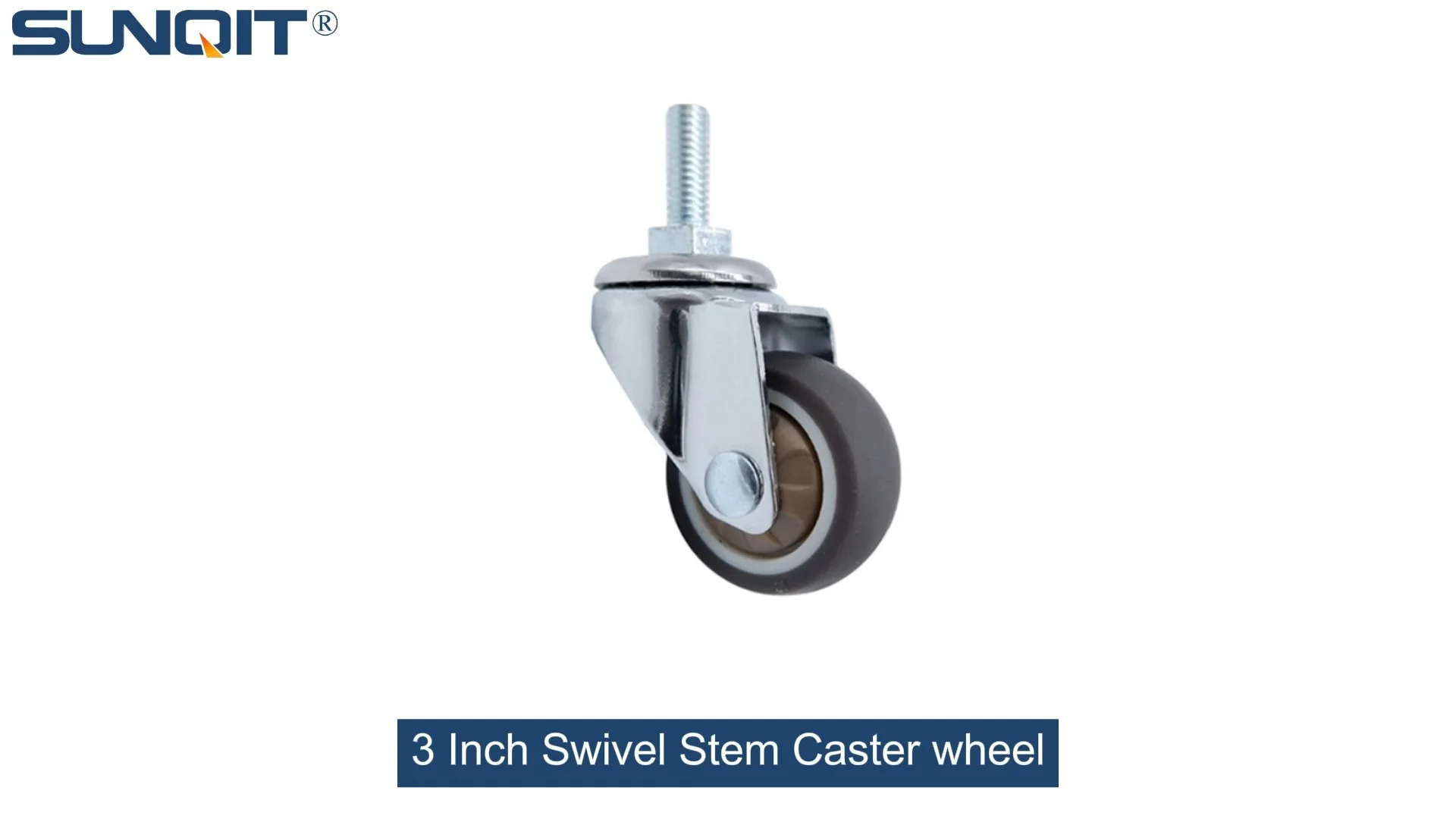
Swivel Stem Caster wheel
360 Degree Swivel Stem Caster. Threaded-post mount design, castors diameter 3 inch.Each swivel caster wheels loading 70KGS. Heavy enough and widely suit for carts, chairs, cabinet, flow rack, workbench, turnover rolley.
The Hidden Challenge of Indoor Production Floors
Walk into any busy indoor production facility—whether it's an electronics assembly plant, a automotive parts workshop, or a small-scale manufacturing studio—and you'll quickly notice the rhythm of the space. Machines hum, tools clink, and teams collaborate over the steady buzz of productivity. But amid this organized chaos, there's a quiet (or not-so-quiet) disruptor that often flies under the radar: the humble caster wheel.
Think about it: Every workbench that needs repositioning, every material rack that glides from station to station, every turnover trolley ferrying components across the floor—they all rely on casters to move. But not all casters are created equal. A poorly designed caster can turn a smooth workflow into a frustrating ordeal: metal wheels scraping against concrete, loud clatters as they hit cracks, wobbly movements that slow down tasks, and brakes that stick or fail when you need them most. Over time, these small annoyances add up—distracting workers, disrupting focus, and even increasing the risk of accidents.
That's where the quiet swivel stem caster wheel with brake comes in. It's not just another piece of hardware; it's a solution designed to address the unique demands of indoor production. In this article, we'll dive into why these casters matter, how they transform daily operations, and why they've become a must-have for facilities prioritizing efficiency, safety, and worker well-being.
What Are Quiet Swivel Stem Caster Wheels with Brake?
Let's start with the basics. A caster wheel is a wheeled device mounted to the bottom of equipment to enable easy movement. The "swivel stem" design means the wheel can rotate 360 degrees around a vertical stem, allowing the equipment to turn smoothly in any direction—no more backtracking or awkward maneuvering. The "brake" feature adds a critical layer of safety: a simple lever or pedal that locks the wheel in place, preventing unintended movement when the equipment is stationary.
But what makes these casters "quiet"? Unlike traditional metal or hard plastic casters, which can create noise as they roll, quiet swivel stem casters are engineered with noise-dampening materials. Many use soft, shock-absorbing rubber or polyurethane wheels that cushion the impact of uneven floors, while precision bearings reduce friction (and thus, squeaking) as the wheel spins. The result? A caster that moves almost silently, even under heavy loads.
Take, for example, a workbench fitted with these casters. In a typical setup, a workbench might hold tools, assembly parts, or testing equipment—all of which need to stay stable when in use but be movable for cleaning, reconfiguration, or team collaboration. With quiet swivel stem casters, that workbench can glide from one corner of the production floor to another without a single screech, and the brake can lock it securely in place the moment it reaches its destination. No more struggling to push a rigid caster around corners, no more shouting over wheel noise, and no more worrying about the bench sliding mid-task.

Why Quiet Matters: The Impact of Noise on Indoor Production
You might be thinking, "Is a little noise really that big of a deal?" In short: yes. Studies have shown that excessive noise in the workplace isn't just a nuisance—it's a productivity killer. The World Health Organization (WHO) recommends keeping workplace noise levels below 85 decibels (dB) to protect worker health, but many production facilities exceed this, often due to constant caster movement, machinery, and chatter. Even low-level, persistent noise (like the 65-75 dB range from standard casters) can lead to fatigue, decreased concentration, and higher error rates over time.
Quiet swivel stem casters tackle this problem head-on. By using soft wheel materials and precision-engineered bearings, they can reduce rolling noise by up to 30% compared to traditional metal or hard plastic casters. Imagine a production line where workers can communicate without raising their voices, where focus isn't broken by sudden wheel scrapes, and where the overall atmosphere feels calmer and more controlled. That's the difference quiet casters make.
But the benefits go beyond comfort. In industries like electronics assembly or medical device manufacturing, where precision is critical, even a momentary distraction from noise can lead to costly mistakes. Quiet casters create a more stable environment for detail-oriented tasks, helping teams maintain the focus needed to produce high-quality work.

Swivel + Brake: The Dynamic Duo for Maneuverability and Safety
While "quiet" is a key selling point, the real magic of these casters lies in their two other core features: swivel functionality and reliable braking. Let's break down why each matters.
360° Swivel: Freedom to Move Without Restriction
Indoor production floors are rarely wide-open spaces. They're filled with workstations, machinery, and storage racks, leaving narrow pathways that require tight turns and quick adjustments. A caster that only rolls forward and backward (a "rigid" caster) becomes a liability here—forcing workers to waste time maneuvering equipment in wide arcs or even lifting heavy loads to reposition them.
Quiet swivel stem casters eliminate this hassle with their 360° rotation. The stem-mounted design allows the wheel to pivot smoothly around its axis, so even a fully loaded workbench can be turned with minimal effort. Need to slide a material rack into a tight corner? Swivel the casters, and it glides into place. Want to reposition a trolley from one assembly line to another without backtracking? The swivel function makes it possible in seconds, not minutes.
This flexibility isn't just about speed—it's about ergonomics. Workers no longer have to strain to push or pull unwieldy equipment, reducing the risk of muscle strain or injury. In fact, ergonomic studies show that swivel casters can cut down on the physical effort required to move heavy loads by up to 40%, making them a simple but effective way to support worker health.
Brake Mechanism: Stability When You Need It Most
Mobility is great, but there's a time and place for movement. When a workbench is in use, when a material rack is loaded with fragile components, or when a trolley is parked at a station, you need absolute stability. That's where the brake comes in.
Quiet swivel stem casters with brake typically feature a "total lock" or "dual-lock" mechanism. A total lock brake locks both the wheel (preventing rolling) and the swivel (preventing rotation), ensuring the equipment stays exactly where you park it—even on slightly uneven floors. Dual-lock brakes offer the option to lock just the wheel or just the swivel, giving workers flexibility for different tasks.
The best part? These brakes are designed for ease of use. A simple foot pedal or lever (no bending required) engages or releases the brake, so workers can lock/unlock the caster in seconds. No fumbling with tiny levers or stuck mechanisms—just a smooth, reliable action that inspires confidence.
Safety is the obvious benefit here. A caster that won't rollly prevents equipment from drifting into walkways, colliding with machinery, or tipping over when loaded. In busy facilities, where foot traffic is constant, this peace of mind is invaluable.

Beyond the Basics: Materials and Design That Last
Quiet, swivel, and brake functionality are the stars, but the unsung heroes of these casters are the materials and engineering that make them durable and reliable. Let's take a closer look at what sets high-quality quiet swivel stem casters apart from cheap alternatives.
Wheel Materials: Soft but Strong
The wheel itself is where the "quiet" magic happens. Most quiet casters use urethane or rubber wheels, both of which have natural shock-absorbing properties. Urethane, in particular, is a popular choice because it combines the best of both worlds: it's soft enough to dampen noise and vibrations, but tough enough to handle heavy loads (up to 500 lbs per caster, depending on the model). Unlike hard plastic or metal wheels, which against floors and create noise, urethane wheels glide smoothly, even over small cracks or uneven surfaces.
Another key feature? Wheel tread design. Many quiet casters have grooved or textured treads that improve grip, reducing the risk of slipping on smooth floors (like polished concrete or vinyl). This is especially important in facilities where spills or moisture might be a concern.
Bearings: The Secret to Smooth Swivel
A swivel caster is only as good as its bearings. Cheap casters often use plastic or low-grade metal bearings, which wear out quickly and start to squeak or stick after minimal use. High-quality quiet swivel stem casters, on the other hand, use precision ball bearings or roller bearings , which reduce friction and ensure smooth rotation even after months of heavy use. Sealed bearings are an added bonus—they prevent dust, debris, and moisture from getting inside, extending the caster's lifespan and maintaining that quiet, smooth action over time.
Stem and Housing: Built to Handle the Load
The stem (the part that attaches the caster to the equipment) and the housing (the frame that holds the wheel and swivel mechanism) are often overlooked, but they're critical for durability. Most industrial-grade quiet casters use steel or aluminum stems and housings, which are strong enough to support heavy loads without bending or warping. The stem diameter and length are also customizable, ensuring a secure fit for everything from lightweight workbenches to heavy-duty material racks.
Where They Shine: Common Applications in Indoor Production
Quiet swivel stem casters with brake aren't a one-trick pony—they excel in a variety of indoor production scenarios. Here are just a few places where they make a noticeable difference:
Workbenches: Flexibility for Changing Needs
Modern production floors are rarely static. Teams might reconfigure workstations weekly (or even daily) to adapt to new projects, seasonal demands, or workflow optimizations. A workbench fitted with quiet swivel casters becomes a versatile tool: it can glide to a new position in minutes, lock securely in place for use, and move again when needed. Whether it's a single-deck workbench (like the "Workbench E" model, common in electronics assembly) or a larger, multi-tiered setup, these casters ensure the bench adapts to the team—not the other way around.
Material Racks and Flow Racks: Streamlining Component Delivery
Material racks (like the "Material Rack B" with 3 rows and 3 floors, a staple in many warehouses) are the backbone of production, holding everything from raw materials to finished goods. When these racks need to move—say, to restock a station or reorganize inventory—quiet swivel casters make the process seamless. They glide smoothly along roller tracks (another key component of efficient material flow), reduce noise during transit, and lock securely once in place, preventing accidental movement that could damage goods.
Turnover Trolleys: Safe Transport of Fragile or Heavy Items
Turnover trolleys are workhorses in production, carrying everything from delicate circuit boards to heavy metal parts. With quiet swivel casters, these trolleys become safer and more efficient: they maneuver easily through tight aisles, reduce noise that could startle workers or damage sensitive components, and brake reliably when loading/unloading. For teams handling fragile items (like glass parts or medical devices), the smooth, stable movement of these casters is a game-changer.
Lean System Setups: Supporting Continuous Improvement
Many modern production facilities adopt lean system principles—focusing on minimizing waste, maximizing efficiency, and continuously improving processes. Quiet swivel stem casters align perfectly with this philosophy. By making equipment more mobile, they reduce the time and effort wasted on reconfiguration. By cutting down on noise and distractions, they free up mental energy for problem-solving. And by improving safety, they reduce the risk of costly accidents or downtime. In short, they're a small but powerful tool for building a leaner, more agile operation.
Comparing Caster Types: Why Quiet Swivel Stem with Brake Stands Out
To truly appreciate these casters, it helps to see how they stack up against other common types. Let's compare them side by side:
| Feature | Quiet Swivel Stem Caster with Brake | Standard Rigid Caster (Non-Swivel) | Heavy-Duty Metal Caster (No Brake) |
|---|---|---|---|
| Noise Level (Typical) | 45-55 dB (Similar to a quiet conversation) | 65-75 dB (Loud enough to disrupt speech) | 70-80 dB (Equivalent to a vacuum cleaner) |
| Swivel Range | 360° (Full rotation) | 0° (Only rolls forward/backward) | 360° (Full rotation, but loud) |
| Brake Mechanism | Dual-lock or total-lock (locks wheel + swivel) | None (must block wheels manually) | Often none (designed for constant movement) |
| Best For | Indoor production, precision work, agile workflows | Fixed-position equipment, outdoor/rough surfaces | Heavy loads (500+ lbs), outdoor or industrial settings |
| Worker Impact | Reduces fatigue, improves focus, enhances safety | Increases physical strain, slows reconfiguration | High noise leads to fatigue, no brake risks accidents |
As the table shows, while other casters have their uses, quiet swivel stem casters with brake are uniquely suited to the demands of indoor production—balancing noise reduction, maneuverability, and safety in a way that others can't match.
Choosing the Right Caster: Key Factors to Consider
Not all quiet swivel stem casters are created equal, so it's important to choose the right model for your needs. Here are a few factors to keep in mind:
Load Capacity: Match the Caster to the Job
Start by calculating the total weight the casters will need to support. This includes the weight of the equipment itself plus the maximum load it will carry. Most quiet casters range from 100 lbs to 500 lbs per wheel, so be sure to check the rating (and err on the side of caution—overloading a caster is a surefire way to shorten its lifespan and compromise safety).
Floor Type: Protect Surfaces and Maintain Quiet
The type of flooring in your facility matters. Urethane wheels work well on concrete, tile, or vinyl floors, offering both quiet operation and floor protection (they won't scratch or mark surfaces). Rubber wheels are better for softer floors (like hardwood or laminate) but may not hold up as well to heavy loads. If your floor has debris or small cracks, look for casters with sealed bearings to prevent jamming.
Caster Accessories: Customizing for Your Setup
Don't overlook caster accessories —they can enhance performance and fit. Stem extenders, for example, allow you to adjust the height of the caster to match your equipment. Brake pedal extensions make it easier to engage/disengage the brake, even for workers with limited mobility. Floor locks (additional stabilizers) add extra security for extremely heavy loads. These small add-ons can turn a good caster into a great one, tailored to your facility's unique needs.
Environmental Conditions: Heat, Chemicals, and Cleanliness
If your production involves extreme temperatures (like in food processing or automotive painting), look for casters with heat-resistant wheels. For facilities with harsh chemicals (e.g., cleaning agents or solvents), chemical-resistant urethane or rubber is a must. In cleanrooms or medical settings, casters with smooth, non-porous surfaces (easy to sanitize) are critical to maintaining compliance.
Maintaining Your Casters: Tips for Long-Lasting Performance
Even the best casters need a little care to keep performing at their best. Here are simple maintenance tips to extend their lifespan:
- Clean regularly: Wipe down wheels and bearings with a damp cloth to remove dust, debris, or oil buildup. This prevents jamming and keeps the swivel mechanism smooth.
- Lubricate bearings: Every 3-6 months (or more often for heavy use), apply a few drops of lubricating oil to the swivel bearings and wheel axles. This reduces friction and noise, maintaining that quiet action.
- Check brakes: Test the brake lever/pedal weekly to ensure it engages and releases smoothly. Tighten any loose screws or adjust the brake pad if it's wearing down.
- Inspect for wear: Look for cracks in the wheel, bent stems, or damaged bearings. replace worn parts promptly—waiting can lead to bigger issues (and louder, less reliable casters).
These small steps take minutes but can add years to your caster's life, ensuring they keep supporting your production floor for the long haul.
The Bottom Line: Investing in the Right Caster for a Better Workplace
At the end of the day, quiet swivel stem caster wheels with brake are more than just a tool—they're an investment in your team, your productivity, and your bottom line. They turn frustrating, noisy, and unsafe equipment movement into a smooth, quiet, and efficient process. They reduce distractions, improve ergonomics, and support the flexibility modern production floors need to thrive.
Whether you're outfitting a new facility, upgrading an existing setup, or simply looking to solve that "annoying caster problem" that's been bugging your team, these casters deliver. They're proof that even the smallest components can have a big impact on how work gets done.
So the next time you walk through your production floor, listen closely. If you hear the scrape of old casters, remember: there's a better way. Quiet swivel stem casters with brake aren't just about moving equipment—they're about moving your entire operation forward.