- Company Articles
- Products and Technology
- Solution
- Rapid Line Changeovers: Flexible Aluminum Workbench C for Mixed-Model Production

Rapid Line Changeovers: Flexible Aluminum Workbench C for Mixed-Model Production
Related Product
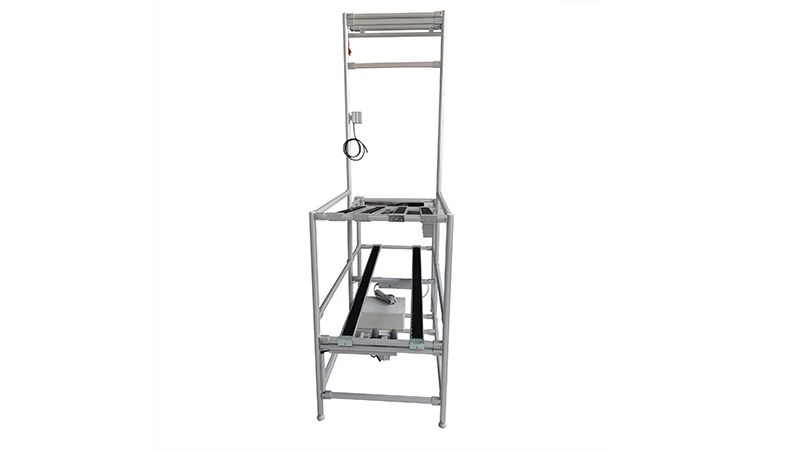
Aluminum Workbench C
aluminum-tube-workbench-is-more-flexible-and-durable,-compared-with-traditional-pe/abs-coated-steel-tube.-it-is-easy-to-assemble,-anti-corrosion,-rust-protection,-and-recycle-use-after-disassemble.
In today's fast-paced manufacturing world, where customer demands shift overnight and product lifecycles grow shorter by the month, mixed-model production has become the norm rather than the exception. Factories no longer churn out one product day in and day out; instead, they juggle multiple models—from smartphones and laptops to automotive parts and medical devices—often on the same production line. While this approach keeps businesses agile and responsive, it comes with a hidden challenge: line changeovers. The time spent reconfiguring workstations, swapping tools, and adjusting layouts between product runs can eat into precious production hours, turning potential profits into costly downtime. For production managers, supervisors, and frontline teams, the question isn't just how to handle these changeovers, but how to do it quickly, safely, and without sacrificing quality .
Enter the Aluminum Workbench C—a modular, adaptable solution designed to tackle the chaos of mixed-model production head-on. More than just a table or a surface to place tools, this workbench is a cornerstone of lean manufacturing, built to minimize waste, maximize flexibility, and slash changeover times. In this article, we'll dive into why traditional workbenches fall short in dynamic environments, how the Aluminum Workbench C addresses these gaps, and why its design—rooted in aluminum profile technology and compatibility with accessories like roller track—makes it a game-changer for factories aiming to stay competitive in 2025 and beyond.
The Hidden Cost of Stagnant Workstations in Mixed-Model Production
Let's start with a scenario many production teams know all too well: It's 9 a.m. on a Tuesday, and your line has just finished a batch of Product A—a small electronic component with strict ESD (Electrostatic Discharge) requirements. By 9:15, the team needs to switch to Product B, a larger, heavier part that requires different tools, more storage space, and a lower workstation height for ergonomics. What happens next? If you're using a traditional workbench—say, a steel-framed model bolted to the floor with fixed shelves and zero adjustability—your team is in for a slog.
First, they'll need to unbolt the ESD matting (if it's even removable) to avoid damaging Product B, which doesn't require ESD protection. Then, they'll spend 20 minutes detaching the fixed shelves that held Product A's tools, only to realize the new tools for Product B don't fit the remaining space. Next, two workers will strain to manually adjust the workbench height (if it's adjustable at all), using wrenches and brute force. Finally, they'll wheel in a separate cart to hold the extra materials, since the old workstation can't accommodate the new storage needs. By the time they're ready to start production, it's 10:30 a.m.—90 minutes of downtime for a single changeover. Multiply that by three or four changeovers a day, and you're looking at 4.5 to 6 hours of lost production time weekly. For a factory running two shifts, that's nearly a full shift's worth of output vanishing into thin air.
This isn't just about time, though. Stagnant workstations also breed frustration. Frontline operators, who know their workflows better than anyone, are forced to work around clunky, unyielding setups. Ergonomic issues creep in: a workstation that's too high for Product B leads to back strain; a lack of proper tool storage means tools get misplaced, slowing down tasks and increasing error rates. Over time, this erodes morale and productivity, creating a cycle where changeovers become dreaded rather than routine.
The root of the problem? Traditional workbenches are built for stability, not adaptability. They're designed for static environments where "set it and forget it" is the mantra. But in mixed-model production, stability alone isn't enough. What teams need is a workstation that can evolve with each product run—something that can be reconfigured in minutes, not hours, without specialized tools or heavy lifting. That's where the Aluminum Workbench C steps in.
Aluminum Workbench C: Designed for the Rhythm of Mixed-Model Production
At first glance, the Aluminum Workbench C might look like any other workstation. But its magic lies in its DNA: modularity. Unlike traditional workbenches made from welded steel or solid wood, this workbench is built using lightweight yet durable aluminum profiles—extruded aluminum beams with T-slot grooves that act as a "blank canvas" for customization. These profiles, combined with a system of connectors, brackets, and accessories, let teams reconfigure the workstation on the fly, no welding or heavy tools required.
Let's break down what makes the Aluminum Workbench C tick, and how each feature directly addresses the pain points of rapid line changeovers.
1. Aluminum Profiles: The Backbone of Flexibility
The star of the show here is the aluminum profile itself. These aren't your average aluminum tubes; they're precision-engineered extrusions with T-shaped slots running along their length. These slots allow accessories—shelves, tool holders, roller track, even ESD mats—to be attached and repositioned in seconds using simple bolts or clips. Need to add a shelf for Product B's tools? Slide a bracket into the T-slot, tighten a knob, and you're done. Want to remove the ESD mat for a non-ESD product? Lift the mat's edge, unscrew the clips from the T-slot, and it's off. No drilling, no welding, no waiting for maintenance to send a technician.
But aluminum profiles aren't just about ease of modification—they're also incredibly strong. Despite being 30% lighter than steel, aluminum profiles (especially those with reinforced internal structures) can support heavy loads, making them ideal for holding tools, materials, and even small machinery. This lightweight strength is a game-changer for mobility, too. Unlike steel workbenches, which require forklifts to move, the Aluminum Workbench C can be equipped with caster wheels (another modular accessory) that let a single operator roll it across the factory floor. Need to reposition the workstation to align with a new assembly line layout? Just unlock the casters, wheel it into place, and lock them again. Done.
2. Roller Track Integration: Streamlining Material Flow Between Changeovers
One of the biggest time drains during line changeovers is adjusting how materials move through the workstation. Product A might require parts to slide gently down a incline, while Product B needs a flat, stable surface to prevent tipping. Traditional workbenches often force teams to jury-rig solutions—stacking books under a plywood sheet to create a slope, or taping down rubber mats to slow movement—leading to inconsistent results and wasted time.
The Aluminum Workbench C solves this with seamless roller track compatibility. Roller track—another key component in lean material handling systems—consists of small, rotating wheels mounted in a track that allows materials to glide smoothly with minimal effort. And because the workbench's aluminum profiles have T-slot grooves, attaching roller track is as simple as sliding the track's mounting brackets into the slots and securing them with bolts. Need a 10-degree incline for Product A's small parts? Adjust the roller track's angle using adjustable brackets (another modular accessory) and lock it in. Switching to Product B, which needs a flat surface? Loosen the brackets, lower the track to horizontal, and you're ready. No more jury-rigging, no more guesswork—just consistent, repeatable material flow in under 5 minutes.
What's more, roller track isn't limited to the workbench surface. Teams can mount it on the sides or even overhead (using aluminum profile frames) to create custom material feeding systems. For example, if Product C requires parts to be fed from above, operators can attach vertical aluminum profiles to the workbench, mount roller track on them, and create a gravity-fed chute—all without modifying the workbench itself. When the line switches back to Product A, they can detach the vertical profiles and roller track, returning the workstation to its original setup in minutes.
3. ESD Workstation Capabilities: Protecting Sensitive Electronics Without Compromise
For manufacturers producing electronics—smartphones, circuit boards, medical devices—ESD protection is non-negotiable. A single static discharge can fry a $100 component, leading to costly rework or scrapped products. But ESD workstations are often seen as "one-trick ponies": great for sensitive parts, but useless for products that don't need protection. This forces teams to either keep separate workstations (wasting floor space) or spend time swapping ESD components during changeovers.
The Aluminum Workbench C eliminates this tradeoff with built-in ESD compatibility. Its aluminum profiles are conductive, meaning they can be grounded to dissipate static charge—no need for separate grounding wires. When ESD protection is needed, teams can quickly attach ESD-safe accessories: ESD mats (secured via T-slot clips), ESD wrist strap holders, and even conductive tool hooks. When switching to a non-ESD product, these accessories are just as easy to remove. The workbench itself remains grounded, but without the ESD mats or tools, it won't interfere with products that don't require protection.
This flexibility is a lifesaver for mixed-model lines that alternate between sensitive and non-sensitive products. For example, a factory producing both ESD-required circuit boards (Product X) and plastic housings (Product Y) can use the same Aluminum Workbench C for both. In the morning, it's an ESD workstation with grounded mats and wrist straps for Product X. By lunch, the ESD accessories are removed, and the workbench is ready for Product Y—no need for a second workstation cluttering the floor.
4. Tool-Free Assembly: From Box to Production in Under an Hour
Even the most flexible workbench is useless if it takes a team of engineers to assemble. Traditional workbenches often require hours of setup: aligning pre-drilled holes, tightening dozens of bolts, and calibrating adjustable features. The Aluminum Workbench C, by contrast, is designed for tool-free (or minimal-tool) assembly, so even a new operator can put it together in under an hour.
How? It starts with the aluminum profile connectors. Instead of nuts and bolts that require wrenches, many connectors use hand-tightened knobs or spring-loaded clips that lock into the T-slot grooves. Want to attach a shelf? Slide the shelf bracket into the profile's T-slot, twist the knob until it's tight, and the shelf is secure. Need to adjust the height? The workbench's legs (also aluminum profiles) use telescoping sections with quick-release levers; pull the lever, slide the leg up or down, and release the lever to lock it in place. No wrenches, no measuring tapes, no frustration.
This speed isn't just for initial setup, either. During changeovers, tool-free assembly means operators can reconfigure the workstation without hunting for tools. If Product D requires a second shelf, they can grab a shelf from the accessory cart, attach it with hand-tightened knobs, and be done in 5 minutes. For teams, this means less time fumbling with tools and more time focusing on what matters: getting the line back up and running.

Aluminum Workbench C vs. Traditional Workbenches: A Side-by-Side Comparison
To truly understand the impact of the Aluminum Workbench C, let's put it head-to-head with traditional workbenches in the scenarios that matter most for mixed-model production. The table below breaks down key features, from assembly time to ESD compatibility, to show why flexibility isn't just a "nice-to-have"—it's a bottom-line necessity.
| Feature | Traditional Steel/Wood Workbench | Aluminum Workbench C |
|---|---|---|
| Assembly Time (Initial Setup) | 2–4 hours (requires tools, drilling, and alignment) | 30–60 minutes (tool-free with hand-tightened connectors) |
| Changeover Reconfiguration Time | 60–90 minutes (requires unbolting, welding, or tool changes) | 5–15 minutes (modular accessories attached via T-slot grooves) |
| Weight (for Mobility) | 200–300 lbs (requires forklift or 4+ people to move) | 70–100 lbs (can be equipped with casters for single-person movement) |
| ESD Compatibility | Static (fixed ESD mats/grounding; hard to remove) | Dynamic (removable ESD accessories; conductive aluminum profiles for grounding) |
| Accessory Compatibility | Limited (only fits pre-drilled holes; custom parts require machining) | Unlimited (T-slot grooves work with roller track, shelves, tool holders, and more) |
| Durability | High (but prone to rust if steel; wood warps with moisture) | High (aluminum resists rust; scratch-resistant anodized finish) |
| Ergonomic Adjustability | Minimal (height adjustment requires tools; fixed shelf positions) | Full (telescoping legs with quick-release levers; shelves adjustable in seconds) |

Real-World Impact: How One Factory Cut Changeover Time by 75%
Numbers and features tell part of the story, but real change happens when these tools are put to work on the factory floor. Take the example of PrecisionTech, a mid-sized electronics manufacturer in Michigan that produces custom circuit boards for automotive and medical clients. Before adopting the Aluminum Workbench C, PrecisionTech struggled with 4–5 changeovers daily, each taking 60–90 minutes. Their old steel workbenches were bolted to the floor, had fixed ESD mats, and required a team of two to adjust heights. By the end of the week, they were losing 25–30 hours of production time—time they couldn't afford, especially with clients demanding faster turnaround times.
In early 2024, PrecisionTech replaced 12 traditional workbenches with Aluminum Workbench C units. The results were immediate. For starters, initial setup of the new workbenches took just 45 minutes per unit, compared to 3 hours for the old steel models. But the real win came during changeovers. Let's walk through a typical day:
- 8:00 a.m. : Start with Product X (automotive circuit boards, ESD required). The workbench is configured with ESD mats, grounded wrist strap holders, and a roller track incline for feeding small components.
- 10:30 a.m. : Switch to Product Y (medical device sensors, no ESD needed, heavier parts). Operator removes ESD mats (3 minutes), detaches wrist strap holders (2 minutes), and adjusts roller track to flat (1 minute). Total changeover time: 6 minutes.
- 1:00 p.m. : Switch to Product Z (consumer electronics, requires extra storage). Operator attaches a second shelf (using T-slot knobs, 4 minutes) and adds a vertical roller track for feeding cables (5 minutes). Total changeover time: 9 minutes.
- 3:30 p.m. : Switch back to Product X. Reattaches ESD mats (3 minutes), wrist strap holders (2 minutes), and adjusts roller track to incline (1 minute). Total changeover time: 6 minutes.
By the end of the day, PrecisionTech had completed 4 changeovers in just 27 minutes—down from 4.5 hours (270 minutes) with the old workbenches. That's a 90% reduction in changeover time. Over a week, they reclaimed 22+ hours of production time, allowing them to increase output by 15% without adding shifts. What's more, operator satisfaction scores rose by 30%: workers reported less fatigue (thanks to ergonomic height adjustments) and fewer frustrations with "fighting the workstation."

Beyond the Workbench: Building a Lean System for the Future
The Aluminum Workbench C isn't just a tool—it's a building block for a leaner, more adaptive production system. Lean manufacturing, at its core, is about eliminating waste: waste of time, waste of materials, waste of effort. By slashing changeover times, the workbench directly reduces "waiting" waste—the time operators and machines sit idle during reconfigurations. But its impact goes deeper.
For example, its modular design reduces "inventory" waste by eliminating the need for duplicate workstations. Instead of keeping separate ESD and non-ESD benches, or benches for small vs. large parts, factories can use a single Aluminum Workbench C and swap accessories as needed. This frees up floor space, reduces storage costs for extra workstations, and simplifies maintenance (fewer units to repair or replace).
It also supports "kaizen" (continuous improvement) by empowering operators to experiment with workstation setups. Since reconfiguring the workbench takes minutes, teams can test new layouts, tool positions, or material flows during breaks or downtime, then adopt what works and discard what doesn't. This culture of experimentation leads to ongoing efficiency gains that go beyond the initial changeover time savings.
Choosing the Right Aluminum Workbench C: Key Considerations for Your Factory
Not all aluminum workbenches are created equal, and choosing the right one for your mixed-model production needs requires a bit of thought. Here are a few factors to keep in mind:
Aluminum Profile Size and Strength : Aluminum profiles come in various sizes (e.g., 20x20mm, 30x30mm, 40x40mm), with larger profiles offering greater load capacity. If you're working with heavy tools or materials, opt for 40x40mm or larger profiles. Look for profiles with internal reinforcing ribs—they add strength without extra weight.
Accessory Ecosystem : A workbench is only as flexible as its accessories. Choose a supplier that offers a wide range of compatible parts: roller track in different lengths, ESD mats in various sizes, casters with locking mechanisms, adjustable shelves, and tool holders. The more accessories available, the more configurations you can create.
ESD Certification : If you work with sensitive electronics, ensure the workbench's aluminum profiles and ESD accessories meet industry standards (e.g., ANSI/ESD S20.20). This ensures reliable static dissipation and protects your products from damage.
Ergonomic Features : Look for workbenches with height-adjustable legs (telescoping or crank-based) and adjustable shelf positions. Ergonomics isn't just about comfort—it's about reducing injuries and keeping operators productive during long shifts.
Conclusion: Flexibility as a Competitive Advantage
In the end, mixed-model production isn't going away. If anything, customer demands will only grow more varied, and product cycles will continue to shrink. For factories, the ability to adapt quickly—without sacrificing time, quality, or operator well-being—will be the difference between thriving and merely surviving. The Aluminum Workbench C, with its aluminum profile modularity, roller track compatibility, ESD flexibility, and tool-free assembly, isn't just a workstation. It's a statement: that your factory is built for change.
Imagine a world where changeovers are no longer dreaded—where operators look forward to switching products because they know the workbench will adapt to their needs, not the other way around. A world where 90-minute delays shrink to 5-minute adjustments, where floor space is freed up, and where every hour of production time is used to make, not reconfigure. That world isn't coming—it's here, and it starts with the right tools. For PrecisionTech and countless other factories, that tool is the Aluminum Workbench C. Could it be yours?