- Company Articles
- Products and Technology
- Application Cases
- Real-World Applications: Heavy Duty Split Foot Seats in Consumer Electronics

Real-World Applications: Heavy Duty Split Foot Seats in Consumer Electronics
Related Product
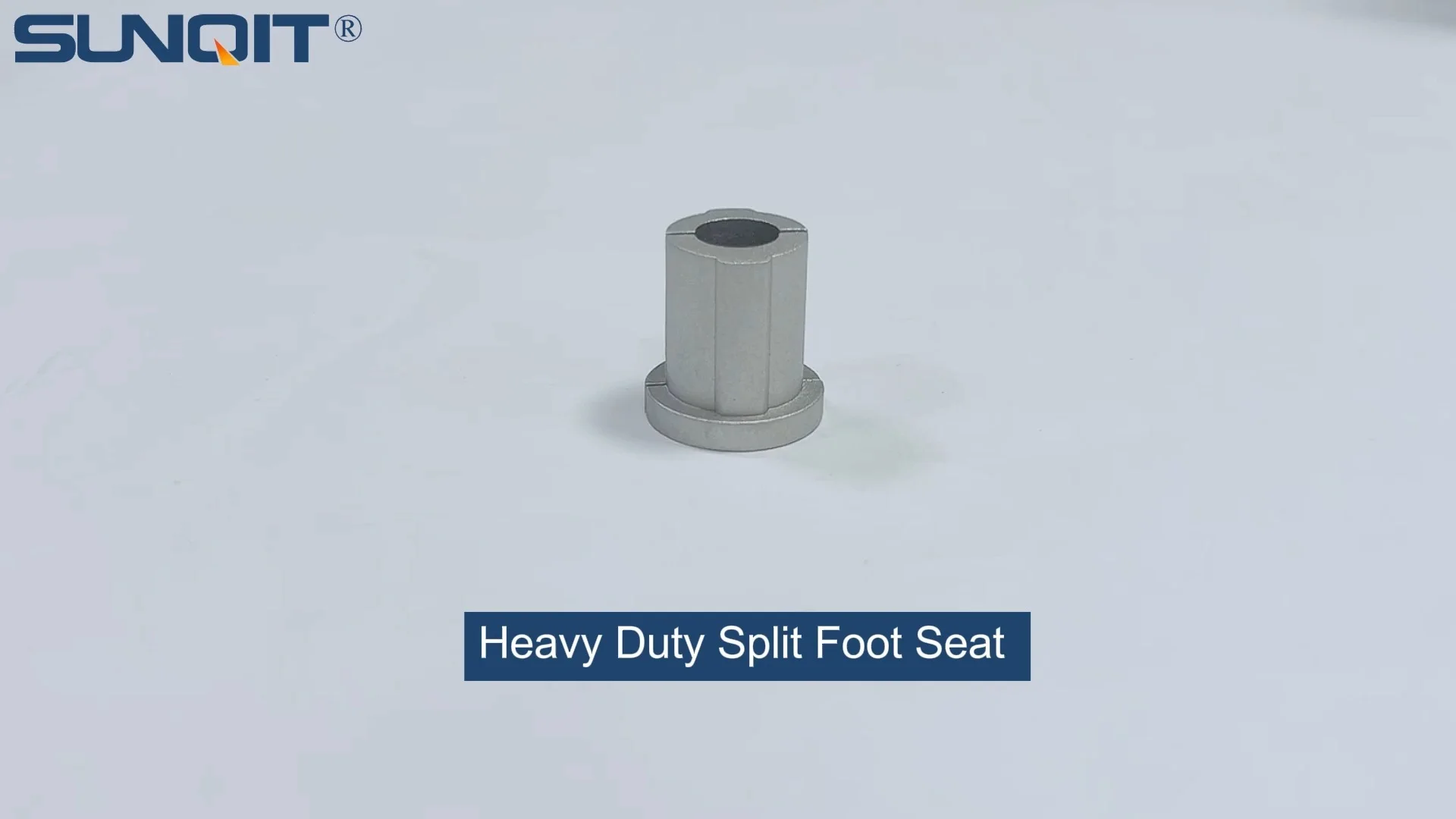
Heavy Duty Split Foot Seat
M10 aluminum heavy duty split foot deat with foot adjuster for workbench and flow rack.
In the fast-paced world of consumer electronics manufacturing, where precision is measured in millimeters and production lines hum around the clock, every component—no matter how small—plays a critical role in ensuring efficiency, reliability, and quality. While flashy innovations like automated robots or AI-driven quality checks often steal the spotlight, there's a quiet workhorse in many factories that deserves far more recognition: the heavy duty split foot seat. These unassuming metal components, often tucked beneath workbenches, conveyor systems, and material racks, are the unsung heroes that keep production lines stable, workers safe, and delicate electronics intact. Today, we're diving into their real-world applications, exploring how they integrate with lean systems, support intricate assembly workbenches, and elevate the performance of conveyor networks in some of the most demanding manufacturing environments.
Why Stability Matters: The Hidden Challenge in Electronics Assembly
Consumer electronics—think smartphones, laptops, smartwatches—are marvels of miniaturization. A single smartphone, for example, contains thousands of tiny components: microchips smaller than a fingernail, delicate wiring as thin as hair, and screens that shatter at the slightest impact. Assembling these requires not just skilled technicians but also work environments that minimize vibration, movement, and instability. Imagine a technician soldering a 0.1mm wire to a circuit board; if their workbench wobbles even a fraction of an inch, the connection could be flawed, leading to a defective product. Similarly, conveyor belts transporting half-assembled laptops need to stay perfectly level to prevent screens from shifting or internal components from dislodging.
Traditional workstation setups often rely on basic rubber feet or fixed metal bases, which may work for lighter loads but falter under the demands of modern electronics manufacturing. Over time, these flimsier supports can loosen, leading to wobbling workbenches, misaligned conveyors, and even safety hazards. This is where heavy duty split foot seats step in. Designed to distribute weight evenly, absorb vibrations, and resist wear and tear, they provide the rock-solid foundation that today's production lines can't afford to be without.
Heavy Duty Split Foot Seats: Design and Functionality
Before delving into their applications, let's take a closer look at what makes heavy duty split foot seats unique. Unlike standard foot seats, which are often a single piece of plastic or lightweight metal, these are engineered for durability. Typically made from high-grade steel or aluminum alloy, they feature a "split" design—two separate but connected plates—that allows for precise height adjustment and enhanced load distribution. The base plate anchors securely to the floor, while the top plate attaches to the equipment (workbench legs, conveyor frames, etc.), with a threaded rod or bolt connecting the two to adjust height. Many models also include anti-slip rubber pads on the bottom to prevent sliding and reduce noise, and some are coated with anti-corrosive materials to withstand the oils, coolants, and humidity common in factory settings.
What truly sets them apart, though, is their load capacity. A standard heavy duty split foot seat can support anywhere from 500kg to 2000kg per unit, depending on size and material. This makes them ideal for heavy equipment like industrial workbenches loaded with tools, conveyor systems carrying pallets of components, or material racks stacked with finished products. In consumer electronics factories, where production lines are often customized and reconfigured to keep up with new models, their adjustability is another key advantage: technicians can tweak the height of a workbench or conveyor in minutes to align with ergonomic standards or new assembly processes, without needing to replace the entire support structure.

Integration with Lean Systems: Streamlining Production from the Ground Up
Lean manufacturing—a philosophy centered on minimizing waste and maximizing value—has become the gold standard in consumer electronics production. From Toyota's original "just-in-time" model to modern adaptations, lean systems rely on efficient workflows, standardized processes, and equipment that adapts to changing needs. Heavy duty split foot seats may not seem like a "lean" component at first glance, but their role in stabilizing key equipment directly supports lean goals.
Consider a typical lean production line for smartwatch assembly. The line is divided into stations: component sorting, circuit board assembly, screen attachment, testing, and packaging. Each station must operate in sync to avoid bottlenecks. If a material rack at the component sorting station is unstable, technicians waste time searching for misplaced parts or adjusting the rack instead of focusing on assembly. Heavy duty split foot seats ensure that racks, workbenches, and conveyors stay in place, reducing non-value-added activities (a core lean principle). Their durability also means less frequent replacements, cutting down on maintenance waste and downtime. In fact, factories that upgrade to these foot seats often report a 15-20% reduction in time spent on equipment adjustments and repairs—time that can be redirected to producing more electronics.

Case Study: Workbenches in Microchip Assembly
To understand the real impact, let's step into a microchip assembly facility—a place where even the air is filtered to remove dust, and technicians wear static-free suits to protect sensitive components. At the heart of this facility are workbenches where operators place tiny semiconductors onto circuit boards using precision pick-and-place machines. These workbenches weigh over 800kg each, thanks to the machines, ESD (electrostatic discharge) mats, and tool storage cabinets attached to them. Without proper support, the vibration from the pick-and-place machines alone could cause the bench to shift, misaligning the delicate components and leading to defects.
A few years ago, this facility was struggling with a 3% defect rate in microchip assemblies—costing them millions in rework and lost revenue. An audit revealed that the culprit was often subtle bench movement: traditional rubber feet were compressing unevenly under the weight, causing the bench to tilt slightly during operation. The solution? Replacing all workbench feet with heavy duty split foot seats. The results were striking: within three months, the defect rate dropped to 0.5%. Technicians reported that the benches felt "rock solid," and the pick-and-place machines maintained alignment for longer periods. The plant manager noted, "We used to spend hours every week recalibrating the machines because the benches would shift. Now, we do it once a month. It's like night and day."
But the benefits went beyond defect reduction. The adjustable height feature of the split foot seats allowed the facility to standardize workbench heights across shifts, reducing ergonomic strain on workers. "Before, some benches were an inch lower than others, and my back would ache after a long day," said one technician. "Now, everything's level, and I can focus on my work instead of adjusting my posture." This focus on worker well-being is another hallmark of lean systems—happy, comfortable employees are more productive and engaged.

Supporting Conveyor Systems: Smooth Transport for Delicate Screens
Consumer electronics aren't just assembled on workbenches—they're also transported between stations via conveyor systems. Screens, in particular, are notoriously fragile: a single scratch or jolt can render a smartphone or laptop screen useless. Conveyors carrying these screens must move at a steady pace, with minimal vibration and perfect alignment. Even a slight dip or bump in the conveyor belt can cause a screen to slide, leading to scratches or cracks.
Heavy duty split foot seats play a vital role here, too. Conveyor frames are often long and heavy, spanning dozens of meters. Without uniform support, these frames can sag in the middle, creating uneven surfaces. Split foot seats, placed strategically along the conveyor's length, distribute the weight evenly, preventing sagging and ensuring the belt runs smoothly. In one tablet manufacturing plant, conveyors transporting LCD screens were fitted with these foot seats after repeated incidents of screen cracking during transport. The seats absorbed the vibration from the conveyor motors and kept the belt level, reducing screen damage by 90%. "We used to have to inspect every screen after it came off the conveyor," said a quality control inspector. "Now, we spot-check maybe one in ten. It's saved us so much time."
Comparing Traditional vs. Heavy Duty Split Foot Seats
| Feature | Traditional Rubber/Plastic Foot Seats | Heavy Duty Split Foot Seats |
|---|---|---|
| Load Capacity | Up to 200kg per unit | 500kg to 2000kg per unit |
| Adjustability | Limited or none; often fixed height | Precise height adjustment via threaded rod |
| Vibration Absorption | Poor; rubber compresses unevenly over time | Excellent; steel/aluminum construction dampens vibration |
| Durability | 6-12 months lifespan in heavy use | 5-10 years lifespan with minimal maintenance |
| Ergonomic Benefits | None; fixed height may cause strain | Adjustable height reduces worker fatigue |
Beyond Workbenches and Conveyors: Material Racks and Turnover Trolleys
While workbenches and conveyors are the most obvious applications, heavy duty split foot seats shine in other areas of the factory, too. Material racks, which store bulk components like circuit boards or batteries, often need to support thousands of kilograms. A rack that leans or wobbles risks collapsing, endangering workers and destroying expensive inventory. Split foot seats anchor these racks to the floor, even in high-traffic areas where forklifts or pallet jacks might bump into them. Similarly, turnover trolleys—used to transport components between stations—benefit from the stability these foot seats provide. In one laptop factory, trolleys carrying screens would sometimes tip when navigating corners, until split foot seats with anti-slip pads were added. The pads gripped the floor, reducing trolley movement and making transport safer.
The Future: Integration with Smart Manufacturing
As consumer electronics manufacturing moves toward Industry 4.0—with IoT sensors, real-time data analytics, and connected production lines—heavy duty split foot seats are evolving, too. Some manufacturers are now embedding load sensors into the seats, allowing factories to monitor weight distribution on workbenches and conveyors in real time. If a workbench becomes overloaded, the sensor sends an alert to the maintenance team, preventing potential collapse. Others are experimenting with self-leveling split foot seats that use small motors to adjust height automatically, compensating for uneven floors or shifting loads. These innovations could further reduce downtime and enhance safety in the factories of tomorrow.
Conclusion: The Foundation of Quality
In the grand scheme of consumer electronics manufacturing, heavy duty split foot seats may not grab headlines, but they are the foundation upon which quality, efficiency, and worker well-being rest. From stabilizing microchip assembly workbenches to ensuring smooth conveyor transport of delicate screens, these unassuming components play a pivotal role in bringing our favorite devices to life. As factories continue to adopt lean systems and smart technologies, the demand for reliable, adaptable support structures will only grow—and heavy duty split foot seats are poised to meet that demand.
So the next time you pick up your smartphone or laptop, take a moment to appreciate the precision that went into making it. Behind that sleek design and powerful performance is a network of systems and components—including the humble split foot seat—working tirelessly to ensure that every detail is just right. In the world of electronics manufacturing, sometimes the smallest parts make the biggest difference.