- Company Articles
- Products and Technology
- Product knowledge
- Recyclable Materials in Castor Installation Base: Supporting Circular Manufacturing

Recyclable Materials in Castor Installation Base: Supporting Circular Manufacturing
Related Product
Castor Installation Base
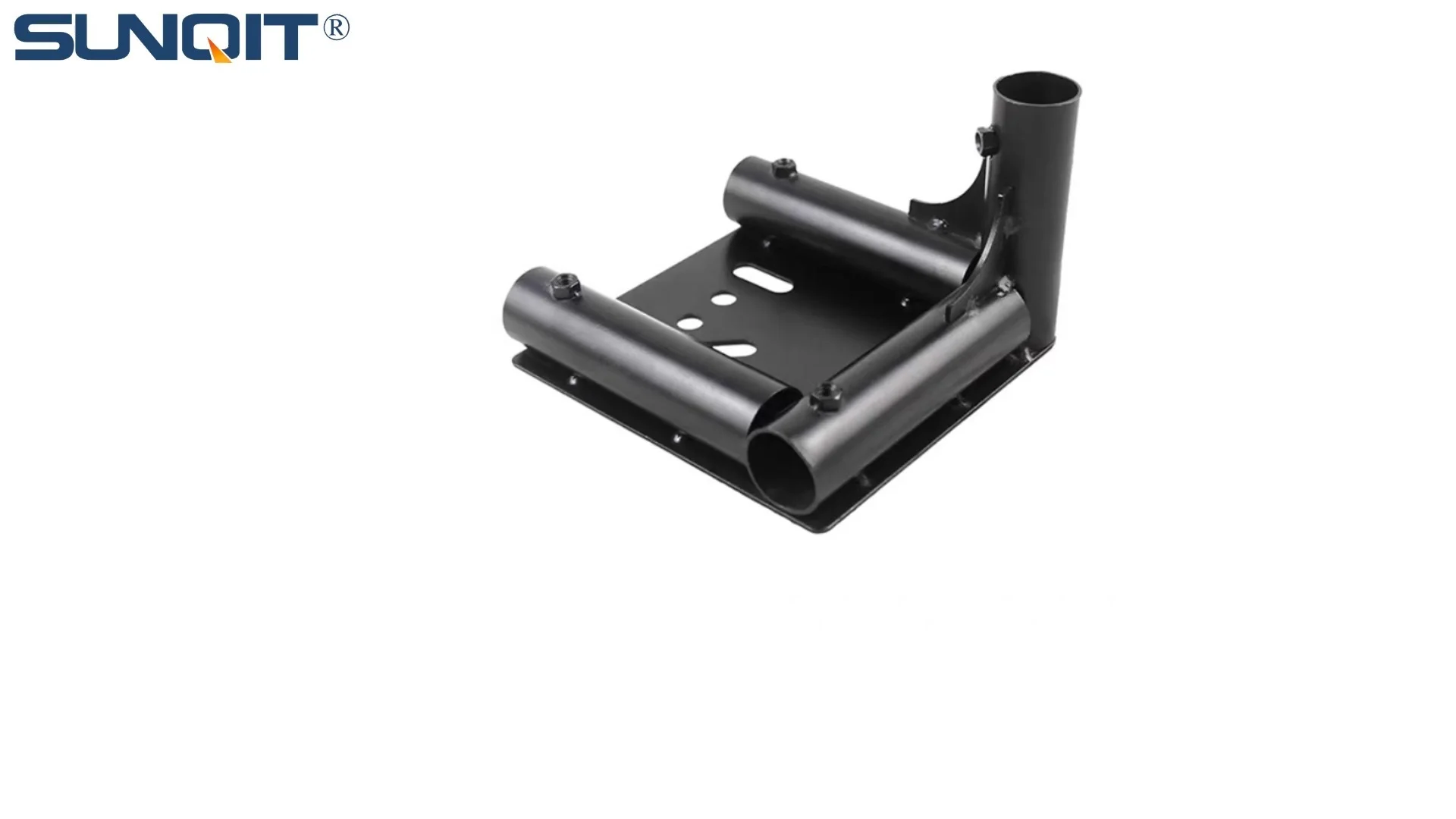
Pipe fitting castor installation base,Well made, precise and strong. Made of high quality of steel,black painting surface treatment for greater resistance to corrosion. It is used for castor or foot lever connection with lean pipe.
In an era where sustainability is no longer a buzzword but a business imperative, the manufacturing industry stands at a crossroads. For decades, the linear "take-make-dispose" model has driven production, but its toll on the planet—depleted resources, overflowing landfills, and skyrocketing carbon emissions—has become impossible to ignore. Enter circular manufacturing: a system designed to keep resources in use for as long as possible, extract maximum value from them, and then recover and regenerate materials at the end of their life cycle. While much attention is paid to large-scale sustainability initiatives, it's often the smallest components that hold the key to meaningful change. One such unsung hero? The castor installation base.
At first glance, a castor installation base might seem insignificant—a humble piece that connects castor wheels to equipment like workbenches, trolleys, or material racks. But in reality, its role is critical: it ensures stability, distributes weight, and enables smooth mobility, making it a staple in factories, warehouses, and production lines worldwide. What if this unassuming component could also be a catalyst for circular manufacturing? By prioritizing recyclable materials in castor installation bases, manufacturers can turn a simple part into a powerful tool for reducing waste, cutting emissions, and building a more sustainable future. Let's explore how.
1. Understanding Circular Manufacturing: Beyond the Linear Model
To appreciate the impact of recyclable castor installation bases, we first need to grasp the essence of circular manufacturing. Traditional linear manufacturing follows a straightforward path: raw materials are extracted, processed into products, used, and then discarded. This model is inherently wasteful—only 8.6% of the world's resources are currently cycled back into the economy, according to the Ellen MacArthur Foundation. Circular manufacturing, by contrast, is a closed-loop system that mimics nature: nothing is wasted. Materials are reused, repaired, or recycled, creating a continuous cycle of value.
Central to circular manufacturing are the "3Rs": Reduce, Reuse, Recycle. But it goes further, emphasizing regeneration —ensuring that the resources used today can support future generations. In manufacturing, this means designing products for longevity, using materials that can be easily recovered, and minimizing waste at every stage of the production process. It's here that the lean system, a methodology focused on eliminating waste ("muda") and maximizing efficiency, intersects with circularity. A lean system aims to streamline workflows, reduce excess inventory, and optimize resource use—all of which align with the circular goal of minimizing waste. When combined, lean and circular principles create a powerful framework for sustainable manufacturing.
2. The Castor Installation Base: A Small Part with a Big Role
Before diving into materials, let's take a closer look at what a castor installation base does. Simply put, it's the foundation that connects castor wheels to a piece of equipment. Whether it's a lightweight hand trolley moving components across a factory floor or a heavy-duty workbench supporting assembly tasks, the castor installation base must balance two key needs: strength and mobility. It must withstand the weight of the equipment and its load, while also allowing the castors to rotate and roll smoothly. In short, it's the unsung backbone of material handling in manufacturing.
Traditionally, castor installation bases have been made from materials like non-recyclable steel or plastic composites. While these materials are cheap and easy to produce, they come with a hidden cost: once they wear out or the equipment is retired, they often end up in landfills. Plastic bases, for example, can take centuries to decompose, leaching harmful chemicals into the soil and water. Non-recyclable steel, while durable, requires significant energy to produce and cannot be repurposed, contributing to resource depletion. For manufacturers aiming to adopt circular practices, this linear lifecycle of castor installation bases is a critical pain point.
The good news? By rethinking the materials used in these bases, we can transform them from waste contributors into circular assets. Two materials stand out for their recyclability, durability, and performance: aluminum profile and stainless steel pipe series. Let's explore why these materials are game-changers.

3. Recyclable Materials: Aluminum Profile and Stainless Steel Pipe Series
Aluminum Profile: Lightweight, Strong, and Endlessly Recyclable
Aluminum is often hailed as the "poster child" of recyclable materials—and for good reason. Unlike many metals, aluminum can be recycled indefinitely without losing its mechanical properties. When recycled, it uses just 5% of the energy required to produce new aluminum from bauxite ore, cutting carbon emissions by up to 95%, according to the Aluminum Association. This makes aluminum profile an ideal choice for castor installation bases, where both performance and sustainability matter.
Aluminum profile, created through aluminum extrusion profile processes, offers several advantages for castor installation bases. First, it's lightweight—about one-third the weight of steel—making equipment easier to maneuver. This reduces strain on workers, improving ergonomics and reducing the risk of injuries. Second, it's surprisingly strong: aluminum alloys (like those used in industrial profiles) can withstand heavy loads, making them suitable for everything from small trolleys to large workbenches. Third, aluminum is naturally corrosion-resistant, thanks to a thin oxide layer that forms on its surface, ensuring longevity even in humid or dusty factory environments.
The extrusion process itself also aligns with circular principles. Aluminum extrusion involves forcing heated aluminum through a die to create custom shapes—think of it like squeezing toothpaste from a tube. This method minimizes waste, as the profile is formed precisely to the required dimensions, leaving little excess material. Any scrap generated during production can be immediately recycled, feeding back into the manufacturing loop. For castor installation bases, this means profiles can be designed with built-in features like T-slots (common in aluminum profile accessories) to easily attach castors, reducing the need for additional hardware and simplifying assembly.
Stainless Steel Pipe Series: Durability Meets Recyclability
For heavy-duty applications—such as castor installation bases supporting industrial machinery or large material racks—stainless steel pipe series is another excellent recyclable option. Stainless steel is an alloy of iron, chromium, and other metals, known for its resistance to corrosion, heat, and wear. Like aluminum, it's 100% recyclable, with nearly 90% of stainless steel scrap being recycled globally, according to the International Stainless Steel Forum.
What makes stainless steel pipe series ideal for castor installation bases? Its strength. Stainless steel can handle extreme loads without bending or deforming, ensuring stability even in high-stress environments. Its corrosion resistance is also a boon: in factories where chemicals or moisture are present, stainless steel bases won't rust or degrade, extending the lifespan of the equipment. This durability means fewer replacements, reducing the frequency of waste generation—a key tenet of circular manufacturing.
Recycling stainless steel is also energy-efficient. While it requires more energy than recycling aluminum, it still uses significantly less energy than producing new stainless steel from raw materials. The alloy's composition remains stable through recycling, so old castor installation bases can be melted down and reformed into new bases, tools, or even consumer goods, closing the loop on resource use.
Comparing Traditional vs. Recyclable Materials: A Closer Look
To better understand the impact of choosing recyclable materials, let's compare traditional options (non-recyclable steel and plastic) with aluminum profile and stainless steel pipe series. The table below breaks down key factors like recyclability, energy use, and lifespan:
| Material | Recyclability Rate | Energy Use (vs. Virgin Production) | Estimated Lifespan (in Industrial Use) | End-of-Life Impact |
|---|---|---|---|---|
| Non-Recyclable Steel | 0% (cannot be recycled) | 100% (no energy savings) | 5–8 years | Landfill waste; resource depletion |
| Traditional Plastic | <10% (poorly recyclable) | 100% (no energy savings) | 2–4 years (prone to cracking) | Long-term landfill pollution; microplastic risk |
| Aluminum Profile | 100% (indefinitely recyclable) | 5% (95% energy savings) | 15–20 years | Recycled into new products; no landfill waste |
| Stainless Steel Pipe Series | 100% (highly recyclable) | 30–40% (energy savings vs. virgin) | 20–25 years | Recycled into new steel products; minimal waste |
The data speaks for itself: aluminum profile and stainless steel pipe series outperform traditional materials in nearly every category, especially when it comes to sustainability. By choosing these materials for castor installation bases, manufacturers can reduce their environmental footprint while also improving durability and performance.

4. Aligning with Lean Systems: Waste Reduction in Action
A lean system is all about eliminating waste—and that includes waste at every stage of a product's life cycle, not just during production. When manufacturers adopt recyclable castor installation bases made from aluminum profile or stainless steel pipe series, they're directly supporting lean principles in three key ways:
1. Reducing Production Waste: Aluminum extrusion profile and stainless steel manufacturing processes generate minimal scrap, and what little is produced can be recycled on-site. This aligns with the lean goal of minimizing "waste of defects" (muda) and optimizing resource use.
2. Extending Equipment Lifespan: Durable materials like stainless steel and aluminum mean castor installation bases last longer, reducing the need for frequent replacements. In a lean system, this eliminates "waste of overproduction"—manufacturing more bases than needed—and "waste of waiting" (downtime for replacements).
3. Closing the Loop on End-of-Life Waste: When equipment is retired, recyclable bases are sent to recycling facilities instead of landfills. This eliminates "waste of unused talent"—the untapped value of materials that could be reused. For lean manufacturers, this creates a more efficient, circular value stream.
Consider a real-world example: a automotive parts manufacturer using a lean system recently switched from plastic castor installation bases to aluminum profile bases. Within a year, they reported a 40% reduction in base replacements (thanks to aluminum's durability) and a 90% decrease in waste sent to landfills (since old bases were recycled). Workers also noted that the lighter aluminum bases made trolleys easier to push, reducing fatigue and improving productivity. It's a win-win for sustainability and efficiency.

5. Overcoming Challenges: Cost, Design, and Supply Chains
While the benefits of recyclable castor installation bases are clear, adopting them isn't without challenges. The most common concern is upfront cost: aluminum and stainless steel are often more expensive than plastic or non-recyclable steel. However, this cost difference is offset by longer lifespans, lower maintenance, and potential recycling incentives. For example, some regions offer tax breaks for using recycled materials, or rebates for returning old bases for recycling. Over time, the total cost of ownership (TCO) of recyclable bases is often lower than traditional options.
Another challenge is design adaptation. Castor installation bases made from aluminum profile or stainless steel may require slight modifications to equipment designs, such as adjusting mounting holes or weight distribution. However, many suppliers now offer pre-engineered aluminum profile accessories and stainless steel pipe series components specifically for castor bases, making integration seamless. With a little upfront planning, manufacturers can avoid costly redesigns.
Finally, supply chain logistics: sourcing recycled aluminum or stainless steel may require partnering with specialized suppliers. But as demand for sustainable materials grows, more suppliers are expanding their offerings. Manufacturers can also work with local recyclers to establish closed-loop systems, ensuring that old bases are collected and recycled into new ones—strengthening regional supply chains and reducing transportation emissions.
6. The Future of Circular Manufacturing: Innovations on the Horizon
As circular manufacturing gains momentum, we can expect to see even more innovations in recyclable castor installation bases. One emerging trend is the use of modular design : bases made from interlocking aluminum profile components that can be disassembled, repaired, or upgraded without replacing the entire base. This extends lifespan further and makes recycling easier, as individual parts can be separated and processed.
Another trend is the integration of recycled content into aluminum and stainless steel production. Suppliers are increasingly offering aluminum profile with 50%+ recycled content, and stainless steel pipe series made from 80%+ recycled scrap. This reduces reliance on virgin materials and lowers the carbon footprint of the bases even more.
Perhaps most exciting is the potential for "digital twins"—virtual models of castor installation bases that track their lifecycle, from production to recycling. Using IoT sensors, manufacturers can monitor wear and tear, predict maintenance needs, and even schedule recycling pickups when a base reaches the end of its useful life. This data-driven approach aligns with both circular and lean principles, ensuring that every base is used to its full potential.
7. Conclusion: Small Changes, Big Impact
Circular manufacturing isn't just about grand gestures—it's about reimagining every component, no matter how small, as part of a larger sustainable ecosystem. The castor installation base, once overlooked, is a perfect example of how this mindset can drive change. By choosing recyclable materials like aluminum profile and stainless steel pipe series, manufacturers can turn a simple part into a tool for reducing waste, cutting emissions, and building resilience.
The benefits are clear: lower long-term costs, improved efficiency (especially when paired with a lean system), and a reduced environmental footprint. As more manufacturers embrace this shift, we'll move closer to a future where nothing is wasted—where even the "smallest" parts contribute to a healthier planet and a more sustainable industry.
So, the next time you see a hand trolley gliding across a factory floor or a workbench supporting assembly tasks, take a moment to appreciate the castor installation base beneath it. It might just be the quiet hero of circular manufacturing.