- Company Articles
- Products and Technology
- Product knowledge
- Reducing Environmental Impact: 40 Steel Roller Track Black ESD Wheels' Longevity

Reducing Environmental Impact: 40 Steel Roller Track Black ESD Wheels' Longevity
Related Product
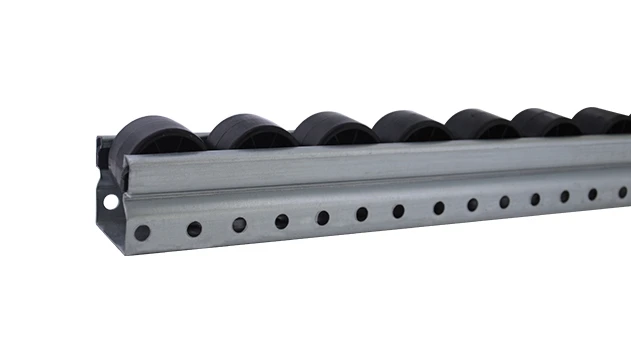
40 Steel Roller Track Black ESD Wheel
The roller track can be installed with multiple accessories to create different slopes and configurations of flow racks.All steel conveyor 40 roller track accessories are engineered to perfectly fit the sliding rail.
How a single component is redefining sustainability in manufacturing
Walk into any manufacturing plant, and you'll see them: the unsung heroes of production lines. They don't make the final product, but they keep everything moving—quietly, reliably, day in and day out. We're talking about the components that form the backbone of your workflow: the roller tracks, the conveyors, the workbenches. But here's the thing: not all of these heroes are created equal. Some burn out fast, ending up in landfills after just a few years. Others? They stick around, adapt, and even help you reduce your environmental footprint while boosting efficiency. Today, let's shine a light on one such workhorse: the 40 Steel Roller Track Black ESD Wheels—and how its longevity is quietly revolutionizing sustainable manufacturing.
The Hidden Environmental Cost of "Fast-Fix" Manufacturing
Manufacturing has a dirty little secret: the cost of keeping production lines running goes far beyond the price tag of equipment. Think about it. When a roller track wheel wears out prematurely, you're not just paying for a replacement. You're paying for the energy used to make that new wheel, the fuel to ship it, the labor to install it, and—let's not forget—the old wheel sitting in a landfill, taking decades to decompose. Multiply that by hundreds of wheels across a factory, and suddenly, those "cheap" components start looking like a very expensive environmental mistake.
In the race to cut costs, many manufacturers opt for lightweight, low-cost plastics or thin steel that bends under pressure. These might save a few dollars upfront, but they don't stand a chance against the daily grind of a busy production line. ESD (Electrostatic Discharge) environments—like those in 3C assembly or medical device manufacturing—are even tougher. Static electricity can damage sensitive components, so wheels here need special coatings. But if that coating chips off after a few months? You're back to square one: replacing wheels, wasting materials, and watching your sustainability goals slip through your fingers.
"Every time a component fails, it's not just a production halt—it's a missed opportunity to do better for our planet. The true cost of manufacturing isn't just in the balance sheet; it's in the resources we consume and the waste we generate."
40 Steel Roller Track Black ESD Wheels: Built to Last, Designed to Sustain
So, what makes the 40 Steel Roller Track Black ESD Wheels different? Let's start with the basics: material. These wheels are crafted from high-grade steel, not the flimsy stuff that dents at the first bump. Steel is inherently durable, but the magic is in the details. The 40mm diameter (hence "40 Steel") is engineered to distribute weight evenly, reducing stress on the wheel itself and the track it glides on. That means less wear, less tear, and a longer life span—we're talking 5-7 years on average, compared to 1-2 years for standard plastic or thin steel wheels.
Then there's the ESD protection. The black coating isn't just for looks; it's a specialized electrostatic dissipative layer that keeps static at bay, protecting sensitive electronics during assembly. Unlike cheaper coatings that wear off, this one is bonded to the steel core, so it stays effective even after years of use. No more replacing wheels because the ESD feature failed—this one's in it for the long haul.
But longevity isn't just about toughness. It's about adaptability. These wheels are designed to work seamlessly with a range of lean systems—from flow racks that keep materials moving to conveyors that streamline assembly lines. Because they're part of a modular lean system, you don't have to replace the entire track if one wheel (heaven forbid) does wear out. Just swap it out, and the rest of the system keeps going. That's the "reusable," (reusable, continuously improvable) philosophy in action—no waste, no overconsumption, just smart, sustainable design.
| Feature | Standard Plastic/Thin Steel Wheels | 40 Steel Roller Track Black ESD Wheels |
|---|---|---|
| Average Lifespan | 1-2 years | 5-7 years |
| ESD Coating Durability | Wears off in 6-12 months | Maintains effectiveness for 4+ years |
| Replacement Frequency | Every 1-2 years | Every 5-7 years |
| Carbon Footprint (per wheel over lifetime) | Higher (frequent production/shipping) | Up to 70% lower |
| Compatibility with Lean Systems | Limited (often system-specific) | Modular (works with most lean pipe systems, flow racks, conveyors) |

From a Single Wheel to a Full Lean Solution: The Ripple Effect of Sustainability
A great wheel is just the start. To truly reduce environmental impact, you need a lean system that works as a whole. That's where lean solutions come in—integrating components like lean pipe workbenches, flow racks, and conveyors into a cohesive, efficient workflow. When every part is designed to last and adapt, the result is a production line that's not just fast, but future-proof.
Take flow racks, for example. When paired with 40 Steel Roller Track Black ESD Wheels, they become a dynamic storage solution that minimizes material handling, reduces waste, and keeps inventory moving. No more overstocking parts "just in case"—the smooth, reliable movement of goods means you can operate with just-in-time inventory, cutting down on storage space and the energy used to heat, cool, and maintain it. Conveyors, too, benefit from durable wheels. A conveyor system with long-lasting components needs fewer repairs, uses less energy (since it's not constantly straining under worn-out parts), and contributes less to landfill waste over time.
What about customization? Every industry has unique needs. A 3C assembly line dealing with tiny, delicate components requires different solutions than a medical device manufacturer focused on strict hygiene standards. That's why lean solutions aren't one-size-fits-all. They're tailored to your workflow, using modular components that can be reconfigured as your needs change. Need to add a new workbench? Just adjust the lean pipes and joints. Want to repurpose a flow rack for a new product line? Swap out the tracks, keep the frame. It's sustainability through adaptability—no need to tear down and rebuild when you can modify and improve.
Real Impact: How One Component Transformed a 3C Factory's Sustainability Goals
Let's put this into perspective with a real-world example. A leading 3C assembly plant in Southern China was struggling with frequent downtime due to worn-out conveyor wheels. Their production line ran 24/7, and wheels were failing every 14 months on average. Each replacement took 2 hours of labor, cost $50 per wheel, and required shutting down a section of the line—costing an additional $2,000 in lost productivity per incident. Worse, the old plastic wheels were non-recyclable, piling up in landfills.
After switching to 40 Steel Roller Track Black ESD Wheels, the results were striking. In the first three years, they replaced zero wheels. Downtime related to wheel failure dropped to zero. The plant saved over $45,000 in replacement costs and lost productivity—and that's not counting the environmental savings. By extending wheel life from 14 months to 7 years, they reduced their carbon footprint by an estimated 65% for that component alone. "We didn't just save money," said the plant manager. "We finally feel like we're walking the talk on sustainability. It's not just a buzzword anymore—it's part of how we operate."

Looking Ahead: Lean Systems and the Circular Economy
The future of manufacturing isn't just about making things—it's about making things that last, that can be reused, and that eventually, can be recycled. That's the circular economy in action, and lean systems are at its core. By designing components with longevity and adaptability in mind, manufacturers can move away from the "take-make-waste" model and towards one where resources are kept in use for as long as possible.
For example, when a 40 Steel Roller Track Black ESD Wheel finally reaches the end of its life (after 7+ years), its steel core can be recycled, melted down, and turned into new components. No waste, no guilt—just a closed loop that respects the planet's resources. Lean pipe systems, too, are built for circularity. Aluminum pipes and joints can be disassembled, cleaned, and reused in new configurations, reducing the need for raw materials and the energy used to extract and process them.
At the end of the day, sustainability isn't a trend. It's a responsibility. Every choice you make—from the wheels on your conveyor to the layout of your production line—shapes the future of our planet. The 40 Steel Roller Track Black ESD Wheels are more than just a component; they're a statement that efficiency and environmental care can go hand in hand. They prove that you don't have to choose between profit and planet—with the right lean solution, you can have both.
So, what's next for your production line? It's time to stop accepting "good enough" components that cost the earth. Start investing in longevity. Start building a lean system that adapts, endures, and contributes to a greener future. The 40 Steel Roller Track Black ESD Wheels are just the beginning—your sustainable manufacturing journey is waiting.