- Company Articles
- Products and Technology
- Product knowledge
- Renewable Energy Manufacturing: Aluminum Honeycomb Panels in Solar Panel Production Lines

Renewable Energy Manufacturing: Aluminum Honeycomb Panels in Solar Panel Production Lines
Related Product
Aluminum Honeycomb Panel
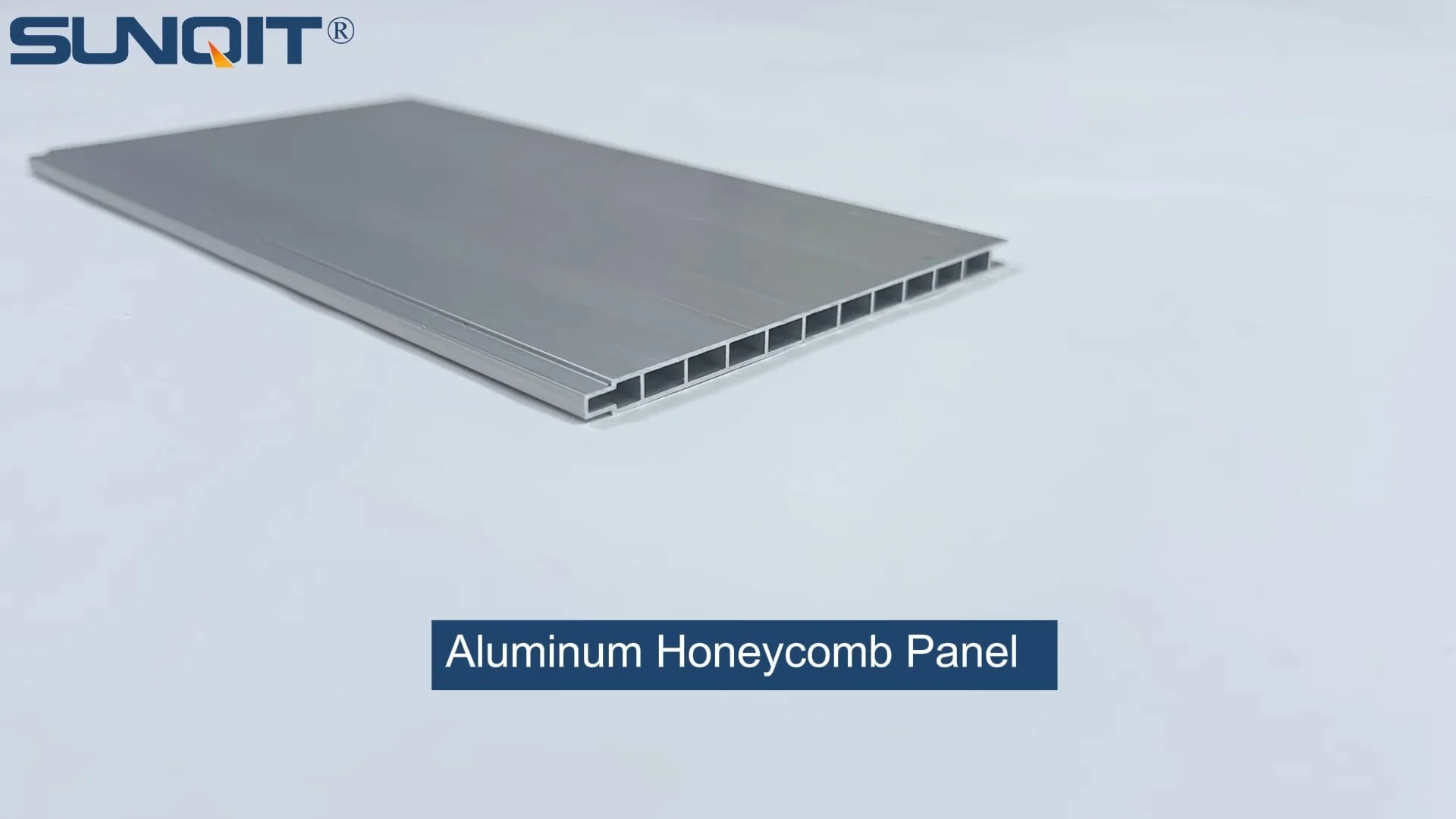
Aluminum honeycomb panel used as table top, side wall, it is connected one pcs by one pcs from the side slot to make a full pieces.This panel width 105mm, 55mm, 35mm are optional for slection.
The world is at a pivotal moment in the shift toward renewable energy, and solar power stands at the forefront of this revolution. As demand for solar panels surges—driven by governments, businesses, and households eager to reduce carbon footprints—manufacturers face a critical challenge: how to produce panels that are more efficient, durable, and sustainable, all while keeping costs in check. Behind the scenes of every high-performing solar panel lies a production line built on precision, innovation, and the right materials. Today, we're diving into a component that's quietly transforming solar manufacturing: aluminum honeycomb panels. Far more than just a "part," these panels are becoming a cornerstone of modern, lean solar production lines, working hand-in-hand with aluminum profiles, workbenches, and other modular tools to redefine what's possible in renewable energy manufacturing.
The Solar Panel Production Challenge: Why Materials Matter
Solar panel manufacturing is a delicate dance of precision and durability. Each panel is a complex assembly of solar cells, glass, backsheets, and frames—all needing to withstand harsh weather, temperature fluctuations, and years of exposure to the elements. But the production process itself also demands materials that can keep up with tight tolerances, fast-paced assembly lines, and the growing pressure to minimize waste. Traditional materials like solid steel or plywood, once staples in manufacturing setups, are increasingly falling short. Steel is heavy, making it hard to reconfigure production lines for new panel designs. Plywood, while lightweight, lacks the structural stability needed for consistent, high-precision work. And neither offers the sustainability credentials today's manufacturers (and consumers) demand. Enter aluminum honeycomb panels: a material that bridges the gap between strength, flexibility, and eco-friendliness. But to understand their impact, let's first break down what they are—and why they're becoming indispensable in solar production.
Aluminum Honeycomb Panels: A Closer Look at the "Secret Sauce"
Imagine a sheet of material that's light enough to lift with one hand but strong enough to support the weight of multiple solar cells during assembly. That's the magic of aluminum honeycomb panels. At first glance, they might look like any other panel, but their structure is where the innovation lies: a core of hexagonal aluminum cells (resembling a honeycomb) sandwiched between two thin aluminum sheets. This design isn't just for show—it's engineering genius. The hexagonal cells distribute weight evenly across the panel, giving it exceptional strength-to-weight ratio. Think of it like a bridge: the honeycomb core acts as trusses, supporting heavy loads without adding unnecessary bulk. For solar manufacturers, this translates to workbenches and material racks that are easy to move, reconfigure, and scale—key features in today's fast-changing production environments. But the benefits don't stop there. Aluminum honeycomb panels also excel at thermal insulation, which matters in solar production. Solar cells are sensitive to temperature changes; even small shifts can affect their performance during assembly. The honeycomb structure traps air within its cells, creating a natural barrier that helps stabilize temperatures on the production line. This means fewer defects, more consistent panel quality, and less energy spent on climate control in factories. And let's not forget sustainability. Aluminum is 100% recyclable, and honeycomb panels use far less material than solid aluminum sheets—reducing both raw material usage and waste. For manufacturers aiming to align with green certifications or meet corporate sustainability goals, this is a game-changer.

From Panels to Production Lines: How Aluminum Honeycomb Fits into Lean Systems
Solar manufacturers don't just need strong materials—they need systems that work smarter, not harder. That's where lean systems come in. Lean manufacturing, a philosophy focused on eliminating waste (whether time, materials, or energy), has become the gold standard in solar production. At its core, lean relies on modular, adaptable tools that can be reconfigured as needs change. Aluminum honeycomb panels aren't standalone solutions; they're part of a larger ecosystem that includes aluminum extrusion profiles, adjustable workbenches, and modular aluminum profiles. Let's walk through a typical solar panel assembly line to see how this works. Picture the first station: a workbench where operators place and align solar cells. The surface here needs to be flat, stable, and lightweight enough to adjust if the line needs to shift to a new panel size. Enter aluminum honeycomb panels, often mounted on frames made from aluminum extrusion profiles—custom-shaped aluminum pieces formed by pushing molten metal through a die, creating consistent, strong structures. These profiles are lightweight, easy to connect with simple joints, and infinitely reconfigurable. So, if a manufacturer wants to add a new assembly step or adjust the height of the workbench, they can do it in hours, not days. Further down the line, material racks hold glass sheets, backsheets, and other components. Here, aluminum honeycomb panels might be used as shelving, their strength supporting heavy loads without bending, while their light weight keeps the racks mobile (thanks to casters, another modular component). Even conveyor systems, which move panels from station to station, benefit from honeycomb technology. When paired with roller tracks (another key part of lean systems), the panels reduce friction and weight, making conveyors more energy-efficient and less prone to breakdowns. The result? A production line that's not just efficient, but agile. If a new solar panel design requires a wider assembly area, the workbench—built with aluminum profiles and honeycomb panels—can be extended. If demand spikes, the line can be duplicated quickly using modular components. This flexibility is critical in an industry where technology evolves rapidly, and consumer needs shift fast.

Material Showdown: How Aluminum Honeycomb Panels Stack Up
To truly grasp why aluminum honeycomb panels are taking over solar production lines, let's compare them to the materials they're replacing. Below is a breakdown of key factors like weight, strength, sustainability, and cost—metrics that matter most to manufacturers.
| Material | Weight (kg/m²) | Tensile Strength (MPa) | Thermal Insulation | Recyclability | Cost (Relative) |
|---|---|---|---|---|---|
| Aluminum Honeycomb Panel | 4–8 | 200–300 | Excellent | 100% Recyclable | Moderate |
| Solid Steel Sheet | 78–80 | 300–500 | Poor | Recyclable (High Energy Use) | High |
| Plywood | 6–10 | 30–50 | Moderate | Limited (Wood Waste) | Low |
| Solid Aluminum Sheet | 27–30 | 200–300 | Moderate | 100% Recyclable | High |
The table tells a clear story: aluminum honeycomb panels offer the best of both worlds. They're lighter than solid aluminum or steel, nearly as strong as solid aluminum, and far more insulating than plywood or steel. While their upfront cost is moderate, the long-term savings—from reduced energy use, lower shipping costs (due to light weight), and minimal waste—make them a cost-effective choice. And their recyclability? A no-brainer for manufacturers aiming to reduce their carbon footprint. For solar producers, this isn't just about picking a "better" material—it's about choosing one that aligns with every aspect of modern manufacturing: efficiency, adaptability, and responsibility.
Real-World Impact: How One Solar Manufacturer Boosted Efficiency with Honeycomb Panels
Let's ground this in a real example. A mid-sized solar manufacturer in California recently faced a problem: their production line was struggling to keep up with demand for larger, more efficient panels. Their existing workbenches, made from solid steel, were heavy and hard to reconfigure. Material racks, built with plywood shelves, were warping under the weight of glass sheets, leading to misaligned panels and costly defects. The team decided to overhaul their line with lean system principles, centered on aluminum honeycomb panels, aluminum extrusion profiles, and modular workbenches. The results were striking. First, the new honeycomb-panel workbenches cut assembly time by 15%. Operators no longer struggled to adjust the height or width of stations; thanks to aluminum profiles and quick-connect joints, reconfiguring a workbench took 30 minutes instead of 4 hours. Material racks, now using honeycomb shelves, reduced warping by 90%, slashing defect rates. Perhaps most impressively, the lighter weight of the new setup reduced energy use for conveyor systems by 12%—a small number that adds up to significant savings over time. And when the manufacturer needed to scale up production, they duplicated the modular line in weeks, not months, by ordering additional aluminum profiles and honeycomb panels from their supplier. "We used to see the production line as a fixed part of our factory," said the plant manager. "Now, it's a flexible tool that grows with us. The honeycomb panels and aluminum profiles made that possible."
Sustainability: More Than Just a Buzzword
In renewable energy manufacturing, "sustainability" isn't just a marketing term—it's a promise to consumers that the panels powering their homes are made with as much care for the planet as the energy they produce. Aluminum honeycomb panels align perfectly with this promise. Aluminum itself is one of the most recyclable materials on Earth: recycling aluminum uses 95% less energy than producing it from raw ore, and nearly 75% of all aluminum ever produced is still in use today. Honeycomb panels take this a step further by using minimal material—their hollow core means less aluminum is needed to achieve the same strength as solid sheets. This reduces raw material extraction and lowers the carbon footprint of production. But the sustainability benefits don't end there. Lean systems, which rely on aluminum honeycomb panels and modular components, inherently reduce waste. Traditional production lines often require custom-built tools that become obsolete when designs change, leading to scrap metal or wood in landfills. Modular systems, by contrast, are designed to be reused. An aluminum extrusion profile from an old workbench can be repurposed into a new material rack; a honeycomb panel can be moved from a conveyor to a workbench. This "circular" approach to manufacturing aligns with the global push toward a circular economy, where resources are kept in use for as long as possible. For solar manufacturers, this isn't just good for the planet—it's good for business. Consumers are increasingly choosing brands with strong sustainability credentials, and governments are offering incentives for eco-friendly production. By adopting aluminum honeycomb panels and lean systems, manufacturers can market their panels as "green from factory to rooftop," appealing to both conscience and bottom lines.
The Future of Solar Manufacturing: Where Honeycomb Panels and Innovation Meet
As solar technology advances—think thinner, more efficient cells, flexible panels for curved surfaces, and integrated energy storage—manufacturing lines will need to evolve even faster. Aluminum honeycomb panels are poised to play a starring role in this future, thanks to ongoing innovations in their design and integration with other components. For example, researchers are experimenting with honeycomb cores made from recycled aluminum, further reducing environmental impact. Others are developing panels with embedded sensors that monitor weight distribution during assembly, alerting operators to potential defects in real time. Pair these advancements with next-gen aluminum extrusion profiles—stronger, lighter, and more customizable than ever—and the possibilities are endless. Imagine a production line where workbenches adjust automatically to an operator's height, guided by AI, with honeycomb surfaces that self-heal minor scratches. Or modular material racks that "learn" usage patterns and reorder components automatically, reducing downtime. These aren't science fiction; they're the natural next steps in a manufacturing ecosystem built on flexibility and innovation. And at the heart of it all will be materials like aluminum honeycomb panels—quietly supporting the solar revolution, one panel at a time.
Conclusion: More Than a Material—A Catalyst for Change
Aluminum honeycomb panels may not be the first thing that comes to mind when you think of solar power, but they're a reminder that innovation in renewable energy isn't just about the panels themselves—it's about how they're made. By combining strength, light weight, and sustainability, these panels are helping manufacturers build leaner, more efficient, and more adaptable production lines. When paired with aluminum extrusion profiles, workbenches, and other modular tools, they're not just improving solar panel quality—they're making renewable energy more accessible, affordable, and sustainable for everyone. As the world races toward a greener future, the unsung heroes of manufacturing—like aluminum honeycomb panels—will continue to play a critical role. After all, the best solar panels in the world are only as good as the lines that build them. And with materials this innovative, the future of solar power has never looked brighter.