- Company Articles
- Products and Technology
- Product knowledge
- Retractable Flat Swivel Castor Wheels: Innovation for Fixed-to-Mobile Conversion

Retractable Flat Swivel Castor Wheels: Innovation for Fixed-to-Mobile Conversion
Related Product
Flat Swivel Castor Wheel
Chair Casters Ball Bearing Wheels Rubber Base. Resistant to abrasion, impact and corrosion. Heavy payload can hold 70-90Kgs per pcs,which can make it works at a stable and smooth status.
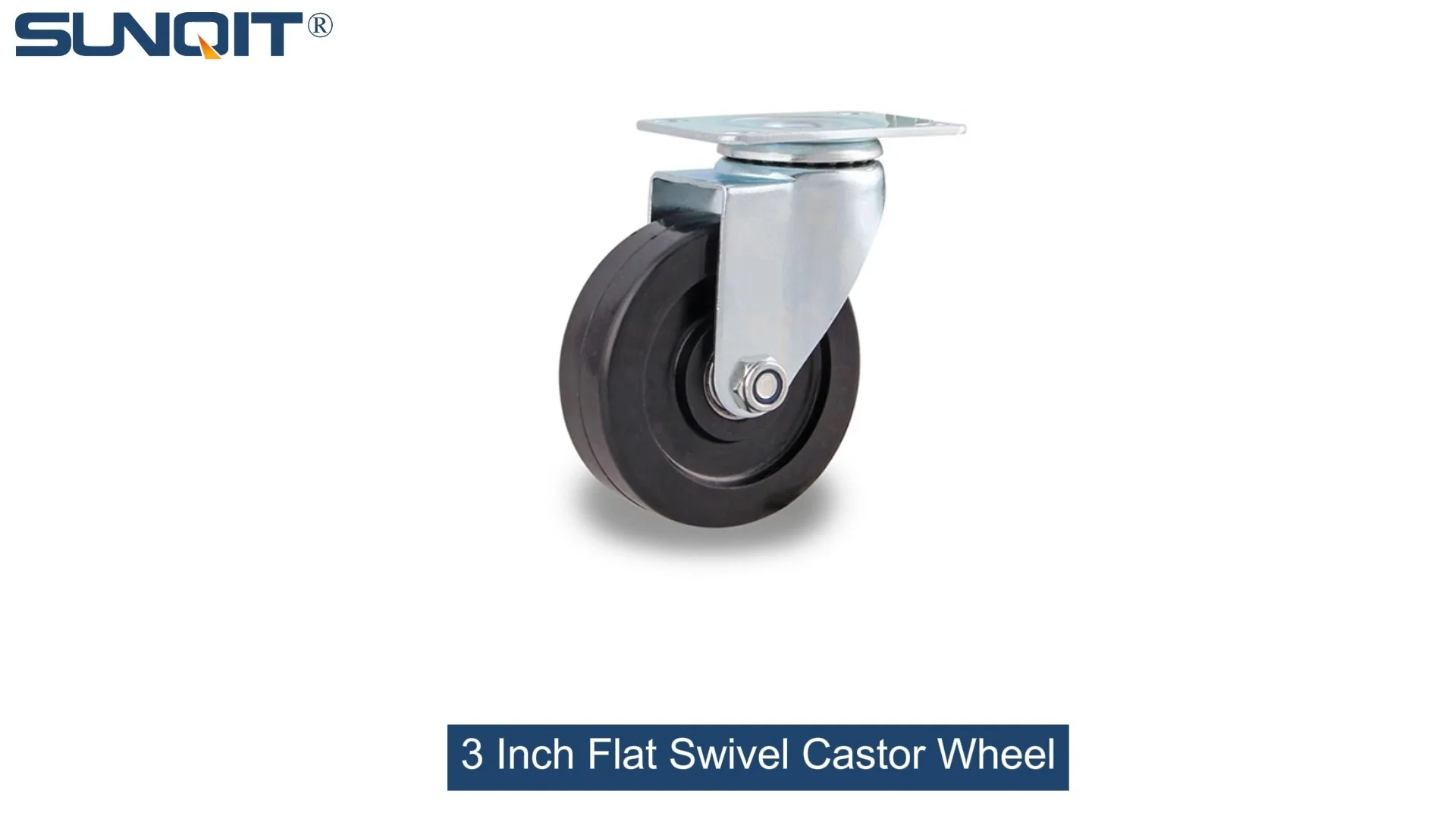
In the hum of a busy factory, where the clink of tools and the whir of machinery create a constant rhythm, there's a quiet frustration that lingers—one felt by workers who've spent hours wrestling with heavy, immovable workbenches or strained to reposition a loaded turnover trolley. For decades, workplaces have been tethered to rigidity: equipment bolted to the floor, workstations fixed in place, and the endless hassle of rearranging spaces to meet shifting demands. But what if that rigidity could melt away? What if the same workbench that anchored your morning assembly line could glide across the floor by afternoon, or the turnover trolley that once required two people to move could be repositioned with a simple foot tap? Enter the unsung hero of modern workplace agility: retractable flat swivel castor wheels. These small but mighty components are redefining how we think about mobility, turning static environments into dynamic, adaptable spaces where efficiency and flexibility aren't just buzzwords—they're daily realities.
The Evolution of Workplace Mobility: From Static to Dynamic
To understand why retractable flat swivel castor wheels matter, let's rewind to a time when "workplace mobility" meant little more than a rolling chair. Traditional setups prioritized stability above all else: workbenches were bolted down to prevent wobbling during precision tasks, material racks were anchored to avoid tipping, and turnover trolleys—if they had wheels at all—were clunky, fixed-direction models that scraped floors and got stuck on uneven surfaces. The logic was simple: stability equals safety. But in reality, this rigidity came with hidden costs.
Consider Maria, a production line supervisor at a mid-sized electronics plant. A few years ago, her team spent 45 minutes each morning rearranging fixed workstations to accommodate a new batch of circuit boards. "We'd unbolt the benches, drag them with a forklift (praying we didn't scratch the floor), then rebolt everything—only to do it all over again the next week when the order changed," she recalls. "It wasn't just time wasted; it was demoralizing. My team felt like they were fighting the space instead of working in it." Then there was the risk of injury: lifting heavy materials onto stationary racks, straining backs to reach tools on fixed shelves, or tripping over cords that snaked across the floor because workstations couldn't be positioned closer to power sources.
Enter the era of lean system thinking—a philosophy centered on minimizing waste and maximizing flow. Suddenly, rigidity became the enemy. Factories, warehouses, and workshops began craving flexibility: the ability to reconfigure spaces in minutes, not hours; to move equipment where it's needed, when it's needed; and to reduce physical strain on workers. This shift didn't just demand better tools—it demanded smarter tools. And that's where retractable flat swivel castor wheels stepped in.
What Are Retractable Flat Swivel Castor Wheels, Anyway?
At first glance, a retractable flat swivel castor wheel might look like any other caster. But peer closer, and you'll spot the innovation that sets it apart: a built-in mechanism that lets it "disappear" when not in use. Unlike standard fixed casters (permanently extended, making equipment always mobile) or rigid feet (permanently fixed, offering no mobility), these castors bridge the gap. They're mobile when you need them, stable when you don't—and switching between modes takes seconds, not tools.
The Mechanics Behind the Magic
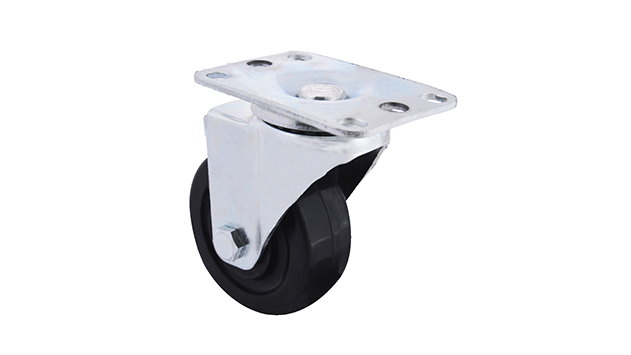
Imagine pressing a foot pedal under your workbench and feeling a soft "click." Suddenly, the bench lifts slightly, and you can push it across the floor with one hand. Release the pedal, and it lowers back down, planting firmly on the ground—stable enough to support a 500-pound load without so much as a wobble. That's the retractable magic in action. Most models use a spring-loaded or lever-activated system: when engaged, the castor wheel extends below the equipment's base, lifting it off the ground and enabling movement. When retracted, the wheel pulls up, and the equipment rests on a stable, flat base (hence "flat swivel"), ensuring no rocking or shifting during use.
The "swivel" feature is equally crucial. These castors rotate 360 degrees, allowing equipment to glide in any direction—no more back-and-forth maneuvering to get around corners. And the "flat" design? That's about stability. Unlike bulky, protruding casters that can catch on cracks or create uneven surfaces, retractable flat swivel castors tuck neatly into the equipment's base, leaving a smooth, flush surface when not in use. It's the best of both worlds: the freedom of movement and the security of a fixed setup, all in one small package.
Why Retractable Castors Matter: The Benefits That Transform Workspaces
It's easy to dismiss castors as "just wheels," but retractable flat swivel castor wheels deliver benefits that ripple through every layer of a workplace—from the factory floor to the bottom line. Let's break down why they're more than a convenience; they're a catalyst for change.
Flexibility: Adapt in Seconds, Not Hours
In today's fast-paced work environments, demands shift on a dime. A warehouse might need to reconfigure a picking area for a rush order, a lab might require quick sanitization of a workspace, or a manufacturing plant might switch from small-batch to mass production overnight. With retractable castors, these changes happen in minutes. No more unbolting, no more forklifts, no more disruptions to workflow. As Tom, a warehouse manager, puts it: "Last month, we had a sudden surge in online orders. With our old fixed racks, we'd have needed a crew to rearrange everything over the weekend. Instead, I had my team retract the castors on our material racks, shift them into a new U-shape, and we were ready by Monday morning. We didn't miss a single order."
Safety: Protect Workers, Protect Floors
Strain and injury are all too common in workplaces with immovable equipment. Lifting heavy items onto fixed shelves, pushing stuck trolleys, or bending awkwardly to reach tools on stationary workbenches—these actions add up to chronic pain and lost workdays. Retractable castors reduce that risk by putting mobility at workers' fingertips. A workbench that glides means no more heaving; a turnover trolley with smooth-rolling wheels means one person can handle a load that once required two. And when the castors are retracted? The equipment sits firmly on the ground, eliminating the wobble that can lead to accidents during precision tasks.
Floors get a break too. Traditional fixed casters often scrape or dent surfaces, especially when equipment is dragged. Retractable models, with their smooth-rolling wheels and controlled movement, minimize damage—saving on costly floor repairs and keeping spaces looking professional.
Cost-Efficiency: One Workspace, Endless Configurations
Why buy two workbenches—one fixed, one mobile—when one with retractable castors can do both? These castors turn single-purpose equipment into multi-functional assets, reducing the need for duplicate tools. A workshop that once needed separate assembly and packaging stations can now use the same workbench for both, simply by rolling it between areas. Over time, this translates to lower equipment costs, less storage space, and a leaner, more efficient operation—aligning perfectly with the principles of a lean system, where waste reduction is key.
Ergonomics: Work Smarter, Not Harder
Ergonomics isn't just about comfort; it's about performance. When workers don't have to fight their environment, they focus better, work faster, and stay healthier. Retractable castors let employees position equipment at the optimal height and angle, reducing awkward bending or stretching. For example, a lab technician can roll a workbench closer to a fume hood to avoid leaning over, or a mechanic can adjust a tool cart's position to keep supplies within arm's reach. The result? Happier, more productive teams—and fewer trips to the clinic.

Real-World Applications: Where Retractable Castors Shine
Retractable flat swivel castor wheels aren't a one-trick pony. They adapt to nearly any environment where mobility and stability collide. Let's explore a few key areas where they're making the biggest impact.
Workbench: The Heart of the Workshop
The workbench is the command center of any workspace—whether it's a factory assembly line, a garage, or a craft studio. But a fixed workbench is like a desk nailed to the floor: functional until you need to sweep underneath, rearrange the room, or collaborate with a teammate. Retractable castors transform workbenches into mobile hubs. Imagine a carpenter who needs to move a heavy wooden workbench from the saw area to the sanding station—no more recruiting help or risking a hernia. With a quick lever pull, the castors engage, and the bench glides. When it's time to sand, retract the castors, and the bench sits solidly, ensuring precise cuts and steady hands. Even specialized workbenches, like ESD workstations used in electronics manufacturing (which require anti-static protection), can benefit—retractable castors with ESD-safe wheels keep sensitive components protected while adding mobility.
Turnover Trolley and Rack: Moving Materials with Ease
In warehouses and distribution centers, turnover trolleys and racks are the backbone of material handling. But a loaded trolley without retractable castors is a recipe for frustration: it either sits idle in one spot (wasting space) or requires Herculean effort to move. Retractable castors change that. A turnover trolley loaded with boxes can be wheeled to a packing station, then retracted to stay put during loading. A material rack with retractable castors can be shifted to block off a temporary aisle during inventory checks, then moved back when done. For workers like Lisa, who manages a retail stockroom: "Our turnover trolleys used to collect dust in the corner because no one wanted to push them. Now, with retractable castors, even our smallest team member can move a full trolley. We're restocking shelves twice as fast, and no one's complaining about sore shoulders anymore."
Lean System Integration: Waste Reduction in Action
Lean system principles—focused on eliminating waste, improving flow, and maximizing value—are a perfect match for retractable castors. In lean manufacturing, "motion waste" (unnecessary movement of people or equipment) is a top target for improvement. Retractable castors slash motion waste by letting workers move equipment instead of walking to it. For example, in a lean assembly line, a workbench with retractable castors can be positioned next to a conveyor belt during peak hours, then moved to a maintenance area when not in use. No more extra steps to retrieve tools or materials. It's mobility that aligns with the lean goal of "doing more with less," turning static workspaces into efficient, waste-free zones.

Breaking Down the Components: Caster Wheel and Accessories
A retractable flat swivel castor wheel is more than just a wheel on a stick—it's a system of components working together to deliver smooth mobility and rock-solid stability. Let's take a closer look at the key parts that make these castors tick, including the star players: the caster wheel and caster accessories.
The Caster Wheel: The Foundation of Mobility
The wheel itself is where the rubber meets the road—literally. Retractable castor wheels come in a range of materials, each suited to different environments:
- Polyurethane: The all-rounder. Offers a smooth ride, quiet operation, and floor protection (no scuffs or marks). Ideal for indoor use on concrete, tile, or hardwood.
- Rubber: Shock-absorbent and grippy, perfect for uneven floors or outdoor use. Great for warehouses with cracked concrete or loading docks.
- Nylon: Heavy-duty and chemical-resistant, making it a staple in labs, factories, or areas with oil, grease, or solvents.
Wheel size matters too. Larger wheels (4-6 inches) glide over obstacles like cords or small debris, while smaller wheels (2-3 inches) are better for tight spaces. Most retractable castors feature flat, wide wheels to distribute weight evenly, preventing sinking into soft floors.
Caster Accessories: The Unsung Helpers
Behind every great caster wheel are the accessories that make it functional. These small parts turn a basic wheel into a retractable powerhouse:
- Mounting Plates: The bridge between the castor and the equipment. Made of steel or aluminum, they bolt or weld onto workbenches, trolleys, or racks, ensuring a secure connection.
- Retraction Mechanisms: The "brains" of the operation. Foot pedals, levers, or spring-loaded buttons that engage or disengage the wheel. Some advanced models even have locking mechanisms to keep the castor retracted during use.
- Brakes: For extra safety. Many retractable castors include side brakes that lock the wheel in place when extended, preventing unintended movement on slopes or uneven surfaces.
- Bearings: The secret to smooth swiveling. Ball bearings or roller bearings reduce friction, letting the castor rotate 360 degrees with minimal effort.
Together, these components create a system that's greater than the sum of its parts—a caster that's not just mobile, but intelligent in how it moves and stabilizes.
Retractable vs. Traditional Castors: A Practical Comparison
Still wondering how retractable flat swivel castors stack up against traditional options? Let's put them head-to-head in a table that cuts through the hype and focuses on real-world performance:
| Feature | Retractable Flat Swivel Castors | Traditional Fixed Castors | Rigid Feet (No Castors) |
|---|---|---|---|
| Mobility | On-demand: engage/disengage in seconds; 360° swivel for easy maneuvering. | Always mobile, but fixed direction (no swivel) or limited swivel; hard to reposition. | None: equipment is bolted or glued to the floor. |
| Stability | Excellent when retracted: flat base prevents wobbling during use. | Poor: equipment rocks or shifts during tasks; risk of tipping with heavy loads. | Excellent, but at the cost of mobility. |
| Floor Protection | High: soft wheels (polyurethane/rubber) and controlled movement reduce scratches. | Low: rough wheels or dragging can damage floors; hard to control movement. | High, but requires floor bolts that leave permanent marks. |
| Worker Strain | Low: one-person operation; no lifting or pushing heavy loads. | High: requires force to move; risk of strain from awkward maneuvering. | Very high: requires unbolting, lifting, or using machinery to move. |
| Best For | Dynamic workspaces needing both mobility and stability (factories, labs, warehouses). | Light, frequently moved equipment (small carts, toolboxes). | Permanent setups with zero need for movement (heavy machinery, structural workbenches). |
Installation and Maintenance: Keeping Your Castors Rolling Smoothly
Retractable flat swivel castors are designed for ease of use, but like any tool, they perform best with proper installation and care. Here's how to get the most out of your castors—today, tomorrow, and for years to come.
Installation: A DIY-Friendly Process
You don't need to be a mechanic to install retractable castors. Most models come with mounting plates that bolt directly to the bottom of your equipment (workbench, trolley, rack). Here's a quick guide:
- Check Weight Capacity: Ensure your castors can handle the equipment's weight (including loads). Overloading leads to premature wear.
- Mark Mounting Holes: Place the castor mounting plate on the equipment's base, mark the holes, and drill pilot holes (use a drill bit slightly smaller than the bolts).
- Bolt It On: Secure the mounting plate with bolts (lock washers help prevent loosening). Repeat for all castors (most equipment needs 4 castors for stability).
- Test Retraction: Engage and retract the castors a few times to ensure smooth movement. Adjust the mechanism if needed (some models have tension screws for retraction springs).
Pro tip: For uneven floors, choose castors with height-adjustable feet—they'll keep your equipment level even when the castors are retracted.
Maintenance: Simple Steps for Longevity
Retractable castors are low-maintenance, but a little care goes a long way:
- Clean Regularly: Wipe wheels and retraction mechanisms with a damp cloth to remove dirt, hair, or debris (which can jam movement).
- Lubricate Moving Parts: Every 3-6 months, apply a few drops of lubricating oil to swivel joints and retraction springs. This keeps movement smooth and prevents rust.
- Check for Wear: Inspect wheels for cracks, flat spots, or loose bolts. replace worn wheels immediately—damaged wheels can cause instability or floor damage.
- Test Brakes (If Equipped): Ensure brakes lock securely and release easily. Adjust or replace brake pads if they're worn.
With minimal effort, your retractable castors will keep rolling for years, saving you time and money on replacements.
The Future of Workplace Mobility: What's Next for Retractable Castors?
As workplaces continue to evolve—embracing automation, flexible work hours, and ever-changing demands—retractable flat swivel castor wheels are poised to evolve with them. Here's a glimpse of what's on the horizon:
Smart Castors: Imagine castors with built-in sensors that track movement, alert you to maintenance needs (like low lubrication), or even connect to a warehouse management system to optimize equipment placement. Early prototypes are already in testing, promising to turn castors into data-driven tools for efficiency.
Eco-Friendly Materials: With sustainability taking center stage, manufacturers are exploring recycled rubber wheels, biodegradable lubricants, and aluminum (instead of steel) components to reduce environmental impact without sacrificing durability.
Power-Assisted Mobility: For ultra-heavy equipment (think industrial workbenches or large material racks), power-assisted retractable castors could soon make an appearance. These would use small motors to help move loads, reducing strain even further.
Conclusion: Mobility That Empowers
Retractable flat swivel castor wheels are more than a hardware upgrade—they're a mindset shift. They challenge the idea that workplaces must choose between stability and mobility, proving that the two can coexist seamlessly. For workers, they mean less strain and more autonomy; for managers, they mean fewer disruptions and greater efficiency; for businesses, they mean a leaner, more adaptable operation that can keep pace with a changing world.
So the next time you're in a workshop, warehouse, or factory, take a look at the equipment around you. Chances are, some of it's already rolling on retractable castors—quietly transforming frustration into flow, rigidity into flexibility, and static spaces into dynamic hubs of productivity. And if it's not? Maybe it's time to ask: Why be fixed when you can be free?