- Company Articles
- Products and Technology
- Product knowledge
- Reusable 4040r EU Standard Aluminum Profile: Lean Manufacturing Cost Cuts

Reusable 4040r EU Standard Aluminum Profile: Lean Manufacturing Cost Cuts
Related Product
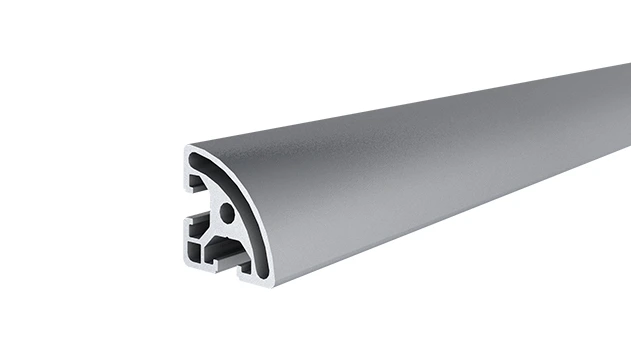
4040R EU Standard Aluminum Profile
4040R is a 4.00x4.00 CM fractional 40 series square extrusion T-slot profile with two side open T-slots, each side with 4.00cm face,the other side is round face. The profile has align-a-grooves to assist in aligning connecting profiles.
In the fast-paced world of manufacturing, every second and every dollar counts. Production lines shift, product designs evolve, and customer demands fluctuate—all while the pressure to reduce waste, cut costs, and stay competitive never eases. This is where lean manufacturing steps in, aiming to eliminate waste in all forms: time, materials, space, and effort. But lean principles are only as effective as the tools and systems that bring them to life. Enter the 4040r EU Standard Aluminum Profile—a humble yet revolutionary component that's quietly transforming how factories build, adapt, and save. In this article, we'll dive into how this aluminum extrusion profile, paired with the right accessories and a focus on reusability, becomes a cornerstone of lean system efficiency, slashing costs and turning rigid production setups into flexible, future-ready workspaces.
What Is the 4040r EU Standard Aluminum Profile, Anyway?
Before we jump into cost cuts and lean benefits, let's get to know the star of the show: the 4040r EU Standard Aluminum Profile. If you've ever walked through a modern factory or workshop, you've probably seen it—even if you didn't realize it. It's the sleek, silver (or sometimes black anodized) frame that makes up workbenches, material racks, conveyor supports, and even machine guards. The "4040" refers to its dimensions: 40mm by 40mm, a versatile size that balances strength and flexibility. The "r" often denotes a specific design variation, like rounded edges for safety or reinforced T-slots for heavier loads. And "EU Standard" means it meets strict European quality and safety norms, ensuring consistency whether you're in Berlin, Barcelona, or Boston.
At its core, this is an aluminum extrusion profile—meaning it's shaped by forcing heated aluminum through a die, creating a uniform cross-section with built-in features. The most critical of these features? T-slots. Running along the length of the profile, these slots act like built-in tracks, allowing aluminum profile accessories (think brackets, connectors, panels, and even casters) to slide in and lock into place with simple bolts or nuts. No welding, no drilling, no messy adhesives—just quick, tool-free (or minimal-tool) assembly. That T-slot design is what turns a basic metal bar into a building block for almost anything.
Reusability: The Hidden Superpower of Lean Savings
Here's a harsh truth about traditional manufacturing setups: They're often one-and-done. A steel workbench welded together for a specific product? When that product line retires, the bench becomes scrap metal. A wooden material rack built to hold a certain part? If the part design changes, the rack gets broken down and thrown away. All that waste—of materials, labor, and money—directly contradicts lean manufacturing's goal of "eliminating non-value-added activities."
The 4040r aluminum profile flips this script by making reusability not just possible, but effortless. Let's say your team builds a workbench using 4040r profiles, aluminum angle brackets, and a plywood top. Six months later, your production line needs to shift to a new product that requires a taller, narrower workbench. Instead of ordering a bench (and tossing the old one), you simply disassemble the existing one: loosen the T-slot nuts, remove the brackets, re-cut the profiles to the new length (or swap in shorter ones from your inventory), and reassemble. The same profiles, the same accessories—just reconfigured. What was once a "fixed asset" becomes a flexible resource that adapts to your needs.
This reusability directly impacts your bottom line in three big ways: First, it slashes waste. According to the Lean Enterprise Institute, material waste alone can account for 20-30% of production costs in traditional setups. By reusing profiles, you cut that waste dramatically. Second, it reduces capital expenditure. Instead of buying new racks or workbenches every time your needs change, you repurpose what you already have. Third, it saves time. Reconfiguring a 4040r setup takes hours, not days (or weeks, for custom welded steel). That means faster response to market changes and less downtime between production runs.

Cost Cuts in Action: Breaking Down the Numbers
Let's get concrete. How much can reusing 4040r profiles actually save your operation? Let's compare a common scenario: building a simple material rack for storing small parts, then needing to reconfigure it six months later.
Traditional Approach (Steel Welded Rack): You hire a welder to cut and weld steel tubes into a 3-tier rack. Cost: ~$300 in materials, ~$200 in labor = $500 total. Six months later, you need a 5-tier rack for smaller parts. The old steel rack is too short and can't be modified—you scrap it (losing $500) and build a new one for another $500. Total cost: $1,000, with 100% waste from the first rack.
4040r Aluminum Approach: You buy 4040r profiles, aluminum profile accessories (corner brackets, shelf supports), and a few aluminum panels. Cost: ~$400 in materials (aluminum is slightly pricier upfront), ~$50 in labor (no welding—your team assembles it with basic tools) = $450 total. Six months later, you need a 5-tier rack. You disassemble the old rack, buy $100 in additional profiles (for the extra tiers), and reassemble. Total cost: $550, with 0% waste (the original profiles are reused). Net savings: $450, plus you own a rack that can be reconfigured again later.
That's a 45% savings in just one reconfiguration. Multiply that across dozens of racks, workbenches, and conveyor supports in a mid-sized factory, and the numbers add up fast. A 2023 study by the Manufacturing Technology Insights found that manufacturers using modular aluminum profiles reduced their annual equipment costs by an average of 28% compared to those using traditional steel or wood setups. The key driver? Reusability.
| Aspect | Steel Welded Frames | Wooden Racks | 4040r Aluminum Profile |
|---|---|---|---|
| Initial Cost (per unit) | $500-$800 (materials + labor) | $200-$400 (lower materials, high labor for custom cuts) | $400-$600 (higher materials, low labor) |
| Reusability Rate | 0-10% (difficult to modify; often scrapped) | 5-15% (may be repurposed for light use, but prone to damage) | 80-95% (easily disassembled and reconfigured) |
| Assembly Time | 8-12 hours (cutting, welding, painting) | 4-6 hours (cutting, drilling, fastening) | 1-3 hours (T-slot assembly with pre-cut profiles) |
| Annual Maintenance Cost | $50-$100 (rust treatment, repainting) | $30-$70 (repairing warped wood, replacing hardware) | $10-$20 (occasional tightening of T-slot nuts) |
| Waste Generated (per reconfiguration) | 100% (scrapped frame) | 70-90% (wood often damaged during disassembly) | 5-10% (minimal waste from cutting to new lengths) |
Beyond Racks and Workbenches: The Versatility of 4040r Profiles
The 4040r profile isn't just for material racks. Its versatility makes it a Swiss Army knife for lean manufacturing setups. Here are a few common applications where reusability shines:
- Workbenches: From basic assembly stations to ESD (electrostatic discharge) workbenches for electronics, 4040r profiles form the backbone. Add a pegboard panel, tool hooks, and a vice, and you've got a custom workstation. Need to add a shelf or raise the height? Just bolt on more profiles.
- Flow Racks: Pair 4040r frames with roller tracks (another modular component) to create gravity-fed flow racks for kanban systems. When product sizes change, swap out the roller tracks or adjust the angle of the rack—no new frame needed.
- Machine Guards: Safety first, but safety shouldn't be rigid. 4040r profiles with polycarbonate panels create lightweight, durable machine guards that can be easily modified if the machine is upgraded or repositioned.
- Mobile Carts: Add casters to a 4040r frame, and you've got a mobile cart for transporting parts between stations. When not in use, disassemble it for compact storage, or reconfigure it into a static shelf.
The key here is that all these applications share the same core component: the 4040r profile. That means your inventory of profiles and accessories (brackets, T-slot nuts, hinges) can be mixed and matched across projects, reducing the need to stock specialized parts for every possible setup.
Case Study: Auto Parts Manufacturer Cuts Costs by 32% with 4040r Profiles
Let's look at a real-world example. A mid-sized auto parts manufacturer in Germany was struggling with frequent changes to their production lines. They produced over 50 different part variants, and each change required new workbenches, racks, and conveyor supports. Their old process relied on custom-welded steel frames, which took 2-3 weeks to build and cost ~€1,200 per setup. Waste was high: 80% of old frames were scrapped, and downtime between line changes averaged 4 days.
In 2022, they switched to 4040r EU standard aluminum profiles, sourced from a reputable lean pipe supplier. Here's what happened:
- Setup Time: Reconfiguring workbenches and racks now takes 1-2 days, not 2-3 weeks. The team can disassemble and rebuild during weekend shifts, eliminating production downtime.
- Cost per Setup: Initial investment in profiles and accessories was higher (~€1,500 for the first line), but reusing components across setups dropped the average cost per new variant to ~€420—a 65% reduction.
- Waste Reduction: Scrap metal from old frames fell from 12 tons/year to 1.5 tons/year, saving €8,000 annually in disposal fees and material costs.
- Total Annual Savings: After one year, the manufacturer reported €142,000 in total savings—32% lower than their previous setup costs. They also noted improved employee morale, as workers no longer had to wait for custom equipment and could take ownership of reconfiguring their own workspaces.
The Role of Accessories: Making Reusability Seamless
A 4040r profile is only as good as the accessories that connect it. Aluminum profile accessories are the unsung heroes of this system, turning individual profiles into functional structures. Let's highlight a few must-haves:
- T-Slot Nuts and Bolts: These small but critical parts slide into the T-slots and lock into place, securing brackets, panels, or other profiles without drilling. They're reusable hundreds of times.
- Angle Brackets: Available in 90°, 45°, and 135° angles, these connect profiles at corners, allowing you to build frames, shelves, and supports.
- End Caps: Simple plastic or aluminum caps that fit over the ends of profiles, preventing dust buildup and reducing the risk of cuts from sharp edges.
- Panel Holders: Attach plywood, MDF, or metal panels to profiles to create workbench tops, shelves, or machine guards.
- Casters: Lockable casters that bolt onto profile frames, turning static racks into mobile carts for easy material transport.
The best part? These accessories are standardized. A T-slot nut that fits a 4040r profile will fit any other 40mm EU standard profile, regardless of brand (as long as you choose a reputable supplier). That means you can mix and match components from different projects, further enhancing reusability.
Myth-Busting: Common Misconceptions About Aluminum Profiles
Myth #1: "Aluminum is too weak for heavy-duty applications."
Not true. While aluminum is lighter than steel, the 4040r profile is engineered for strength. Its hollow, extruded design distributes weight evenly, and when paired with reinforced brackets, it can support hundreds of kilograms. For example, a 4040r workbench with a 2mm thick aluminum top can easily hold 200kg—more than enough for most assembly or inspection tasks. For ultra-heavy loads, simply use thicker-walled profiles (e.g., 3mm instead of 2mm) or add cross-bracing.
Myth #2: "Aluminum profiles are too expensive upfront."
It's true: 4040r profiles cost more per meter than raw steel tubing. But as we saw earlier, the total cost of ownership is lower because of reusability. Think of it as investing in a tool that pays dividends over time, rather than a one-time expense. Plus, labor costs are significantly lower—no need for welders or specialized fabricators. Many manufacturers find that the ROI on aluminum profiles is less than a year.
Myth #3: "They're only for large factories with big budgets."
Small and medium-sized manufacturers (SMEs) stand to gain the most from 4040r profiles. SMEs often have tighter budgets and need to pivot quickly to stay competitive—exactly the scenarios where reusability and flexibility shine. Even a small workshop can start small: buy a few profiles and accessories to build a single workbench, then expand as needed. Many suppliers offer starter kits with basic components, making it easy to test the waters.
Choosing the Right Supplier: Why Quality Matters
Not all aluminum profiles are created equal. To maximize reusability and durability, it's critical to source from a reputable lean pipe supplier (or aluminum profile specialist). Here's what to look for:
- EU Standard Compliance: Ensure the profiles meet EU standards for material quality, dimensional accuracy, and T-slot consistency. Non-compliant profiles may have misaligned slots or weak points, making accessories hard to fit or reducing load capacity.
- Anodized Finish: A high-quality anodized coating protects against corrosion and wear, ensuring profiles look and perform like new for years—even in dusty or humid factory environments.
- Accessory Compatibility: The supplier should offer a full range of accessories (brackets, nuts, casters) that work seamlessly with their profiles. Mismatched accessories can lead to loose connections or stripped T-slots.
- Technical Support: Look for suppliers who provide design guides, assembly tips, or even custom cutting services. This is especially helpful if you're new to modular aluminum systems.
Skimping on quality might save a few euros upfront, but it'll cost you in the long run. Cheap profiles bend under load, accessories strip easily, and reusability becomes a hassle (if not impossible). Invest in quality, and your profiles will pay you back for years.
Conclusion: Building a Leaner, More Flexible Future
Lean manufacturing isn't just a buzzword—it's a mindset. It's about seeing waste where others see "the way we've always done it" and finding smarter, more efficient ways to work. The 4040r EU Standard Aluminum Profile embodies that mindset. It's not just a piece of metal; it's a tool for eliminating waste, reducing costs, and building production systems that adapt as quickly as your business does.
By prioritizing reusability, leveraging modular accessories, and choosing quality components, manufacturers of all sizes can transform rigid, wasteful setups into flexible, cost-effective workspaces. Whether you're building a simple workbench or reconfiguring an entire production line, the 4040r profile proves that sometimes, the most powerful innovations are the ones that let you do more with less.
So, the next time you're planning a new workspace or staring down a production line change, ask yourself: Is this setup built to last… or built to be reused? With 4040r aluminum profiles, the answer can be both—and your bottom line will thank you.