- Company Articles
- Products and Technology
- Product knowledge
- Reusable 4080B EU Standard Aluminum Profile Systems: Reducing Waste in Manufacturing

Reusable 4080B EU Standard Aluminum Profile Systems: Reducing Waste in Manufacturing
Related Product
4080B EU Standard Aluminum Profile
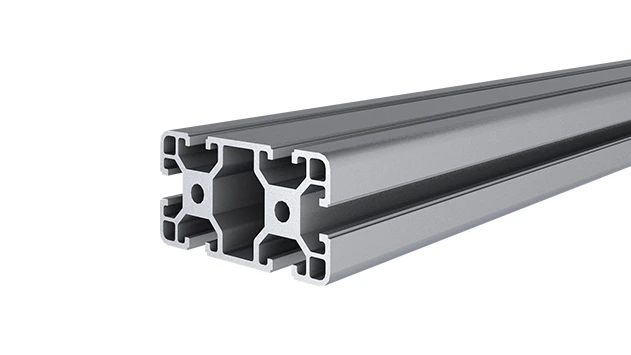
4080B is a 4.00x8.00 CM fractional 40 series square extrusion T-slot profile with two side open T-slots, each side with 4.00cm face, two side with 8.00cm face. The profile has align-a-grooves to assist in aligning connecting profiles.
Walk into any manufacturing facility, and you'll likely spot the same silent culprit eating away at profits: waste. It's in the half-used sheets of plywood tossed aside after a workstation upgrade. It's in the days of downtime when a production line is torn apart and rebuilt for a new product. It's in the metal scraps piling up because a custom steel frame no longer fits the workflow. For decades, manufacturers have accepted this as the cost of doing business. But what if there was a way to build smarter, not just harder? Enter the 4080B EU Standard Aluminum Profile system—a quiet revolution in how factories design, build, and adapt their spaces to cut waste at every turn.
The Hidden Price of "One-and-Done" Manufacturing Setups
Traditional manufacturing setups are often built with a single goal in mind: get the job done today. Workbenches are welded from steel, racks are bolted to the floor, and conveyor systems are custom-fabricated for a specific product. It's effective—until tomorrow comes. When demand shifts, a new model launches, or a workflow bottleneck emerges, those rigid structures become liabilities. A steel workbench that took a week to build might need to be completely replaced, leaving behind piles of scrap metal. A fixed rack system, once perfect for last year's inventory, now wastes floor space because it can't expand. The numbers add up: the EPA estimates that manufacturing facilities generate over 11 million tons of construction and demolition waste annually in the U.S. alone, much of it from outdated or non-reusable equipment.
But waste isn't just about materials. Time is another casualty. Reconfiguring a traditional production line can take weeks—time when machines sit idle and orders pile up. And then there's the cost of custom fabrication: hiring welders, ordering custom-cut materials, and paying for the engineering hours to redesign something that might only last a few months. For small to mid-sized manufacturers, this cycle of build, break, and rebuild can feel like running on a treadmill—expending energy but never getting ahead.
4080B EU Standard Aluminum Profiles: Built to Adapt, Not Dispose
What Makes 4080B Profiles Different?
At first glance, the 4080B EU Standard Aluminum Profile might look like just another metal bar. But its design tells a different story. Measuring 40mm by 80mm, this extruded aluminum profile features a precision-engineered T-slot system running along its length—grooves that act as built-in connection points for accessories. Unlike steel, which requires welding or drilling to modify, these slots let you attach brackets, panels, or connectors with simple bolts and screws. It's modularity by design: a single length of 4080B profile can be part of a workbench today, a material rack next month, and a conveyor guard next year—no cutting, welding, or waste required.
But the real magic is in the details. EU Standard certification ensures consistency: every 4080B profile, whether sourced from Germany, China, or the U.S., adheres to strict dimensional tolerances. That means a connector bought from one supplier will fit a profile from another, eliminating the "vendor lock-in" that forces manufacturers to buy overpriced custom parts. And because aluminum is inherently lightweight—about a third the weight of steel—installing and reconfiguring these systems doesn't require heavy machinery or a crew of workers. A single technician can disassemble a workstation and rebuild it elsewhere in an afternoon, not a week.
The Science of Aluminum Extrusion: Less Waste, More Precision
The 4080B profile's story starts long before it reaches the factory floor—with aluminum extrusion profile technology. Unlike casting, which pours molten metal into a mold (and often results in excess material that needs trimming), extrusion pushes heated aluminum through a die, shaping it into the exact cross-section needed in one seamless step. This process is remarkably efficient: up to 95% of the raw aluminum ends up in the final product, compared to as little as 60% with traditional steel fabrication. Less material waste during production means lower costs for manufacturers and a smaller environmental footprint from the start.
Extrusion also unlocks precision. The T-slots in 4080B profiles are cut with microscopic accuracy, ensuring accessories slide into place and lock securely every time. This consistency matters when you're building something like a quality control workbench, where even a 1mm misalignment can throw off measurements. Traditional wood or steel setups often require on-site adjustments—shaving off a corner here, adding a shim there—creating more waste. With extruded aluminum, what you see is what you get: a profile ready to build with, no extra steps (or scraps) needed.

Aluminum Profile Accessories: The Glue That Makes Modularity Work
A profile is only as useful as the accessories that bring it to life. The 4080B system's ecosystem of aluminum profile accessories turns a simple metal bar into a toolkit for endless configurations. Let's start with the basics: connectors. A 90° aluminum profile connector lets you join two profiles at a right angle without drilling—perfect for building a workbench frame. Need to add a shelf? Slide a T-slot nut into the profile's groove, bolt on a bracket, and you're done. End caps snap onto the profile ends to cover sharp edges, while rubber seal strips fit into T-slots to dampen noise or protect cables. Even specialized parts, like hinge brackets for fold-down tables or caster mounts for mobile carts, are designed to click into place with minimal effort.
What's striking about these accessories is their reusability. A connector used in a workbench today can be unscrewed and reused in a rack tomorrow. Unlike welded steel brackets, which bend or break when removed, aluminum accessories are designed for repeated assembly and disassembly. This creates a "kit of parts" mentality: instead of ordering custom components for each new project, manufacturers can stock a handful of accessories and mix-and-match them to solve new problems. It's like having a workshop where the tools themselves can be rearranged to build anything—no need to buy new ones every time.
From Workbenches to Whole Lines: Real-World Waste Reduction in Action
Workbenches: The Heart of the Factory, Reborn
Take a typical manufacturing workbench. Traditionally, it's a slab of wood or steel bolted to a fixed frame. If a worker needs a shelf added, a drill comes out, holes are drilled, and if the measurements are off? More waste. With a 4080B aluminum profile workbench, the process is night and day. The frame is built from 4080B profiles connected with corner brackets. The top might be an aluminum honeycomb panel (lightweight, durable, and recyclable) attached via T-slot bolts. Need a shelf? Slide a bracket into the frame's T-slot, tighten a screw, and done. Six months later, if the workflow changes, the shelf can be moved up, down, or removed entirely—no holes, no sawdust, no waste.
Even better, mobility becomes an afterthought. Add a set of casters to the workbench legs, and suddenly it can roll to where it's needed—no more building duplicate workbenches for different areas of the factory. A furniture manufacturer in Poland reported cutting their workbench waste by 70% after switching to aluminum profiles: instead of building new benches for each product line, they reconfigure existing ones in hours. "We used to throw away old wooden tops and weld new steel frames every quarter," says their production manager. "Now, we just swap out the top panel and adjust the height. The aluminum frame? It's been in use for three years and still looks new."
Material Racks: From Static to Dynamic Storage
Material storage is another waste hotspot. Traditional steel racks are built to hold specific load sizes—too small, and they waste space; too large, and they're overkill. When inventory changes, the racks become obsolete. 4080B profile racks, by contrast, adapt. Using adjustable shelf brackets that slide along T-slots, a single rack can go from holding 20kg boxes one week to 50kg pallets the next. Add dividers, label holders, or even roller tracks (another modular accessory), and it transforms into a picking station for order fulfillment. When the warehouse layout shifts, the entire rack can be disassembled, moved, and rebuilt in a new location—no cutting, no welding, no scrap metal left behind.
Lean System Principles in Action: Waste Reduction by Design
At its core, the 4080B aluminum profile system aligns with lean manufacturing principles—the idea of maximizing value while minimizing waste. Lean identifies eight types of waste, from overproduction to unused talent, and modular aluminum profiles tackle several head-on:
- Waste of Defects: Extruded aluminum's precision reduces errors in assembly, so workbenches or racks don't need rework.
- Waste of Waiting: Quick reconfiguration means less downtime when switching product lines.
- Waste of Transportation: Lightweight profiles and mobile setups reduce the need to move materials across the factory.
- Waste of Inventory: A modular "kit of parts" reduces the need to stockpile custom components.
Consider a small electronics manufacturer that switched to 4080B profiles for their assembly lines. Previously, launching a new smartphone model required rebuilding three workstations, a process that took two weeks and generated 150kg of steel and wood waste. With aluminum profiles, they reconfigure the same workstations in two days using existing accessories, cutting waste by 90% and slashing time-to-market for new products. It's lean in practice: doing more with less, and doing it faster.
Traditional vs. 4080B Aluminum Profile Systems: A Waste Comparison
| Metric | Traditional Steel/Wood Systems | 4080B Aluminum Profile Systems |
|---|---|---|
| Material Waste During Setup | High: 30-40% of raw material ends up as scrap due to cutting/welding | Low: <5% waste, thanks to precision extrusion and modular assembly |
| Reconfigurability | Low: Requires cutting/welding; 70-80% of components are non-reusable | High: 100% reusable components; reconfigurable in hours/days, not weeks |
| Lifecycle Cost (10-Year Span) | High: Requires 3-4 full replacements; $50,000+ in materials/labor | Low: 1 initial purchase + minor accessory upgrades; ~$15,000 total |
| End-of-Life Impact | High: Steel/wood recycling rates ~65%; often ends in landfills | Low: Aluminum recycling rate 95%; profiles retain 90% of original value |
| Downtime for Reconfiguration | 1-2 weeks per line change | 1-2 days per line change |
The Circular Economy: Aluminum Profiles Never Truly "End"
Sustainability isn't just about reducing waste during use—it's about what happens when a product reaches the end of its lifecycle. Aluminum is one of the most recyclable materials on the planet: recycling it uses 95% less energy than producing new aluminum, and it can be recycled indefinitely without losing quality. When a 4080B profile finally wears out (after decades of use), it can be melted down and extruded into a new profile, closing the loop. Contrast that with wood, which decomposes but releases methane in landfills, or steel, which loses strength after multiple recycling cycles. For manufacturers aiming for net-zero goals, this circularity is a game-changer.
Some forward-thinking suppliers even offer take-back programs: when a customer upgrades to a new system, the old profiles are collected, recycled, and turned into new products. It's a closed-loop system that turns "waste" into raw material—exactly the kind of innovation the manufacturing industry needs to meet 2030 sustainability targets.
Why Now? The Case for Investing in Modular Systems
Manufacturing today is defined by volatility: supply chain disruptions, shifting consumer demands, and pressure to reduce carbon footprints. Rigid systems that worked a decade ago can't keep up. The 4080B EU Standard Aluminum Profile system isn't just a tool for today—it's insurance for tomorrow. It lets manufacturers pivot quickly, reduce costs, and shrink their environmental impact, all while building spaces that grow with their business.
Consider the numbers: a mid-sized manufacturer with 10 workstations and 5 material racks could save over $100,000 in waste and reconfiguration costs over five years by switching to aluminum profiles. That's not just a cost saving—it's a competitive advantage. In an industry where margins are tight, every dollar saved on waste is a dollar that can be reinvested in innovation, workforce development, or better products.
Conclusion: Building a Future Without Waste
The 4080B EU Standard Aluminum Profile system isn't just about aluminum and accessories. It's about reimagining what manufacturing can be: a place where waste is the exception, not the rule; where adaptability is built into every workbench, rack, and conveyor; and where sustainability isn't a buzzword, but a byproduct of smart design. For manufacturers ready to break the cycle of build, break, and rebuild, these profiles offer a simple promise: build once, adapt always. In a world that can't afford more waste, that's not just progress—it's essential.