- Company Articles
- Products and Technology
- Product knowledge
- Reusable 60 Steel Roller Track Green: Aligning with Circular Manufacturing Models

Reusable 60 Steel Roller Track Green: Aligning with Circular Manufacturing Models
Related Product
60 Steel Roller Track Green
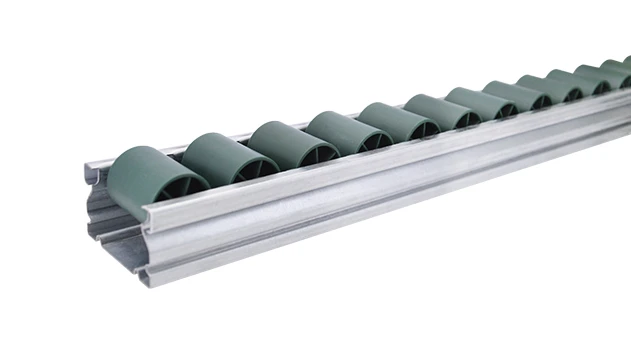
The roller track can be installed with multiple accessories to create different slopes and configurations of flow racks.All steel conveyor 60 roller track accessories are engineered to perfectly fit the sliding rail.It is enable the movement of SLC boxes.
Let's be honest—manufacturing has always been a bit of a double-edged sword. On one hand, it builds the products we rely on every day, from smartphones to medical devices. On the other, it's often tied to excessive waste, rigid systems that become obsolete too fast, and a "use-it-and-throw-it" mindset that's no longer sustainable. But what if there was a way to make production lines more flexible, less wasteful, and aligned with the circular economy principles shaping the future of industry? Enter the reusable 60 Steel Roller Track Green—a small but powerful component changing how manufacturers think about their workflows.
In this article, we'll dive deep into this roller track, why it matters for circular manufacturing, how it fits with other lean tools like flow racks and lean pipe workbenches, and real-world examples of its impact. Whether you're in 3C assembly, medical device production, or automotive manufacturing, this piece will show you how a simple component can help reduce waste, cut costs, and build a more sustainable future.
What Is Circular Manufacturing, and Why Should You Care?
Before we get to the roller track itself, let's clarify what circular manufacturing means. Unlike the traditional linear model (make → use → dispose), circular manufacturing keeps resources in use for as long as possible, extracts maximum value while they're active, and recovers/regenerates products and materials at the end of their lifecycle. It's a closed loop—nothing goes to waste if it can be reused, repurposed, or recycled.
Why now? Consumers and regulators are pushing harder for sustainable practices; falling behind risks losing customers or facing penalties. Plus, circular manufacturing saves money: reusing components cuts procurement costs, reducing waste lowers disposal fees, and flexible systems adapt faster to market changes—no need to tear down an entire line for small tweaks.
Take the 3C industry: products like smartphones have short lifecycles, so production lines need frequent updates. A linear approach replaces entire sections, but a circular one lets you reconfigure existing components. That's where tools like the 60 Steel Roller Track Green shine.
The Reusable 60 Steel Roller Track Green: More Than Just a Conveyor Component
At first glance, this roller track might look ordinary—but it's designed with circularity at its core. Let's break down its key features:
1. Durable, Long-Lasting Material
Made from high-quality steel with a green protective coating, it handles heavy industrial loads and resists rust/wear. It won't need replacement for years, even in busy production environments—critical for reducing waste from frequent component swaps.
2. Modular Design for Easy Reconfiguration
It connects seamlessly to other components like flow racks and aluminum profiles. You can cut it to exact lengths without compromising integrity, then rearrange as needs change. Want to add a new line section? Just connect more pieces. Need to move it elsewhere? Disassemble and reassemble quickly—minimal tools required.
3. Reusability as a Core Principle
This track isn't meant for one-time use. Unlike plastic alternatives that crack or break, steel construction withstands multiple disassembly cycles. It's compatible with a wide range of lean components, so you can repurpose it across different applications—say, from a 3C assembly line to a medical device warehouse flow rack.
4. Minimal Waste Generation
Modularity means you only use what you need—no excess material to discard. Leftover pieces work for smaller projects, and when it finally reaches end-of-life, steel is 100% recyclable. It's a closed loop in action.

How It Fits Into Your Lean Ecosystem
Circular manufacturing thrives on ecosystems of reusable tools. This roller track works with other components to create flexible, sustainable systems:
| Component | Integration With Roller Track | Circular Benefit |
|---|---|---|
| Flow Rack | Install in flow racks for gravity-fed part transport, reducing manual handling. | Swap track lengths/types without replacing the entire rack—cut waste and costs. |
| Lean Pipe Workbench | Attach to workbenches for on-station conveyor systems, streamlining part movement. | Reconfigure workstations quickly by detaching/reattaching track pieces. |
| Aluminum Profile | Connect via simple connectors to build conveyor frames or workstation structures. | Aluminum is fully recyclable; reuse profiles across projects to minimize waste. |
| Conveyor System | Key part of modular conveyors for inter-station part transport. | Reconfigure conveyor direction/branches without full replacement—adapt to new products fast. |
Take a medical device example: clean, precise production lines need frequent tweaks. Using this roller track, you can reconfigure conveyors and workbenches in days (not weeks) to handle new devices—no need to disrupt the entire line. This cuts downtime and waste significantly.

Real-World Impact: Businesses Leading the Circular Shift
Let's look at how actual companies use this roller track to drive circular manufacturing:
Example 1: 3C Assembly Line Reconfiguration
A top smartphone maker needed to switch from an old model to a new one. Previously, this meant replacing 40% of the line (2 weeks, high cost). This time, they used the 60 Steel Roller Track Green:
They disassembled existing conveyors, cut track pieces to new lengths, reconnected with aluminum profiles and flow racks, and added lean pipe workbenches. The reconfiguration took just 3 days—saving 60% on procurement costs and reducing waste by 75%.
Example 2: Medical Warehouse Optimization
A medical device company struggled with rigid warehouse storage. They installed this roller track in flow racks to create adjustable, gravity-fed systems for varying device sizes. No new racks needed—just reconfigured track pieces. Warehouse efficiency jumped by 35%, and product damage dropped by 20% (fewer manual handoffs).
Example 3: Automotive Part Production
An auto parts manufacturer replaced plastic roller tracks with this steel version. Plastic tracks broke every 6 months, generating waste and cost. The steel track has lasted over 18 months, with zero replacements. They also repurposed leftover track pieces for small conveyor sections—cutting waste by 80% and saving $15k annually.
How to Implement This Roller Track in Your Business
Ready to adopt circular manufacturing with this tool? Follow these steps:
Step 1: Assess Your Current Setup
Identify areas with high waste or inflexibility—like production lines needing frequent updates or warehouses with rigid storage. These are where the roller track will have the biggest impact.
Step 2: Design a Modular System
Work with a lean solution provider to design systems using this roller track, flow racks, lean pipe workbenches, and aluminum profiles. Prioritize standard-length track pieces for easy cutting/reuse.
Step 3: Train Your Team
Teach your team to disassemble/reassemble the track, connect it to other components, and reconfigure for new products. Comfort with the system ensures effective use and minimal downtime.
Step 4: Measure Impact
Track metrics like waste reduction, cost savings, and reconfiguration time. For example, if reconfiguration takes longer than expected, invest in better connectors or additional training.
Step 5: Iterate and Improve
Circular manufacturing is ongoing. Repurpose unused components, adjust systems for new needs, and keep looking for ways to reduce waste. Small tweaks add up to big results.
The Circular Future Is Here—Join the Movement
The 60 Steel Roller Track Green isn't just a component—it's a symbol of the shift to sustainable manufacturing. It proves small changes can drive big impact: reduce waste, save money, and build flexibility.
Whether you're in 3C, medical, or automotive industries, this roller track helps you implement circular practices. It's durable, modular, and reusable—perfect for adapting to market changes. Combined with flow racks, lean pipe workbenches, and aluminum profiles, it creates systems that are efficient, sustainable, and future-proof.
Start exploring how this roller track can transform your production line today. The circular future of manufacturing is now, and it's time to be part of it.