- Company Articles
- Products and Technology
- Product knowledge
- Reusable Aluminum Pipe with Board Holder: Lean Principles

Reusable Aluminum Pipe with Board Holder: Lean Principles
Related Product
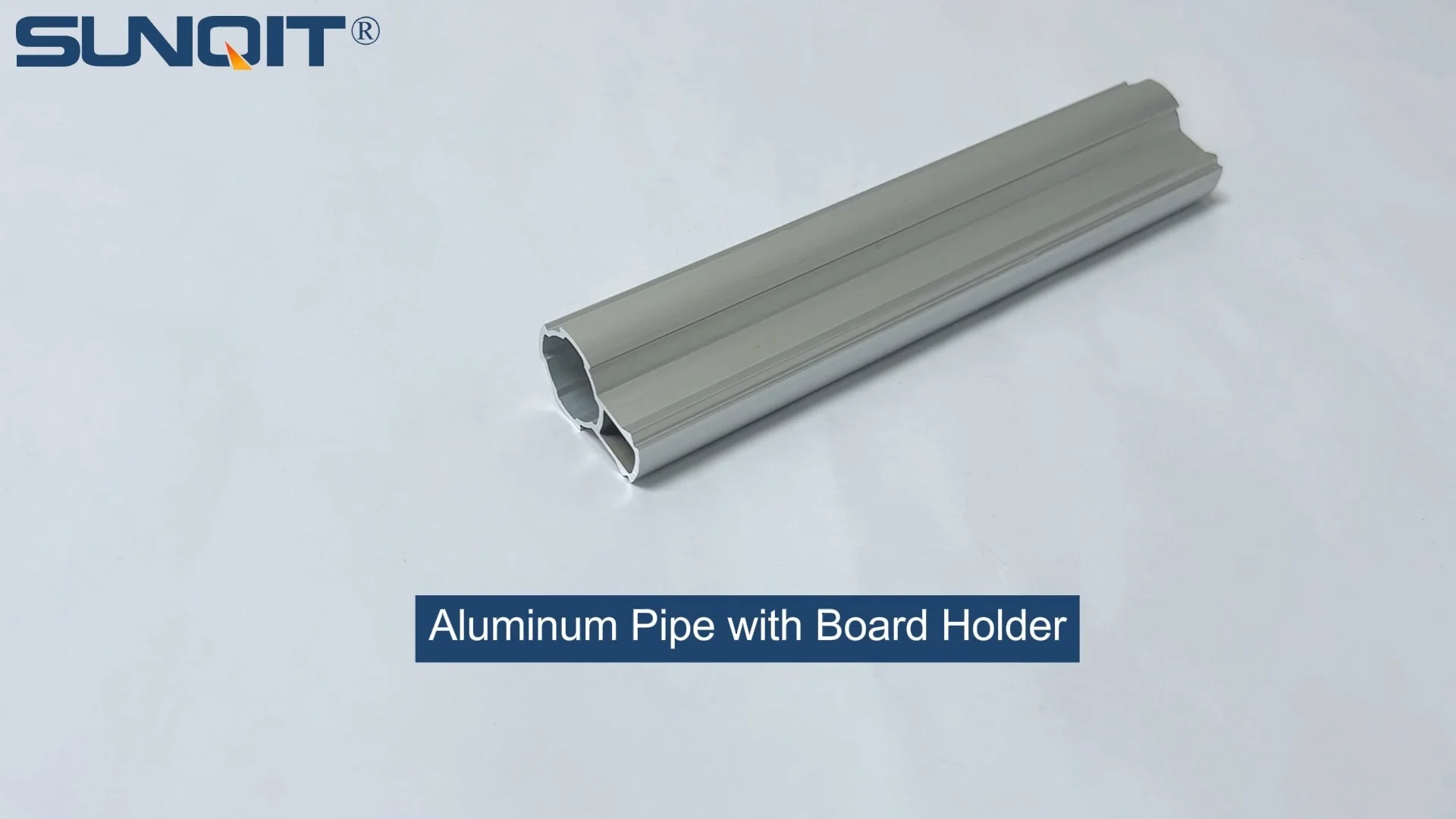
Aluminum Pipe with Board Holder
The linear rolling assembly can be arbitrarily connected in the protruding part of the card slot to increase the rigidity of the track.
Walk into any modern manufacturing facility, and you'll likely notice a shift in how workspaces are designed. Gone are the days of rigid, one-size-fits-all workbenches and clunky material racks that seem permanently rooted to the floor. Instead, there's a sense of adaptability—stations that reconfigure overnight, racks that expand with demand, and tools that grow with the team. This isn't just a design trend; it's the result of lean system thinking, where every element of the workspace is intentional, waste-free, and focused on creating value. At the heart of this transformation lies a surprisingly simple tool: the reusable aluminum pipe with board holder. More than just a collection of tubes and connectors, it's a physical embodiment of lean principles, empowering teams to build, adapt, and optimize their workflows with unprecedented ease.
Understanding Lean: Beyond Buzzwords, Toward Better Work
Before diving into the specifics of aluminum pipes and board holders, let's ground ourselves in what lean truly means. Lean isn't about cutting costs at the expense of quality or overworking teams to meet quotas. At its core, lean is a philosophy built on five key principles: value (defining what customers truly need), value stream (mapping the steps to deliver that value), flow (ensuring smooth, uninterrupted movement of work), pull (producing only what's needed, when it's needed), and perfection (constantly improving the process). These principles guide every decision, from how products are assembled to how workspaces are structured. And here's the thing: lean can't thrive in a rigid environment. To eliminate waste—whether it's time, materials, or space—teams need tools that are as flexible as their processes. That's where reusable aluminum pipe with board holder comes in.
The Problem with Traditional Workspace Solutions: Rigidity as a Barrier to Lean
For decades, manufacturers relied on static, fixed workspace solutions. Steel workbenches were welded into place, their dimensions set in stone. Material racks were built to hold a specific number of parts, with no room to expand or shrink. If a product line changed, or demand spiked, or a new process was introduced, the workspace often couldn't keep up. The result? Waste. Time wasted waiting for new equipment to be fabricated. Money wasted on replacing perfectly functional but ill-fitting workbenches. Space wasted on storing unused racks. Even talent wasted—skilled workers forced to adapt to tools that didn't support their best work.
Consider a hypothetical scenario: A small electronics manufacturer lands a new client with a unique product. The assembly process requires a longer workbench to accommodate additional testing steps. Their existing steel benches are 4 feet long; they need 6-foot benches. With traditional solutions, they'd have two options: hire a welder to modify the existing benches (costing time and money) or buy new ones (creating waste by leaving the old benches unused). Either way, the delay slows down production, and the added cost eats into profits. This is the opposite of lean. Lean demands that the workspace supports change, not resists it.

Enter Reusable Aluminum Pipe with Board Holder: A Lean Game-Changer
Reusable aluminum pipe with board holder—often called aluminum lean pipe —solves this rigidity problem. At first glance, it might look like a simple system of tubes and connectors, but its genius lies in its modularity. Made from high-grade aluminum, these pipes are lightweight yet surprisingly strong, capable of supporting heavy tools, materials, and even work-in-progress. The board holder, a versatile accessory, attaches seamlessly to the pipes, providing a stable surface for everything from instruction manuals and digital tablets to small parts bins. And here's the kicker: none of it requires welding, drilling, or specialized tools. Thanks to intuitive connectors (like the internal rotatory aluminum joint ), teams can assemble, disassemble, and reconfigure the system by hand, often in a matter of hours.
Let's circle back to our electronics manufacturer. With aluminum lean pipe, they wouldn't need to hire a welder or buy new benches. Instead, they could purchase a few extra pipes and connectors, disassemble their existing 4-foot workbench, and rebuild it as a 6-foot station. The board holder could be repositioned to hold the new testing checklist, and aluminum guide rails could be added to organize the new tools. Total time? Maybe an afternoon. Total waste? Almost none—since the extra pipes can be reused for future projects. That's lean in action: eliminating waste, responding to demand, and creating value without unnecessary cost.

How Aluminum Lean Pipe Embodies Lean Principles
It's one thing to say aluminum lean pipe is "lean-friendly," but let's break down how it directly supports each of the five lean principles. This isn't just marketing—it's a tangible alignment between tool and philosophy.
1. Value: Creating What Customers Actually Need
Lean starts with understanding value from the customer's perspective. Customers don't pay for wasteful, rigid tools—they pay for products that work, delivered on time, at a fair price. Aluminum lean pipe creates value by ensuring that every dollar spent on workspace tools goes toward utility, not waste. Since the pipes and accessories are reusable, you're not buying a "bench" or a "rack"—you're buying a system that can become a bench, a rack, a cart, or a conveyor, depending on what your customer's order requires. This flexibility means you're never stuck with equipment that no longer serves a purpose, which translates to lower costs and better value for your customers.
2. Value Stream: Streamlining the Flow of Work
The value stream is the sequence of steps required to turn raw materials into a finished product. Lean aims to eliminate bottlenecks in this stream, ensuring work flows smoothly from one step to the next. Aluminum lean pipe excels here. For example, a material rack built with aluminum pipes and swivel roller balls allows workers to access parts with minimal effort—no more reaching, bending, or searching. A workbench with a board holder keeps instructions at eye level, reducing time spent flipping through manuals. Even conveyors, built with plastic roller track guide rails, can be integrated into the system to move products between stations without manual lifting. Every component is designed to keep the value stream moving, with no unnecessary stops or delays.
3. Flow: Adapting to Keep Work Moving
Flow is about ensuring work-in-progress moves through the value stream without getting stuck. In manufacturing, this often means designing workstations that are positioned for optimal movement—no long walks to fetch tools, no backtracking to access materials. Aluminum lean pipe makes this easy. Need to move a workbench 3 feet to the left to align with a new conveyor? Add caster wheel accessories, and the whole station rolls into place. Need to split a large assembly line into two smaller cells to handle a rush order? Disassemble the existing setup and rebuild two smaller workbenches in an hour. The system adapts to the flow, not the other way around.
4. Pull: Producing Only What's Needed
Pull-based production means making products based on customer demand, not forecasts. This reduces inventory waste and ensures you're never stuck with unsold goods. But pull requires workspace flexibility. If a customer orders 100 units instead of the usual 50, your material racks need to hold more parts. If they order a custom variation, your workbench needs to accommodate new tools. Aluminum lean pipe supports pull by letting you scale up or down quickly. Add a few extra shelves to your material rack with aluminum profile accessories when demand spikes; remove them when it slows. No overbuilding, no underutilizing—just the right amount of space and storage for what's needed, right now.
5. Perfection: Continuous Improvement Through Experimentation
Lean isn't a one-and-done process; it's about constantly improving. Teams need to experiment with new layouts, test different workflows, and refine their approach. But experimentation is risky with rigid tools—what if a new layout doesn't work? With aluminum lean pipe, failure is cheap. Try rearranging your workbench to reduce tool travel time. If it doesn't work, disassemble and try again. No wasted money on failed experiments, just lessons learned. Over time, this leads to a workspace that's perfectly tailored to your team's needs—true perfection, in lean terms.
Key Features of Reusable Aluminum Pipe with Board Holder: Why It Works
So, what makes aluminum lean pipe so effective? Let's dive into its core features and how they support lean goals:
- Lightweight yet durable: Aluminum weighs roughly 1/3 of steel, making it easy to handle and reconfigure without heavy machinery. Yet it's strong enough to support up to 500 lbs per linear foot, depending on the setup. This balance means teams can build sturdy workspaces without sacrificing flexibility.
- Corrosion-resistant: Unlike steel, aluminum doesn't rust, making it ideal for cleanrooms, food processing facilities, or even outdoor use. This durability reduces replacement costs and extends the system's lifespan—another win for waste reduction.
- Tool-free assembly: With connectors like the internal rotatory aluminum joint, assembly requires only basic hand tools (and sometimes just a rubber mallet). No welding, no drilling, no waiting for specialists. This empowers frontline teams to take ownership of their workspace.
- Reusable and recyclable: When a project ends or a layout changes, simply disassemble the pipes and accessories and reuse them elsewhere. Even at the end of their lifecycle, aluminum is 100% recyclable, aligning with sustainability goals (and reducing environmental waste).
- Compatible with a range of accessories: From board holders and aluminum guide rails to caster wheels and roller tracks, aluminum lean pipe works with hundreds of accessories. This modularity means you can build almost anything: workbenches, material racks, mobile carts, conveyor systems, and more.
Real-World Applications: Aluminum Lean Pipe in Action
To truly understand the impact of aluminum lean pipe, let's look at how it's used in everyday manufacturing scenarios. These aren't hypothetical—they're examples of how teams are applying lean principles with this versatile tool.
Workbench E: A Customizable Testing Station
Consider Workbench E (single deck-without caster) , a common setup in electronics and automotive manufacturing. Built with aluminum lean pipe, this workbench serves as a testing station for circuit boards. The board holder is positioned at eye level, holding a digital test manual and a tablet displaying real-time quality data. Aluminum guide rails along the edge keep small tools (screwdrivers, multimeters) organized and within arm's reach. Below the deck, hooks made from aluminum profile accessories hold cables and testing leads. After six months, the team realizes they could improve efficiency by adding a second level for test equipment. Instead of buying a new bench, they add a few extra pipes and connectors, creating a dual-level workspace in under two hours. The result? A 20% reduction in time spent reaching for tools, all without waste.
Material Rack B: Adapting to Seasonal Demand
Material Rack B (3 row and 3 floor) is a staple in warehouses and distribution centers. Built with aluminum lean pipe, this rack holds small parts bins for assembly lines. In the summer, demand for air conditioner parts spikes, so the team adds two extra rows using aluminum profile accessories and swivel roller balls (1 inch) for easy bin access. In the winter, when demand drops, they remove the extra rows and repurpose the pipes to build a mobile cart for transporting holiday inventory. No wasted space, no unused equipment—just a rack that shrinks and grows with the seasons.
Mobile Conveyor Systems: Smooth Flow for Custom Orders
For custom furniture manufacturers, every order is unique. One day, they're building a small bookshelf; the next, a large dining table. Traditional conveyors are fixed, making it hard to adjust for different product sizes. With aluminum lean pipe and plastic roller track guide rails (grey), they build modular conveyors that can be extended, shortened, or repositioned. Need to move a dining table top across the shop? Add extra roller track sections and caster wheels to create a temporary conveyor. Done? Disassemble and store the parts for next time. Flow is maintained, waste is eliminated, and custom orders are fulfilled on time.
Comparing Materials: Why Aluminum Lean Pipe Stands Out
Aluminum lean pipe isn't the only modular workspace solution on the market. Steel and plastic pipes are also available, but they each have tradeoffs. Let's compare them across key factors to see why aluminum is often the best choice for lean environments:
| Material | Weight (per linear foot) | Reusability | Assembly Time (Workbench Setup) | Cost (Relative) | Durability | Corrosion Resistance |
|---|---|---|---|---|---|---|
| Aluminum Lean Pipe | 1.5 lbs | High (can be reused indefinitely) | 2 hours | Medium | High (resists dents, withstands heavy loads) | High (rust-proof) |
| Steel Pipe | 4 lbs | Low (often welded, hard to disassemble) | 8 hours (requires welding) | High | High (but prone to rust without coating) | Low (rusts in humid environments) |
| Plastic Pipe | 0.8 lbs | Medium (can crack or warp over time) | 3 hours | Low | Low (not suitable for heavy loads) | High (resists moisture) |
As the table shows, aluminum strikes a balance between weight, reusability, and cost. It's light enough to reconfigure by hand, durable enough to handle daily use, and reusable enough to avoid waste. Steel is strong but rigid and heavy; plastic is cheap but flimsy. For lean environments, where flexibility and durability are non-negotiable, aluminum lean pipe is the clear winner.
Choosing the Right Partner: The Role of a Lean System Supplier
To get the most out of aluminum lean pipe, it's critical to partner with a reliable lean system supplier . A good supplier does more than sell pipes and connectors—they provide expertise, support, and a full ecosystem of accessories to ensure your system works seamlessly. Look for suppliers who offer:
- A comprehensive product line: From basic aluminum tubes and internal rotatory joints to specialized accessories like swivel roller balls and plastic roller track guide rails, they should have everything you need to build any workspace.
- Design support: Lean isn't just about tools—it's about layout. A good supplier can help you design workstations and material flows that align with lean principles, ensuring you're not just buying parts but building a better process.
- Quality assurance: Aluminum lean pipe is only as good as its materials. Look for suppliers who use high-grade aluminum and rigorously test their connectors for strength and durability.
- Fast delivery: In lean manufacturing, delays are waste. A supplier with local warehouses or quick shipping ensures you get the parts you need when you need them, so you can keep improving without waiting.
The Future of Lean Manufacturing: Aluminum Lean Pipe and Beyond
As manufacturing continues to evolve—with trends like automation, small-batch production, and sustainability taking center stage—aluminum lean pipe will only grow in importance. Automation and lean go hand in hand, but even the most advanced robots need flexible workspaces to operate efficiently. Aluminum lean pipe can integrate with cobots (collaborative robots), creating hybrid human-machine workstations that adapt as tasks change. Small-batch production, driven by consumer demand for customization, requires workspace agility—exactly what aluminum lean pipe provides. And sustainability, a key pillar of modern manufacturing, aligns perfectly with aluminum's recyclability and reusability.
Looking ahead, we'll likely see even more innovation in aluminum lean pipe accessories—smarter board holders with integrated digital displays, connectors that use RFID to track components, and eco-friendly materials for accessories. But even without these advancements, the core value of aluminum lean pipe remains clear: it's a tool that lets teams focus on what matters—creating value, eliminating waste, and building a better way to work.
Conclusion: Lean Principles, Tangible Results
Reusable aluminum pipe with board holder isn't just a workspace solution—it's a lean mindset made physical. It turns abstract principles like "eliminate waste" and "continuous improvement" into tangible actions: reconfiguring a workbench in an afternoon, reusing pipes from a completed project, or testing a new layout without risk. For manufacturers looking to embrace lean, it's not just an investment in tools; it's an investment in their team's ability to adapt, innovate, and thrive.
So, the next time you walk into a manufacturing facility and see those sleek aluminum workbenches and modular material racks, remember: what looks like a simple collection of pipes is actually a story of lean in action. A story of waste eliminated, value created, and teams empowered to do their best work. And that's the true power of reusable aluminum pipe with board holder—it doesn't just support lean principles. It makes them possible.